Key Takeaways
- Retatrutide is a triple-action injectable drug targeting GIP, GLP-1, and glucagon receptors simultaneously, unlike approved weight loss drugs that target only one or two receptors, making it significantly more potent.
- Phase 2 trials in 2023 showed up to 24.2% mean weight loss after 48 weeks, with Phase 3 TRIUMPH trials reporting approximately 28-28.7% weight loss at 12-mg doses over 68-80 weeks in adults with obesity and related health conditions.
- Retatrutide remains investigational and unapproved by the FDA; online products claiming to be retatrutide are untested, unregulated, and potentially unsafe, so patients should only access it through licensed medical providers in clinical trials.
- Understanding drug development timelines protects patients from misinformation, helps identify trial stage versus approved treatment, and enables informed discussions with healthcare providers about emerging weight loss options.
- Beyond weight loss, retatrutide is being studied for managing interconnected conditions including type 2 diabetes, heart disease, sleep apnea, and fatty liver disease through TRIUMPH, TRANSCEND, and SYNERGY trial programs.
- Phase 1 testing revealed the drug's six-day half-life supports practical once-weekly dosing, with side effects generally mild digestive issues similar to other incretin-based medicines, establishing safety foundation for larger trials.
If you follow weight loss news, you have likely heard about a new injectable drug that promises bigger results than anything before it. Retatrutide has become one of the most talked-about medicines in obesity research. But most people do not know how it got here or what it actually is. Understanding the retatrutide development history can help you make smarter, safer choices about your own health journey. At InCare, we believe patients deserve clear, honest information about emerging treatments before they consider any weight loss option.
This guide walks through how retatrutide moved from a lab discovery to a widely studied drug. We will explain the science in plain language, share the real numbers from clinical trials, and explain why this history matters if you are exploring weight loss care today. Whether you are a busy parent, a young professional, or someone managing diabetes, this timeline gives you the facts you need.
What Is Retatrutide and Why Does Its History Matter
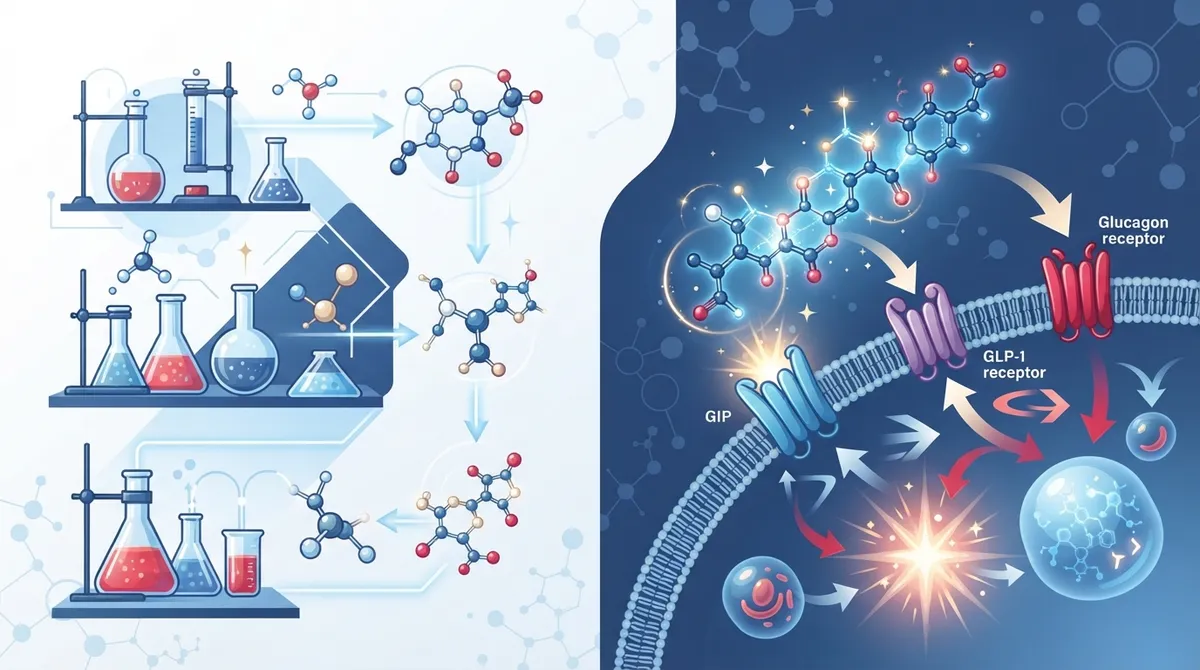
Retatrutide, also known by its research code LY3437943, is an experimental medicine made by Eli Lilly. It is given once a week by injection. What makes it different from other weight loss drugs is that it targets three hormone receptors at once: GIP, GLP-1, and glucagon.
Most approved weight loss injections only target one or two of these receptors. This triple-action approach is why retatrutide has drawn so much attention from doctors and researchers. Knowing its backstory helps patients separate real science from social media hype.
Why Patients Should Care About Drug Development Timelines
Every medicine goes through years of testing before it can be prescribed safely. Understanding this process helps you know what questions to ask your healthcare provider. It also protects you from unapproved products sold online that claim to be retatrutide but are not tested or regulated.
- Helps you understand what stage a drug is in (lab testing vs. real-world use)
- Shows you the difference between promising trial data and approved treatment
- Protects you from unsafe, unregulated products sold outside medical supervision
- Gives context for discussing new options with your primary care doctor

The Early Years: Discovery and First Human Testing
Retatrutide was discovered and refined during the late 2010s. Scientists at Eli Lilly worked to build a molecule that could activate three different hormone pathways at the same time. This was a bold step beyond older diabetes and weight loss drugs.
The compound entered its first human trial around 2019. This is called a Phase 1 study. Researchers gave small groups of adults with obesity single and then increasing doses of the drug. They watched closely for safety issues and any early signs it was working.
Key Findings From Phase 1 Testing
- The drug showed dose-related weight loss even in this early, small study.
- Side effects were generally similar to other incretin-based medicines, meaning mostly mild digestive issues.
- Researchers found the drug has a half-life of about six days. This supports once-weekly dosing, which is easier for patients to stick with.
This early data gave Lilly the confidence to move forward into larger trials. It also gave the medical community its first real look at what a triple-hormone medicine could do for weight management.
Phase 2 Trials: The Turning Point in 2023
The real excitement around retatrutide began in 2023, when two major Phase 2 studies were published in respected medical journals. These trials tested the drug in much larger groups of people and over a longer period.
The Obesity Trial Results
The landmark Phase 2 obesity trial appeared in the New England Journal of Medicine in 2023. After 48 weeks, participants lost between 8.7% and 24.2% of their body weight, depending on their dose. Compare that to just 1.6% weight loss in the placebo group.
The highest dose group saw an average weight loss of 24.2%. For many patients, that is a life-changing amount of weight loss, especially for those who have struggled with obesity-related health problems for years.
The Type 2 Diabetes Trial Results
A separate Phase 2 study looked at retatrutide in adults with type 2 diabetes. This trial was published in The Lancet in 2023. It showed the drug could help control blood sugar while also supporting weight loss. This dual benefit is important because obesity and diabetes often go hand in hand.
|
Trial |
Population |
Duration |
Key Result |
|---|---|---|---|
|
Phase 2 Obesity Trial |
Adults with obesity |
48 weeks |
Up to 24.2% mean weight loss |
|
Phase 2 Diabetes Trial |
Adults with type 2 diabetes |
Varied dosing periods |
Improved blood sugar and weight loss |
|
Phase 1 Study |
Adults with obesity |
Single and multiple doses |
Dose-related weight loss, six-day half-life |
Phase 3 Trials: Expanding Into Real-World Conditions
After the strong Phase 2 results, Eli Lilly launched a large Phase 3 program in 2023 called TRIUMPH. This program studies retatrutide in people with obesity or overweight who also have related health problems. These include type 2 diabetes, heart disease, knee osteoarthritis, and obstructive sleep apnea.
The initial TRIUMPH program included more than 5,800 participants across four global trials. This scale shows how seriously the medical community is treating this new drug class.
Recent TRIUMPH Trial Updates
- TRIUMPH-4: Announced in December 2025, this trial reported about 28.7% mean weight loss at the 12-mg dose after 68 weeks in adults with obesity and knee osteoarthritis.
- TRIUMPH-1: Results announced May 21, 2026, showed about 28.3% mean weight loss at the 12-mg dose after 80 weeks in adults with obesity or overweight and at least one weight-related health issue.
- TRIUMPH-2 and TRIUMPH-3: Positive topline results were reported in July 2026. TRIUMPH-2 focused on obesity with type 2 diabetes, while TRIUMPH-3 studied severe obesity with existing heart disease.
It is important to note these are topline, company-reported numbers. Full peer-reviewed publications are still needed before these results become part of standard medical practice.
Beyond Obesity: TRANSCEND and SYNERGY Programs
Lilly has also expanded testing beyond weight loss alone. The TRANSCEND program studies retatrutide for type 2 diabetes specifically. One study, TRANSCEND-T2D-1, is a 40-week trial enrolling more than 2,050 participants, according to a March 2026 update.
The SYNERGY studies look at retatrutide for metabolic dysfunction-associated steatotic liver disease, sometimes called fatty liver disease. This condition is closely tied to obesity and diabetes, making it a natural next step in research.
How This History Relates to Primary Care and Wellness
Why should a primary care patient care about all this trial data? Because obesity is not just about appearance. It is linked to diabetes, heart disease, sleep apnea, joint pain, and liver disease. A drug that could help manage all of these conditions at once would be a major step forward in whole-body health.
At InCare, our approach to medical weight loss already reflects this kind of whole-body thinking. We look at your metabolism, body composition, and overall health history rather than treating weight loss as a single isolated goal. Our metabolic breath analysis and body composition testing help us build a plan that fits your unique biology.
Why You Should Not Buy Retatrutide Online
Because retatrutide is still investigational, it is not FDA-approved or available by prescription in any pharmacy. Products sold online claiming to be retatrutide may be unapproved, mislabeled, or downright unsafe. There is no way to verify their purity or dosage outside a controlled clinical trial.
If you are interested in medically supervised weight loss options that are currently available and proven safe, working with a licensed provider is the only responsible path. Our team at InCare, including Dr. Naveen Paddu, Dr. Pramjeet Ahluwalia, and Dr. Teshy John, can walk you through options that fit your health needs today.
Questions to Ask Before Trying Any New Weight Loss Treatment
As new drugs like retatrutide move through trials, patients often feel pressure to try the newest thing. Before considering any weight loss treatment, ask these questions:
- Is this treatment FDA-approved, or still in clinical trials?
- What are the known side effects, and how serious are they?
- Does my current health history make me a good candidate?
- How will this treatment be monitored by a medical provider?
- What is the realistic cost, and is it covered by insurance?
A trustworthy primary care provider will walk through each of these points honestly, rather than pushing a trend before it is proven safe.
What Comes Next for Retatrutide
The retatrutide story is still being written. More Phase 3 results are expected in the coming months, and full peer-reviewed publications will help confirm the topline numbers already announced. If the drug eventually earns FDA approval, it could become an important tool for treating obesity, diabetes, sleep apnea, and fatty liver disease together.
Until then, primary care teams like InCare will continue to rely on proven, medically supervised methods for weight loss and metabolic health. We stay current with emerging research so we can guide our patients honestly, whether that means exploring current GLP-1 options or simply building healthier daily habits.
Trust InCare for Honest, Science-Based Weight Care
Understanding the full retatrutide development history shows how much careful science goes into every weight loss drug before it reaches patients. It also shows why working with a trusted medical team matters more than chasing the newest headline.
At our Tampa and Riverview clinics, we combine cutting-edge tools with honest, personalized care. Patients trust us for everything from cancer screenings to DNA gene testing and IV hydration therapy. You can follow our latest health updates on Facebook, see patient tips on Instagram, and catch quick wellness videos on TikTok.
Curious what our patients say about their experience? You can visit us on Google — InCare to read real reviews from people in Tampa and Riverview. Ready to talk about a weight loss plan that fits your real life and health goals? Book your appointment today or reach out to our team with any questions about our current weight loss programs.
FAQs
Q: What is retatrutide and how is it different from semaglutide and tirzepatide?
A: Retatrutide is an investigational once-weekly medicine that activates three hormone receptors: GIP, GLP-1, and glucagon. Semaglutide only targets GLP-1, and tirzepatide targets two receptors, GIP and GLP-1. This triple-action approach is why retatrutide has shown larger weight loss results in early trials.
Q: When did retatrutide development begin?
A: Retatrutide was discovered and optimized by Eli Lilly during the late 2010s. It entered first-in-human Phase 1 testing around 2019, with major Phase 2 trial results published in 2023 and Phase 3 trials launching that same year.
Q: How much weight loss did retatrutide produce in clinical trials?
A: In the 2023 Phase 2 obesity trial, participants lost between 8.7% and 24.2% of their body weight after 48 weeks, depending on dose. More recent Phase 3 topline results, such as TRIUMPH-1 and TRIUMPH-4, reported around 28% mean weight loss at higher doses over longer periods.
Q: Is retatrutide FDA-approved or available by prescription?
A: No, retatrutide remains investigational and is not FDA-approved or available by prescription. It should not be considered for routine use, and products sold online claiming to be retatrutide may be unapproved, mislabeled, or unsafe.
Q: Could retatrutide eventually be used in primary care for obesity, diabetes, sleep apnea, or fatty liver disease?
A: Retatrutide is being studied for exactly these conditions through the TRIUMPH, TRANSCEND, and SYNERGY trial programs. If approved, it could become a valuable tool in primary care, but any future clinical role would still require careful evaluation of eligibility, safety, and long-term outcomes.