
Key Takeaways
- Medical weight loss starts with a full clinical assessment of your health history, medications, labs, sleep, and weight-related conditions, while diets typically start with a generic eating plan.
- Medical programs include clinician-guided follow-up and plan adjustments, whereas diets are usually self-monitored and end with a set date, which often leads to weight regain.
- Medication may be considered for adults with a BMI of 30+ or 27+ with a weight-related condition, but it works best alongside nutrition, activity, and behavioral changes rather than replacing them.
- The NIDDK reports adults using medication plus lifestyle changes lose 3% to 12% more of their starting weight after one year than those using lifestyle changes alone.
- The CDC notes that losing about 1 to 2 pounds per week is more likely to be maintained long term than faster crash-diet losses.
- When choosing a program, confirm a licensed clinician evaluates your health, the plan is individualized, follow-up is scheduled, and a maintenance strategy and costs are explained upfront.
Most people have tried a diet at some point. You cut calories, follow a plan for a few weeks, and watch the scale. Then life gets busy, the plan fades, and the weight often returns. If that cycle sounds familiar, you are not alone, and it is not a personal failing. Weight is shaped by hormones, sleep, stress, medications, genetics, and habits, and a diet alone rarely addresses all of them.
So how is medical weight loss different from dieting? In short, medical weight loss treats weight as a health issue. It starts with an assessment, builds an individualized plan, and includes clinician oversight and follow-up. A diet is usually a self-directed eating plan with a start date and an end date. This guide explains the differences, what a medical program involves, who may benefit, and how to choose a program in 2026. It is written for busy professionals, young families, and anyone who wants a smarter path than guesswork.
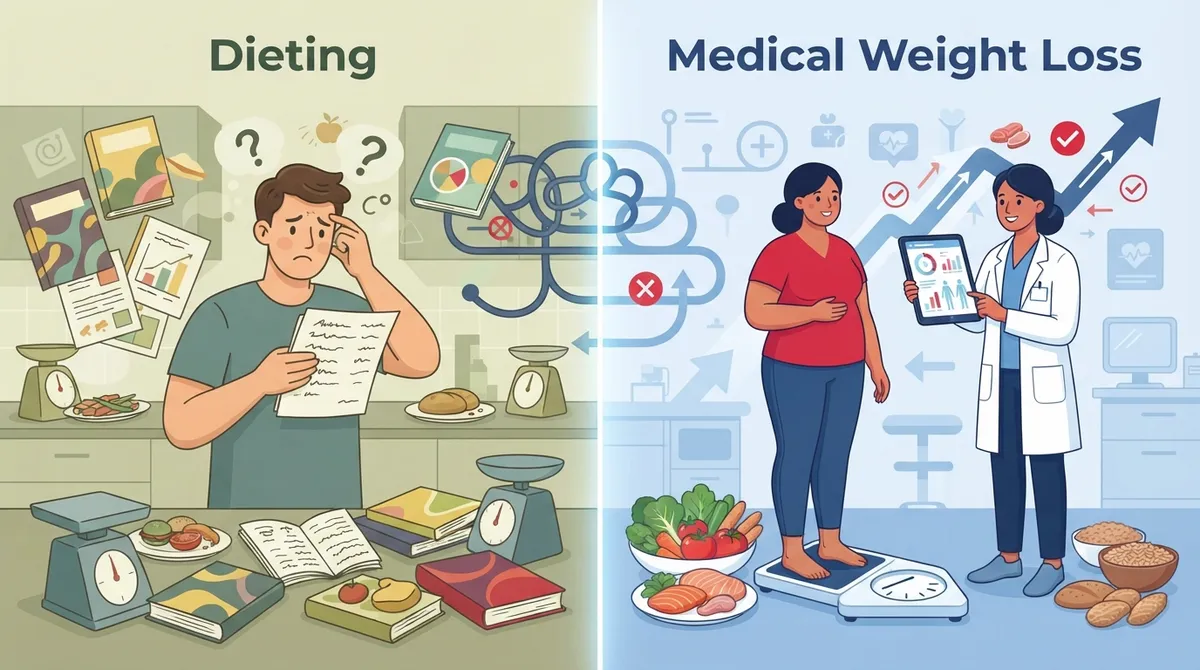
What Is Medical Weight Loss?
Medical weight loss is a clinician-guided approach to treating excess weight and the health risks that come with it. It may be delivered through a primary care practice or a multidisciplinary team. It is not one standardized program. The right approach depends on your health, preferences, and circumstances.
Instead of handing you a meal plan and wishing you luck, a clinician looks at the full picture. That includes your medical history, current medications, eating and activity patterns, sleep, and any weight-related conditions such as high blood pressure, prediabetes, or sleep apnea. From there, you and your provider create a plan and adjust it over time.
What Is Dieting?
Dieting usually means following a specific eating pattern to lose weight. Popular examples include calorie counting, low-carb plans, intermittent fasting, and commercial meal programs. Many people try these on their own, using apps, books, or social media advice.
Diets can work for some people in the short term. The challenge is that most are built around restriction, and they rarely include medical screening, ongoing accountability, or a plan for keeping weight off. When the diet ends, the support ends too.
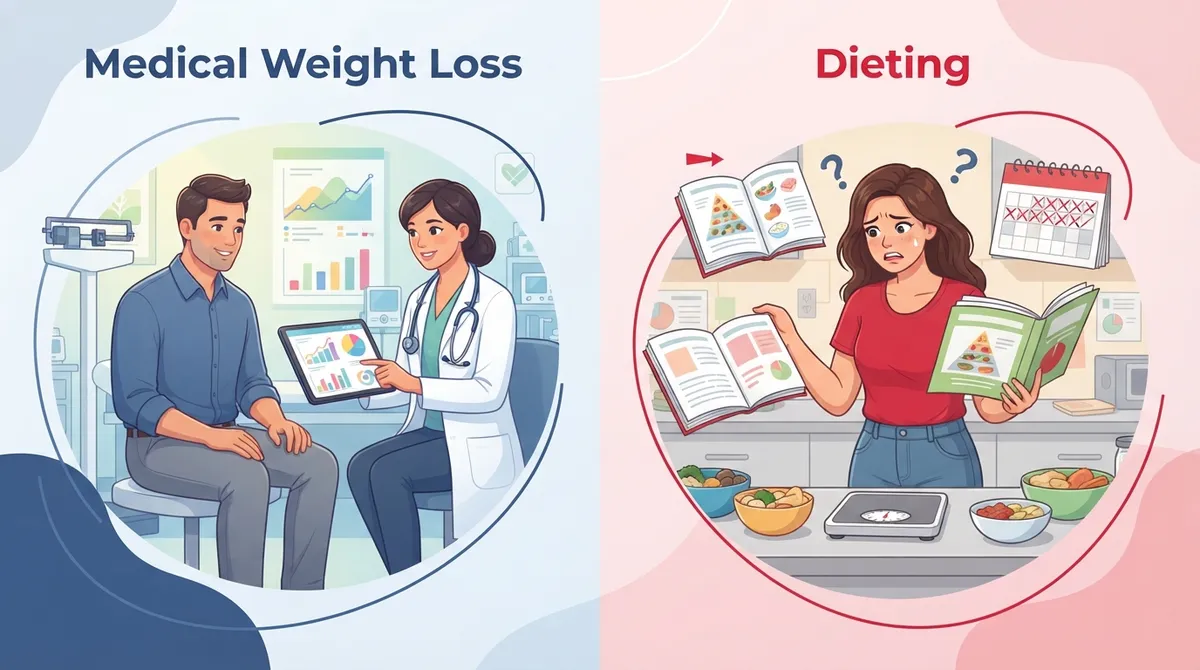
Medical Weight Loss vs. Dieting: Key Differences
The table below summarizes the main differences between the two approaches.
|
Factor |
Dieting |
Medical Weight Loss |
|---|---|---|
|
Starting point |
A generic eating plan |
Clinical assessment of your health history, labs, and goals |
|
Personalization |
One-size-fits-all or loosely adapted |
Individualized plan built around you |
|
Oversight |
Self-monitored |
Clinician-guided with scheduled follow-up |
|
Medication option |
Not available |
Considered when appropriate and safe |
|
Underlying causes |
Rarely addressed |
Evaluated, including sleep, medications, and metabolic factors |
|
Long-term plan |
Often ends at the goal weight |
Includes maintenance and ongoing adjustment |
|
Safety monitoring |
Limited |
Includes tracking of benefits, risks, and side effects |
1. Assessment Comes First
A medical program begins with a full evaluation. Weight and BMI are part of that, but BMI is only one screening measure. It is not a complete picture of health. A clinician also considers how you eat, how active you are, how well you sleep, and which medications or supplements you take. Some medications can make weight loss harder, and some health conditions affect which treatments are safe.
2. The Plan Is Individualized
Two people can weigh the same and have very different needs. One may need help with emotional eating. Another may be dealing with a thyroid issue or insulin resistance. A medical approach adapts to these differences rather than applying the same template to everyone.
3. A Clinician Monitors Progress
With a diet, you are the only one tracking progress. In medical weight loss, a provider reviews your results, answers questions, and changes the plan when needed. This matters for safety and for motivation, because a plateau is easier to handle when someone helps you interpret it.
4. Medication May Be an Option
For some adults, lifestyle changes alone are not enough. In those cases, a clinician may consider prescription anti-obesity medication. The National Institute of Diabetes and Digestive and Kidney Diseases (NIDDK) describes common U.S. eligibility thresholds as a BMI of 30 or higher, or a BMI of 27 or higher with a weight-related health problem. Eligibility, approved uses, and coverage depend on the specific medicine.
Medication is an option, not a requirement. It does not replace nutrition, activity, or behavioral support. A clinician weighs the potential benefits, side effects, other conditions and medicines you take, family history, and cost, then monitors how you respond.
What the Research Says About Results
Evidence supports pairing lifestyle changes with professional support. The NIDDK reports that adults using prescription weight-management medication alongside lifestyle and behavior changes lose, on average, 3% to 12% more of their starting body weight after one year than people in a lifestyle program without medication.
The Centers for Disease Control and Prevention (CDC) notes that gradual weight loss of about 1 to 2 pounds per week is more likely to be maintained than faster loss. That pace may feel slow compared with crash diets, but it is more realistic and safer for most people.
The NIDDK also describes safe and successful programs as typically including:
- 14 or more counseling sessions over six months
- An individualized eating plan
- At least 150 minutes per week of moderate-intensity aerobic activity
- Daily food and activity monitoring
- Weekly weight monitoring
- Regular feedback from a specialist
Notice how much of this is about structure and support, not just food choices. That is a core difference between dieting and a medical program.
What Happens During a Medical Weight Loss Program?
Every program is different, but most follow a similar path. Here is what a typical journey may look like.
- Initial consultation. You discuss your goals, history, past diet attempts, and daily routine. Your provider reviews medications and may order lab work.
- Health and body assessment. Testing may include body composition analysis and metabolic evaluation to understand how your body uses energy. At InCare, tools such as body composition analysis and metabolic breath analysis help turn guesswork into data.
- Personalized plan. Your provider outlines a reduced-calorie eating pattern, an activity plan, and behavioral strategies. If appropriate, medication is discussed.
- Regular follow-up. You check in to review progress, side effects, and barriers. The plan is adjusted as your body changes.
- Maintenance planning. Once you reach your goals, the focus shifts to keeping the results long term.
Referrals and Additional Support
Medical weight management can also include referral to a registered dietitian or another specialist. For selected patients, metabolic or bariatric surgery may be considered. Not every patient needs medication or specialist care. The goal is to match the level of support to your needs.
Why Many Diets Fall Short
Diets are not always bad. Some people use them successfully. But several common problems explain why many people regain weight afterward.
- They are temporary by design. A plan with an end date invites a return to old habits.
- They ignore medical factors. Hormones, sleep problems, and medications can quietly work against you.
- They rely on willpower. Biology matters. Appetite and metabolism can shift during weight loss, making restriction harder over time.
- They lack feedback. Without a professional, it is hard to tell whether a plateau is normal or a sign that something needs to change.
Weight regain can happen after weight loss, even with medical care. That is why a sustainable plan and continued support matter. Treatment should avoid unsafe promises or one-size-fits-all targets.
Who May Benefit From Medical Weight Loss?
Medical weight loss may be a good fit if you:
- Have tried several diets and regained the weight
- Live with a weight-related condition such as prediabetes, high blood pressure, or high cholesterol
- Want a plan based on data rather than trends
- Need help balancing a demanding schedule with healthy habits
- Want safe oversight if you are considering medication
Busy parents often find the structure helpful because appointments and plans are built around real life. Tech-savvy patients may appreciate data-driven tracking and virtual options. Those focused on prevention can use a program to lower long-term health risks before problems develop. You can read more about who can benefit from medical weight loss programs and how a program may support people managing diabetes in our guide on medical weight loss for diabetics.
Risks and Considerations
Any health treatment has trade-offs. Medical weight loss is no exception, and a good provider will discuss them openly.
- Side effects. Prescription medications can cause digestive symptoms or other effects. Your clinician will explain what to watch for.
- Not for everyone. Pregnancy, certain medical conditions, and some medications may rule out specific treatments.
- Cost and coverage. Insurance coverage varies. Ask about pricing before you begin. Our overview of weight loss injection costs in 2026 can help you plan.
- Effort still matters. Medication and medical support work best alongside nutrition, activity, and behavioral changes.
How to Choose a Medical Weight Loss Program
Not all programs are equal. Look for a practice that offers real medical oversight rather than a quick fix. Ask these questions:
- Will a licensed clinician evaluate my health history and labs?
- Is the plan individualized, or is everyone given the same protocol?
- How often are follow-up visits, and who conducts them?
- What is the plan for maintaining results after I reach my goal?
- Are risks, side effects, and costs explained clearly?
A primary care setting can be a strong starting point because your provider already knows your full medical picture. For more guidance, see our article on mistakes to avoid when choosing a weight loss clinic.
Why Patients in Tampa and Riverview Choose InCare
InCare is a personalized healthcare clinic that combines advanced technology with medical expertise. With locations in Tampa and Riverview, Florida, plus virtual visits, InCare offers a physician-guided weight loss program that sits within a full primary care practice. That means your weight plan is coordinated with your overall health, from preventive screenings to chronic condition management.
Patients also benefit from tools like 3D body scanning and metabolic testing that make progress easier to see. InCare holds a 4.8 out of 5 rating on Google, and you can visit us on Google — InCare to read what patients say. You can also follow the practice on Instagram, Facebook, and TikTok for health tips and updates. To learn more about what sets medical care apart, read what makes medical weight loss different from dieting.
Conclusion
So, how is medical weight loss different from dieting? Dieting is usually a short-term, self-directed eating plan. Medical weight loss is a clinician-guided approach that starts with assessment, adds individualized planning, and continues with follow-up and maintenance. It may include medication when appropriate, but it always rests on sustainable nutrition, activity, and behavior changes.
If you are tired of starting over, a medical approach may give you the structure and support that diets lack. The best next step is a conversation with a provider who can review your health and explain your options honestly. Ready to get started? Book your weight loss consultation with InCare or contact our team with questions.
FAQs
Q: What is medical weight loss, and how does it work?
A: Medical weight loss is a clinician-guided approach to treating excess weight and related health risks. It begins with an assessment, followed by an individualized plan that combines nutrition, activity, and behavioral support. When appropriate, a provider may add medication and will monitor your progress over time.
Q: Who qualifies for prescription weight-loss medication?
A: The NIDDK describes common U.S. thresholds as a BMI of 30 or higher, or a BMI of 27 or higher with a weight-related health condition. These are general guidelines. Eligibility, safety, and coverage depend on the specific medicine and your health history, so a clinician must evaluate you.
Q: Do weight-loss medications work without diet and exercise changes?
A: Medication is designed to support, not replace, lifestyle changes. Research shows the best results come when medication is paired with nutrition, physical activity, and behavioral support. Your clinician will build a plan that includes all of these elements.
Q: How much weight can someone expect to lose with medical weight management?
A: Results vary by person, health status, and treatment choice. The NIDDK reports that adults using medication alongside lifestyle changes lose, on average, 3% to 12% more of their starting body weight after one year than those using lifestyle changes alone. A provider can help set realistic, safe targets for you.
Q: How can I maintain weight loss after reaching my goal?
A: Weight regain is common, so maintenance should be part of the plan from the start. Ongoing follow-up, consistent eating and activity habits, self-monitoring, and continued clinician support all help. Your provider can adjust your plan as your needs change.