Key Takeaways
- Tirzepatide targets GIP and GLP-1 receptors and is FDA-approved for type 2 diabetes, chronic weight management, and sleep apnea in adults with obesity.
- Retatrutide adds glucagon receptor activity to GIP and GLP-1 targeting, but it remains investigational and is not FDA-approved or available as routine care.
- No head-to-head trial shows retatrutide is more effective or safer than tirzepatide, so cross-study weight-loss comparisons are unreliable.
- Tirzepatide's most common side effects are digestive (nausea, diarrhea, vomiting, constipation), and its boxed warning on thyroid C-cell tumors rules it out for people with medullary thyroid carcinoma or MEN 2.
- Avoid retatrutide sold online or outside regulated channels, since their quality, dosing, and safety cannot be verified.
- Discuss diagnoses, medications, family thyroid history, and goals with a clinician before starting either medicine, and confirm current approval status with the FDA.
Weight loss medicines are changing fast, and two names now come up in almost every wellness conversation: tirzepatide and retatrutide. Patients often ask whether one is simply a stronger version of the other. The honest answer is more nuanced. These two once-weekly injectable medicines work through different hormone pathways, and they sit at very different points in the medical approval process.
If you are asking how is retatrutide different from tirzepatide, the short answer is this. Tirzepatide activates two hormone receptors (GIP and GLP-1) and is an FDA-approved prescription medicine. Retatrutide is designed to activate three (GIP, GLP-1, and glucagon) and remains investigational. That single extra receptor is the main scientific difference, and the approval gap is the main practical one.
This guide explains both medicines in plain language. It covers how they work, what is proven, what is still unknown, and how a primary care clinician decides what is appropriate for you. Whether you are a busy parent, a health-conscious professional, or exploring prevention-focused care for the first time, you will leave with a clear, accurate picture.
The Short Answer: Two Receptors Versus Three
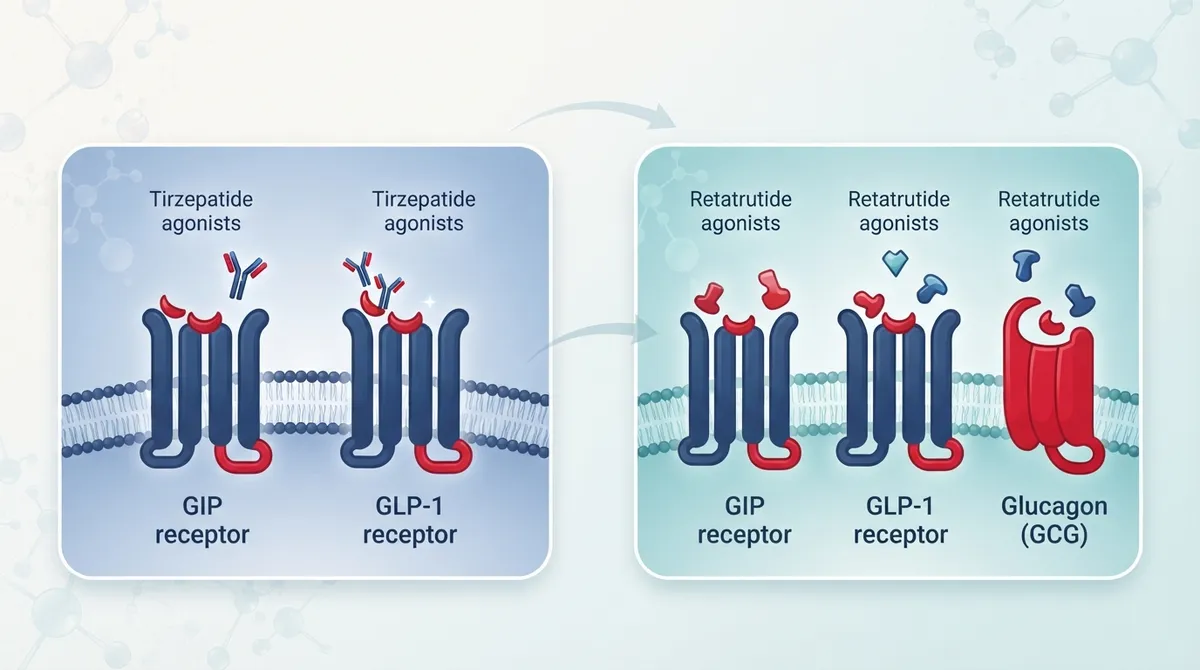
Both medicines belong to a newer group of drugs that mimic natural gut hormones. These hormones help regulate appetite, blood sugar, and how the body handles food. The key differences come down to which hormone signals each drug targets.
- Tirzepatide activates the GIP and GLP-1 receptors.
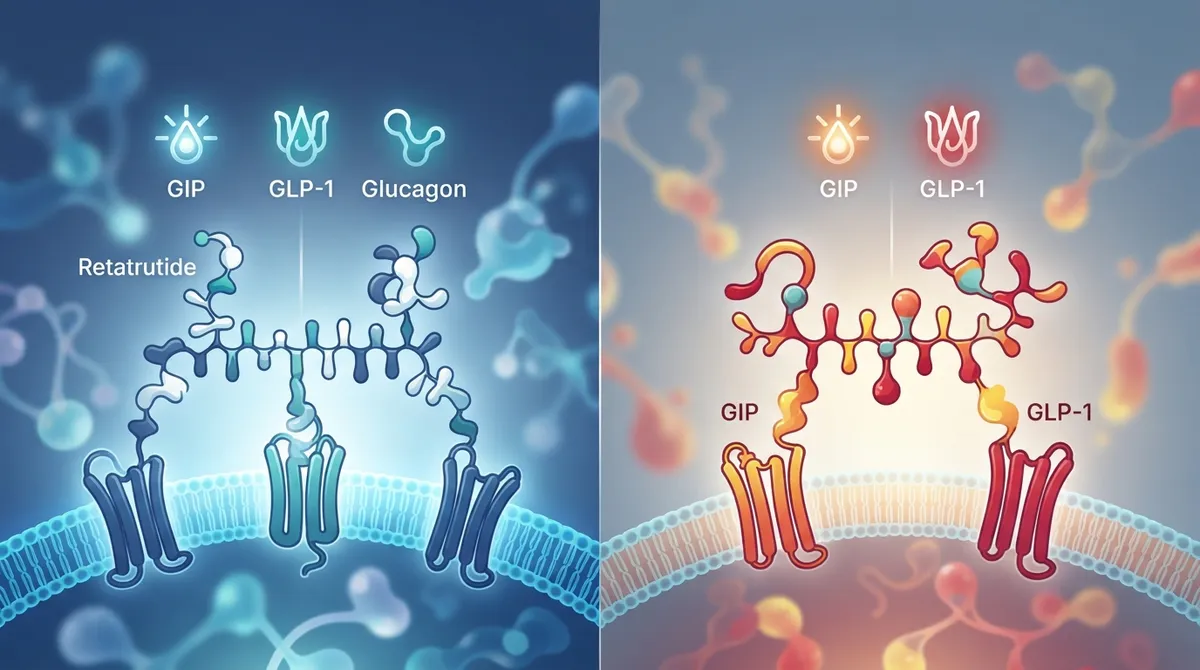
- Retatrutide is designed to activate the GIP, GLP-1, and glucagon receptors.
The added glucagon-receptor activity is the central pharmacologic distinction. Glucagon is involved in energy expenditure and metabolism. Researchers are studying whether this extra pathway changes how the body uses energy. However, its real-world benefits and risks must be confirmed through completed clinical trials and regulatory review.
Side-by-Side Comparison
A quick table helps clarify where the two medicines stand today.
|
Feature |
Tirzepatide |
Retatrutide |
|---|---|---|
|
Receptor targets |
GIP and GLP-1 |
GIP, GLP-1, and glucagon |
|
FDA status |
Approved (Mounjaro and Zepbound) |
Investigational, not FDA-approved |
|
How it is given |
Once-weekly subcutaneous injection |
Once-weekly injection in clinical studies |
|
Approved uses |
Type 2 diabetes, chronic weight management, sleep apnea in adults with obesity |
None approved |
|
Available by prescription |
Yes |
No, not as routine care |
|
Head-to-head trial vs. the other |
Not established in available sources |
Not established in available sources |
This table makes one point especially clear. Tirzepatide is an established option that clinicians can prescribe today when it is medically appropriate. Retatrutide is a promising research compound, not a ready alternative.
How Tirzepatide Works
Tirzepatide is marketed as Mounjaro for type 2 diabetes and as Zepbound for chronic weight management. The U.S. label also includes treatment of moderate-to-severe obstructive sleep apnea in adults with obesity.
According to prescribing information, tirzepatide works in several ways:
- It lowers calorie intake and body weight by reducing appetite.
- It increases insulin secretion in a glucose-dependent way, meaning it responds to blood sugar levels.
- It reduces glucagon secretion.
- It slows gastric emptying, so food leaves the stomach more gradually.
It is given once a week as an injection under the skin. The dose rises gradually over time to help the body adjust and to reduce stomach-related side effects. It is used together with a reduced-calorie eating plan and more physical activity.
In the Zepbound weight-management trials, treatment lasted 72 weeks. The label reports statistically significant weight reduction compared with placebo at the studied 5 mg, 10 mg, and 15 mg doses. Exact percentages vary by trial population and study method, so they should be quoted directly from the current label rather than from headlines.
How Retatrutide Is Designed to Work
Retatrutide builds on the same hormone-mimicking idea but adds a third target. By also engaging the glucagon receptor, it aims to influence how the body spends energy, not just how much it eats.
This is a scientific hypothesis under active study. It is not a proven advantage. A drug that touches more pathways can bring more benefit, but it can also bring more side effects or unexpected risks. That is exactly why large, completed trials and regulatory review matter before any medicine reaches routine care.
It is also important to be careful with claims you may see online. Available sources do not give a verified, current phase 3 outcome for retatrutide. Any comparison of weight-loss percentages between the two drugs should be treated with caution unless it comes from the latest peer-reviewed publications and trial registries.
Is Retatrutide Better Than Tirzepatide?
This is the question most people really want answered, and the evidence does not yet support a clear yes or no. No head-to-head trial in the available sources shows that retatrutide is more effective or safer than tirzepatide.
Comparing results across separate studies is unreliable. Each trial may differ in:
- Who was enrolled (age, starting weight, other conditions)
- How long the study lasted
- Which doses were used
- How results were measured and reported
Because of these differences, putting two numbers side by side can be misleading. Until a direct comparison exists, the fair statement is that both are interesting, and only one is currently approved and prescribable.
Approval Status and Availability
Approval status is the most practical difference for patients in 2026. Tirzepatide has FDA-approved uses and an established safety record in labeling. Retatrutide is not FDA-approved based on the information available here.
Trial status and approval status can change, so it is wise to confirm current details with the FDA and official clinical-trial records. A responsible clinic will never present an investigational drug as a routine, proven treatment. Be cautious of any website or seller offering retatrutide as if it were an available prescription. Products sold outside regulated channels may not match what was studied, and their quality and safety cannot be assured.
Side Effects and Safety Considerations for Tirzepatide
Safety information for tirzepatide is well documented in its labeling. Common effects are mostly digestive:
- Nausea
- Diarrhea
- Vomiting
- Constipation
- Abdominal discomfort
- Decreased appetite
Gradual dose increases are designed to ease these effects. In a Zepbound trial involving adults with type 2 diabetes and a BMI of at least 27 kg/m², hypoglycemia below 54 mg/dL was reported in 4.2% of tirzepatide-treated participants versus 1.3% with placebo, according to the FDA label.
The U.S. labels also carry a boxed warning about thyroid C-cell tumors seen in rodents. Tirzepatide is not for people with a personal or family history of medullary thyroid carcinoma or Multiple Endocrine Neoplasia syndrome type 2 (MEN 2). This is one reason a full medical history matters before starting.
Because retatrutide is still being studied, its long-term safety profile cannot be fully described yet. Do not assume it carries the same, fewer, or additional risks without completed trial data.
What This Means in Primary Care
In a primary care setting, the right treatment is never about choosing the newest or strongest-sounding drug. It is about matching a medicine to the person. A good clinician weighs several factors together:
- Diagnoses: Do you have type 2 diabetes, obesity, sleep apnea, or related conditions?
- Current medications: Could anything interact or change how a new medicine is used?
- Contraindications: Is there a thyroid cancer history or other safety concern?
- Goals: Are you aiming for better metabolic health, blood sugar control, or sustained weight management?
- Tolerability and follow-up: Can you manage possible side effects, and who will monitor your progress?
Neither medicine is appropriate for purely cosmetic weight loss, and investigational retatrutide cannot be prescribed as routine care. Supervision, lab work, and regular check-ins are what make these treatments safer and more effective. If you want to learn how different options compare, our guide on tirzepatide vs. semaglutide weight loss injections is a helpful next read. You can also review key facts about retatrutide to see what is currently known.
Who May Qualify for Tirzepatide for Weight Management?
Eligibility for chronic weight management is set by the FDA label and by a clinician's judgment. In general, a prescriber looks at your body mass index, other weight-related health conditions, and whether you can use the medicine alongside nutrition and activity changes. The decision should always follow an in-person or virtual medical evaluation, not an online questionnaire alone.
For many patients, medication is only one piece of a bigger plan. A structured program that includes nutrition, activity, and monitoring tends to support better long-term results. To see what a supervised approach looks like, explore our overview of medical weight loss and our resource on weight loss injection costs in 2026.
Questions to Ask Before Starting Any Weight Medication
Whether you are considering tirzepatide today or simply following retatrutide news, bring informed questions to your visit:
- Is this medicine FDA-approved for my condition?
- What are the most common side effects, and how will we manage them?
- Do any of my health conditions or family history rule it out?
- How will my progress and lab results be monitored?
- What is the plan if I stop the medicine?
Clear answers to these questions help you avoid unregulated products and set realistic expectations. They also help your care team build a plan that fits your life, schedule, and goals.
Why Supervised Care Matters
At InCare, we pair advanced diagnostics with personalized primary care. Tools such as body composition analysis and metabolic breath analysis help show where you are starting, so treatment decisions rest on data rather than guesswork. Our team can also discuss how primary care supports whole-body health before, during, and after any weight management plan.
Patients across Tampa and Riverview have shared their experiences with us, and you can see what our community says when you visit us on Google — InCare. For quick updates and wellness tips, you can also follow us on Instagram, Facebook, and TikTok.
Conclusion
So, how is retatrutide different from tirzepatide? The main scientific difference is receptor targeting: tirzepatide activates GIP and GLP-1, while retatrutide also targets glucagon. The main practical difference is status: tirzepatide is an FDA-approved, prescribable medicine, and retatrutide remains investigational. No direct trial proves one is better than the other, so claims of superiority should be treated carefully.
The best next step is a conversation with a clinician who can review your history, goals, and safety factors. If you are ready to explore evidence-based options, book an appointment with InCare or contact our team with your questions. We will help you build a plan that is safe, personalized, and built to last.
FAQs
Q: What is the main difference between retatrutide and tirzepatide?
A: Tirzepatide activates the GIP and GLP-1 receptors, while retatrutide is designed to also activate the glucagon receptor. In addition, tirzepatide is FDA-approved for specific uses, whereas retatrutide remains investigational.
Q: Is retatrutide FDA-approved or available by prescription?
A: Based on the information available, retatrutide is not FDA-approved and cannot be prescribed as routine care. Approval status can change, so patients should confirm current details with the FDA and official clinical-trial records.
Q: Is retatrutide more effective than tirzepatide for weight loss?
A: No head-to-head trial in the available sources shows that retatrutide is more effective or safer than tirzepatide. Comparing results from separate studies is unreliable because populations, doses, and methods differ.
Q: What are the common side effects of tirzepatide?
A: Tirzepatide most often causes digestive effects such as nausea, diarrhea, vomiting, constipation, abdominal discomfort, and decreased appetite. Its U.S. labels also carry a boxed warning about thyroid C-cell tumors seen in rodents, and it is not for people with a history of medullary thyroid carcinoma or MEN 2.
Q: What should I discuss with a primary care clinician before starting tirzepatide?
A: Share your diagnoses, current medications, personal and family medical history, and treatment goals. Your clinician can then assess contraindications, tolerability, and the monitoring and follow-up you will need.