
Key Takeaways
- Neither CJC-1295 nor ipamorelin is FDA-approved for wellness, weight loss, muscle gain, or anti-aging; the FDA has raised safety concerns including increased heart rate, systemic reactions, and quality control issues with compounded versions.
- CJC-1295 mimics growth hormone-releasing hormone (GHRH) and ipamorelin activates the ghrelin receptor—two separate pathways that theoretically work together, but this mechanism does not prove health benefits or safety.
- Small human studies show hormone level changes (GH 2-10 fold, IGF-1 1.5-3 fold) but do not establish actual improvements in body composition, strength, recovery, or longevity.
- CJC-1295 with DAC and without DAC are different formulations with different durations; findings from one cannot be assumed to apply to the other, creating significant confusion in marketed products.
- Before considering peptide therapy, ask a clinician: Is it FDA-approved? What is the human evidence? Which exact formulation? How is purity tested? What are risks for your medical history?
- Potential risks of stimulating the GH/IGF-1 axis include fluid retention, blood sugar changes, increased heart rate, immune reactions, and immunogenicity—with long-term safety data lacking for healthy individuals.
If you have searched for ways to improve energy, body composition, or recovery, you have likely seen CJC-1295 and ipamorelin mentioned together. Wellness websites often describe them as a "growth hormone stack." The claims can sound exciting. The science is more limited, and the safety picture is more complicated than most marketing suggests.
So, how does CJC-1295 ipamorelin work? In short, both peptides are designed to signal the pituitary gland to release more of the body's own growth hormone (GH). They use two different pathways to do this. That is the reasoning behind combining them. But a change in a hormone level is not the same as a proven health benefit.
This article explains the biology in plain language, what the research shows, what it does not show, and what regulators have said. It also covers questions to ask a clinician before considering any peptide therapy. If you want guidance based on evidence rather than hype, a primary care visit is the best place to start.
The Short Answer: Two Signals, One Target
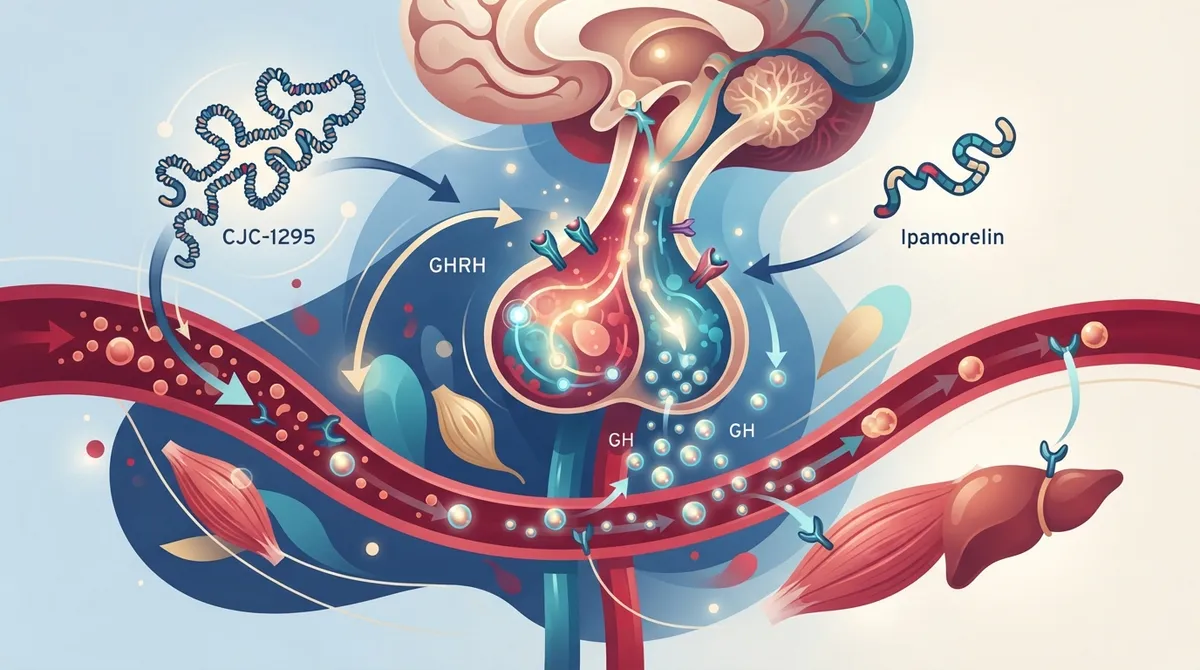
Your pituitary gland, a small gland at the base of the brain, releases growth hormone in bursts. Growth hormone then prompts the liver and other tissues to make insulin-like growth factor 1 (IGF-1). Together, GH and IGF-1 affect growth, metabolism, body composition, and tissue repair.
CJC-1295 and ipamorelin are proposed to nudge this system in two ways:
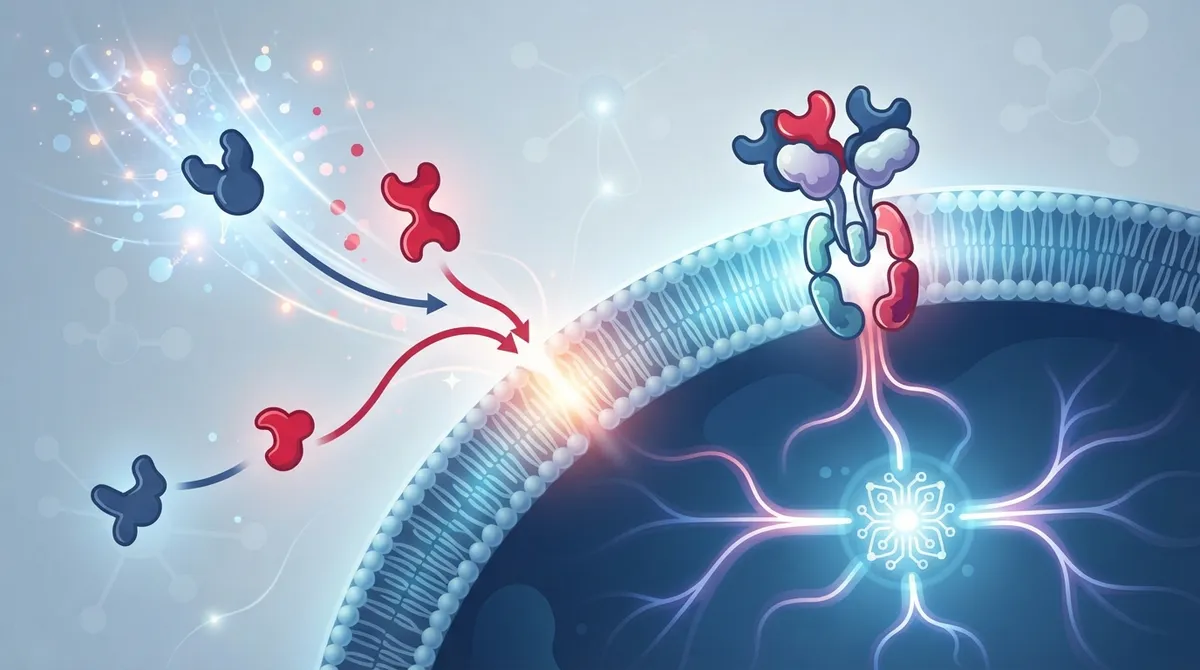
- CJC-1295 acts like growth hormone-releasing hormone (GHRH). It binds GHRH receptors on pituitary cells.
- Ipamorelin acts as a growth hormone secretagogue. It activates the ghrelin receptor, also called GHS-R1a.
Because these are separate receptors, the idea is that using both could prompt a stronger GH release than either one alone. This is a theory based on how the receptors work. It does not prove that the combination improves weight, muscle, aging, or any other health outcome.
How CJC-1295 Works
CJC-1295 is a synthetic version of GHRH. Your body makes GHRH in the hypothalamus. It tells the pituitary to release GH. CJC-1295 is built to copy that signal.
CJC-1295 With DAC vs. Without DAC
The name "CJC-1295" is used for products that are not the same. This causes a lot of confusion.
|
Feature |
CJC-1295 With DAC |
CJC-1295 Without DAC (Modified GRF 1-29) |
|---|---|---|
|
What it is |
Long-acting version with a Drug Affinity Complex |
Shorter-acting GHRH analog |
|
How it behaves |
Binds albumin, which can prolong exposure |
Cleared more quickly |
|
Duration of effect |
Prolonged in studies |
Shorter and more pulse-like |
|
Can results be assumed to match? |
No |
No |
These two formulations should not be treated as interchangeable. Findings about one cannot be assumed for the other.
What the Human Research Found
Human data on CJC-1295 is limited. A small human study reported that average GH concentrations rose about 2- to 10-fold after dosing. IGF-1 rose about 1.5- to 3-fold. GH elevation lasted at least 6 days, and IGF-1 elevation lasted about 9 to 11 days.
These numbers are hormone measurements. They are not proof of fat loss, muscle gain, better recovery, or longer life. The study was small, and the findings apply to the long-acting formulation that was studied. They should not be applied to every product sold under the CJC-1295 name.
How Ipamorelin Works
Ipamorelin is a growth hormone secretagogue. It activates the ghrelin receptor (GHS-R1a) on pituitary cells. Ghrelin is often called the "hunger hormone," but this receptor also plays a role in GH release.
Ipamorelin follows a separate route from CJC-1295. That is why the two are often discussed together. One peptide sends a GHRH-style signal, and the other sends a ghrelin-receptor signal.
Research on ipamorelin is also limited. Findings about one peptide cannot establish the safety or effectiveness of the combined regimen. Anyone who says the pair is proven for a wellness goal is going beyond what the evidence supports.
Why People Combine Them
The reasoning for combining the peptides is simple. Two receptors, two signals, and possibly a bigger GH response. In theory, one peptide may raise the baseline signal while the other prompts a release.
Here is what this reasoning does and does not mean:
- It does mean: the two peptides act on different receptors.
- It does not mean: the pair is safer or more effective than either alone.
- It does not mean: higher GH or IGF-1 will improve how you look, feel, or age.
Raising a hormone number is a biological effect. A real health benefit must be shown in studies that track outcomes such as body composition, strength, or disease risk. For this combination, those studies are lacking.
What About Weight Loss, Muscle, and Anti-Aging?
Many people ask whether CJC-1295 and ipamorelin help with weight loss, muscle gain, or anti-aging. The honest answer is that the evidence does not establish these benefits.
Neither peptide, alone or combined, is an FDA-approved treatment for anti-aging, weight loss, muscle building, or general wellness. Small studies show changes in GH and IGF-1. They do not show that the combination safely improves long-term health.
If your goal is weight loss, there are medical options with stronger evidence. A clinician can review your history, labs, and goals. You can learn more about medical weight loss programs and how supervised care differs from unproven products. For a deeper look at the topic, see this guide on what makes medical weight loss different from dieting.
What Regulators Have Said
This part matters for anyone thinking about these peptides. Neither CJC-1295 nor ipamorelin is an FDA-approved finished drug for wellness use. Compounded products are not FDA-approved. The FDA does not review each compounded product for safety, effectiveness, or quality before it is sold.
Concerns Raised by the FDA
|
Peptide |
FDA-Identified Concerns |
|---|---|
|
CJC-1295 |
Limited clinical data, peptide impurities and characterization issues, possible immunogenicity, and reports of increased heart rate and systemic vasodilatory reactions |
|
Ipamorelin (bulk substances) |
Potential immunogenicity, impurity concerns, and limited safety information for injectable use |
"Immunogenicity" means the body may react to a product as if it were foreign. The FDA has also reported that serious adverse events linked to CJC-1295 have included increased heart rate and a systemic vasodilatory reaction. The available clinical safety data are limited.
Quality is another issue. Unregulated peptide products can vary in purity and strength. A label may not match what is in the vial. Medical supervision does not make an unapproved treatment proven or risk-free, but it does add screening, monitoring, and honest conversation.
Possible Risks of Stimulating the GH/IGF-1 Axis
Raising GH and IGF-1 can affect more than muscle and fat. The long-term risks and benefits for otherwise healthy people are not established. Potential concerns include:
- Fluid retention and swelling
- Changes in blood sugar regulation
- Other hormone-related effects
- Increased heart rate or flushing, as noted in FDA reports for CJC-1295
- Possible immune reactions to impure or poorly characterized products
People with diabetes, a history of cancer, heart conditions, or who are pregnant or breastfeeding have extra reasons for caution. A clinician should review your full history before you consider any hormone-signaling product.
Questions to Ask a Clinician Before Considering Peptide Therapy
Whether you are curious or already considering a peptide, a thoughtful conversation can protect your health. Bring these questions to your appointment:
- Is this product FDA-approved for my goal, or is it compounded or unapproved?
- What is the evidence in humans, and what outcomes were measured?
- Which exact formulation is it, with DAC or without DAC?
- Who makes it, and how is purity tested?
- What baseline labs should I get first, such as glucose and IGF-1?
- What are the risks given my medical history and medications?
- What proven options could help me reach the same goal?
Good answers should be clear and honest. If a provider promises guaranteed results, that is a warning sign.
A Smarter Starting Point: Look at Your Whole Health
Before chasing a hormone-based shortcut, it helps to know your baseline. Many concerns that lead people to peptides, such as low energy, slow recovery, or stubborn weight, have causes that can be tested and treated.
A thorough primary care evaluation can look at sleep, thyroid, blood sugar, vitamin levels, hormones, and lifestyle factors. Tools such as body composition analysis and metabolic breath analysis give measurable data instead of guesses. DNA gene testing can add personal insight for prevention-focused planning.
For tech-savvy and wellness-focused patients, this data-driven approach often feels more useful than a one-size-fits-all stack. It also helps busy families and young adults avoid spending money on products that may not help. You can read more about peptide therapy safety in Tampa and how to evaluate any program with a critical eye.
How InCare Approaches Wellness Questions
InCare is a personalized primary care and wellness clinic with locations in Tampa and Riverview, Florida. Our team combines medical expertise with advanced technology to focus on prevention and whole-body health. Patients can explore our primary care services, meet our providers, or find the nearest of our locations.
When patients ask about peptides, we start with education. We explain what is known, what is not known, and what safer, better-studied options may exist. You can read what other patients say on Google by visiting us here: Visit us on Google — InCare. Our team also shares health updates on Instagram, Facebook, and TikTok.
For a related explainer, see our guide on what CJC-1295 actually does for your health, and our overview of what ipamorelin is and whether it is right for you.
Key Takeaways
- CJC-1295 mimics GHRH, and ipamorelin activates the ghrelin receptor. Both aim to raise the body's own GH release.
- Small studies show changes in GH and IGF-1. They do not prove health benefits.
- CJC-1295 with DAC and without DAC are different products with different durations.
- Neither peptide is FDA-approved for anti-aging, weight loss, muscle building, or general wellness.
- The FDA has raised safety and quality concerns about compounded versions.
- Medical supervision adds safety checks but does not make an unproven treatment proven.
Conclusion
So, how does CJC-1295 ipamorelin work? Together, they target two separate receptors to encourage the pituitary to release more growth hormone. That mechanism is real. The leap from a higher hormone level to better health is not supported by solid human evidence, and regulators have flagged safety and quality concerns.
If you are curious about peptides, hormone health, or body composition, the smartest first step is an honest conversation with a clinician who will look at your whole picture. Book your visit with InCare to get evidence-based guidance, or contact our team with your questions. We serve patients in Tampa and Riverview, and offer virtual visits for added convenience.
FAQs
Q: What do CJC-1295 and ipamorelin do in the body?
A: CJC-1295 acts like growth hormone-releasing hormone and binds GHRH receptors on pituitary cells. Ipamorelin activates the ghrelin receptor (GHS-R1a), a separate route that also prompts GH release. Both are proposed to raise the body's own growth hormone, but this does not prove a health benefit.
Q: Are CJC-1295 and ipamorelin FDA-approved?
A: No. Neither peptide, alone or combined, is FDA-approved for anti-aging, weight loss, muscle building, or general wellness. Compounded products are not FDA-approved finished drugs, and the FDA does not review each one for safety, effectiveness, or quality before marketing.
Q: What are the risks or side effects of CJC-1295 and ipamorelin?
A: The FDA has reported concerns about increased heart rate and systemic vasodilatory reactions with CJC-1295, along with impurity and immunogenicity concerns for both peptides. Stimulating the GH/IGF-1 axis may also cause fluid retention and changes in glucose regulation. Long-term risks for healthy people are not established.
Q: Is CJC-1295 with DAC different from CJC-1295 without DAC?
A: Yes. The version with Drug Affinity Complex binds albumin and can prolong exposure. Products without DAC, often called modified GRF 1-29, are shorter acting. Their effects and duration should not be assumed to be the same.
Q: What should I ask a primary care clinician before considering peptide therapy?
A: Ask whether the product is FDA-approved, what human evidence exists, which exact formulation it is, how purity is tested, and what risks apply to your medical history. Also ask about proven alternatives for your goal. A clinician can order baseline labs and help you weigh the options.