Key Takeaways
- Third-party certifications like USP Verified and NSF confirm manufacturing quality and safety standards, but do not prove a product delivers specific health benefits—quality and efficacy are two different things.
- IV glutathione is not FDA-approved for wellness or skin lightening and carries serious risks including allergic reactions, bronchospasm, and rare cases of Stevens-Johnson syndrome; always verify product source and sterile compounding protocols before use.
- Absorption varies significantly by formulation; a 2025 study showed one specialized liposomal delivery system increased bioavailability 16.1-fold, but this result applies only to that specific formulation, not all liposomal products.
- Evaluate glutathione quality by checking for third-party certification, verifying reduced glutathione (GSH) is clearly listed, confirming current good manufacturing practices, and avoiding vague or exaggerated health claims.
- Current evidence does not strongly support broad detoxification or anti-aging claims for oral glutathione supplements; your body already makes glutathione and handles detoxification through complex natural processes.
- Individuals with liver disease, kidney disease, asthma, pregnancy, or those on certain medications should consult a healthcare provider before using glutathione, as safety data is limited and interactions are possible.
Walk into any wellness aisle or search "glutathione" online, and you will find dozens of products claiming to boost energy, brighten skin, or detoxify your liver. But not all glutathione is made the same way. Understanding glutathione quality can help you avoid wasted money and, more importantly, avoid products that may put your health at risk. Whether you are a busy parent researching supplements for your family or a wellness-focused professional exploring IV therapy, knowing what separates a well-made product from a poorly regulated one matters.
At InCare, our Tampa and Riverview teams often field questions about glutathione, antioxidants, and detox claims. This guide breaks down what glutathione quality actually means, how to evaluate supplements and infusions, and what the current research really shows about safety and effectiveness.
What Is Glutathione and Why Does It Matter?
Glutathione (GSH) is a natural antioxidant made in your body. It comes from three building blocks: glutamate, cysteine, and glycine. This molecule helps protect your cells from oxidative stress and plays a role in your body's natural detox processes.
Because glutathione supports so many functions, wellness brands often market it as a cure-all. But the truth is more nuanced. Your body already makes glutathione on its own. Supplements and IV treatments are meant to support this process, not replace your body's natural systems entirely.
Why Glutathione Quality Is a Growing Concern
As demand for antioxidant supplements grows, so does the number of products on the market. Some are made under strict manufacturing standards. Others are not. This gap creates real risks for consumers who assume all glutathione products are equally safe and effective.
- Inconsistent potency between brands and batches
- Contamination risks in poorly regulated products
- Misleading marketing claims about detox and anti-aging benefits
- Confusion between oral, liposomal, and IV forms
- Lack of independent testing for many over-the-counter brands
Key Factors That Define Glutathione Quality
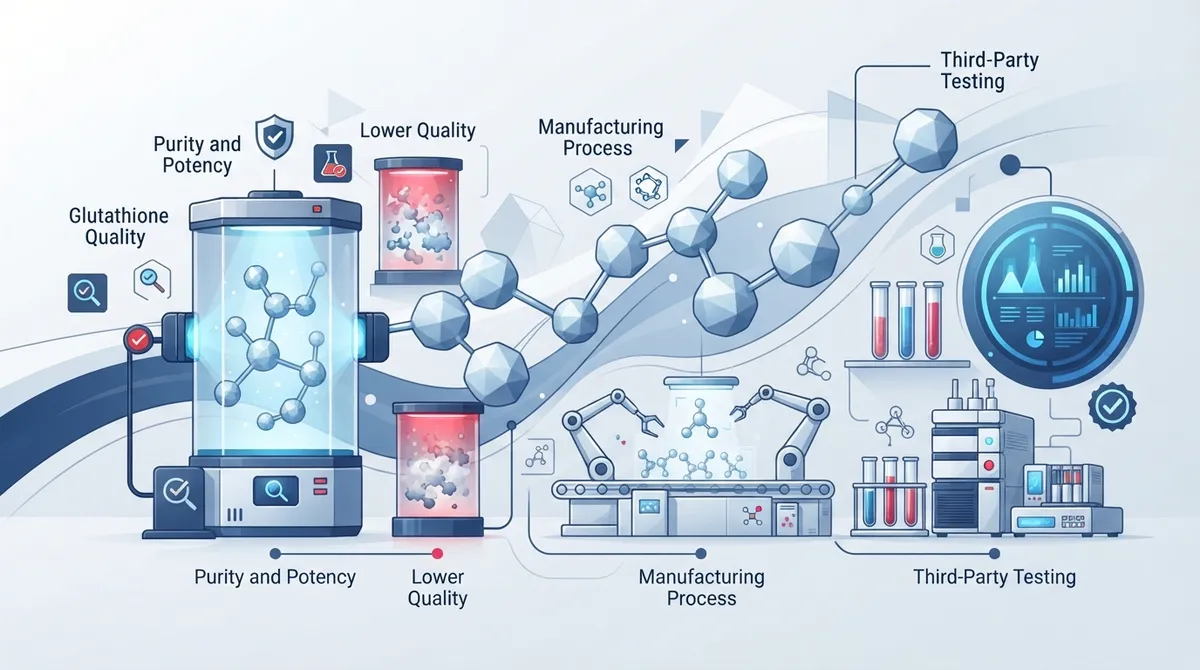
When evaluating any glutathione product, whether a pill, powder, or infusion, there are specific quality markers worth checking. These apply whether you are looking at a supplement bottle or discussing IV options with a provider.
- Identity and Potency: Does the product contain the type and amount of glutathione it claims?
- Purity: Is the product free from harmful contaminants like heavy metals or bacteria?
- Stability: Does the formula stay effective through its shelf life and expiration date?
- Manufacturing Standards: Was it made under current good manufacturing practices (cGMPs)?
- Independent Certification: Has it been verified by a third party like USP or NSF?
These five factors form the foundation of what health professionals mean when they talk about glutathione quality. A product can pass every one of these checks and still not be proven effective for a specific health claim. Quality and efficacy are two different things.
The Role of Independent Certification
Third-party certification adds a layer of trust that manufacturer claims alone cannot provide. Two well-known certification bodies are worth understanding.
|
Certification |
What It Evaluates |
What It Does Not Evaluate |
|---|---|---|
|
USP Verified Mark |
Label accuracy, contaminant limits, dissolution, manufacturing quality |
Whether the product works for a specific health condition |
|
NSF/ANSI 173 |
Label claims, formulation safety, contaminants |
Clinical effectiveness or health outcomes |
According to USP, its Verified Mark program includes independent testing to confirm that supplements contain the listed ingredients and meet safety limits. Similarly, NSF's dietary supplement program reviews formulation toxicology and contaminants, but it does not test whether a product delivers on wellness claims. This distinction is important. Certification tells you a product is made responsibly, not that it will cure fatigue or reverse aging.
Oral vs. Liposomal vs. IV Glutathione: What's the Difference?
One of the most common questions patients ask is which form of glutathione is best. The answer depends on your goals, your health history, and how much risk you are willing to accept.
|
Form |
Absorption |
Evidence Level |
Safety Profile |
|---|---|---|---|
|
Standard Oral |
Lower bioavailability |
Small clinical trials, generally well tolerated short-term |
Favorable short-term safety |
|
Liposomal/Micellar Oral |
Formulation-dependent, sometimes improved |
Limited, formulation-specific studies |
Generally well tolerated in short studies |
|
IV Glutathione |
Direct into bloodstream |
Not FDA-approved for wellness or skin lightening |
Higher risk, including rare severe reactions |
A 2025 formulation study reported a 16.1-fold increase in oral bioavailability and a 16.8-fold increase in plasma half-life for one specialized delivery system, compared to native glutathione in lab testing. This sounds impressive, but it is important to note these results apply to one specific formulation. They should not be assumed to apply to every liposomal or micellar product on the market.
What About Micellar Glutathione?
A 30-day study of a micellar glutathione formulation at 600 mg per day found no significant changes in liver enzymes (ALT, AST, alkaline phosphatase) or kidney markers (creatinine) in healthy adults. This is reassuring for short-term use, but the study did not run long enough to confirm long-term safety or prove specific health benefits.
Understanding the Risks of IV Glutathione
IV glutathione has become popular for wellness, energy, and skin-lightening purposes. However, it is important to understand that IV glutathione is not FDA-approved for these uses. This matters because compounded IV products may carry additional risks tied to sterility, dosing accuracy, and contamination.
Reported side effects of injectable glutathione include:
- Nausea and stomach discomfort
- Allergic reactions ranging from mild to severe
- Bronchospasm in sensitive individuals
- Anaphylaxis in rare cases
- Liver or kidney irritation
- Injection site complications
- Rare but serious skin reactions
A 2025 case report documented a patient who developed Stevens-Johnson syndrome and toxic epidermal necrolysis after receiving an IV infusion containing glutathione, vitamin C, and vitamin D. While a single case report cannot prove how common this reaction is, it highlights a real safety signal that deserves attention. If you are considering IV hydration or vitamin drips, always ask about the source, preparation method, and oversight of the products used.
Why Compounded Products Carry Extra Risk
Compounded glutathione products are prepared outside standard pharmaceutical manufacturing. This means they may not go through the same rigorous testing as FDA-approved medications. Clinics that do not follow strict sterile compounding protocols increase the chance of contamination or inconsistent dosing.
Does Oral Glutathione Actually Work?
The evidence for oral glutathione is still developing. Small clinical trials suggest it is generally safe for short-term use, but claims about detoxification, immune enhancement, anti-aging, or skin lightening are not strongly supported by current research.
This does not mean oral glutathione has no value. It simply means consumers should be cautious about marketing language that overstates what science has proven. A product with excellent manufacturing quality can still lack strong evidence for the specific benefit you are hoping to achieve.
Steps to Evaluate Glutathione Product Quality
- Check for third-party certification such as USP Verified or NSF certification
- Look for a clear ingredient list with reduced glutathione (GSH) specified
- Confirm the manufacturer follows current good manufacturing practices
- Review expiration dates and storage instructions carefully
- Research the specific formulation type, not just the brand name
- Avoid products with vague or exaggerated health claims
- Ask your primary care provider before starting any new supplement
Who Should Be Cautious with Glutathione?
Certain individuals should talk with a healthcare provider before using glutathione supplements or infusions. This includes people with liver disease, kidney disease, asthma, or those who are pregnant or breastfeeding. Glutathione may also interact with certain medications, so a full medical history review is important before starting any regimen.
It is equally important to remember that antioxidant supplements should never replace a proper medical evaluation. Persistent fatigue, liver abnormalities, or recurrent infections deserve a real diagnosis, not just an empiric antioxidant trial. This is where a relationship with a trusted primary care provider becomes valuable, since underlying causes need to be identified and treated appropriately.
How InCare Approaches Wellness and Antioxidant Therapies
At InCare, we believe wellness services should be offered responsibly and paired with honest information. Our providers in Tampa and Riverview take time to review your health history before recommending any therapy, including IV treatments. We also offer DNA gene testing and body composition analysis to help build a complete picture of your health before recommending wellness add-ons.
If you are exploring glutathione therapy or other wellness services, our glutathione infusion therapy guide offers additional details on what patients should know before starting treatment. You can also learn more about our full range of services by visiting our Tampa and Riverview locations.
Why Provider Oversight Matters
Choosing a clinic with medical oversight reduces your risk significantly. A qualified provider will:
- Review your full medical history before recommending treatment
- Explain the evidence and limitations behind any wellness therapy
- Use properly sourced and tested products
- Monitor for side effects during and after treatment
- Coordinate care with your broader health picture, including chronic conditions
Many patients also appreciate seeing real feedback from others in the community. You can visit us on Google — InCare to read reviews from patients across our Tampa and Riverview locations. We also share wellness tips and updates on Facebook, Instagram, and TikTok for those who want to stay informed between visits.
Common Myths About Glutathione Quality
Misinformation spreads quickly in the wellness space. Here are a few myths worth addressing directly.
- Myth: All liposomal glutathione products absorb the same way. Fact: Absorption varies significantly by formulation and manufacturing process.
- Myth: IV glutathione is FDA-approved for skin lightening. Fact: It is not approved for this use in the United States.
- Myth: Certification proves a product works. Fact: Certification confirms manufacturing quality, not clinical effectiveness.
- Myth: More glutathione always means better detox. Fact: Your liver and kidneys already manage detoxification through complex natural processes.
Making an Informed Decision
The best approach to glutathione is an informed one. Look past flashy marketing and focus on manufacturing transparency, certification, and realistic expectations. If a clinic or brand cannot clearly explain their sourcing or testing process, that is a red flag worth taking seriously.
Whether you are curious about supplements or considering a supervised wellness program, working with a knowledgeable primary care team can help you separate fact from marketing hype. Our weight loss and wellness programs at InCare are built around real data, not trends, and our team is always available to answer your questions honestly.
Final Thoughts on Glutathione Quality
Glutathione quality comes down to three things: how the product is made, how it is tested, and how honestly its benefits are communicated. A well-manufactured product with strong certification is a good start, but it does not guarantee the results some marketing claims promise. Understanding this distinction protects both your wallet and your health.
If you have questions about glutathione, IV therapy, or building a personalized wellness plan, our team at InCare is here to help. Reach out to our team to discuss your options, or schedule your appointment today at our Tampa or Riverview location.
FAQs
Q: How can I tell whether a glutathione supplement is high quality?
A: Look for third-party certification such as USP Verified or NSF certification, confirm the product lists reduced glutathione (GSH) clearly, and check that it was manufactured under current good manufacturing practices. Certification confirms label accuracy and safety testing, though it does not prove the product treats a specific health condition.
Q: Is liposomal glutathione better absorbed than regular glutathione?
A: Some liposomal and micellar formulations show improved absorption in specific studies, including one 2025 formulation study showing significantly higher bioavailability. However, these results are formulation-specific and should not be assumed to apply to every liposomal product on the market.
Q: Is IV glutathione safe for wellness or skin lightening?
A: IV glutathione is not FDA-approved for general wellness or skin-lightening purposes, and it carries risks including allergic reactions and rare but serious skin conditions. Anyone considering IV glutathione should discuss risks and alternatives with a licensed medical provider first.
Q: Does glutathione detox the liver or remove toxins from the body?
A: Current evidence does not strongly support broad detoxification claims for glutathione supplements. Your liver and kidneys already handle detoxification through complex natural processes, and glutathione supplementation should not be viewed as a replacement for medical evaluation of liver or kidney concerns.
Q: Should people with liver disease, kidney disease, asthma, pregnancy, or breastfeeding use glutathione?
A: These groups should speak with a healthcare provider before starting glutathione supplementation or IV therapy, since safety data is limited and individual health conditions can affect risk. A qualified provider can review your medical history and help determine whether glutathione is appropriate for your situation.