Key Takeaways
- Peptide therapy is a broad marketing term, not one standard treatment. Ask for the exact ingredient name and whether it is FDA-approved or compounded, since compounded products are not FDA-reviewed for safety or effectiveness.
- Verify the treating clinician's Florida license and board certification, and confirm a licensed clinician (not a sales rep) makes the medical decisions after a full evaluation.
- Red flags include guaranteed results, prescribing without an individualized assessment, calling compounded products FDA-approved, upfront pressure to buy large packages, and vague answers about ingredients or the preparing pharmacy.
- No independent source can name one 'best' Tampa peptide clinic, and no reliable Tampa-wide statistics exist on outcomes or prices, so choose based on credentials, transparency, and fit.
Searching for a clinic to recommend best peptide clinic near me tampa sounds simple. In practice, it is not. Peptide therapy is a broad marketing term, not one standardized treatment. Some clinics offer FDA-approved prescription medicines. Others offer compounded products or substances with limited human research. Knowing the difference protects your health and your money.
This guide is written for busy professionals, young families, wellness-minded adults, and first-time patients in the Tampa Bay area. It explains what peptide therapy is, what the FDA says about it, and how to judge any clinic fairly. You will also learn which questions to ask before you start.
One note up front: no independent source can crown a single "best" clinic. The right choice depends on credentials, transparency, and fit. This article gives you a clear checklist so you can decide with confidence.

What Does Peptide Therapy Actually Mean?
Peptides are short chains of amino acids. Your body makes many of them naturally. Some act as hormones or signaling molecules. Medicine has used peptides for decades, including insulin and certain weight management drugs.
The phrase "peptide therapy" in a wellness setting covers a very wide range. A clinic might use it to describe prescription weight management medicines, compounded products, or substances marketed for recovery, energy, or healthy aging. Evidence and regulatory status differ for each one.
If you want a plain-language primer, read what peptides are and how they relate to longevity and wellness. It helps to understand the basics before you walk into any consultation.
Why the Label Matters
Two clinics can both say they offer "peptide therapy" and mean completely different things. One may prescribe an FDA-approved medicine for a labeled use. Another may offer a compounded product with little human safety data. Always ask for the exact ingredient name, not just the category.
FDA-Approved Medicines vs. Compounded Peptides
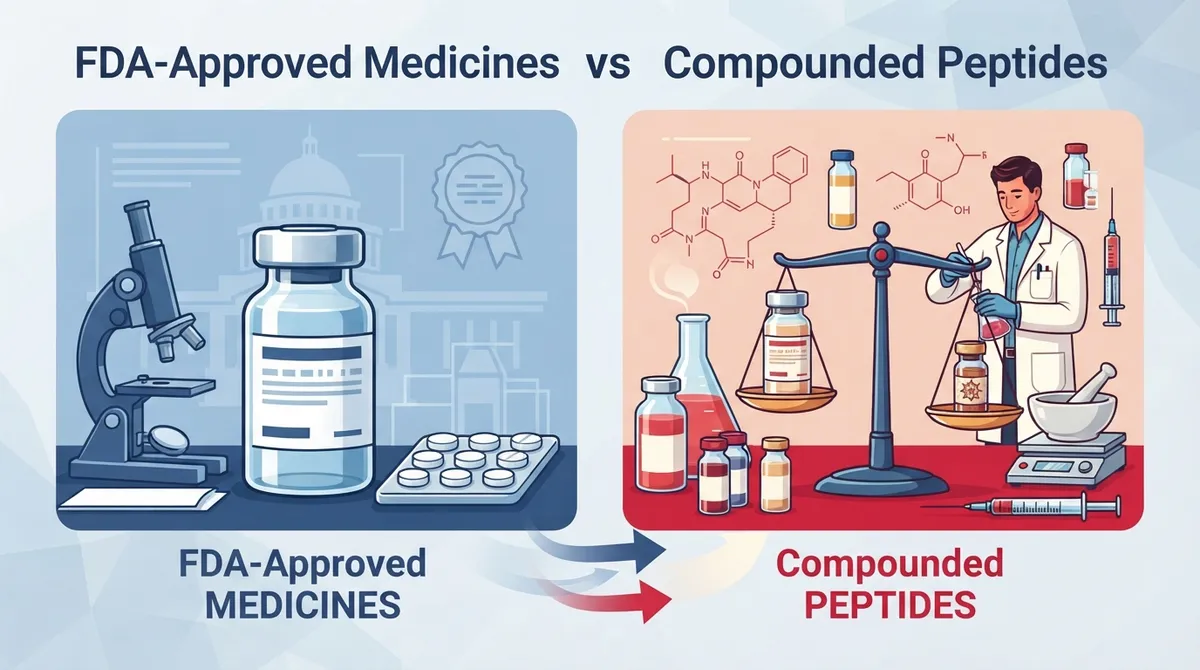
This is the most important distinction in the field. FDA-approved medicines have been reviewed by the agency for safety, effectiveness, and manufacturing quality for specific uses. Compounded drugs are different. They are not FDA-approved, and the FDA does not review them for safety, effectiveness, or quality before they are marketed.
Compounding can be appropriate for an individual patient when a prescriber identifies a medical need and legal requirements are met. It is not meant to be a general substitute for an approved medicine that is already commercially available.
|
Feature |
FDA-Approved Medicine |
Compounded Product |
|---|---|---|
|
FDA review for safety and effectiveness |
Yes, for specific uses |
No |
|
FDA review of manufacturing quality |
Yes |
Not reviewed before marketing |
|
Typical purpose |
Labeled medical conditions |
Individual patient needs when a prescriber finds a medical need |
|
Key patient question |
Is this the right approved option for me? |
Why is compounding needed, and who prepares it? |
The FDA has also identified safety concerns or limited safety information for some peptides promoted by wellness clinics. Concerns can include immune reactions, impurities, poor characterization, and a lack of human safety and effectiveness data. The status of a given substance can change, so check current FDA information instead of relying on clinic marketing.
Which Peptides Do Tampa Clinics Commonly Discuss?
Clinics in the Tampa Bay area may discuss several categories. The evidence behind each one varies a great deal. Here is a simple way to think about them:
- Weight management medicines: Some are FDA-approved for specific uses. You can read about tirzepatide versus semaglutide weight loss injections in Tampa to see how these options differ.
- Recovery-focused peptides: These are often marketed for healing. Human evidence is limited for many of them. See this review of BPC-157 and what the evidence shows.
- Growth hormone releasing peptides: These are discussed for energy and body composition. Regulatory status and safety data differ by product.
- Hormone-related care: Some clinics pair peptides with hormone therapy. Compare options in TRT vs. peptide therapy vs. hormone replacement therapy.
No reliable, independently verified Tampa-wide statistic exists on peptide clinic outcomes, typical prices, or treatment effectiveness. Be cautious of any clinic that cites big numbers without a source.
7 Steps to Find a Reputable Peptide Clinic in Tampa
Use this checklist to compare any clinic fairly. It works whether you are a first-time patient or already have a doctor.
- Verify the clinician's license. Check the treating clinician's Florida license through the official state directory. Confirm board certification through the relevant certifying board.
- Ask who evaluates and who prescribes. A licensed clinician should review your history, current medications, and goals. A sales representative should not be making medical decisions.
- Request the exact ingredient and route. Ask for the specific substance name, the dose, and how it is given (injection, oral, nasal, or topical).
- Ask whether the product is FDA-approved or compounded. If it is compounded, ask which pharmacy prepares it and why compounding is medically needed for you.
- Expect a real medical evaluation. A good plan starts with history, a medication review, and an exam as appropriate. Lab work may be part of the process.
- Get an itemized quote. Prices and protocols vary. Ask what is included, how long treatment lasts, and what follow-up costs.
- Confirm the follow-up plan. You should know how side effects are tracked and who to call if something feels wrong.
For a deeper look at provider selection, review how to choose the best peptide therapy provider in Tampa Bay and what to look for in a Tampa peptide clinic.
Red Flags to Avoid
Some warning signs should make you pause. Watch for these:
- Promises of guaranteed results or dramatic transformations
- Prescribing without an individualized assessment
- Describing compounded products as FDA-approved
- Pressure to pay for large packages upfront
- Vague answers about ingredients, sourcing, or the preparing pharmacy
- No clear plan for monitoring or follow-up
A trustworthy clinic welcomes tough questions. If a provider avoids them, that tells you something important.
Why Primary Care Matters for Peptide Decisions
Peptides affect the whole body, so context matters. Your blood pressure, hormones, metabolism, sleep, and current medications all influence what is safe and sensible. A clinic that treats peptides as part of broader primary care is better placed to spot interactions and risks.
That is one reason many patients prefer a medical practice over a stand-alone wellness shop. A primary care team can order labs, review your history over time, and coordinate other care. If you are still choosing a doctor, this guide to choosing a primary care physician in Tampa Bay can help.
Questions to Ask About Safety
Before any injection or new product, ask these questions:
- What is the evidence for this use in humans?
- What are the known risks and side effects?
- Are there FDA-approved alternatives for my goal?
- How will you monitor me, and how often?
- What happens if I want to stop?
You can also explore a Tampa peptide therapy safety guide for more detail on benefits and cautions.
How InCare Approaches Peptide and Wellness Care in Tampa
InCare is a personalized primary care and wellness clinic with locations in downtown Tampa and Riverview. The practice combines modern technology with medical expertise. That includes DNA gene testing, metabolic breath analysis, and body composition analysis. These tools help guide decisions with data instead of guesswork.
For patients exploring peptides, InCare offers a physician-led approach. You can learn more on the page about peptides in Tampa at InCare, or review the InCare providers who lead care. The team also supports medical weight loss and primary care under one roof.
Search results show other Tampa-area providers advertising peptide services as well. These are advertised services, not independent endorsements, so confirm credentials and offerings directly with any clinic you consider. You can also see what patients say by reading InCare reviews on Google, and follow updates on Instagram.
What a First Peptide Consultation Should Include
A strong first visit is thorough and unhurried. Here is what to expect from a well-run consultation:
- Medical history review: Past conditions, family history, and current symptoms.
- Medication and supplement review: This helps prevent interactions.
- Examination and labs as appropriate: Testing may include metabolic markers and hormone panels.
- Goal discussion: Weight, recovery, energy, or another clear objective.
- Options and alternatives: Including FDA-approved choices and lifestyle strategies.
- Risk and cost explanation: In plain language, with a written plan.
If you are new to a practice, this new patient appointment guide explains how to prepare.
Cost and Insurance: What to Expect
Pricing varies widely and depends on the specific product, dose, and duration. Many peptide services are not covered by insurance, though some prescription medicines may be covered in certain situations. Coverage differs by plan and by the reason for treatment.
Ask for an itemized quote that lists the consultation, labs, the product, supplies, and follow-up visits. For a general cost picture, see how much peptide therapy costs in 2026 and whether peptide therapy is covered by insurance.
Your Next Step
The best peptide clinic for you is the one that is transparent, medically led, and honest about evidence. Verify licenses, insist on clear answers about ingredients and regulatory status, and choose a team that will follow your progress over time. A clinic that treats you as a whole person, not just a prescription, is usually the safer path.
Ready to talk with a physician-led team in Tampa? Book Now to schedule a visit, or contact InCare with questions before you decide.
FAQs
Q: How do I find a reputable peptide clinic near me in Tampa?
A: Start by verifying the treating clinician's Florida license and board certification through official directories. Then ask for the exact ingredient, whether it is FDA-approved or compounded, and which pharmacy prepares it. A reputable clinic begins with a full medical evaluation and gives clear answers about risks, costs, and follow-up.
Q: Are peptide therapies FDA-approved?
A: It depends on the specific product. Some peptide-based medicines are FDA-approved for specific uses, but many products marketed in wellness settings are not. Compounded drugs are not FDA-approved and are not reviewed by the FDA for safety, effectiveness, or quality before marketing.
Q: What questions should I ask a peptide clinic before starting treatment?
A: Ask who evaluates and prescribes, what the exact ingredient and route are, and whether the product is FDA-approved or compounded. Also ask about the evidence in humans, known side effects, itemized costs, and how follow-up and adverse effects are handled.
Q: Are compounded peptides safe?
A: Safety varies by substance and by how a product is prepared. The FDA has identified safety concerns or limited safety information for some peptides promoted by wellness clinics, including possible immune reactions and impurities. Discuss risks and FDA-approved alternatives with a licensed clinician before you decide.
Q: Does insurance cover peptide therapy in Tampa?
A: Coverage depends on the product, your plan, and the medical reason for treatment. Many wellness-focused peptide services are not covered, while some FDA-approved prescription medicines may be covered in certain cases. Ask the clinic for an itemized quote and check with your insurer directly.