Key Takeaways
- The evidence for hormone support supplements is limited: the NCCIH reports phytoestrogens and herbs have not been clearly shown to relieve menopause symptoms, and the FDA does not establish these products as safe or effective.
- "Hormone support" is a marketing term, not a standard treatment, and supplements are not FDA-reviewed for effectiveness before sale, so strong labels do not equal strong evidence.
- Supplements can interact with prescription medications such as blood thinners, thyroid medication, antidepressants, and diabetes drugs, so share every bottle you take with your clinician before starting.
- Fatigue, weight changes, and mood shifts can signal thyroid issues, anemia, diabetes, sleep problems, or stress, so get a primary care evaluation with targeted testing before self-treating.
Walk into any Tampa health store or scroll through social media, and you will see products promising to "balance" or "optimize" your hormones. For busy professionals, young families, and wellness-minded adults, the appeal is easy to understand. Fatigue, weight changes, mood swings, and poor sleep are common, and a simple capsule seems like a quick fix.
The reality is more complicated. "Hormone support supplements" is a marketing term, not a single standard treatment. Products may contain vitamins, minerals, herbs, plant compounds, or hormone-related ingredients. The evidence behind them varies widely, and some carry real risks.
This guide explains what hormone support supplements are, what the research says, how they differ from prescription hormone therapy, and how a primary care evaluation in Tampa can help you decide what is right for you. InCare, a personalized primary care and wellness clinic serving Tampa and Riverview, believes the safest path starts with answers, not guesses.
What Are Hormone Support Supplements?
Hormone support supplements are nonprescription products sold as dietary supplements. They are marketed to help with menopause symptoms, low energy, stress, sleep, weight, or reproductive health. There is no single formula and no standard definition.
Common ingredient categories include:
- Vitamins and minerals such as vitamin D, magnesium, zinc, and B vitamins
- Herbs and botanicals such as black cohosh, ashwagandha, or maca
- Phytoestrogens, which are plant compounds found in soy and red clover
- Hormone-related ingredients such as DHEA
Because each ingredient works differently, the benefits and risks differ too. A multivitamin and a DHEA product are not the same thing, even if both are labeled "hormone support."
Do Hormone Support Supplements Actually Work?
The honest answer is that the evidence is limited. The National Center for Complementary and Integrative Health (NCCIH) reports that supplements such as phytoestrogens and herbs have not been clearly shown to relieve menopause symptoms. You can review the details on the NCCIH menopause symptoms resource.
The U.S. Food and Drug Administration (FDA) also notes that dietary supplements and over-the-counter products marketed as "natural" hormone support are not established as safe or effective for menopause symptoms. Its guidance on menopause and hormone products encourages consumers to talk with a healthcare professional first.
This does not mean every supplement is useless. Some nutrients matter if you have a true deficiency. But no single product has been proven to "fix" hormones in general, and long-term safety is often unknown.
Why Claims Can Be Misleading
Supplements are not reviewed by the FDA for effectiveness before they reach shelves. Words like "balance," "detox," and "optimize" are not medical terms. A strong label does not equal strong evidence.
Supplements vs. Prescription Hormone Therapy
Many people confuse these two categories. They are very different, and the difference affects safety.
|
Feature |
Hormone Support Supplements |
Prescription Hormone Therapy |
|---|---|---|
|
Regulation |
Sold as dietary supplements; not approved for treating conditions |
FDA-approved options are tested for safety and effectiveness |
|
Who prescribes |
No prescription needed |
Licensed clinician after evaluation |
|
Testing before use |
Usually none |
Symptoms, history, and lab testing reviewed |
|
Evidence |
Limited and ingredient-specific |
Stronger evidence for approved products |
|
Monitoring |
Rarely included |
Follow-up care expected |
The FDA also states that compounded "bioidentical" hormone drugs are not FDA-approved, and the evidence does not show they are safer or more effective than approved options. If you want a deeper comparison, read about BHRT vs. traditional HRT.
Risks and Interactions to Consider
"Natural" does not mean risk-free. Supplements can cause side effects, and some interact with prescription medicines. This matters most if you take blood thinners, thyroid medication, antidepressants, or diabetes drugs.
Key risks include:
- Drug interactions that raise or lower how well a medicine works
- Unknown dosing, since product strength can vary between brands
- Hormone-active ingredients that may not be appropriate for people with certain health conditions
- Delayed diagnosis, when a supplement masks a symptom that needs medical attention
Fatigue and weight changes are good examples. They may point to thyroid issues, sleep problems, anemia, diabetes, or stress. A supplement may not address any of those causes.
How a Primary Care Evaluation Helps
Instead of assuming a hormone imbalance, a primary care clinician looks at the whole picture. This approach is especially helpful for adults who have not had a full checkup in a while.
A thoughtful evaluation typically includes:
- Symptom review. Your clinician asks when symptoms started, how severe they are, and what makes them better or worse.
- Medical and medication history. This identifies conditions and drug interactions that may affect your choices.
- Targeted testing. Labs are ordered when they make sense for your symptoms, not as a blanket screen.
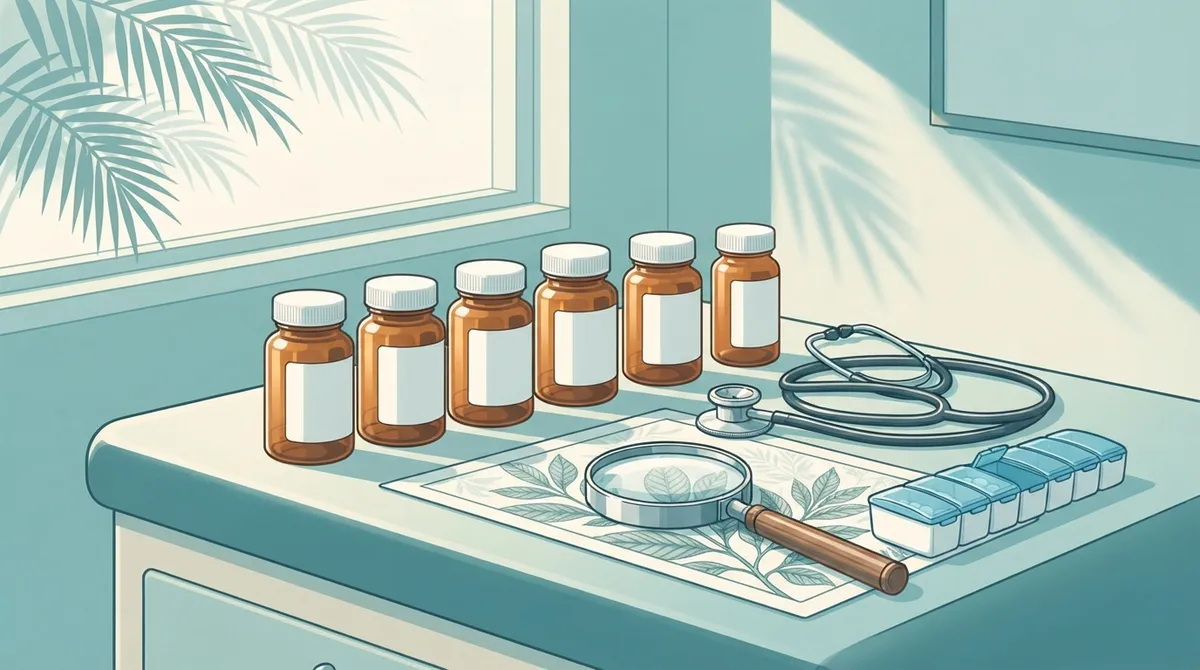
- Review of current supplements. Bring every bottle you take so ingredients and doses can be checked.
- A personalized plan. This may include lifestyle changes, nutrition, treating an underlying condition, or discussing medical options.
Many readers are surprised by how often the answer is not a pill at all. Sleep habits, stress, nutrition, and activity often play a major role. If you are unsure where to begin, an annual wellness visit is a practical starting point.
What to Look for in a Tampa Provider
Tampa-area practices advertise many services, including supplements, nutraceuticals, and clinician-supervised hormone programs. These are provider-reported offerings, not proof that a specific product works. Advertised prices also vary. For example, one local provider lists hormone programs starting at $150 per month, while a separate practice advertises membership-based primary care starting at $75 per month. Treat any figure as clinic-specific and confirm details directly.
Before choosing a provider, consider these questions:
- What are the clinician's credentials and licensing?
- Is testing done before anything is recommended?
- Will the clinic review my medications for interactions?
- What is included in follow-up care and monitoring?
- Are all costs and ingredients disclosed upfront?
You may also find it useful to read about finding a hormone therapy doctor and how a hormone therapy doctor can help.
How to Check a Supplement Before You Buy
If you and your clinician decide a supplement is reasonable, a little homework goes a long way.
- Read the full ingredient list. Look for proprietary blends that hide exact amounts.
- Check for third-party testing. Seals from independent labs can indicate quality control.
- Avoid miracle claims. Promises to "cure" or "reverse" conditions are red flags.
- Compare against your medications. Ask a clinician or pharmacist to review for interactions.
- Start with one change at a time. This makes it easier to see what helps and what causes problems.
Related reading on third-party tested products can help you understand what quality testing looks like.
Who Should Be Especially Careful?
Some groups need extra caution and a clinician's input before starting any hormone-related product:
- People taking prescription medications or managing chronic conditions
- Women who are pregnant, breastfeeding, or planning pregnancy
- Anyone with a personal or family history of hormone-sensitive conditions
- Adults with unexplained fatigue, weight change, or mood shifts that have lasted weeks
Men with symptoms such as low energy or low libido should also avoid self-treating. A proper evaluation can sort out causes, and testosterone replacement therapy at InCare is available only after appropriate assessment.
Why Choose InCare for Hormone Questions in Tampa
InCare combines state-of-the-art technology with medical expertise to deliver primary care, urgent care, and advanced wellness services in Tampa and Riverview. The clinic focuses on prevention and whole-body health, which means your hormone questions are considered alongside your overall picture.
InCare maintains a 4.8 out of 5 rating on Google, with patients often praising the friendly staff and quality of care. You can visit us on Google — InCare to read patient feedback. Tools such as body composition analysis and metabolic breath analysis give clinicians objective data, so decisions are based on measurements rather than marketing. For readers who prefer a broader view of care, primary care at InCare is the foundation for every wellness plan.
You can also follow InCare on Instagram and Facebook for wellness updates, or watch short health tips on TikTok.
The Bottom Line
Hormone support supplements are a broad category with mixed evidence. Some ingredients may help if you have a confirmed deficiency, but none are proven to balance hormones across the board. Safety, interactions, and product quality all matter.
The smartest first step is not a purchase. It is a conversation with a clinician who can review your symptoms, history, and medications, and order tests when appropriate. That approach protects your health and your budget.
If you live in Tampa or Riverview and have questions about hormones, energy, sleep, or weight, our team is ready to help. Book your appointment with InCare today, or contact our team to talk through your concerns. You can also call 813-553-3330.
FAQs
Q: What hormone support supplements are available in Tampa?
A: Tampa stores and clinics offer many nonprescription products, including vitamins, minerals, herbs, phytoestrogens, and DHEA-based items. Because "hormone support" is a marketing term, ingredients and quality vary widely. A primary care clinician can review any product before you start.
Q: Do hormone balance supplements work for menopause symptoms?
A: Evidence is limited. The NCCIH reports that phytoestrogens and herbal supplements have not been clearly shown to relieve menopause symptoms. The FDA also says "natural" hormone products are not established as safe or effective for these symptoms.
Q: Can hormone support supplements interact with medications?
A: Yes. Some supplements can change how prescription drugs work or cause side effects. Always share every supplement you take with your healthcare provider, especially if you manage a chronic condition.
Q: Are bioidentical hormone products FDA-approved?
A: FDA-approved hormone therapies are evaluated for safety and effectiveness. Compounded "bioidentical" hormone drugs are not FDA-approved, and the FDA says evidence does not show they are safer or more effective than approved options.
Q: How is a hormone-related concern evaluated in primary care?
A: A clinician reviews your symptoms, medical history, and medications, then orders appropriate testing. This helps identify the true cause, since fatigue or weight changes can stem from many conditions other than hormone imbalance.