Key Takeaways
- Glutathione has only observational evidence linking it to mental health, while standard care has decades of randomized trials; no supplement should replace therapy or medication for diagnosed conditions.
- NAC (N-acetylcysteine) and glutathione are not interchangeable—most psychiatric research studied NAC as a glutathione precursor, not direct glutathione supplementation, making supplement claims unproven.
- Schizophrenia shows the strongest evidence of lower glutathione levels, but even this association does not prove supplementation improves outcomes or should replace standard treatment.
- Glutathione may be naturally supported through diet (sulfur-rich foods like broccoli and garlic), exercise, sleep, and stress management rather than relying on unproven supplements.
- People on psychiatric medications, pregnant individuals, and those with kidney or liver conditions should consult their doctor before using glutathione or NAC supplements due to interaction and safety risks.
- Glutathione levels cannot diagnose mental health conditions and should never be used as a standalone diagnostic tool, requiring proper clinical evaluation by a qualified provider instead.
If you have searched for natural ways to support your mood, you may have come across glutathione. It is often called the body's "master antioxidant," and some wellness blogs claim it can fix anxiety, depression, or even schizophrenia. But what does the science actually say? This article compares glutathione-focused approaches to standard, evidence-based mental health care, so you can make an informed decision with your primary care team.
At InCare, our Tampa and Riverview clinics focus on whole-body wellness, including brain health, without overselling unproven treatments. We believe patients deserve clear, honest information before trying any new supplement or therapy.
What Is Glutathione and Why Does It Matter for Brain Health?
Glutathione (GSH) is the main antioxidant found inside your cells, including brain cells. It helps control oxidative stress, supports mitochondrial function, and calms inflammation throughout the body. Because the brain uses a lot of energy and is sensitive to oxidative damage, researchers have long been curious about its role in mental health.
Oxidative stress happens when harmful molecules called free radicals build up faster than your body can clear them. Over time, this stress may damage brain cells and disrupt normal signaling. This is why glutathione has become a topic of interest in primary care and wellness circles.
How Glutathione Levels Are Linked to Mental Health Conditions
Several studies have found lower glutathione levels in people with certain psychiatric conditions. However, it is important to understand that association does not mean causation. Having lower glutathione does not prove it caused the condition, and raising it does not guarantee improvement.
- Major depressive disorder has been linked to lower glutathione in some brain regions.
- Schizophrenia has shown some of the strongest and most consistent oxidative stress findings.
- Bipolar disorder has also been associated with reduced glutathione levels in blood samples.
- Anxiety-related disorders show more limited and preliminary evidence.
- Some neurodevelopmental conditions have also been studied, though results remain early-stage.
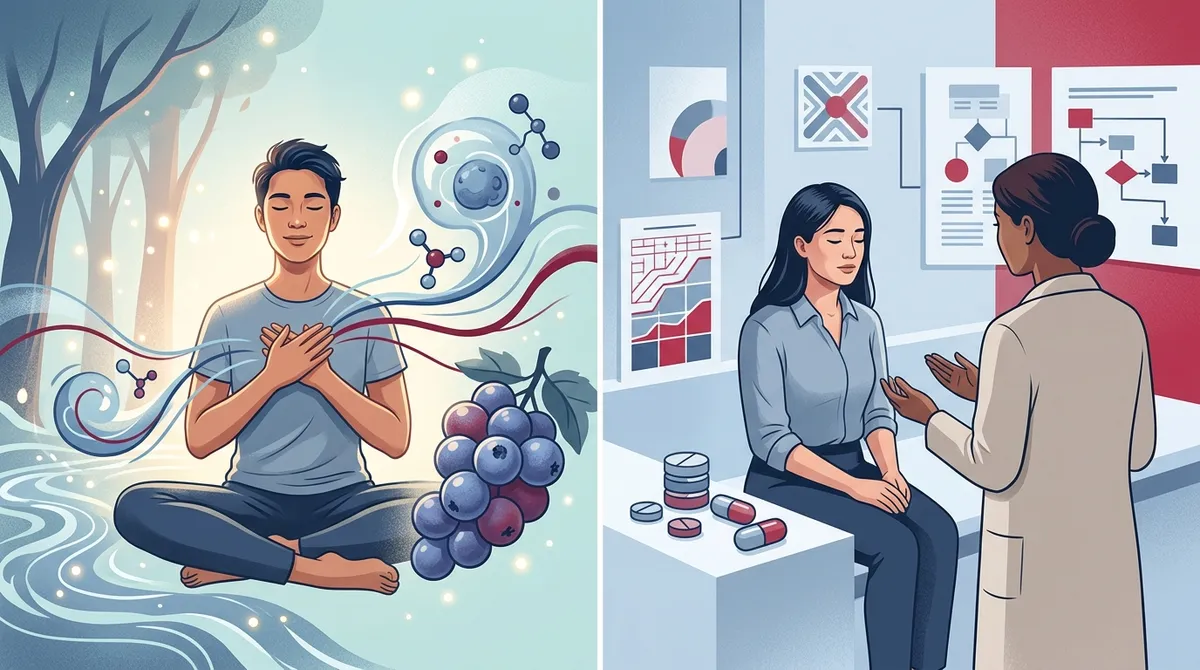
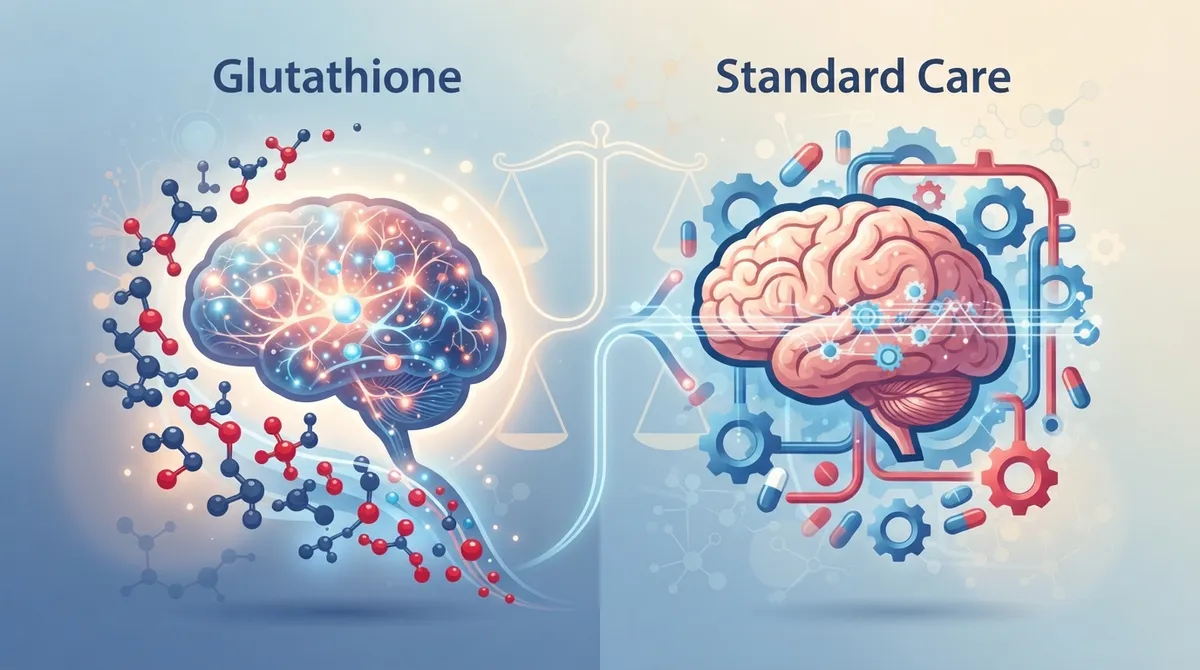
Glutathione vs. Standard Mental Health Care: A Side-by-Side Look
To help you understand where glutathione fits into the bigger picture, here is a comparison of glutathione-focused approaches versus standard, evidence-based mental health treatment.
|
Factor |
Glutathione-Focused Approach |
Standard Mental Health Care |
|---|---|---|
|
Evidence base |
Limited, small studies, mostly observational |
Large randomized trials, decades of research |
|
Regulatory status |
Supplements are not FDA-approved for mental health |
Medications are FDA-approved and monitored |
|
Diagnostic use |
Cannot diagnose any mental health condition |
Structured clinical evaluation and criteria |
|
Role in care |
Possible supportive or adjunctive interest |
Primary, first-line treatment |
|
Risk profile |
Varies by delivery method; some risks with IV or high doses |
Well-studied risks and monitoring protocols |
What the Research Actually Shows
A 2025 systematic review and meta-analysis looked at brain scans from people with depression. It found lower glutathione in the occipital cortex, the brain's visual processing area, but no significant difference in the medial frontal cortex. The study included 230 people with depression and 216 healthy people as a comparison group.
This is an important finding, but the authors were clear that the evidence is still limited. They called for larger, higher-quality studies across more brain regions before drawing firm conclusions.
A separate 2017 study compared plasma glutathione in 48 healthy adults, 52 people with schizophrenia, and 62 people with bipolar disorder. Both psychiatric groups had significantly lower glutathione than the healthy group. Lower levels were also linked to more severe symptoms in people with psychosis.
Is NAC the Same as Taking Glutathione?
Many people confuse N-acetylcysteine (NAC) with glutathione itself. NAC is a building block your body uses to make its own glutathione. Most of the actual clinical research in psychiatry has studied NAC, not oral or IV glutathione supplements directly.
This distinction matters. Research on NAC cannot be used to prove that glutathione supplements work the same way. The two are related, but they are not interchangeable in terms of evidence.
Numbered Steps: How Researchers Have Studied NAC in Psychiatry
- Early studies looked at NAC as an add-on treatment alongside standard medications.
- A randomized, placebo-controlled trial in schizophrenia included 140 participants over six months.
- That study reported modest effect sizes on symptom scales, including 0.57 on the Positive and Negative Syndrome Scale.
- A separate trial in bipolar disorder included 75 participants and reported favorable results on several measures.
- Later systematic reviews reanalyzed this data and found the overall evidence for bipolar disorder was not statistically significant.
- Researchers concluded that more rigorous, larger trials are needed before NAC or glutathione can be considered standard treatment.
Common Delivery Methods: Which One Might Be Right for You?
If you are considering glutathione for general wellness support, it helps to understand the different delivery methods available. Each has different absorption rates and safety considerations.
- Oral capsules or tablets: Convenient but may have lower absorption due to digestion.
- Liposomal glutathione: Designed for better absorption compared to standard oral forms.
- Inhaled glutathione: Less common and requires medical supervision.
- Intravenous (IV) glutathione: Delivered directly into the bloodstream, often part of IV hydration and vitamin drip services.
None of these delivery methods have strong evidence for treating diagnosed mental health conditions. They are best discussed as part of a broader wellness plan, not as a replacement for therapy or medication.
Ranking the Strength of Evidence by Condition
Based on current research, here is how the oxidative stress and glutathione evidence ranks across different mental health conditions, from strongest to weakest.
- Schizophrenia — the most consistent and multidimensional findings.
- Bipolar disorder — moderate evidence, especially in symptom severity studies.
- Major depressive disorder — mixed findings, with some brain regions showing changes and others not.
- Anxiety-related disorders — limited, preliminary evidence.
- Substance-use disorders — early-stage research.
- Autism spectrum conditions — preliminary and inconsistent findings.
- ADHD — least studied, with minimal direct evidence so far.
Why Glutathione Should Not Replace Evidence-Based Mental Health Care
It is tempting to look for a simple supplement fix for complex mental health struggles. But no current research supports glutathione or NAC as a stand-alone treatment for depression, anxiety, bipolar disorder, or schizophrenia. These conditions require proper diagnosis and often benefit most from therapy, medication, or a combination of both.
If you are struggling with your mental health, please do not stop or delay standard care while trying supplements. Talk with your care team before making any changes to your treatment plan.
Who Should Be Cautious About Glutathione or NAC Supplements?
- People currently taking psychiatric medications, due to possible interactions.
- Pregnant or breastfeeding individuals, since safety data is limited.
- People with kidney or liver conditions, who may process supplements differently.
- Anyone considering IV glutathione without medical supervision.
- Patients hoping to use glutathione levels as a diagnostic tool, which is not currently supported by science.
Supporting Glutathione Naturally Through Diet and Lifestyle
Rather than relying only on supplements, many wellness-focused patients ask about food and lifestyle habits that support the body's natural glutathione production. This approach fits well within a broader wellness and weight management plan.
- Eating sulfur-rich foods like broccoli, garlic, and onions.
- Getting regular physical activity, which supports antioxidant balance.
- Prioritizing sleep, since poor sleep is linked to higher oxidative stress.
- Managing chronic stress through therapy, mindfulness, or counseling.
- Limiting alcohol and processed foods, which can deplete antioxidant reserves.
How InCare Approaches Wellness and Whole-Body Health
At InCare, we believe in giving patients honest, research-based guidance rather than hype. Our Tampa and Riverview locations offer comprehensive services, including DNA gene testing, body composition analysis, and IV hydration therapy, all designed to support your overall wellness goals alongside your primary care needs.
If you are curious about glutathione, oxidative stress, or how your mental health connects to your physical health, our team can walk you through the current research and help you decide what, if anything, makes sense for your situation. We never recommend replacing therapy, medication, or crisis care with unproven supplements.
You can also follow our wellness tips and patient stories on Facebook, Instagram, and TikTok for more updates on primary care and wellness topics.
Making the Right Choice for Your Mental and Physical Health
Glutathione is a fascinating area of ongoing research, but it is not a proven treatment for mental health conditions. Standard care, including therapy, prescribed medication, and regular checkups with a primary care physician, remains the most reliable path forward. Glutathione support may play a small supporting role in your broader wellness routine, but it should never replace medical treatment for diagnosed conditions.
Many patients in Tampa and Riverview trust InCare for straightforward, judgment-free guidance on wellness trends like this one. You can see what our InCare patients say by visiting us on Google — InCare and reading real reviews from our community.
Conclusion: Talk to a Professional Before You Decide
Glutathione and mental health remain an exciting but still-developing area of research. The current evidence shows interesting associations, especially in schizophrenia and bipolar disorder, but it is far from proof that supplements can treat these conditions. Your safest and most effective path is to combine trusted medical care with any wellness strategies you are considering.
If you want to discuss glutathione, oxidative stress, or your overall mental and physical wellness with a knowledgeable team, reach out to our InCare team today or schedule your appointment now at our Tampa or Riverview location.
FAQs
Q: Can glutathione improve depression or anxiety?
A: Current research shows only an association between lower glutathione and some mental health conditions, not proof that it causes or treats them. Depression research specifically shows mixed results depending on the brain region studied. Glutathione should not replace therapy, medication, or professional evaluation for depression or anxiety.
Q: Is NAC the same as taking glutathione for mental health?
A: No, NAC is a precursor that helps your body produce its own glutathione, but it is not identical to taking glutathione directly. Most psychiatric research has focused on NAC, not on oral or IV glutathione supplements. This means findings on NAC cannot be assumed to apply to glutathione products.
Q: Are glutathione supplements effective for depression, bipolar disorder, or schizophrenia?
A: No supplement, including glutathione, is currently proven as an effective stand-alone treatment for these conditions. Some studies show associations between low glutathione and symptom severity, particularly in schizophrenia and bipolar disorder, but this does not confirm supplementation improves outcomes. Standard, evidence-based treatment remains the recommended approach.
Q: Can low glutathione levels be used to diagnose a mental health condition?
A: No, glutathione levels cannot currently be used as a diagnostic marker for any mental health condition. Research findings are based on group averages in studies, not individual diagnostic thresholds. A proper mental health diagnosis requires clinical evaluation by a qualified provider.
Q: Should someone taking psychiatric medication use NAC or glutathione supplements?
A: Anyone taking psychiatric medication should speak with their doctor before adding NAC or glutathione supplements, due to possible interactions. Your primary care or mental health provider can review your full medication list and health history first. This helps ensure any added supplement is safe alongside your current treatment plan.