
Key Takeaways
- FDA-approved peptides like semaglutide and tirzepatide have strong clinical evidence: semaglutide users lost 14.9% body weight vs 2.4% placebo, while tirzepatide users lost 20.9% in controlled trials.
- Peptides work by binding to specific cell receptors like keys in locks, triggering different effects depending on which receptor they target; dual-action tirzepatide activates both GLP-1 and GIP receptors for stronger results than single-target alternatives.
- Wellness peptides like BPC-157 and CJC-1295 lack FDA approval and robust human safety data, relying mostly on animal studies; patients should demand clear evidence rather than guaranteed anti-aging or muscle recovery claims.
- Peptides require injection because digestive enzymes destroy protein chains before absorption; oral semaglutide is rare due to special protective formulation, making subcutaneous injection the biological necessity for most treatments.
- Weight loss from peptide therapy often requires sustained long-term use; STEP 4 trial showed patients regained significant weight after stopping semaglutide, meaning these are maintenance treatments, not short-term fixes.
- Medical supervision is essential because dosing errors cause real harm and peptides require routine monitoring including lab work, dose adjustments, and screening for serious side effects like pancreatitis or gallbladder issues.
Peptide medicine is one of the fastest-growing areas of primary care and wellness. Yet many patients still ask a simple question: how do peptides actually work inside the body? The answer depends heavily on which peptide you mean. Some, like semaglutide and tirzepatide, are FDA-approved medications backed by large clinical trials. Others, like BPC-157 and CJC-1295, are popular in wellness circles but lack the same level of proven safety data.
This comparison breaks down how proven metabolic peptides work versus how experimental wellness peptides are marketed to work. Understanding this difference matters if you live in Tampa or Riverview and are considering peptide therapy for weight loss, blood sugar control, or general wellness. At InCare, our providers walk patients through the science, the evidence, and the realistic expectations before starting any peptide-based treatment.
What Are Peptides, and Why Do They Matter in Primary Care
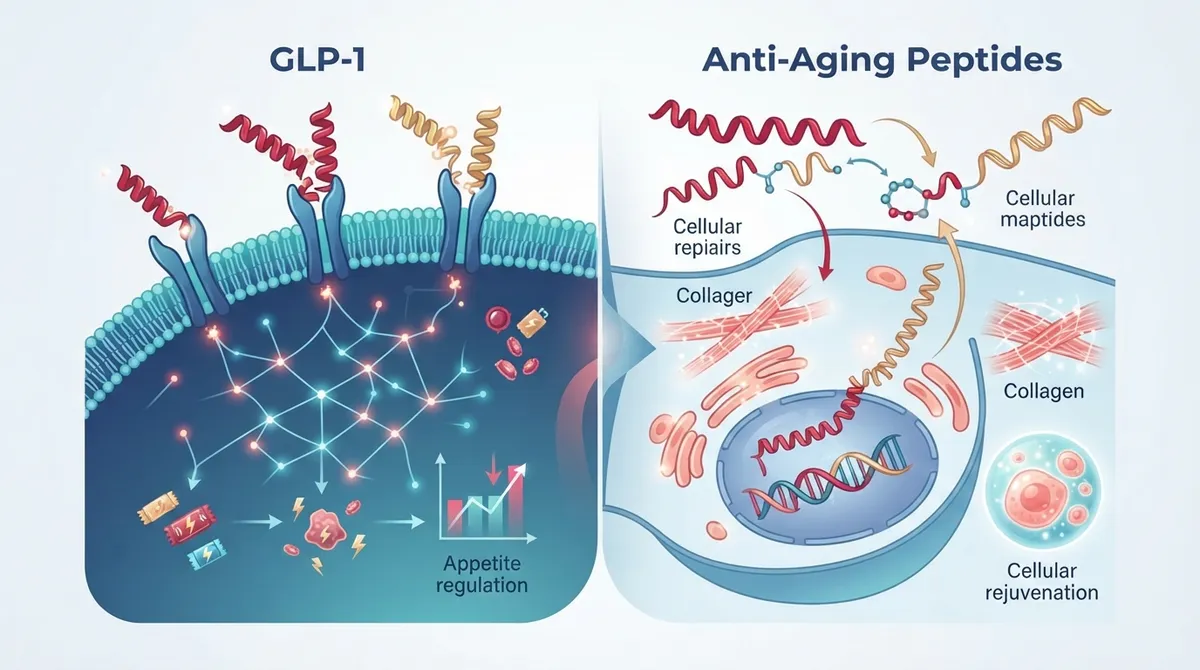
Peptides are short chains of amino acids. Think of them as tiny messengers that tell your cells what to do. Your body already makes many peptides naturally, including insulin and growth hormone.
In medicine, peptide drugs are designed to copy, boost, or block these natural signals. They attach to specific receptors on your cells, similar to a key fitting into a lock. Once attached, they trigger a chain of events inside the cell.
This mechanism explains why peptide effects vary so much. A peptide that targets appetite receptors in your brain works very differently than one marketed for skin healing. The target receptor determines the result.
How GLP-1 and Dual-Action Peptides Work in the Body
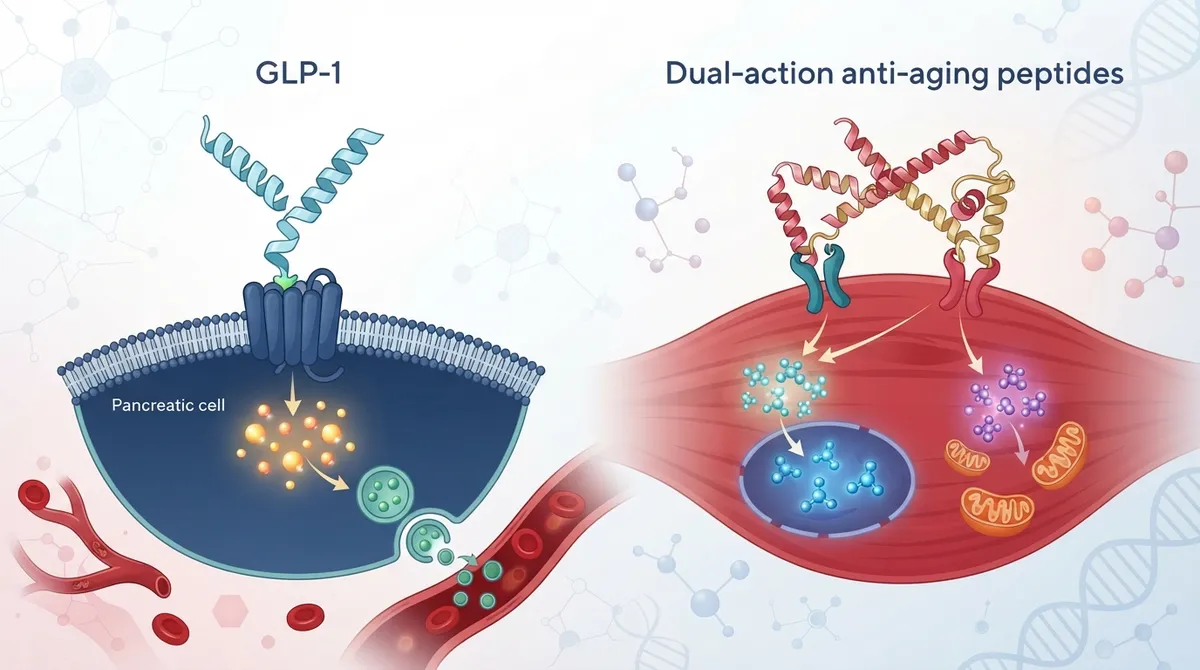
GLP-1 receptor agonists are the most studied peptide medications in primary care today. Semaglutide and liraglutide fall into this category. Here is how they work, step by step:
- They bind to GLP-1 receptors found in the pancreas, stomach, and brain.
- This binding increases insulin release, but only when blood sugar is high.
- It also reduces glucagon, a hormone that raises blood sugar.
- The medication slows down stomach emptying, so you feel full longer.
- It acts on brain regions that control hunger, lowering appetite overall.
Tirzepatide takes this a step further. It activates both GIP and GLP-1 receptors, creating a dual effect on blood sugar and appetite. This dual action is why tirzepatide often produces stronger results than single-target GLP-1 medications.
The numbers back this up. In the STEP 1 trial, patients using semaglutide lost about 14.9% of body weight after 68 weeks, compared to 2.4% with a placebo, according to a 2021 study published in the New England Journal of Medicine. In the SURMOUNT-1 trial, tirzepatide users lost around 20.9% of body weight after 72 weeks. These are real, measured results from controlled research, not marketing claims.
How Wellness Peptides Are Marketed to Work
Wellness clinics often promote peptides like BPC-157, TB-500, CJC-1295, and ipamorelin for anti-aging, muscle recovery, or tissue repair. These peptides are described as working through cell signaling pathways tied to growth hormone release or tissue repair processes.
The problem is that most of these peptides do not have FDA-approved products for routine human use in the United States. Much of the supporting evidence comes from animal studies or small, limited trials. Long-term human safety data is often missing.
This does not mean every claim is false. It means the science is still developing, and patients should treat these products with caution. A trustworthy provider will tell you clearly when evidence is limited rather than promising guaranteed results.
Side-by-Side Comparison: Approved vs. Experimental Peptides
|
Feature |
FDA-Approved Peptides (e.g., Semaglutide, Tirzepatide) |
Wellness Peptides (e.g., BPC-157, CJC-1295) |
|---|---|---|
|
Regulatory Status |
FDA-approved for specific uses |
Not FDA-approved for general human use |
|
Evidence Level |
Large randomized clinical trials |
Limited human data, mostly animal studies |
|
Typical Use |
Type 2 diabetes, chronic weight management |
Anti-aging, muscle recovery, tissue repair claims |
|
Administration |
Injection, some oral formulations available |
Usually injection, often compounded |
|
Monitoring Needed |
Routine follow-up, glucose and kidney checks |
Limited standardized monitoring guidelines |
|
Source |
Manufactured under FDA quality standards |
Often compounded, variable quality control |
Why Injection Is the Common Delivery Method
Most peptide medications are given by injection. This is not a marketing choice. It is a biological necessity.
Peptides are proteins, and your digestive system breaks proteins down before they can absorb properly. Swallowing a peptide as a pill often destroys it before it reaches the bloodstream. Injecting the peptide under the skin or into muscle bypasses this problem entirely.
Some exceptions exist. Oral semaglutide uses a special formulation that helps protect the peptide as it passes through the stomach. This is a good example of how drug science keeps evolving to make treatment more convenient.
Who Should Consider Peptide Therapy
Not everyone is a good candidate for peptide-based treatment. Primary care providers look at several factors before prescribing:
- Current weight and BMI, especially for weight-loss peptides
- Blood sugar levels and diabetes history
- Kidney and liver function
- Pregnancy status or plans for pregnancy
- Other medications that might interact with the peptide
- Personal health goals and realistic expectations
FDA labeling for weight-management peptides generally applies to adults with a BMI of 30 or higher, or a BMI of 27 or higher with a weight-related health condition. Eligibility still depends on your full medical history, not just a number on a scale.
If you are unsure whether peptide therapy fits your health profile, a personalized weight loss consultation can help clarify your options based on lab work and medical history.
Common Side Effects and Safety Considerations
GLP-1 and dual-action peptides come with a known side effect profile. Most side effects are mild and improve over time. Common ones include:
- Nausea and occasional vomiting
- Diarrhea or constipation
- Stomach discomfort
- Reduced appetite, which is often the intended effect
Less common but more serious risks include dehydration, gallbladder issues, and pancreatitis. Patients on certain diabetes medications may also face a higher risk of low blood sugar when combining treatments. This is why routine monitoring matters so much.
Compounded peptides carry extra risk. The FDA does not review compounded medicines the same way it reviews approved drugs. This means less certainty about dosing accuracy, ingredient purity, and contamination risk. Patients considering compounded options should ask detailed questions about sourcing and quality control.
How to Choose Between Proven and Experimental Options
Here is a simple framework for evaluating any peptide therapy:
- Ask if the specific product has FDA approval for your intended use.
- Request to see the clinical evidence behind the claimed benefits.
- Confirm what monitoring plan will track your progress and safety.
- Clarify the total cost, including follow-up visits and lab work.
- Discuss alternatives, including lifestyle changes and other approved medications.
Long-term commitment is often part of the picture. The STEP 4 trial found that patients who stopped semaglutide after 20 weeks regained significant weight over the following months, while those who continued treatment kept losing weight. This tells us that peptide therapy for weight management often works best as a sustained plan, not a short-term fix.
Why Medical Supervision Matters for Peptide Therapy
Peptide therapy is not a do-it-yourself treatment. The receptors these drugs target are powerful, and dosing errors can cause real harm. A qualified provider adjusts your dose gradually, watches for side effects, and checks labs when needed.
At InCare, our team including Dr. Naveen Paddu, Dr. Pramjeet Ahluwalia, and Dr. Teshy John evaluates each patient individually before recommending any peptide-based approach. We combine lab testing, body composition analysis, and sometimes DNA gene testing to build a realistic, evidence-based plan rather than a one-size-fits-all prescription.
Patients throughout Tampa and Riverview trust InCare because we are transparent about what the science actually shows. You can learn more about our approach to peptide therapy in Tampa or explore our full range of provider-led services across both locations.
The Role of Lifestyle Alongside Peptide Therapy
No peptide works in isolation. Diet, activity level, sleep, and stress all influence how well any medication performs. This is especially true for GLP-1 and dual-action peptides used for weight management.
Patients who pair peptide therapy with consistent nutrition habits and movement routines tend to see better, more lasting results. This is why primary care providers usually build a full plan rather than handing over a prescription alone. Follow-up visits allow adjustments based on how your body responds over time.
Our primary care team also screens for related conditions during these visits, including cancer screenings and metabolic panels, so your peptide therapy fits into a bigger picture of whole-body health.
Making an Informed Decision
Understanding how peptides work helps you ask better questions before starting treatment. Approved metabolic peptides like semaglutide and tirzepatide have strong evidence behind their mechanisms and outcomes. Wellness peptides often rely on theory and early research rather than proven human data.
Neither category should be treated as a guaranteed fix. Both require medical oversight, realistic expectations, and a follow-up plan. The right choice depends on your health history, your goals, and how much risk you are comfortable accepting for unproven claims.
Community feedback matters too. You can visit us on Google — InCare to read what patients in Tampa and Riverview say about their experience with our providers and treatment plans. Many highlight the clear communication and personalized attention they receive during their visits.
We also share educational updates and patient stories on Facebook, Instagram, and TikTok, where our team breaks down complex topics like peptide therapy into practical, easy-to-understand information.
Ready to Explore Peptide Therapy the Right Way
If you are curious whether peptide therapy fits your health goals, the safest first step is a conversation with a qualified provider. Our team at InCare will review your history, explain realistic outcomes, and build a plan around evidence rather than hype.
Ready to get started? Book Now to schedule a consultation, or reach out to our team with any questions about peptide therapy in Tampa or Riverview.
FAQs
Q: How do peptide medications work in the body?
A: Peptides are short chains of amino acids that act like signaling molecules. They bind to specific receptors on cells and trigger a response, such as increasing insulin release or reducing appetite. The exact effect depends entirely on which receptor the peptide targets.
Q: What is the difference between semaglutide and tirzepatide?
A: Semaglutide activates only GLP-1 receptors, while tirzepatide activates both GLP-1 and GIP receptors. This dual action often gives tirzepatide a stronger effect on blood sugar control and weight loss, based on clinical trial data.
Q: Are compounded peptides safe and legal?
A: Compounded peptides are not FDA-approved products, and they do not undergo the same premarket safety review as approved drugs. This creates more uncertainty around dosing accuracy, purity, and contamination risk, so medical supervision is essential.
Q: Do peptides work for anti-aging, muscle gain, or injury recovery?
A: Many wellness peptides marketed for these purposes, like BPC-157 or CJC-1295, lack strong human clinical evidence. Most supporting data comes from animal studies, so claims about anti-aging or muscle recovery should be viewed with caution.
Q: What side effects can peptide therapy cause?
A: GLP-1 and dual-action peptides commonly cause nausea, diarrhea, constipation, and reduced appetite. Less common but more serious effects include dehydration, gallbladder problems, and pancreatitis, which is why ongoing monitoring is important.