
Key Takeaways
- The 24-week Phase IIb trial of 536 adults with obesity found no statistically significant weight loss for AOD-9604 compared with placebo, so the evidence does not support it as a fat-loss treatment.
- AOD-9604 is not FDA-approved for weight loss, and the FDA has said available evidence does not support its effectiveness for obesity.
- The 12-week trial's weight loss did not increase with higher doses, a red flag that suggests the effect may not be a true drug effect.
- The FDA has raised concerns about AOD-9604's limited safety data, possible immune reactions, impurities, and product quality, especially in products bought online.
- Peptides sold as 'research use only' are not made to medical standards, creating risks from unknown purity, dosing errors, and injection mistakes.
- A primary care clinician can check for conditions like thyroid problems or insulin resistance and build a supervised plan using proven options such as approved medications when appropriate.
Scroll through wellness forums or social media, and you will see AOD-9604 praised as a "fat-burning peptide." The claims sound exciting, especially if you have tried diet and exercise without lasting results. But does the science back them up? If you are asking can AOD-9604 help with fat loss, the honest answer is: the evidence is weak, and it is not an approved weight-loss treatment.
This guide explains what AOD-9604 is, what clinical trials actually found, and what the FDA has said about it. You will also learn which proven options exist in 2026, and how a primary care clinician can build a safe plan around your health goals. Whether you are a busy parent, a health-conscious professional, or someone exploring advanced wellness for the first time, this article will help you separate marketing from medicine.
What Is AOD-9604?
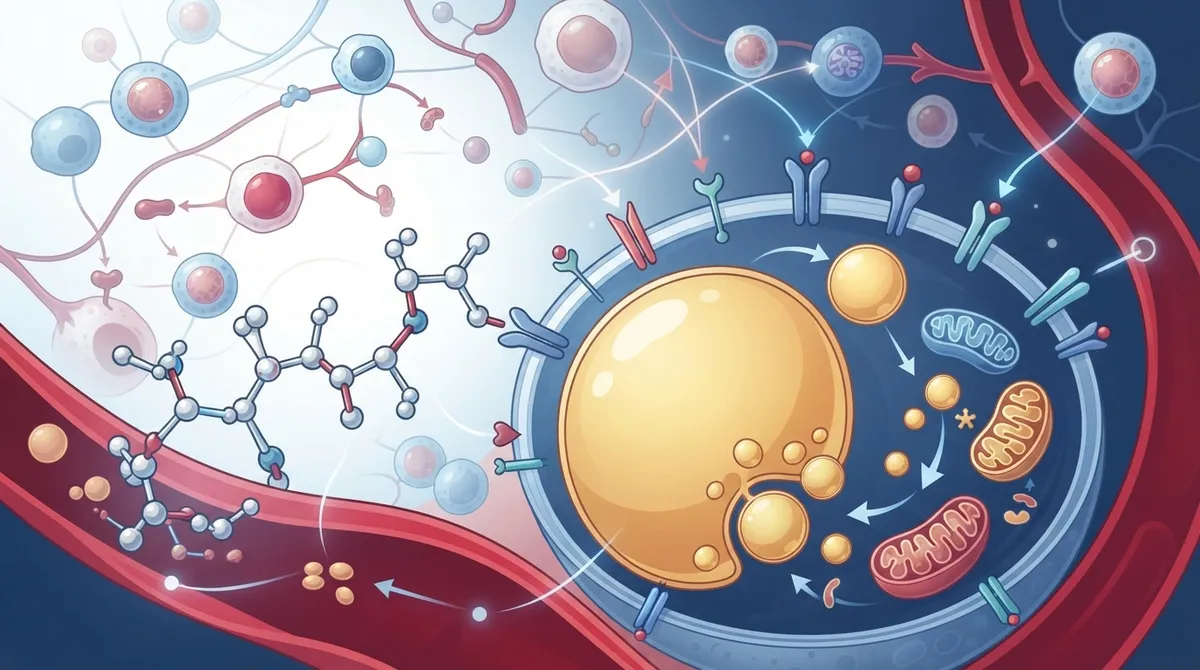
AOD-9604 is a synthetic peptide. It is a small piece of the human growth hormone (HGH) molecule, taken from its tail end (the C-terminal region). Researchers created it because they believed this fragment might burn fat without the other effects of full growth hormone.
It was studied as a possible obesity drug. However, it is not an FDA-approved medication for weight loss. It is also not the same thing as human growth hormone, and it is not related to approved obesity medications.
Why Did It Get So Much Attention?
The idea was simple and appealing. Growth hormone can affect fat metabolism. A fragment that did only the fat-burning part could, in theory, offer benefits with fewer side effects. Early lab and small human studies fueled that hope, and the story spread online.

What Did Clinical Trials Show?
The most important question is not what a peptide might do in theory. It is what happened when it was tested in people. Here is a quick look at the key studies.
|
Study |
Design |
Result |
|---|---|---|
|
12-week randomized trial |
Adults given AOD-9604 or placebo |
Average loss of 2.6 kg at 1 mg/day vs. 0.8 kg with placebo; effect was not dose-dependent |
|
24-week Phase IIb trial |
536 adults with obesity |
No statistically significant weight loss compared with placebo |
|
Development status |
Obesity program |
Discontinued by the developer in 2007 |
Why the Larger Trial Matters
Small, early studies can be misleading. The 24-week trial with 536 adults was the real test. It did not show a meaningful benefit over placebo. When a larger, better-designed study fails to confirm early results, that is a strong signal that the effect is not reliable.
The 12-week result also had a red flag. The effect did not grow with higher doses. In medicine, a true drug effect usually gets stronger as the dose rises. When it does not, researchers become cautious.
So, Can AOD-9604 Help With Fat Loss?
Based on current human evidence, AOD-9604 cannot be recommended as an evidence-based fat-loss treatment. Here is why:
- Early results were small and inconsistent.
- The largest trial showed no significant advantage over placebo.
- The developer stopped pursuing it as an obesity drug.
- The FDA has said available evidence does not support its effectiveness for obesity.
A weight change of a couple of kilograms over 12 weeks is also modest. It is far below what many patients hope for, and below what proven medical programs can deliver.
What Has the FDA Said?
The FDA has stated that AOD-9604 is not a component of an FDA-approved drug. In its review of bulk substances used in compounding, the agency raised several concerns:
- Limited safety information. There is not enough data to know the risks of long-term use.
- Possible immunogenicity. For certain routes of use, the body may react to the peptide as a foreign substance.
- Impurities and product quality. Peptide products can contain related impurities, and the active ingredient is not always well characterized.
- Insufficient evidence of effectiveness. The agency concluded the evidence does not support its use for obesity.
The FDA review also noted serious adverse events reported in some oral human studies. These included diarrhea, chest tightness, and cancers. The agency was clear that it is unknown whether the peptide caused them. Still, the reports add to the need for caution. These are regulatory concerns. They do not prove that every product causes harm.
What About Short-Term Safety?
Short-term trial reports generally described AOD-9604 as tolerated. That is reassuring, but limited. It does not prove that current compounded or unapproved products are safe. It also does not cover different routes of use, longer treatment, or people with certain medical conditions.
A Note on "GRAS" Claims
You may see the term GRAS (generally recognized as safe) tied to AOD-9604 in a food-ingredient context. A GRAS determination for a specific food use is not drug approval. It also does not show that the peptide causes weight loss.
Risks of Buying Peptides Online
Many people first meet AOD-9604 through online sellers or social media. This is where the most practical risks appear.
- Unknown purity. Products labeled "research use only" are not made to medical standards.
- Wrong dosing. Without clinical guidance, it is easy to misjudge amounts.
- Self-injection errors. Poor technique can lead to infection or injury.
- Hidden health issues. A peptide may interact with a condition or medication you have not discussed with a doctor.
If a product promises dramatic fat loss with no lifestyle change, treat it with skepticism. Real, lasting weight management is rarely that simple.
Proven Options for Fat Loss and Weight Management in 2026
The good news is that effective, evidence-based options exist. A clinician can match them to your health history, goals, and lifestyle.
Medical Weight Loss Programs
Supervised programs combine nutrition, activity, lab work, and follow-up. They look at the whole person, not just the number on the scale. To understand how this differs from dieting on your own, read about what makes medical weight loss different from dieting.
Approved Prescription Medications
For eligible patients, FDA-approved options such as GLP-1 based medications can be part of a plan. These drugs have been through large clinical trials. If you are weighing your choices, our guide on how to choose the best injection for weight loss in 2026 explains key factors. You can also review what to expect on cost before you begin.
Body Composition and Metabolic Testing
Not all weight is the same. Knowing how much of your weight is fat versus muscle helps you set smart goals. Tools like body composition analysis and metabolic breath analysis show how your body uses energy. This turns guesswork into data.
Genetic and Lab Insights
Some people respond differently to diet and exercise because of their biology. DNA gene testing and routine bloodwork can reveal factors that affect weight, such as thyroid function, blood sugar, or hormone levels.
Quick Comparison: AOD-9604 vs. Evidence-Based Care
|
Factor |
AOD-9604 |
Supervised Medical Weight Loss |
|---|---|---|
|
FDA approval for obesity |
No |
Approved medications available when appropriate |
|
Large-trial evidence |
Failed to beat placebo in a 24-week trial |
Supported by extensive clinical research |
|
Product quality oversight |
Concerns raised by the FDA |
Clinician-guided, regulated products |
|
Personalization |
One-size-fits-all claims |
Plans based on labs, history, and goals |
|
Follow-up |
Usually none |
Ongoing monitoring and adjustment |
Why Start With Primary Care?
Before trying any weight-loss product, a primary care visit can save you time, money, and risk. A clinician can check for conditions that make weight loss harder, such as thyroid problems, insulin resistance, sleep apnea, or hormone changes. They can also review your medications and screen for health risks.
This is especially helpful for busy people. A single coordinated plan is easier to follow than piecing together advice from social media. If you are not sure where to begin, learn what comprehensive primary care includes. You can also see how a personalized weight loss program works at InCare.
InCare serves patients in Tampa and Riverview, Florida, with primary care, urgent care, and advanced wellness services under one roof. Our team combines modern technology with hands-on medical expertise to build plans around you. You can see what InCare patients say on Google or meet the physicians on our providers page.
Questions to Ask Before Trying Any Peptide
If you are still curious about peptides, use this checklist first:
- Is the product FDA-approved for my goal?
- What do large, human clinical trials show?
- Who makes it, and can the quality be verified?
- Could it interact with my medications or conditions?
- Is a licensed clinician overseeing my care and follow-up?
If you cannot answer "yes" or get clear answers, pause. For a deeper look at this category, see our overview of weight loss peptide facts to know before you start.
Building a Plan That Lasts
Fat loss is rarely about one product. Lasting results usually come from a mix of steps:
- Nutrition: Balanced meals, protein, fiber, and smart meal timing.
- Movement: Strength training and regular activity to protect muscle.
- Sleep and stress: Poor rest and high stress can drive weight gain.
- Medical support: Labs, medication when appropriate, and regular check-ins.
- Tracking: Body composition and metabolic data to measure real progress.
This approach works because it treats the cause, not just the symptom. It also fits real life, including busy family schedules and demanding jobs.
The Bottom Line
So, can AOD-9604 help with fat loss? The current evidence says it cannot be relied on. Early studies showed small, inconsistent changes, and the larger 24-week trial found no meaningful benefit over placebo. The FDA has also raised concerns about its effectiveness, safety data, and product quality. It is not an approved obesity treatment.
You deserve a plan built on proven science and personal attention. If you want help with weight management, the best first step is a conversation with a licensed clinician. Book your visit with InCare today to explore safe, evidence-based options, or contact our team with questions. You can also follow our wellness updates on Instagram, Facebook, and TikTok.
FAQs
Q: Does AOD-9604 actually help with fat loss?
A: Current human evidence does not show that AOD-9604 produces clinically meaningful fat loss. A 24-week trial of 536 adults found no statistically significant weight loss compared with placebo. It cannot be recommended as an evidence-based fat-loss treatment.
Q: Is AOD-9604 FDA-approved for weight loss?
A: No. AOD-9604 is not an FDA-approved medication for weight loss or any other use. The FDA has stated that available evidence does not support its effectiveness for obesity and has raised safety and quality concerns about compounding it.
Q: What are the possible risks of AOD-9604?
A: Short-term trials generally described it as tolerated, but long-term safety data are limited. The FDA has cited concerns about immunogenicity, peptide-related impurities, and serious adverse events reported in some human studies, though a causal link is unclear.
Q: Is AOD-9604 the same as human growth hormone?
A: No. AOD-9604 is a synthetic fragment taken from the tail end of the growth hormone molecule. It is not the full hormone and is not an approved obesity medication.
Q: What should I do instead if I want to lose body fat?
A: Talk with a licensed primary care clinician about a personalized plan. Options may include supervised medical weight loss, FDA-approved medications when appropriate, lab testing, and body composition tracking to measure real progress.