Key Takeaways
- Yes, Florida-licensed primary care physicians can prescribe GLP-1 medicines when clinically appropriate; no Florida rule reserves them for endocrinologists or weight-loss specialists.
- Match the medication to your diagnosis: diabetes-labeled and weight-management-labeled GLP-1 products have different FDA-approved uses, so a brand request alone isn't enough.
- FDA labeling for chronic weight management generally uses BMI 30 or higher, or BMI 27 or higher with at least one weight-related condition such as high blood pressure or type 2 diabetes.
- Compounded semaglutide and tirzepatide are not FDA-approved products; the tirzepatide shortage was resolved in December 2024 and semaglutide in February 2025, restricting routine compounding.
- Telehealth prescribing still requires a Florida-licensed clinician, a full health history, safety screening, and a follow-up plan; avoid services promising prescriptions without real assessment.
- Plan for ongoing follow-up, since doses are increased gradually and weight often returns when treatment stops without a maintenance plan. Check insurance coverage early, as plans vary and often require prior authorization.
Many Florida residents assume weight-loss injections require a trip to a specialist or an online-only vendor. That assumption leads to delays, wasted money, and unsafe shortcuts. The straightforward answer is this: can primary care doctors prescribe GLP-1 in Florida? Yes. A Florida-licensed primary care physician may prescribe GLP-1 medicines when treatment is clinically appropriate and within the physician's scope of practice.
That answer comes with important conditions. The right medication depends on the diagnosis, the FDA-approved indication, the patient's history, and the follow-up plan. Missteps in any of these areas can slow results or put health at risk.
This guide walks through nine common mistakes patients make when seeking GLP-1 care in Florida. It also explains what a responsible prescribing process looks like in 2026. Whether you live in Tampa, Riverview, or elsewhere in the state, these points will help you choose care wisely and avoid costly errors.

Can Primary Care Doctors Prescribe GLP-1 in Florida?
Yes. Based on current research, no Florida rule reserves GLP-1 prescriptions for endocrinologists or weight-loss specialists. A licensed primary care physician can evaluate you, prescribe an appropriate GLP-1 medicine, and monitor your progress. Prescribing remains subject to professional standards and each drug's FDA labeling.
Primary care is often the best place to start. Your doctor already understands your full health picture, including blood pressure, blood sugar, cholesterol, and current medications. That context matters because GLP-1 therapy affects the whole body, not just weight.
What a Primary Care Doctor Can Do
- Assess whether you are a good candidate for treatment
- Review your medical history, family history, and current medications
- Explain benefits, risks, and realistic expectations
- Prescribe and adjust the dose over time
- Monitor weight, blood sugar, and side effects
- Refer you to a specialist when your case needs one
Mistake 1: Assuming You Need a Specialist First
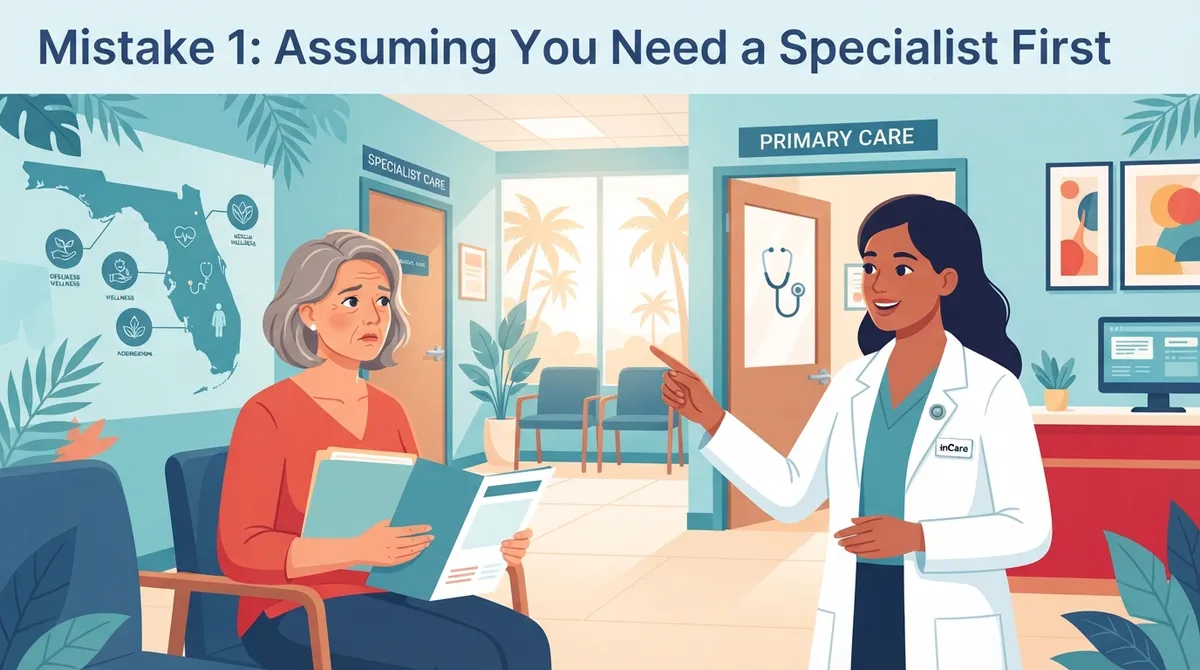
Many patients delay care because they believe only a specialist can help. That belief is not supported by Florida prescribing rules. A primary care physician can manage GLP-1 therapy for most patients and coordinate specialist care if complications arise.
Starting with primary care also saves time. Your doctor can order labs, review chronic conditions, and build a plan in one place. For busy families and working professionals, that coordination removes extra appointments and repeated paperwork.
Mistake 2: Ignoring the FDA-Approved Indication
GLP-1 medicines are not interchangeable. Some products are labeled for type 2 diabetes. Others are labeled for chronic weight management. A diabetes-labeled product is not automatically a substitute for a weight-management-labeled product, even when the active ingredient is similar.
For example, semaglutide and tirzepatide each appear under different brand names with different approved uses. Your doctor should match the product to your diagnosis and goal. Asking for a specific brand without discussing your health profile is a common error.
|
Treatment Goal |
What to Discuss With Your Doctor |
Key Consideration |
|---|---|---|
|
Type 2 diabetes control |
Diabetes-labeled GLP-1 options |
Blood sugar targets and A1C history |
|
Chronic weight management |
Weight-management-labeled options |
BMI and weight-related conditions |
|
Both conditions present |
Which product fits the full picture |
Coordinated monitoring of weight and glucose |
Mistake 3: Not Knowing the BMI Eligibility Guidelines
FDA labeling for chronic weight management generally uses two thresholds. The first is a BMI of 30 or higher. The second is a BMI of 27 or higher with at least one weight-related condition, such as high blood pressure or type 2 diabetes. These medicines are meant to be used alongside a reduced-calorie diet and increased physical activity.
Labeling can change, and it can differ by product and patient group. Your doctor should confirm the current label at the time of prescribing. If your BMI falls below the threshold, a doctor may recommend other approaches first.
Mistake 4: Skipping the Safety Review
GLP-1 medicines carry important warnings and precautions. Before treatment begins, a prescriber should review the current product label, contraindications, possible side effects, pregnancy considerations, and relevant personal or family history.
Patients sometimes skip this step when buying from a convenience-focused source. That is risky. A thorough review is not a formality. It is how your doctor spots reasons to avoid a medicine or to monitor you more closely.
Topics to Discuss Before Starting
- Medical history: Share all current and past diagnoses, including digestive, pancreatic, and thyroid concerns.
- Family history: Mention any relevant conditions that run in your family.
- Current medications: Include prescriptions, over-the-counter products, and supplements.
- Pregnancy plans: Tell your doctor if you are pregnant, nursing, or planning to conceive.
- Lifestyle goals: Discuss nutrition, activity, sleep, and stress so the plan is realistic.
For a closer look at how these drugs work, see How to Understand Semaglutide's Mechanism of Action and 9 Ways Tirzepatide Works Inside Your Body (2026).
Mistake 5: Treating Follow-Up as Optional
GLP-1 therapy is not a one-time prescription. Doses are usually increased gradually to improve tolerability. Your doctor needs to check how you feel, how your weight or glucose is responding, and whether side effects are manageable.
Patients who skip follow-up may stay on the wrong dose or miss early warning signs. Regular visits also support long-term success. Weight often returns when treatment stops without a plan, so ongoing guidance matters. You can read more in Why Does Weight Return After Stopping Tirzepatide?.
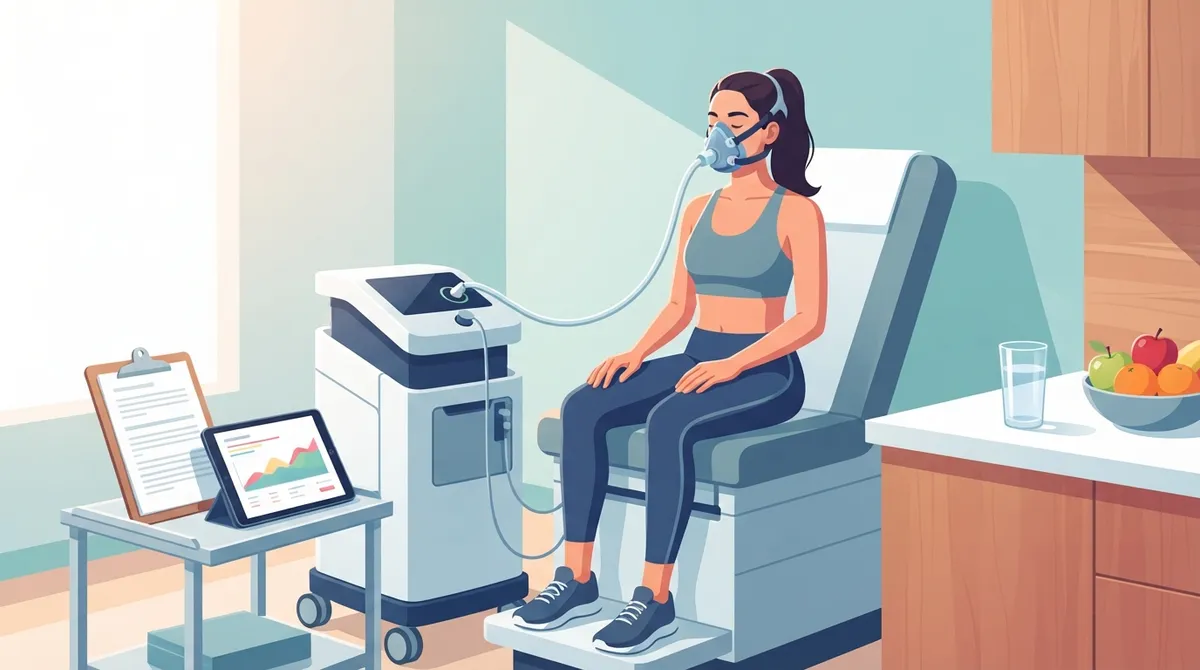
A strong primary care relationship makes follow-up easier. InCare, with locations in Tampa and Riverview, builds personalized plans that pair medical oversight with advanced tools such as body composition analysis and metabolic breath testing. This helps patients see real progress beyond the number on a scale.
Mistake 6: Misunderstanding Telehealth Prescribing
Telehealth can be a legitimate way to receive care in Florida. However, a remote visit does not remove the need for a proper clinical evaluation, a valid prescription, follow-up, and compliance with state and federal law. The clinician must meet Florida's requirements for telehealth practice and prescribing.
Be cautious of any service that promises a prescription without a real assessment. A responsible telehealth visit still includes history review, safety screening, and a clear follow-up schedule.
Signs of a Responsible Telehealth Visit
- The clinician is licensed in Florida
- You complete a full health history
- Contraindications and risks are explained
- A follow-up plan is in place
- The prescription is issued through a legitimate pharmacy
Mistake 7: Confusing Compounded Products With FDA-Approved Medicines
Compounded semaglutide or tirzepatide is not the same as an FDA-approved product. Research indicates the FDA declared the tirzepatide injection shortage resolved in December 2024 and the semaglutide injection shortage resolved in February 2025. Those changes affect the federal conditions for compounding.
Routine compounding of essentially identical copies is now restricted. Patient-specific compounding may be allowed when legal requirements are met and a documented medical need exists. Because rules and FDA notices can change, patients should ask their doctor which product is being prescribed and why.
For more on this topic, review 15 Compounded Semaglutide Tampa Mistakes to Avoid in 2026.
Mistake 8: Forgetting That Physician Assistants Work Under Delegation
Florida law allows physician assistants to prescribe or dispense medications under a supervising physician's delegation. This authority is subject to statutory limits and formulary rules. It is distinct from a physician's own prescribing authority.
This matters for patients because care teams often include more than one clinician. At a well-run practice, delegation is clear, and your supervising physician remains involved in your plan. Ask who is overseeing your treatment and how decisions are made.
Mistake 9: Overlooking Cost and Insurance Questions
Coverage for GLP-1 medicine varies by plan, diagnosis, and product. Some plans cover diabetes-labeled products but not weight-management products. Others require prior authorization or documented lifestyle efforts.
Ask your primary care office to help you understand your options before you start. Budgeting early prevents surprise bills and treatment gaps. These resources may help: How to Budget for Tirzepatide Costs in 2026 and Tirzepatide Insurance Coverage: What Florida Patients Should Know.
What Responsible GLP-1 Care Looks Like
A quality program follows a clear sequence. It starts with evaluation and ends with long-term support. The steps below reflect what patients should expect from a trusted primary care clinic.
- Initial consultation: Your doctor reviews your history, goals, and current health status.
- Testing and screening: Labs and measurements establish a baseline.
- Medication selection: The product is matched to your diagnosis and the FDA label.
- Education: You learn how to use the medicine and what side effects to watch for.
- Gradual dose adjustment: Doses are increased on a monitored schedule.
- Ongoing follow-up: Progress, tolerability, and overall health are reviewed regularly.
- Long-term planning: You and your doctor plan for maintenance and life after active weight loss.
Learn how medically guided care differs from going it alone in How Does Medically Supervised Weight Loss Work? and 14 Ways a Primary Care Doctor Aids Weight Loss (2026).
Why Primary Care Is a Strong Starting Point
Primary care offers continuity. Your physician can manage GLP-1 therapy while also handling blood pressure, cholesterol, preventive screenings, and vaccinations. That whole-person view is difficult to replicate when care is split across several providers.
InCare is a personalized healthcare clinic combining state-of-the-art technology with medical expertise. The team offers primary care, urgent care, cancer screenings, weight loss programs, metabolic breath analysis, body composition analysis, DNA gene testing, and IV hydration therapy. With a 4.8-star Google rating across more than 350 reviews, patients in Tampa and Riverview consistently praise the friendly staff and the quality of care. You can see what our InCare patients say on Google.
InCare also stays connected with its community online. You can follow wellness updates on Instagram, Facebook, and TikTok.
Conclusion: Start With a Trusted Primary Care Team
So, can primary care doctors prescribe GLP-1 in Florida? Yes, when it is clinically appropriate and handled with proper screening, counseling, and follow-up. The mistakes above are avoidable. Match the medicine to your diagnosis, confirm eligibility, review safety, commit to follow-up, and be careful with telehealth and compounded products.
If you want a clear, personalized answer for your own health, speak with a clinician who knows your full history. Book Your InCare Appointment Today to discuss whether GLP-1 therapy fits your goals, or contact our team with questions before you schedule.
FAQs
Q: Can a primary care doctor prescribe Ozempic or Wegovy in Florida?
A: Yes. A Florida-licensed primary care physician may prescribe these medicines when they are clinically appropriate and match the FDA-approved indication. Ozempic is labeled for type 2 diabetes, while Wegovy is labeled for chronic weight management, so the right choice depends on your diagnosis and goals.
Q: What BMI do I need to qualify for a GLP-1 weight-loss medication?
A: FDA labeling for chronic weight management generally uses a BMI of 30 or higher, or a BMI of 27 or higher with at least one weight-related condition. These medicines are used alongside a reduced-calorie diet and increased physical activity. Your doctor should confirm the current label for the specific product.
Q: Can I get a GLP-1 prescription through a telehealth visit in Florida?
A: Telehealth can be used when the clinician meets Florida's telehealth and prescribing requirements. A remote visit still requires an appropriate clinical evaluation, a valid prescription, and follow-up care. It does not replace the need for safety screening or compliance with state and federal law.
Q: Are compounded semaglutide and tirzepatide the same as FDA-approved products?
A: No. Compounded versions are not FDA-approved products. Reports indicate the tirzepatide shortage was declared resolved in December 2024 and the semaglutide shortage in February 2025, which restricts routine compounding of essentially identical copies. Patient-specific compounding may be allowed only when legal requirements and a documented medical need are met.
Q: Does insurance cover GLP-1 medication prescribed by a primary care doctor in Florida?
A: Coverage varies by plan, diagnosis, and product. Some plans cover diabetes-labeled products but not weight-management products, and many require prior authorization. Ask your primary care office to review your benefits before you start treatment.