
Key Takeaways
- KPV has no human clinical trials and lacks FDA approval; current evidence is limited to cell culture and animal studies, making it an unproven treatment for mast cell activation syndrome.
- KPV should never replace proven MCAS treatments like antihistamines, cromolyn sodium, or epinephrine, as relying on unproven peptides instead may delay proper diagnosis and put patients at serious risk.
- Unregulated online KPV products vary dramatically in purity, sterility, and actual peptide content; discuss any peptide therapy with a licensed provider rather than self-ordering from unregulated websites.
- Many MCAS symptoms overlap with common conditions like seasonal allergies, food sensitivities, and IBS; proper diagnostic testing with tryptase and related markers is essential before pursuing any treatment.
If you have searched for relief from unexplained flushing, hives, or stomach pain, you may have come across claims about KPV mast cell stabilization. Wellness forums and peptide vendors often describe this peptide as a fix for mast cell activation syndrome (MCAS). But how much of this is backed by real science? Before you spend money on an unproven product, it helps to understand what KPV actually is, what the research shows, and what steps make sense for your health.
At InCare, patients in Tampa and Riverview often ask about peptide therapies they discover online. This guide breaks down eight common misunderstandings about KPV and mast cell stabilization, so you can make an informed decision with your care team rather than relying on marketing claims alone.
What Is KPV and Why Is It Linked to Mast Cells?
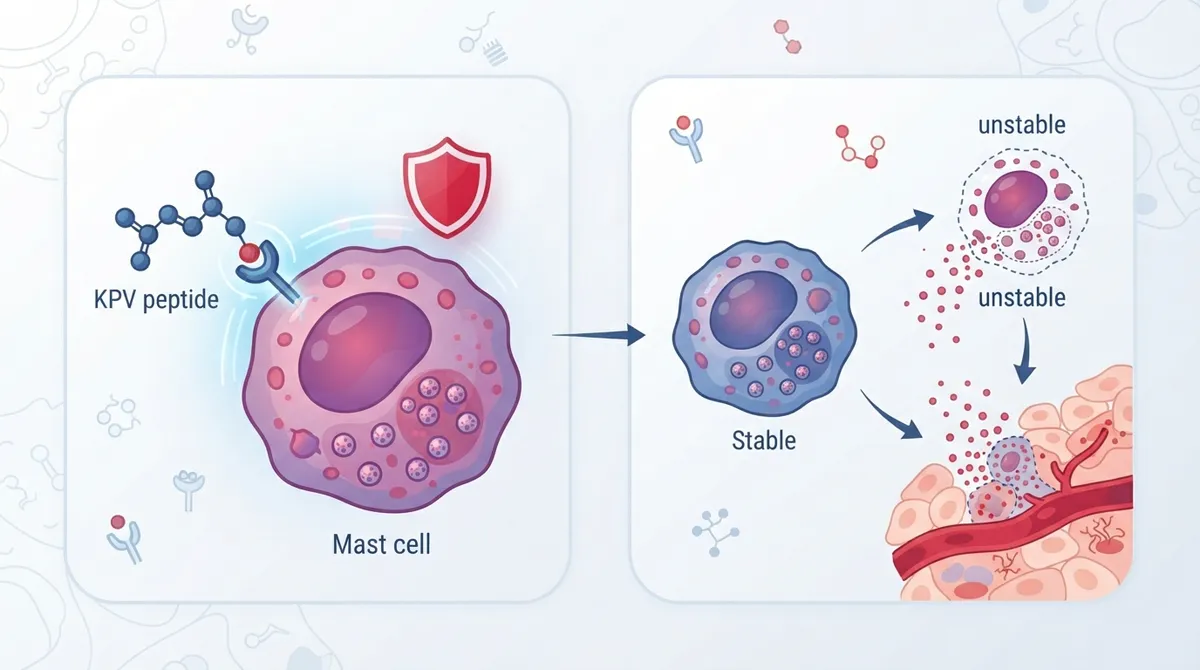
KPV stands for Lysine-Proline-Valine. It is a tiny fragment made of three amino acids. Scientists first studied it as part of a larger hormone called alpha-melanocyte-stimulating hormone (α-MSH). Researchers found that KPV keeps some anti-inflammatory properties of the full hormone without triggering skin pigment changes.
The theory behind KPV mast cell stabilization centers on inflammation pathways, not direct mast cell action. KPV may interact with melanocortin receptors and reduce activity in a signaling pathway called NF-κB. In theory, this could lower the release of inflammatory chemicals. But a theory about reduced inflammation is very different from proof that a peptide stabilizes mast cells or blocks histamine release in real patients.
Mistake 1: Assuming Anti-Inflammatory Action Means Mast Cell Stabilization
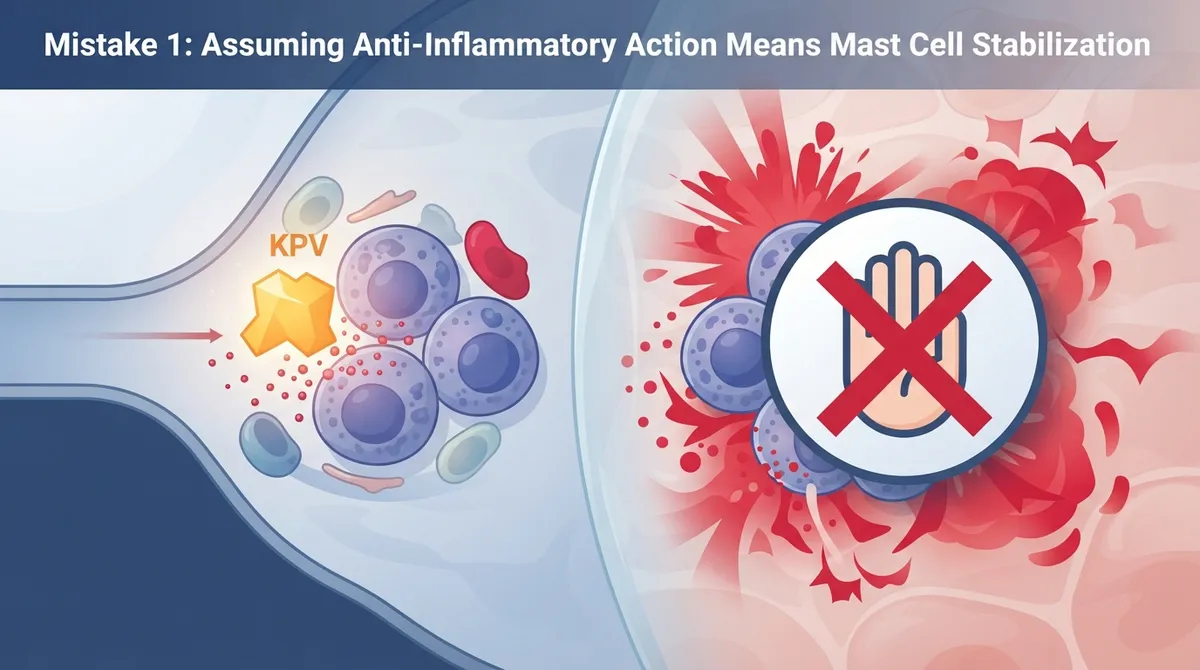
Many online articles blend two separate ideas: general inflammation reduction and specific mast cell stabilization. These are not the same thing. Mast cells release histamine, tryptase, and prostaglandin D2 during degranulation. Stopping this process requires a very specific mechanism.
Current research on KPV has not confirmed that it blocks this exact process in humans. Most available data comes from cell cultures and animal models, not people with diagnosed MCAS. Assuming a broad anti-inflammatory effect equals mast cell stabilization is a common and risky leap.
Mistake 2: Believing KPV Has Passed Human Clinical Trials
One of the biggest gaps in the KPV story is the lack of clinical trials in people. As of now, there are no registered Phase 1, Phase 2, or Phase 3 human trials studying KPV for MCAS, allergies, or general wellness.
This means there is no official dosing standard, no confirmed safety profile, and no data on how the body absorbs or processes the peptide. Patients considering KPV should understand that most claims rest on preclinical work, not verified human outcomes.
|
Evidence Type |
What It Shows |
Relevance to Human MCAS Treatment |
|---|---|---|
|
Cell culture studies |
Reduced inflammatory signaling in isolated cells |
Limited - does not reflect whole-body response |
|
Animal models (airway, gut, skin) |
Lower inflammation markers in mice |
Suggestive only - animal results often fail in humans |
|
Human clinical trials |
None currently registered |
No confirmed safety or effectiveness data |
|
Direct mast cell endpoints (histamine, tryptase, PGD2) |
Not adequately tested in controlled human studies |
Core MCAS markers remain unverified for KPV |
Mistake 3: Thinking KPV Is FDA Approved or Regulated
KPV has no FDA-approved indication for any condition. It is not approved to treat MCAS, allergic disease, gastrointestinal disorders, or general wellness concerns. Some compounding pharmacies may offer it, but this does not mean it carries the same oversight as an approved medication.
Products purchased online may vary widely in purity, sterility, and actual peptide content. Without regulatory testing, you cannot be certain what you are actually receiving. This uncertainty adds real risk, especially for something you might inject or apply to your skin.
Mistake 4: Confusing MCAS Symptoms With Common Allergic Conditions
Mast cell activation syndrome can be difficult to diagnose. Its symptoms often overlap with seasonal allergies, food sensitivities, medication reactions, and digestive disorders. Flushing, itching, hives, and stomach cramps have many possible causes.
Primary care providers use a structured process to rule out other explanations before considering MCAS. Skipping this step and jumping straight to an unproven peptide may delay proper diagnosis and treatment for the actual underlying issue.
Common Conditions That Mimic MCAS Symptoms
- Seasonal or environmental allergies
- Food intolerances or sensitivities
- Medication side effects
- Irritable bowel syndrome
- Anxiety-related physical symptoms
- Thyroid or hormonal imbalances
A thorough primary care evaluation can help identify which of these might explain your symptoms before considering more unusual treatments.
Mistake 5: Trying KPV Instead of Proven MCAS Treatments
Standard MCAS management includes antihistamines, mast cell stabilizers like cromolyn sodium, and medications such as ketotifen. For severe reactions, epinephrine remains the only proven emergency treatment.
KPV should never replace these options. There is no data showing it can substitute for prescribed antihistamines or emergency medication. Patients who rely on unproven peptides instead of established treatments may put themselves at serious risk during a severe allergic episode.
Mistake 6: Overlooking Diagnostic Testing Before Treatment
Diagnosing MCAS properly usually involves blood and urine testing for specific markers, along with a detailed symptom history. Physicians look at tryptase levels, prostaglandin metabolites, and histamine markers, often during or shortly after a reaction.
Here is a general outline of the diagnostic process many primary care providers follow:
- Review your symptom pattern and triggers over time
- Rule out other allergic and gastrointestinal conditions
- Order tryptase and related lab testing during symptomatic periods
- Discuss trial treatments with proven mast cell stabilizers
- Monitor response and adjust the treatment plan as needed
Skipping these steps in favor of self-directed peptide use means you may never get an accurate diagnosis. This can lead to ongoing symptoms without real answers.
Mistake 7: Ignoring Product Quality and Sourcing Risks
Because KPV is not FDA approved, sourcing varies dramatically between vendors. Some products sold online may not contain the labeled dose. Others may lack proper sterility testing, which raises the risk of contamination.
Route of administration also matters. Some vendors sell KPV as injectable solutions, others as nasal sprays or topical creams. None of these formats have standardized human safety data. If you are considering any peptide therapy, always discuss it with a licensed provider first rather than ordering directly from an unregulated website.
Mistake 8: Skipping a Conversation With Your Primary Care Provider
Perhaps the biggest mistake is trying to manage suspected MCAS symptoms alone. A knowledgeable primary care provider can help you sort through possible causes, order appropriate testing, and build a treatment plan based on established medicine.
At InCare, our team in Tampa and Riverview takes a whole-body approach to unexplained symptoms. We combine standard diagnostic tools with a personalized review of your health history. If peptide therapies come up in conversation, our providers can help you understand the current evidence honestly, without hype. Learn more about our approach to peptide therapy in Tampa and how it fits into a broader wellness strategy.
What the Research Actually Shows So Far
A 2012 study available through PubMed Central found that KPV suppressed inflammatory responses in animal models of airway inflammation. This is interesting preclinical data, but it is not the same as a clinical trial in people with MCAS.
Other reviews describing α-MSH tripeptides have noted anti-inflammatory activity across gut, skin, and airway tissue models. Still, no source has demonstrated that KPV reliably lowers histamine, tryptase, or prostaglandin D2 in human patients under controlled conditions. Until that evidence exists, KPV should be treated as investigational, not as a proven mast cell stabilizer.
Questions to Ask Before Considering Any Peptide Therapy
- Has this peptide been tested in registered human clinical trials?
- What does the FDA say about its approval status?
- Who is manufacturing the product, and is it third-party tested?
- Could this interact with medications I already take?
- Does my provider have experience discussing this option?
Asking these questions before starting any new supplement or peptide helps protect your health and your wallet.
How InCare Approaches Unexplained Inflammatory Symptoms
Rather than jumping to unproven treatments, InCare focuses on comprehensive evaluation first. This may include reviewing your DNA gene testing results, checking body composition data, and discussing lifestyle factors that could contribute to inflammation.
For patients dealing with fatigue, digestive issues, or skin flare-ups alongside possible allergy symptoms, our providers can also discuss supportive options like IV hydration and vitamin drips as part of a broader wellness plan. Every recommendation is grounded in your specific test results and medical history, not internet trends.
Patients across Tampa and Riverview have shared their experiences with our team on social platforms including Facebook, Instagram, and Tik Tok. You can also visit us on Google — InCare to read reviews from real patients in the area.
Take the Next Step With Evidence-Based Care
KPV mast cell stabilization remains an interesting area of preclinical research, but it is not a proven treatment for MCAS or histamine-related symptoms. If you are dealing with unexplained flushing, hives, or digestive discomfort, the safest path forward is a proper medical evaluation rather than a peptide purchased online.
Our team at InCare in Tampa and Riverview can help you get real answers backed by established diagnostic tools and treatment options. Book your appointment today to discuss your symptoms with a provider who puts your safety first. If you have questions before scheduling, feel free to reach out to our team directly.
FAQs
Q: What is KPV peptide and how is it supposed to stabilize mast cells?
A: KPV is a three-amino-acid fragment derived from alpha-melanocyte-stimulating hormone. It is theorized to reduce inflammation by affecting melanocortin receptors and the NF-κB signaling pathway, but no human studies confirm it directly stabilizes mast cells.
Q: Is there clinical evidence that KPV treats MCAS or histamine intolerance?
A: No. Current evidence is limited to cell culture and animal studies. There are no registered human clinical trials confirming KPV reduces histamine, tryptase, or prostaglandin D2 levels in people with MCAS.
Q: Has KPV been tested in human clinical trials?
A: As of now, no Phase 1, Phase 2, or Phase 3 human trials have been registered for KPV. This means there is no established dosing standard or confirmed safety profile in humans.
Q: Can KPV replace antihistamines, cromolyn, or epinephrine?
A: No. KPV should never substitute for prescribed antihistamines, mast cell stabilizers like cromolyn, or emergency epinephrine. These treatments have proven safety and effectiveness data that KPV currently lacks.
Q: How is mast cell activation syndrome diagnosed in primary care?
A: Diagnosis typically involves reviewing symptom patterns, ruling out other allergic or gastrointestinal conditions, and ordering tryptase and related lab tests during symptomatic periods. A primary care provider can guide this evaluation process.