
Key Takeaways
- CBT-I is a key evidence-based treatment for chronic insomnia and is generally preferred over sleep medication alone; it can be delivered in person, by telehealth, or through validated digital programs.
- See a doctor if sleep trouble happens several nights a week for a month or longer, or affects daytime energy, mood, or focus; seek prompt evaluation for loud snoring, gasping at night, or severe daytime sleepiness.
- Keep a sleep diary for one to two weeks before your visit, recording bedtime, time to fall asleep, awakenings, wake time, caffeine, alcohol, and naps, and list all medications and supplements.
- A primary care clinician is a practical first stop for insomnia, while a sleep-medicine physician is better suited to complex cases or suspected disorders like sleep apnea; most people with uncomplicated insomnia don't need a sleep study.
Few things wear a person down like weeks of poor sleep. You lie awake, check the clock, and dread the next day. If this sounds familiar, you are not alone. In 2024, 15.4% of U.S. adults reported trouble falling asleep most days or every day, and 18.1% reported trouble staying asleep, according to CDC/NCHS data published in 2026. The good news is that insomnia is treatable, and the right clinician can make a real difference.
Finding an insomnia doctor in Tampa starts with knowing who can help and what to expect. For many adults, a primary care clinician is a practical first stop. They can review your health history, medications, and daily habits, then guide treatment or arrange a referral if needed. This guide walks you through each step, from spotting the warning signs to preparing for your visit and understanding treatment options. Whether you are a busy parent, a young professional, or someone focused on proactive wellness, you will find clear, practical steps here.

What an Insomnia Doctor in Tampa Actually Does
An insomnia doctor in Tampa is not one single type of provider. It may be a primary care clinician, a sleep-medicine physician, or another qualified professional. Each plays a different role in your care.
A primary care clinician looks at the whole picture. They check for health conditions, medication side effects, stress, and lifestyle factors that disrupt sleep. A sleep-medicine specialist steps in when symptoms are complex or when another sleep disorder is suspected. Understanding this difference helps you choose the right starting point.
Primary Care Versus Sleep Medicine
|
Provider Type |
Best For |
Typical Role |
|---|---|---|
|
Primary care clinician |
First evaluation of sleep trouble |
Reviews history, medications, and health conditions; starts treatment; refers when needed |
|
Sleep-medicine physician |
Complex cases or suspected sleep disorders |
Orders sleep studies; diagnoses disorders such as sleep apnea |
|
Behavioral sleep clinician |
Structured therapy for chronic insomnia |
Delivers cognitive behavioral therapy for insomnia (CBT-I) |
Many people do well starting with primary care. The primary care team at InCare takes a whole-body approach, which fits well when poor sleep may connect to weight, hormones, stress, or chronic conditions.
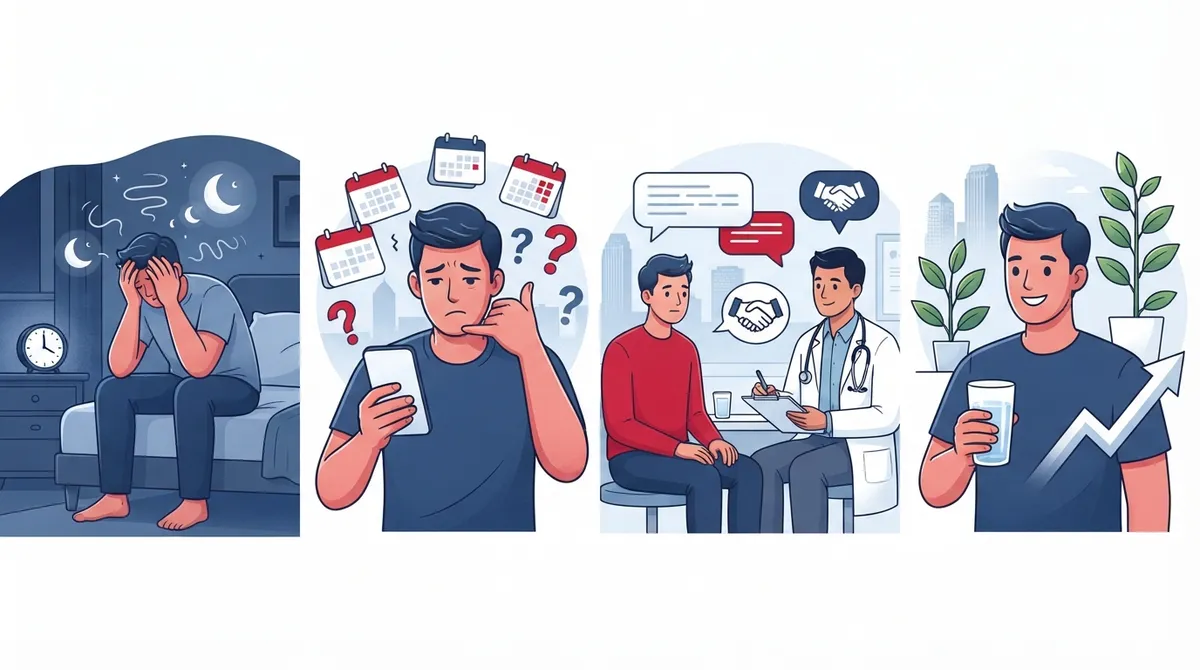
How to Know When It Is Time to See a Doctor
Everyone has a bad night now and then. Chronic insomnia is different. It involves trouble falling asleep, staying asleep, or waking too early, even when you have enough time to sleep. It also causes problems during the day, such as fatigue, low mood, or poor focus.
The American Academy of Sleep Medicine describes chronic insomnia disorder as affecting roughly 10% to 15% of adults. If your sleep struggles last for weeks and affect your daily life, a medical discussion is worthwhile.
Signs You Should Book a Visit
- Sleep trouble happens several nights a week and lasts a month or longer
- You feel tired, irritable, or unfocused during the day
- You rely on alcohol, over-the-counter aids, or leftover medication to sleep
- Your mood, work, or relationships are suffering
- You have new health changes that may affect sleep
Red Flags That Need Prompt Attention
Some symptoms point beyond simple insomnia. Loud snoring, gasping or choking at night, severe daytime sleepiness, or unusual nighttime behaviors may signal another condition. These can warrant evaluation by a sleep specialist. If you suspect sleep apnea, see our guide on the best sleep apnea doctor in Tampa and Riverview.
How to Prepare for Your Insomnia Appointment
Good preparation helps your clinician understand your sleep pattern quickly. A little effort before the visit leads to a more useful conversation and a better plan.
- Keep a sleep diary for one to two weeks. Record when you go to bed, how long it takes to fall asleep, how often you wake, and when you get up. Add notes on caffeine, alcohol, and naps.
- List all medications and supplements. Some prescriptions, stimulants, and even common cold remedies can affect sleep.
- Note your daily schedule. Include work hours, screen time before bed, exercise, and meal timing.
- Write down mood and stress concerns. Anxiety and low mood often travel with sleep trouble.
- Prepare your questions. Ask about treatment options, timelines, and when a referral might make sense.
Bring your insurance details and any past sleep records. If you prefer a flexible visit, ask about telehealth options. Primary care telemedicine in Tampa can make follow-ups easier for busy schedules.
What Happens During an Insomnia Evaluation
An insomnia evaluation is mostly a conversation. Your clinician looks at the pattern and length of your symptoms rather than relying on a sleep test alone.
Common Parts of the Visit
- Sleep and medical history: How long the problem has lasted and what makes it better or worse
- Medication and substance review: Prescriptions, caffeine, nicotine, and alcohol
- Mood and stress screening: Questions about anxiety, depression, and life changes
- Daily routine review: Work schedule, light exposure, and bedtime habits
- Daytime function check: Energy, focus, and mood during the day
Your clinician may also order labs to look for contributors such as thyroid problems, vitamin deficiencies, or hormone imbalances. Preventive screening is part of whole-body care. Learn more in what happens during an annual physical exam.
Do You Need a Sleep Study?
Most people with uncomplicated insomnia do not need a sleep study. These tests are generally used when another disorder, such as sleep apnea, is suspected. Your clinician will tell you if one makes sense for you.
Treatment Options for Chronic Insomnia
Treatment is individualized. The best plan depends on your symptoms, health history, and preferences. Here are the main approaches.
Cognitive Behavioral Therapy for Insomnia (CBT-I)
CBT-I is a key evidence-based treatment and is generally preferred over relying on sleep medication alone. It uses structured behavioral and cognitive strategies to change habits and thoughts that keep you awake. It may be delivered in person, by telehealth, or through validated digital programs. This flexibility suits tech-savvy patients and busy families.
Typical CBT-I elements include:
- Setting a consistent sleep and wake schedule
- Limiting time in bed to match actual sleep time
- Reducing worry and racing thoughts at bedtime
- Building a calming pre-sleep routine
Medication
Medication may be considered based on your symptoms, health history, preferences, and response to other treatments. A clinician should explain the benefits, side effects, interactions, and expected duration. Do not start, stop, or combine sleep medicines without professional guidance.
The AASM's 2026 guideline offers conditional recommendations. It suggests CBT-I plus medication over medication alone, and it suggests against combination treatment over CBT-I alone. These recommendations rely on low-certainty evidence and support shared decision-making between you and your clinician.
Addressing Root Causes
Sleep rarely exists in isolation. Weight, hormones, blood sugar, and stress all play a part. A whole-body approach can uncover contributors that a sleep pill will never fix. Some adults find that improving metabolic health supports better rest. Explore the weight loss programs at InCare or learn about 10 sleep mistakes that quietly wreck your health for daily habits to review.
Everyday Habits That Support Better Sleep
Behavior changes work alongside medical care. These simple habits often help.
- Keep the same wake time every day, including weekends
- Get morning daylight to anchor your body clock
- Limit caffeine in the afternoon and alcohol near bedtime
- Keep your bedroom cool, dark, and quiet
- Put screens away at least an hour before bed
- Use the bed only for sleep, not work or scrolling
If you are still awake after about 20 minutes, get up and do something calm until you feel sleepy. This helps your brain link the bed with sleep again.
Tampa-Area Options and What to Confirm Before You Go
Tampa offers several routes to sleep care. Academic health systems, hospital-based sleep centers, and independent primary care clinics all serve the area. Services, wait times, and referral rules vary.
|
Question to Ask |
Why It Matters |
|---|---|
|
Do you accept my insurance? |
Avoids surprise bills |
|
Is a referral required? |
Some plans require one for specialists |
|
Do you offer CBT-I or telehealth? |
Expands access and convenience |
|
How soon can I be seen? |
Wait times differ widely |
|
Which location is closest? |
Saves travel time |
Always confirm current services, clinician availability, and insurance participation directly with any provider. For a primary care starting point, InCare serves patients in Tampa and Riverview. You can also read how to choose the best primary care doctor in Tampa to compare your options with confidence.
Why Primary Care Is a Smart Starting Point
Primary care offers continuity. One team knows your history, tracks your progress, and coordinates referrals if you need a specialist. InCare combines personalized medical expertise with modern technology, and its team focuses on prevention and whole-body optimization. Patients have noted the friendly staff and quality of care, and you can read InCare reviews on Google to see what others say.
InCare is a strong choice for adults who want one place for sleep concerns, preventive screening, weight management, and wellness testing. The clinic offers in-person visits at its Tampa and Riverview locations as well as virtual appointments. You can learn more about the care team on the providers page.
Stay connected for health tips by following InCare on Instagram, Facebook, or TikTok.
Take the Next Step Toward Better Sleep
Persistent insomnia deserves attention, not endless tossing and turning. Start by tracking your sleep, noting your symptoms, and choosing a clinician who looks at your whole health. Evidence-based care, especially CBT-I, can restore restful nights for many adults.
Ready to talk with a clinician about your sleep? Book your appointment with InCare today, or contact our team with questions about care in Tampa and Riverview.
FAQs
Q: When should I see a doctor for insomnia in Tampa?
A: See a doctor when sleep trouble happens several nights a week, lasts a month or longer, or affects your daytime energy, mood, or focus. Seek prompt evaluation for loud snoring, gasping at night, or severe daytime sleepiness, which may point to another sleep or medical condition.
Q: Can my primary care doctor treat insomnia, or do I need a sleep specialist?
A: A primary care clinician can assess common contributors, review medications and health conditions, and begin treatment. A sleep-medicine specialist may be appropriate if symptoms are complex or another sleep disorder is suspected.
Q: Do I need a sleep study to diagnose insomnia?
A: Usually not. Insomnia is diagnosed mainly through your history, symptom pattern, and duration. Sleep studies are generally used when another disorder, such as sleep apnea, is suspected.
Q: Is CBT-I available in Tampa, and can it be done online?
A: CBT-I may be delivered in person, by telehealth, or through validated digital programs. Confirm current availability and formats with your chosen provider, since offerings differ by clinic.
Q: What treatments are available for chronic insomnia besides sleeping pills?
A: CBT-I is a central evidence-based treatment and is generally preferred over medication alone. Habit changes, addressing root causes such as stress or medical conditions, and individualized medication decisions can also play a role.