
Key Takeaways
- KPV has never been FDA-approved for treating colitis and all evidence comes from animal and cell studies, not human clinical trials, making marketing claims about human remission rates unsupported.
- Stopping prescribed IBD medications like mesalamine, biologics, or steroids to try KPV is dangerous and can trigger severe flares; always disclose any peptide use to your doctor first.
- Online KPV products lack FDA regulation, creating risks of bacterial contamination, incorrect dosing, poor sterility, and unclear sourcing that could harm your health.
- Established colitis treatments have FDA approval and extensive multi-phase human trials with consistent dosing standards, while KPV lacks any of these safety benchmarks.
- Seek urgent care immediately for severe abdominal pain, persistent vomiting, high fever, significant rectal bleeding, or signs of dehydration rather than attempting self-treatment with unproven peptides.
- Get a proper diagnosis from a primary care provider and gastroenterologist before self-treating, as colitis symptoms can overlap with infections, medication reactions, or serious conditions like colorectal cancer.
Searching online for "KPV colitis treatment" often leads to bold claims about a peptide that can calm gut inflammation fast. If you or someone you love struggles with ulcerative colitis or Crohn's disease, that promise can feel tempting. But before you spend money on an unproven peptide, you need the real facts. This guide breaks down what the research actually shows about KPV, where people go wrong, and how proper primary care can protect your health while you explore new options.
KPV, short for lysine-proline-valine, is a small protein fragment studied mostly in labs and mice. It has never been approved by the FDA to treat colitis in people. Understanding the difference between promising lab data and proven human treatment is the first step toward avoiding costly, risky mistakes.
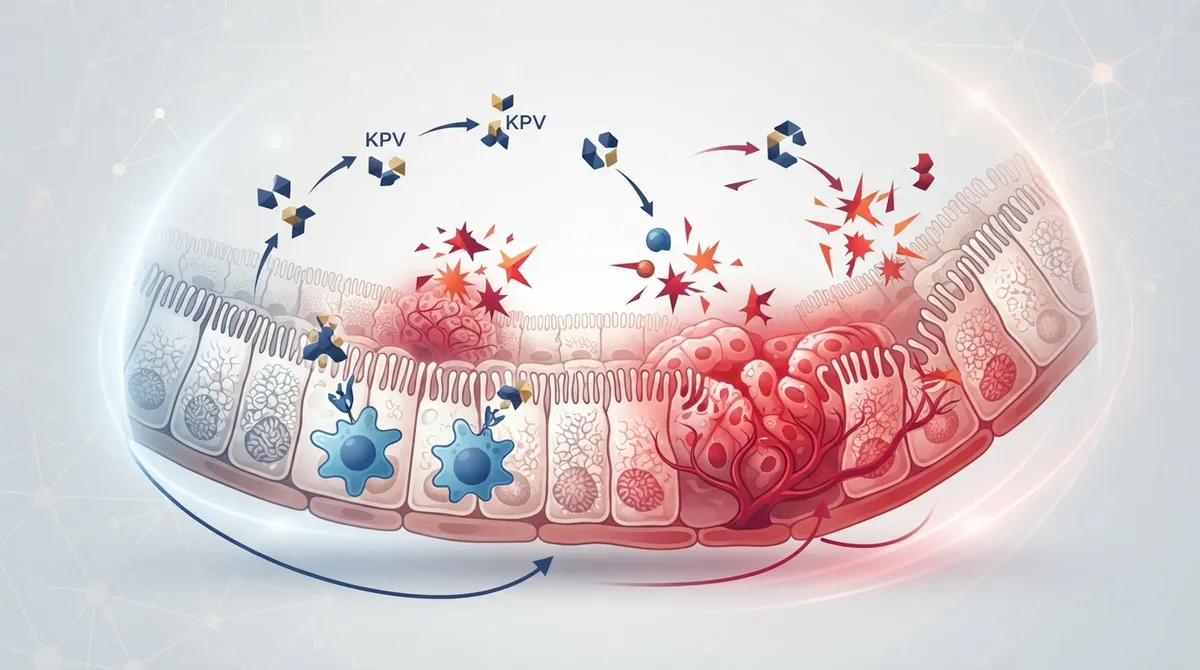
What Is KPV and Why Is It Linked to Colitis?
KPV is a tripeptide, meaning it's made of just three amino acids: lysine, proline, and valine. It comes from a larger hormone called alpha-melanocyte-stimulating hormone, or α-MSH. Researchers noticed that this small fragment might calm inflammation without some of the side effects seen with the full hormone.
Scientists have tested KPV mostly in cells and mice with induced colitis. The interest exists because inflammatory bowel disease, or IBD, involves an overactive immune response in the gut. Anything that might calm that response without harsh side effects draws attention from both researchers and wellness marketers.
The Science Behind the Interest
A 2008 study published in a respected gastroenterology journal found that KPV entered intestinal cells through a transporter called PepT1. Inside the cells, it appeared to block inflammatory signals known as NF-κB and MAP kinase pathways. In mice with chemically induced colitis, oral KPV reduced signs of inflammation.
A second 2008 study found similar results. Mice given KPV showed better weight recovery, less tissue damage, and lower markers of gut inflammation. A 2017 study tested a nanoparticle version of KPV, using hyaluronic acid to help deliver the peptide to inflamed areas of the colon in mice. That formulation showed stronger anti-inflammatory effects than simpler versions.
These findings are genuinely interesting from a scientific standpoint. But every single one of these studies was done in mice or lab dishes, not people. That distinction matters enormously when your health is on the line.

8 KPV Colitis Treatment Mistakes That Could Hurt You
Many people searching for relief from colitis symptoms make avoidable errors when they encounter KPV marketing. Here are the most common mistakes, ranked by how often primary care providers see them.
- Believing KPV is FDA-approved for colitis. It is not. No peptide marketed as KPV has been cleared by the FDA to treat ulcerative colitis, Crohn's disease, or any other condition.
- Stopping prescribed IBD medication to try KPV instead. This is one of the most dangerous mistakes. Suddenly stopping mesalamine, biologics, or steroids can trigger a severe flare.
- Assuming animal study results apply directly to humans. Mouse colitis models are useful for research, but human digestion, immune systems, and disease patterns differ in important ways.
- Buying peptides from unregulated online sellers. Many research-grade peptides are not tested for purity, sterility, or accurate dosing. Contamination risks are real.
- Ignoring warning signs that need urgent care. Severe abdominal pain, high fever, or heavy rectal bleeding require immediate medical attention, not a peptide regimen.
- Not telling your doctor about supplement or peptide use. Hidden use of unregulated products can complicate diagnosis and interfere with prescribed treatments.
- Trusting online remission claims without checking sources. Many testimonials circulating online are not backed by peer-reviewed human trials.
- Delaying a proper diagnosis while self-treating. Colitis symptoms can overlap with infections, medication reactions, or even colorectal cancer risk factors that need prompt evaluation.
What the Research Actually Shows About KPV
It helps to separate hope from hard evidence. Here is a simple breakdown of what has and has not been demonstrated in KPV research so far.
|
Research Area |
What Was Studied |
Human Evidence? |
|---|---|---|
|
NF-κB and MAP kinase inhibition |
Intestinal and immune cells in lab settings |
No |
|
DSS and TNBS colitis models |
Mice with chemically induced colitis |
No |
|
CD45RB-high transfer colitis |
Mouse immune-transfer model |
No |
|
Nanoparticle-delivered KPV |
Mouse ulcerative colitis model, 2017 |
No |
|
Randomized controlled human trial |
Not identified in current research |
No |
As the table shows, every documented benefit comes from animal or cell-based research. That doesn't mean KPV is worthless as a research subject. It simply means marketing claims about human remission rates or long-term safety are not supported by the evidence currently available.
How KPV Compares to Established Colitis Treatments
Understanding where KPV stands next to proven therapies can help you make safer decisions. The following comparison highlights key differences.
|
Factor |
KPV Peptide |
Established IBD Treatments |
|---|---|---|
|
FDA approval status |
Not approved |
Approved (5-ASAs, biologics, immunomodulators) |
|
Human clinical trials |
None identified |
Extensive, multi-phase trials |
|
Dosing standards |
Undefined, inconsistent |
Established, weight and severity based |
|
Product quality control |
Variable, often unregulated |
Pharmaceutical-grade manufacturing |
|
Physician oversight |
Often self-administered |
Coordinated with gastroenterology |
This comparison makes one thing clear. Standard colitis treatment has a track record built on years of clinical trials and physician oversight. KPV, while scientifically interesting, has not reached that stage of testing in people.
Steps to Take If You Suspect You Have Colitis
If you're dealing with ongoing digestive symptoms, following a clear process protects your health better than chasing unproven remedies. Consider these steps in order.
- Schedule an appointment with a primary care provider to discuss your symptoms in detail.
- Get appropriate testing, which may include stool studies, bloodwork, or imaging to rule out infection or other causes.
- Ask for a referral to gastroenterology if inflammatory bowel disease is suspected or confirmed.
- Discuss all treatment options, including 5-aminosalicylates, corticosteroids, immunomodulators, or biologics, based on your specific diagnosis.
- Disclose any supplements, peptides, or compounded products you are using or considering.
- Follow up regularly to monitor how your treatment plan is working and adjust as needed.
- Seek urgent evaluation right away if you notice severe pain, persistent vomiting, high fever, or significant bleeding.
At InCare, our primary care team in Tampa and Riverview helps patients navigate exactly these steps. We focus on accurate diagnosis first, so treatment decisions are based on evidence, not guesswork.
Signs You Should Seek Urgent Care Instead of Waiting
Colitis symptoms can sometimes turn serious quickly. Knowing when to seek immediate help can prevent complications.
- Severe or worsening abdominal pain that does not improve
- Persistent vomiting that prevents you from keeping fluids down
- High fever combined with digestive symptoms
- Significant or ongoing rectal bleeding
- Signs of dehydration, such as dizziness or very dark urine
- Severe weakness or an inability to stand without support
- Noticeable abdominal swelling or distension
If you experience any of these symptoms, do not wait to see if a supplement helps. Visit an urgent care clinic or emergency department right away. Our Tampa and Riverview locations offer same-day support when symptoms escalate unexpectedly.
Why Product Quality Matters So Much With Research Peptides
One of the biggest risks with KPV products sold online is inconsistent quality. Because these products are not FDA-regulated for human use, several problems can occur.
- Contamination with bacteria or other harmful substances
- Incorrect concentration, meaning the dose may be far higher or lower than labeled
- Lack of sterility, which is especially dangerous for injectable products
- Unclear sourcing, making it hard to verify what you're actually buying
- No standardized testing across different sellers or batches
These risks are not hypothetical. Poor manufacturing standards in unregulated peptide markets have led to documented safety concerns. If you decide to explore peptide therapies for any reason, always do so through a licensed provider who can discuss peptide therapy options responsibly and monitor your response closely.
How Primary Care Supports Long-Term Colitis Management
Ongoing colitis management works best with a coordinated, whole-person approach. This is where a strong primary care relationship makes a real difference.
- Regular monitoring of symptoms and medication effectiveness
- Coordination with gastroenterology for specialized testing and biologic therapies
- Screening for complications, including colorectal cancer risk in long-standing IBD
- Nutritional guidance to support gut healing and overall wellness
- Support for mental health, since chronic illness often affects mood and stress levels
InCare's approach to managing chronic illnesses emphasizes this kind of coordinated care. Rather than treating colitis in isolation, our providers look at your full health picture, including nutrition, stress, and preventive screening needs like cancer screening when clinically appropriate.
Questions to Ask Before Trying Any Experimental Peptide
Before you consider KPV or any other unapproved peptide, ask yourself these questions.
- Has this compound been tested in human clinical trials, or only in animals?
- What does the seller say about purity testing and manufacturing standards?
- Will using this product interfere with medications I'm already taking?
- Does my primary care doctor know I'm considering this option?
- What happens if my symptoms get worse while I'm using it?
If you can't answer these questions with confidence, it's a strong sign to pause and talk with a licensed clinician first. Our team welcomes these conversations because informed patients make safer choices.
Why Choose InCare for Colitis-Related Concerns
InCare combines modern technology with attentive, personalized care across our Tampa and Riverview locations. Whether you need an initial evaluation for digestive symptoms, ongoing management of a chronic condition, or a second opinion about a treatment you saw online, our providers are ready to help. You can learn more about our providers, including Dr. Pramjeet Ahluwalia, who patients frequently mention for thorough, attentive care.
Patients consistently rate InCare highly for both clinical quality and customer service. You can visit us on Google — InCare to read real patient experiences before your first appointment. We also share health education and clinic updates on Facebook, Instagram, and TikTok, where our team breaks down complex health topics in plain language.
Moving Forward Safely With Your Digestive Health
KPV remains an interesting subject for future colitis research, but it is not a proven treatment today. The strongest evidence sits in animal studies, not human trials. Relying on it instead of established care could delay proper diagnosis or worsen a treatable condition.
If you're dealing with ongoing digestive symptoms, don't navigate this alone or rely on unverified online claims. Our team at InCare, with convenient locations in Tampa and Riverview, is ready to provide clear answers and a personalized care plan. Book your appointment today and take the next step toward safe, evidence-based digestive health management.
FAQs
Q: What is KPV peptide, and how is it connected to colitis treatment?
A: KPV is a small tripeptide studied in labs and mice for its anti-inflammatory effects on the gut. It is derived from a natural hormone, but it has not been proven to treat colitis in humans through clinical trials.
Q: Does KPV work for ulcerative colitis in humans?
A: There is no completed, adequately powered human clinical trial showing KPV treats ulcerative colitis. Current evidence comes only from cell studies and animal models of colitis, not people.
Q: Is KPV FDA-approved for ulcerative colitis or Crohn's disease?
A: No, KPV is not FDA-approved for any form of colitis or inflammatory bowel disease. It remains an experimental compound without established human safety or efficacy data.
Q: Can KPV be taken with biologics, steroids, mesalamine, or other IBD medicines?
A: This has not been studied in humans, so interactions are unknown. Patients should never stop prescribed IBD medications and should always disclose any peptide use to their doctor first.
Q: When should someone with possible colitis see a primary-care clinician or gastroenterologist?
A: Anyone with persistent digestive symptoms, blood in the stool, or unexplained weight loss should see a primary care provider promptly. Severe pain, high fever, or heavy bleeding requires urgent care right away.