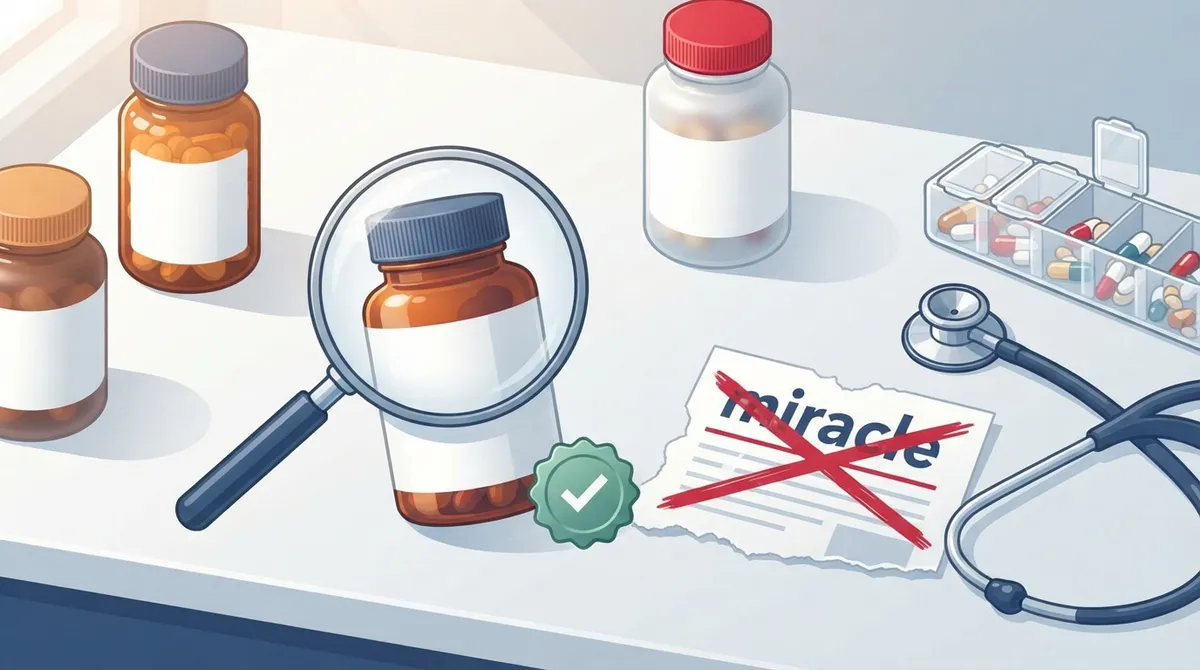
Key Takeaways
- Verify the clinician's Florida license and confirm a real medical evaluation happens before any peptide is offered; a clinic that skips this step is a red flag.
- Get the exact name, dose, and delivery method of every substance, then confirm whether it is FDA-approved for your specific use rather than for a different condition.
- Ask which licensed pharmacy compounds or dispenses the product and how it verifies quality, since compounded drugs are not FDA-reviewed before marketing.
- Be wary of guaranteed results, reversal-of-aging claims, or large upfront packages; honest clinics openly discuss limited evidence, side effects, and risks.
Searching for a peptide and supplement clinic in Tampa can feel confusing. Some clinics offer careful, physician-led care. Others lean on bold marketing and promises that outpace the science. For busy professionals, young families, and wellness-minded adults, knowing the difference matters.
In 2026, interest in peptides and targeted supplements keeps growing. Yet the word "peptide" covers many different substances. Some are FDA-approved medicines. Others are compounded or unapproved products promoted for recovery, anti-aging, or general wellness. Headlines about regulatory changes do not make a product approved, safe, or proven.
This guide gives you seven practical questions to ask before you book. Each one helps you judge safety, credentials, and quality of care. You will also find a comparison table, a short checklist, and answers to common questions. The goal is simple: help you choose a clinic that puts evidence and your health first.

What a Peptide and Supplement Clinic in Tampa Actually Does
A peptide and supplement clinic in Tampa is usually a primary care or wellness practice. It pairs clinician visits with services such as supplement guidance, weight-management support, hormone-related care, or peptide treatments. Standards vary widely from one provider to the next.
Peptides are short chains of amino acids. Some are approved medicines for specific conditions. That does not mean other peptides sold for muscle recovery or anti-aging are approved or proven for those uses. Marketing claims are not evidence.
Dietary supplements are also different from prescription drugs. They are not interchangeable with medicine. A good clinic explains this clearly and never uses supplements to replace needed medical care.
|
Category |
What It Is |
Key Point to Verify |
|---|---|---|
|
FDA-approved peptide medicine |
Reviewed for safety and effectiveness for a specific use |
Is it being used for its approved purpose? |
|
Compounded peptide |
Prepared by a pharmacy for an individual patient |
Not reviewed by the FDA before marketing; not a generic equivalent |
|
Unapproved or gray-market peptide |
Sold outside standard approval pathways |
Source, purity, and legality are often unclear |
|
Dietary supplement |
Vitamins, minerals, and similar products |
Ingredients, dose, testing, and drug interactions |

1. Who Is Prescribing, and What Are Their Credentials?
Start with the clinician. Ask who will evaluate you and who will write any prescription. In Florida, you can check a physician's license through the state health department's public lookup before you commit.
Look for a licensed physician or other qualified clinician who reviews your history in person or by telehealth. A clinic that offers peptides without a real medical evaluation is a red flag.
At InCare's provider team, patients meet experienced clinicians such as Dr. Pramjeet Ahluwalia and Dr. Naveen Paddu. Seeing a primary care physician first keeps your whole health picture in view.
2. What Exact Substance Is Being Offered?
Never accept a vague answer like "a healing peptide." Ask for the exact name, the dose, and how it is given. Then ask whether it is FDA-approved for the use being proposed.
Here are quick questions to put on your list:
- What is the full name of the substance?
- Is it FDA-approved, compounded, or neither?
- For which condition is it approved, if any?
- What does human research actually show for my goal?
Be careful with headlines. In 2026, reports described an advisory committee vote on certain peptides for a possible compounding pathway. That recommendation was nonbinding. It did not make any peptide FDA-approved. Always verify current status directly rather than trusting a news summary or a clinic's sales page.
You can learn more in our guide on FDA-approved versus compounded peptides.
3. Where Is the Product Made and Dispensed?
Sourcing matters. The FDA states that compounded drugs are not reviewed before marketing for safety, effectiveness, or quality the way approved drugs are. Compounding can be appropriate for an individual patient when legal requirements are met. But a compounded product is not the same as an approved generic.
Ask which pharmacy prepares the product. Ask whether it is a licensed pharmacy and how the clinic confirms quality. The FDA has also flagged safety concerns for some bulk substances, including risks tied to impurities, aggregation, and immune reactions, with limited human safety data.
If a clinic cannot name its pharmacy or tell you where the product comes from, walk away. For background on the gray market, see our article on signs you are getting third-party tested peptides.
4. Will You Get a Real Medical Evaluation First?
A responsible clinic starts with a thorough review. That means your medical history, current medications, health goals, and possible reasons you should not take a product.
Labs and testing often help. Tools such as DNA gene testing, body composition analysis, and metabolic breath analysis can give objective data. Data helps you and your clinician decide what, if anything, is worth trying.
This step is especially valuable for tech-savvy adults who want measurable answers instead of guesswork. A plan built on your numbers beats a one-size-fits-all package every time.
5. Does the Clinic Explain Evidence and Uncertainty Honestly?
Strong clinics tell you what is known and what is not. They separate approved uses from experimental ones. They do not promise dramatic results or use words like "guaranteed."
Watch for these warning signs:
- Claims that a peptide "reverses aging" or "cures" a condition
- Pressure to buy a large package up front
- No discussion of side effects or risks
- Testimonials used in place of data
Honest care sounds more cautious. A clinician should be willing to say, "The evidence here is limited." If you want a deeper look at one area, read our overview of what peptides are and what they may offer.
6. How Are Supplements Chosen and Checked for Safety?
Supplements are not risk-free. They can interact with prescription medicines and may not suit certain health conditions. A good clinic reviews everything you already take before adding anything new.
Ask about ingredients, dose, and quality testing. Ask whether a supplement is truly needed or whether lab results justify it. Supplements should support, not replace, evidence-based primary care or prescribed treatment.
For example, hydration and nutrient support can be delivered through IV hydration and vitamin drips when clinically appropriate. A clinician should match any therapy to your needs and health history, not to a menu.
7. What Follow-Up and Safety Support Is Included?
Care does not end at the first visit. Ask how the clinic tracks your response, adjusts the plan, and handles side effects. You should know exactly who to call if something feels wrong.
A solid follow-up plan includes:
- A scheduled check-in to review how you feel
- Repeat labs or measurements when relevant
- Clear instructions for reporting adverse effects
- A plan to stop or change treatment if it is not helping
Continuity is a strength of primary care. When one team knows your history, your care stays coordinated. Learn why that matters in our post on fragmented versus coordinated care.
A Quick Checklist Before You Book
Use this short list when you call or visit any peptide and supplement clinic in Tampa:
- Verify the clinician's Florida license
- Get the exact name of every substance offered
- Confirm FDA status for the proposed use
- Ask which pharmacy dispenses the product
- Request a full medication and history review
- Confirm follow-up and adverse-event guidance
If you want a closer look at one popular topic, see our guide to peptide therapy benefits and safety in Tampa, or compare options in TRT versus peptide therapy versus hormone replacement.
Why Primary Care Is the Smart Starting Point
For many people, the safest path begins with a trusted primary care team. A physician who knows your history can tell you whether a peptide or supplement makes sense, or whether another approach fits better. That includes weight support through a physician-supervised weight loss program, preventive screenings, and routine visits.
InCare is a personalized healthcare clinic that combines modern technology with medical expertise. With locations in Tampa and Riverview, the team offers primary care, urgent care, and advanced wellness services under one roof. Many patients value the clear, physician-led approach to peptide therapy and the focus on prevention. You can also see what patients say, since InCare's reviews on Google reflect the care experience in Tampa and Riverview.
Staying connected also helps. Follow the clinic on Instagram, Facebook, and TikTok for health updates and clinic news.
Take the Next Step Toward Safer Wellness Care
The best peptide and supplement clinic in Tampa is not the one with the boldest promises. It is the one that checks your health first, names every product clearly, and stays with you afterward. Ask the seven questions above, verify credentials, and expect honest answers about evidence and risk.
Ready for a careful, personalized approach? Book your visit with InCare to talk through your goals with a physician, or contact our team with questions. Service availability and details should always be confirmed directly with the clinic.
FAQs
Q: What services does a peptide and supplement clinic in Tampa offer?
A: These clinics typically combine clinician consultations with nutrition and supplement guidance, weight-management support, hormone-related care, or peptide treatments. Services and clinical standards vary by provider, so confirm what is offered and who delivers it before booking.
Q: Are peptides FDA-approved for anti-aging, recovery, or weight loss?
A: Some peptide medicines are FDA-approved for specific conditions, but that does not extend to other peptides promoted for anti-aging or general recovery. Always ask whether a product is approved for the exact use being proposed and verify the current FDA status.
Q: What is the difference between an FDA-approved peptide medicine and a compounded peptide?
A: FDA-approved medicines are reviewed for safety, effectiveness, and quality before marketing. Compounded drugs are not reviewed in the same way and are not generic equivalents of approved drugs, though compounding can be appropriate for an individual patient when legal requirements are met.
Q: Can peptides or supplements interact with prescription medications?
A: Yes. Both can interact with prescription drugs or be unsuitable for certain health conditions. Share your full medication and supplement list with your clinician before starting anything new.
Q: How can I verify a clinic's credentials and pharmacy practices in Florida?
A: Check the clinician's license through the Florida Department of Health's public lookup. Then ask the clinic which licensed pharmacy prepares its products and how it confirms quality and sourcing.