
Key Takeaways
- MOTS-c is not FDA-approved for diabetes management and lacks validated dosing, established treatment schedules, and confirmed long-term safety data in humans.
- While observational studies show people with type 2 diabetes have lower MOTS-c levels, this association does not prove low MOTS-c causes diabetes or that supplementation would improve blood sugar control.
- Current human clinical trials for MOTS-c are still in early Phase 2a stages with results not yet published; most evidence remains preclinical or from animal studies rather than large placebo-controlled trials.
- Compounded and online MOTS-c products carry significant risks due to lack of FDA oversight, variable quality, potential contamination, and marketing claims that exceed scientific evidence.
Search interest in MOTS-c has grown fast among people looking for new ways to manage blood sugar. Social media posts and wellness forums often describe this peptide as a breakthrough for diabetes and metabolic health. But what does the actual research say, and should patients in Tampa or Riverview consider it part of a treatment plan? This article breaks down seven key facts about MOTS-c diabetes management, using current evidence rather than hype, so you can make informed decisions with your care team.
MOTS-c is a peptide made by your mitochondria, the tiny structures inside cells that produce energy. Scientists have studied it in labs and in some human observational studies, mostly looking at how it relates to insulin sensitivity and glucose metabolism. The information below explains what is known, what remains unproven, and why working with a licensed primary care provider matters more than ever when new peptides make headlines.
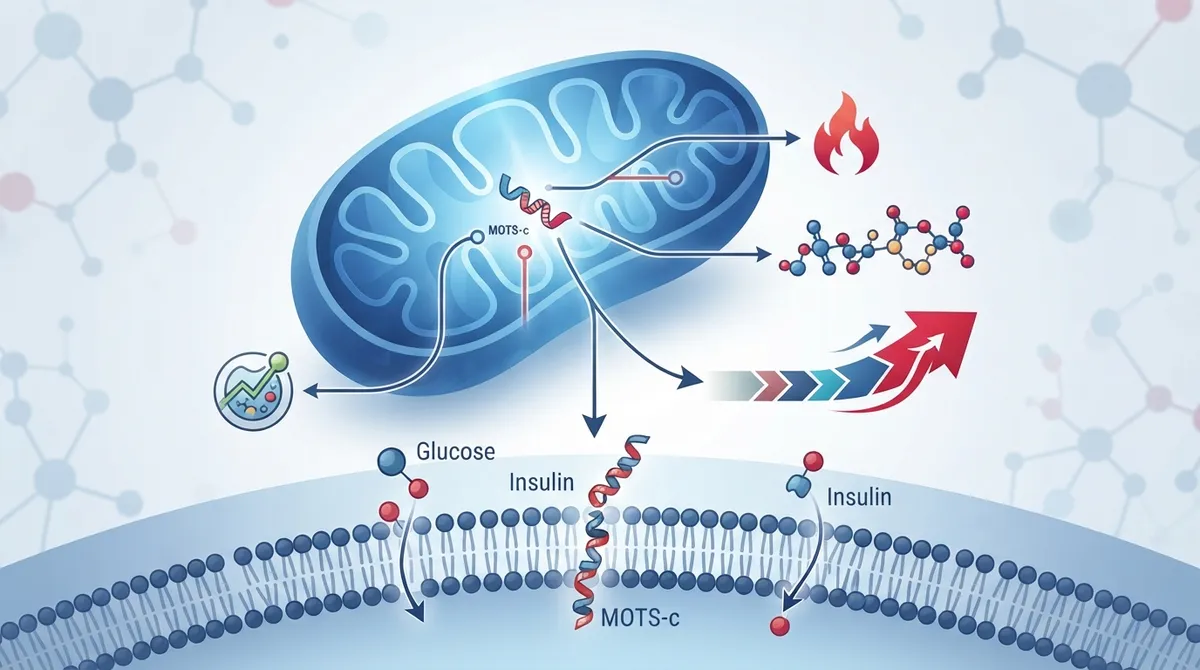
1. MOTS-c Is a Mitochondrial Peptide Linked to Metabolism
MOTS-c stands for mitochondrial open reading frame of the 12S rRNA-c. It is a small peptide encoded by mitochondrial DNA rather than the DNA in your cell's nucleus. Researchers have studied it for its possible role in energy production, exercise adaptation, insulin sensitivity, and even aging.
Much of what scientists know comes from laboratory and animal studies. These early findings suggest MOTS-c may influence a cellular pathway called AMPK, which helps regulate how cells use glucose. This is promising groundwork, but it is not the same as proof that MOTS-c treats diabetes in people.

2. Lower MOTS-c Levels Are Linked to Diabetes, But That Is Not the Whole Story
Several observational studies have found that people with type 2 diabetes tend to have lower circulating MOTS-c levels than people without diabetes. A 2024 systematic review and meta-analysis published in Diabetology & Metabolic Syndrome reported a standardized mean difference of -0.89 in the diabetes subgroup, meaning MOTS-c levels were notably lower in these patients.
The same review found an overall standardized mean difference of -0.37 when comparing people with diabetes or obesity to healthy individuals. These numbers show a pattern, but they do not prove that low MOTS-c causes diabetes. They also do not prove that giving someone more MOTS-c would reverse or improve their condition.
- Lower MOTS-c has been observed in people with poorly controlled blood sugar
- A 2023 review described a study of 225 participants, including those with prediabetes and type 2 diabetes
- Participants with HbA1c above 7% showed lower serum MOTS-c than those with better control
- These are associations, not cause-and-effect relationships
3. MOTS-c Is Not FDA-Approved for Diabetes Management
This is one of the most important facts for anyone considering MOTS-c. The peptide is not approved by the FDA for diabetes, prediabetes, weight loss, or general wellness use. There is no approved dosing, no established treatment schedule, and no confirmed long-term safety profile.
Proven, guideline-based options remain the gold standard for diabetes care. These include nutrition counseling, regular physical activity, weight management, home glucose monitoring, metformin when appropriate, and GLP-1 or dual-incretin therapies when a doctor determines they are indicated. If you are curious how these established therapies work, our team can walk you through how medical weight loss supports diabetics in managing health.
4. Human Clinical Trials Are Still Early
A registered Phase 2a clinical trial, NCT07505745, is currently designed to study 12 weeks of MOTS-c use in adults with prediabetes and overweight or obesity. This trial will measure insulin sensitivity using a standard test called the Matsuda Index, along with tracking adverse events through 16 weeks.
The fact that this trial exists shows research is moving forward. But registration of a study is not the same as proof of effectiveness. Results are not yet available, and much of the current evidence remains preclinical or observational rather than from large, completed, placebo-controlled human trials.
What This Means for Patients Right Now
Until results are published and reviewed, patients should treat MOTS-c as an experimental compound. It has not yet demonstrated reductions in HbA1c, diabetes complications, cardiovascular events, or mortality in rigorous human trials.
5. Safety Data Remains Incomplete
There is currently no validated dose, treatment schedule, or long-term safety profile for MOTS-c in humans. Researchers also lack clear information about how MOTS-c might interact with other medications.
Safety in certain groups is especially unclear, including:
- Pregnant or breastfeeding individuals
- Children and adolescents
- Older adults with multiple health conditions
- People with kidney, liver, or cardiovascular disease
Because of these gaps, anyone considering MOTS-c should first discuss it with a physician familiar with their full medical history. This is especially true for patients already managing diabetes with prescribed medications, since unknown interactions could pose real risks.
6. Compounded and Online MOTS-c Products Carry Real Risks
Many wellness products marketed online claim to contain MOTS-c. These compounded or injectable products are not FDA-approved, and their quality can vary widely. Concerns include incorrect concentration, contamination, impurities, and poor storage conditions.
Marketing claims for these products often go far beyond what current science supports. A responsible wellness clinic will always be upfront about the difference between promising research and an approved treatment. Patients deserve honesty, not exaggerated promises about unproven compounds.
|
Factor |
MOTS-c (Investigational) |
FDA-Approved Diabetes Care |
|---|---|---|
|
FDA Approval |
No |
Yes |
|
Established Dosing |
Not validated |
Yes, physician-guided |
|
Long-Term Safety Data |
Limited or absent |
Well-documented |
|
Clinical Trial Evidence |
Early-stage (Phase 2a ongoing) |
Extensive, peer-reviewed |
|
Insurance Coverage |
Typically not covered |
Often covered |
7. Proven Diabetes Management Strategies Still Come First
While MOTS-c research continues, established strategies remain the foundation of good diabetes care. These include consistent blood sugar monitoring, balanced nutrition, regular exercise, and medications proven through years of clinical trials.
At InCare, our providers focus on building personalized plans using tools that already have strong evidence behind them. This might include metabolic breath analysis to understand how your body burns fuel, or body composition testing to track changes over time. Combined with routine cancer screening and regular checkups, these tools give a fuller picture of your health.
Patients in Tampa and Riverview often ask how primary care doctors help manage chronic illnesses like diabetes long term. The answer lies in consistent monitoring, medication management, and lifestyle coaching tailored to each person. You can learn more in our article on how primary doctors help manage chronic illnesses.
Working With Your Care Team on Emerging Therapies
If you are interested in peptide therapy research, it is worth discussing openly with your provider rather than trying unregulated products alone. Our providers, including those featured on our providers page, stay current on emerging research while prioritizing treatments backed by solid clinical evidence.
For patients curious about the broader peptide landscape, our clinic also offers educational guidance through resources like peptide therapy information in Tampa. This helps patients separate legitimate, physician-supervised options from unproven internet products.
Why Personalized Primary Care Matters for Diabetes Risk
Diabetes management is not one-size-fits-all. Genetics, lifestyle, weight, and existing health conditions all play a role. Some patients benefit from exploring DNA gene testing to better understand their metabolic risk factors and tailor prevention strategies.
Others may need support through structured weight loss programs, since excess weight is closely tied to insulin resistance. A personalized plan, built with your doctor, remains far more reliable than chasing unproven peptides sold online.
InCare providers such as Dr. Naveen Paddu, Dr. Pramjeet Ahluwalia, and Dr. Teshy John work directly with patients to build diabetes management plans grounded in current medical evidence. This approach protects your health while staying open to new research as it matures.
What Patients Should Ask Before Trying MOTS-c
If you are still curious about MOTS-c after learning the facts, bring specific questions to your next appointment. Useful questions include asking about current clinical trial results, potential interactions with your existing medications, and whether any FDA-approved alternatives might better serve your goals.
Your provider can also explain how tools like IV hydration and vitamin drips might support overall wellness during a diabetes management journey, without replacing proven medical therapy. Being informed protects you from wasting money on unproven products and, more importantly, protects your health.
Trusted Primary Care in Tampa and Riverview
Diabetes management deserves careful, evidence-based attention. At InCare, our team combines two convenient locations in Tampa and Riverview with a commitment to honest, up-to-date guidance on emerging treatments like MOTS-c. We believe patients deserve clarity, not confusion, when navigating new wellness trends.
You can also follow our latest health updates and patient stories on Facebook, Instagram, and TikTok. Many patients also share their experiences and read what others say by choosing to visit us on Google — InCare before booking their first visit.
If you want a diabetes management plan built around proven strategies and honest guidance on new research, our team is ready to help. Reach out to our care team today or schedule your appointment online to start building a plan that fits your health goals.
FAQs
Q: What is MOTS-c and how might it affect blood sugar?
A: MOTS-c is a peptide produced by mitochondria, the energy-making parts of cells. Lab research suggests it may influence insulin sensitivity and glucose metabolism, but this evidence comes mostly from animal studies rather than confirmed human clinical trials.
Q: Can MOTS-c treat type 2 diabetes or prediabetes?
A: No, MOTS-c is not an established treatment for type 2 diabetes or prediabetes. Observational studies show lower MOTS-c levels in people with diabetes, but this association does not prove that taking MOTS-c would improve blood sugar control.
Q: Is MOTS-c FDA approved for diabetes or weight loss?
A: MOTS-c is not FDA-approved for diabetes, weight loss, or any other medical condition. It remains an investigational compound without validated dosing or confirmed long-term safety data.
Q: Are low MOTS-c levels a risk factor for diabetes?
A: Research shows lower circulating MOTS-c levels are often found in people with diabetes and poor glycemic control. However, this is an association, not proof that low MOTS-c causes diabetes or that raising levels would prevent it.
Q: Should primary care patients use compounded or online MOTS-c products?
A: Primary care providers generally advise caution with compounded or online MOTS-c products, since their purity, dosing, and safety are not well regulated. Patients should discuss any interest in emerging peptides with their doctor before use.