
Key Takeaways
- Retatrutide is a triple-agonist drug targeting GIP, GLP-1, and glucagon receptors simultaneously, unlike semaglutide (GLP-1 only) or tirzepatide (GIP/GLP-1), with the glucagon component potentially boosting energy expenditure and fat metabolism beyond existing drugs.
- Retatrutide remains unapproved and investigational as of late 2026 with no FDA authorization; online 'research use only' products carry serious risks including unknown purity and incorrect dosing, making FDA-approved alternatives like semaglutide the safer current option.
- Phase 3 trial data shows participants on highest retatrutide doses achieved up to 28.3% body weight loss versus 2.2% placebo over 80 weeks, though full peer review is still pending before these results become medical standard.
- Common side effects are gastrointestinal (nausea, vomiting, diarrhea) and dose-related, with broader class concerns including dehydration, gallbladder issues, and low blood sugar when combined with diabetes medications, requiring medical supervision.
Patients across Tampa and Riverview are asking their doctors about a new weight-loss injection called retatrutide. Many have seen headlines about dramatic weight loss results. Others have found it for sale online through unverified sellers. Before you consider this drug, you need to understand exactly what it is and what drug class it belongs to.
Retatrutide is not yet an approved medicine. It remains under investigation, and understanding its classification helps you make safer decisions about your health. This guide breaks down the science, the research data, and what primary care providers want patients to know before they consider retatrutide or ask about it during a primary care visit.
1. Retatrutide Belongs to a Triple-Agonist Drug Class
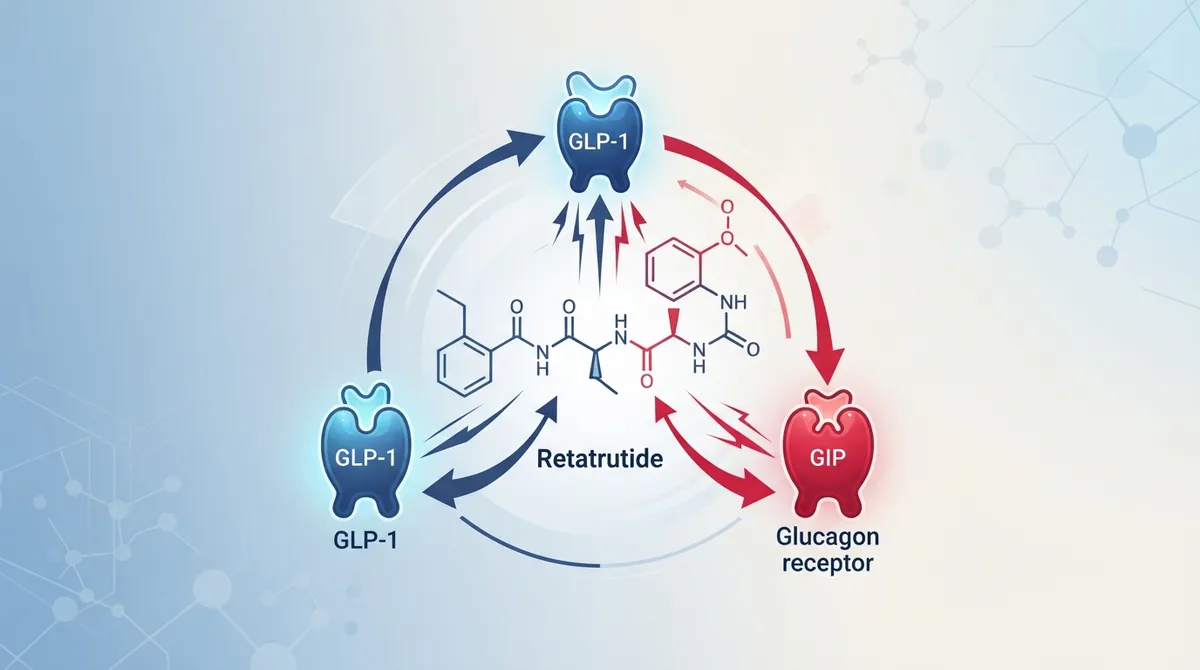
Retatrutide, also known by its development code LY3437943, falls into a new category of metabolic medicines. Doctors call this class a triple agonist. It works on three separate hormone receptors at once.
These three receptors are:
- GIP (glucose-dependent insulinotropic polypeptide)
- GLP-1 (glucagon-like peptide-1)
- Glucagon receptor
This sets retatrutide apart from older weight-loss drugs. Semaglutide only targets the GLP-1 receptor. Tirzepatide targets two receptors, GIP and GLP-1. Retatrutide adds a third target, the glucagon receptor, making it a triple-action drug.

2. The Glucagon Component Sets It Apart from Other GLP-1 Drugs
Many patients ask if retatrutide is just another GLP-1 medication. The answer is no. While it does activate GLP-1 receptors like semaglutide, its added glucagon-receptor activity may change how the body burns fat and creates energy.
Researchers believe this third mechanism could boost energy expenditure and support fat breakdown, beyond what GLP-1 or dual GIP/GLP-1 drugs achieve alone. However, this theory still needs full confirmation through completed, peer-reviewed studies. Patients exploring weight loss options should understand this distinction clearly before assuming all injectable weight-loss drugs work the same way.
How the Three Mechanisms May Work Together
Each receptor target appears to play a different role in appetite and metabolism:
- GIP activation may improve insulin sensitivity and support fat cell function
- GLP-1 activation slows stomach emptying and reduces hunger signals
- Glucagon receptor activation may increase calorie burning and support liver fat metabolism
This combination is part of why early trial results have shown such significant weight loss numbers compared to single-target drugs.
3. Retatrutide Trial Data Shows Notable Weight Loss Results
Clinical trial data has generated excitement among wellness-focused patients. A Phase 2 obesity trial, published in the New England Journal of Medicine in 2023, found that adults on the highest studied dose lost about 24.2% of their body weight after 48 weeks. Those on placebo lost only about 2.1%.
More recent Phase 3 topline results reported by Eli Lilly in 2026 show even more striking numbers. The table below summarizes key findings from major retatrutide trials.
|
Trial Name |
Population |
Duration |
Reported Weight Loss (Highest Dose) |
Placebo Weight Loss |
|---|---|---|---|---|
|
TRIUMPH-1 |
Obesity/overweight, no diabetes |
80 weeks |
28.3% |
2.2% |
|
TRIUMPH-2 |
Obesity/overweight with type 2 diabetes |
80 weeks |
20.8% |
4.0% |
|
TRANSCEND-T2D-1 |
Type 2 diabetes |
Not specified |
16.8% weight loss; A1c drop of 1.7–2.0 points |
0.8 point A1c drop |
In TRIUMPH-1, 45.3% of participants on the 12-mg dose reportedly achieved at least 30% weight loss by week 80. These numbers are impressive, but they come from sponsor-reported topline data. Full peer review is still needed before these results become part of an approved medical standard.
4. Retatrutide Is Not FDA-Approved or Available by Prescription
This is the most important fact for patients to understand. As of late 2026, retatrutide remains investigational. It has no FDA approval and no approval from any other major regulatory body. There is no official brand name, and it cannot be legally prescribed as a standard medicine.
Because of this, primary care clinicians cannot write prescriptions for retatrutide. Any product marketed online as "retatrutide" for personal use, often labeled "research use only," carries serious risks. These products may have unknown purity, incorrect dosing, or contamination.
If you are searching for weight-loss support today, safer and proven paths exist. Providers at InCare can walk you through FDA-approved treatments and help you understand how to choose the best injection for weight loss in 2026. These options come with established safety data and dosing guidelines.
5. Reported Side Effects Follow a Familiar Pattern
Clinical trial data on retatrutide shows a side effect profile similar to other incretin-based drugs. Most reported issues involve the digestive system. Common side effects noted in trials include:
- Nausea
- Vomiting
- Diarrhea
- Constipation
- Reduced appetite
These effects tend to be dose-related, meaning they often appear more with higher doses. Primary care providers also watch for broader risks tied to this drug class, such as dehydration, gallbladder issues, pancreatitis concerns, and low blood sugar when combined with insulin or certain diabetes medications. Because retatrutide has not completed full regulatory review, definitive safety labeling does not yet exist.
Why Medical Supervision Matters
Any drug that affects appetite, digestion, and blood sugar needs careful monitoring. This is true even for approved medications. Working with a licensed provider ensures you get proper dosing, side effect management, and regular check-ins. Programs offered through experienced providers include this kind of ongoing support, which unverified online sellers cannot offer.
6. Retatrutide Is Being Studied for More Than Weight Loss
Eli Lilly is studying retatrutide for a wide range of conditions beyond obesity. Current and planned research includes:
- Type 2 diabetes management
- Knee osteoarthritis linked to obesity
- Obstructive sleep apnea
- Chronic low back pain
- Cardiovascular and kidney health outcomes
- Metabolic dysfunction-associated steatotic liver disease (MASLD)
This broad research program shows how seriously the triple-agonist drug class is being studied. However, none of these uses are approved yet. Patients should not assume retatrutide can safely or legally treat any of these conditions until regulators complete their review.
What This Means for Your Wellness Plan Today
Curiosity about retatrutide is understandable, especially with so much buzz around GLP-1 medications. But acting on unapproved products can put your health at risk. The smarter path is working with a primary care team that understands current, approved treatment options and keeps you updated as new research becomes available.
At InCare, our providers stay current on emerging treatments while prioritizing your safety first. Whether you are exploring body composition analysis, DNA gene testing, or a structured weight-loss program, our Tampa and Riverview locations offer science-backed care tailored to your goals. You can also follow our updates and patient tips on Facebook, Instagram, and Tik Tok for the latest wellness insights.
Patients considering advanced metabolic treatments should also look into approved options like semaglutide, discussed in our guide on semaglutide in Tampa, or explore how medical weight loss differs from dieting under proper supervision.
Take the Next Step with Trusted Care
Understanding the retatrutide drug class helps you make informed choices about your health. While this triple-agonist medicine shows promise in trials, only FDA-approved treatments should guide your current wellness plan. Our team can help you find a safe, proven approach that fits your goals.
Ready to talk with a provider about weight-loss options that are safe and available today? Contact our team to schedule a consultation, or book your appointment now at one of our Tampa or Riverview locations. You can also visit us on Google — InCare to read reviews from patients who trust our approach to whole-body wellness.
FAQs
Q: What drug class does retatrutide belong to?
A: Retatrutide is a triple-hormone-receptor agonist, meaning it activates GIP, GLP-1, and glucagon receptors at the same time. This makes it distinct from single-target GLP-1 drugs and dual-target GIP/GLP-1 medications like tirzepatide.
Q: Is retatrutide FDA-approved or available by prescription?
A: No, as of late 2026, retatrutide remains investigational and has not received FDA approval or approval from any other major regulator. It has no brand name and cannot be legally prescribed as a standard medicine.
Q: How does retatrutide compare with semaglutide and tirzepatide?
A: Semaglutide targets only the GLP-1 receptor, while tirzepatide targets both GIP and GLP-1 receptors. Retatrutide adds a third target, the glucagon receptor, which researchers believe may further boost energy expenditure and fat metabolism.
Q: What are the side effects and safety concerns of retatrutide?
A: Reported side effects in clinical trials are mostly gastrointestinal, including nausea, vomiting, diarrhea, and reduced appetite. Broader concerns for this drug class include dehydration, gallbladder issues, and low blood sugar when combined with certain diabetes medications.
Q: Can patients legally buy or use compounded retatrutide?
A: Compounded or 'research use only' retatrutide products carry serious risks, including uncertain purity, strength, and legal status. Patients should avoid these products and instead discuss FDA-approved options with a licensed primary care provider.