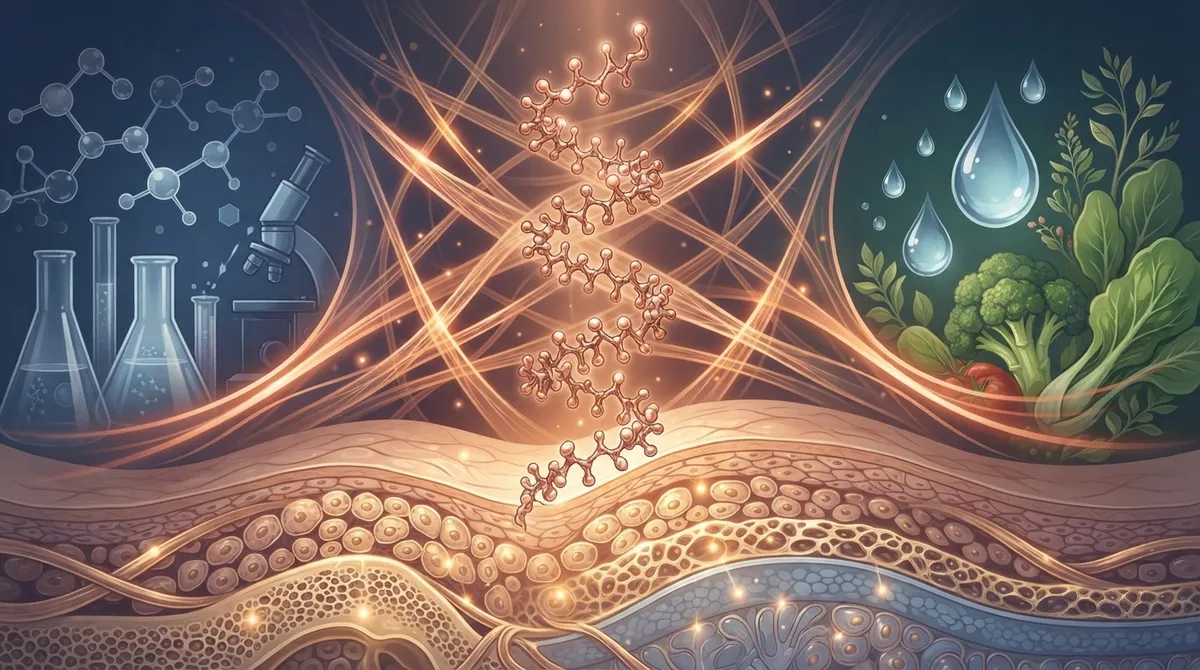
Key Takeaways
- GHK-Cu is a naturally occurring copper-binding peptide that stimulates fibroblasts to produce collagen and other extracellular matrix components, but evidence remains primarily from lab and animal studies rather than large human trials.
- Preclinical wound healing studies show GHK-Cu can accelerate wound closure by 30-41%, but it is not FDA-approved and should be viewed as experimental rather than a proven medical treatment.
- GHK-Cu shows promise across multiple connective tissues including skin, bone, cartilage, and tendons, but research is most developed for skin while other tissue applications remain in early stages.
- Safety data for topical GHK-Cu products is generally favorable with only mild side effects reported, but human clinical trials remain small and quality varies widely between over-the-counter products.
- GHK-Cu works best as part of a comprehensive wellness approach including proper hydration, nutrition, weight management, and preventive healthcare rather than as a standalone solution.
- The copper binding in GHK-Cu is essential for its biological activity; products listing only 'GHK' without copper may lack the same research backing as GHK-Cu formulations.
Your skin, tendons, and joints all depend on strong connective tissue to stay healthy. As we age, this tissue naturally breaks down, leading to wrinkles, slower healing, and stiffer joints. That is why more wellness-focused patients are asking about GHK-Cu, a copper peptide studied for its role in tissue repair and collagen support. If you have seen this ingredient mentioned in skincare products or regenerative wellness programs, you may wonder what the science actually says.
This guide breaks down six key facts about GHK-Cu and connective tissue in simple terms. We will cover how it works, what the research shows, and where it fits into a broader wellness routine. Whether you are a busy parent trying to stay ahead of aging, or a wellness seeker exploring advanced options, this article will help you understand the facts before making any decisions. For personalized guidance, the team at InCare can help you separate proven science from marketing hype.
1. What Is GHK-Cu and Why Does It Matter for Connective Tissue?
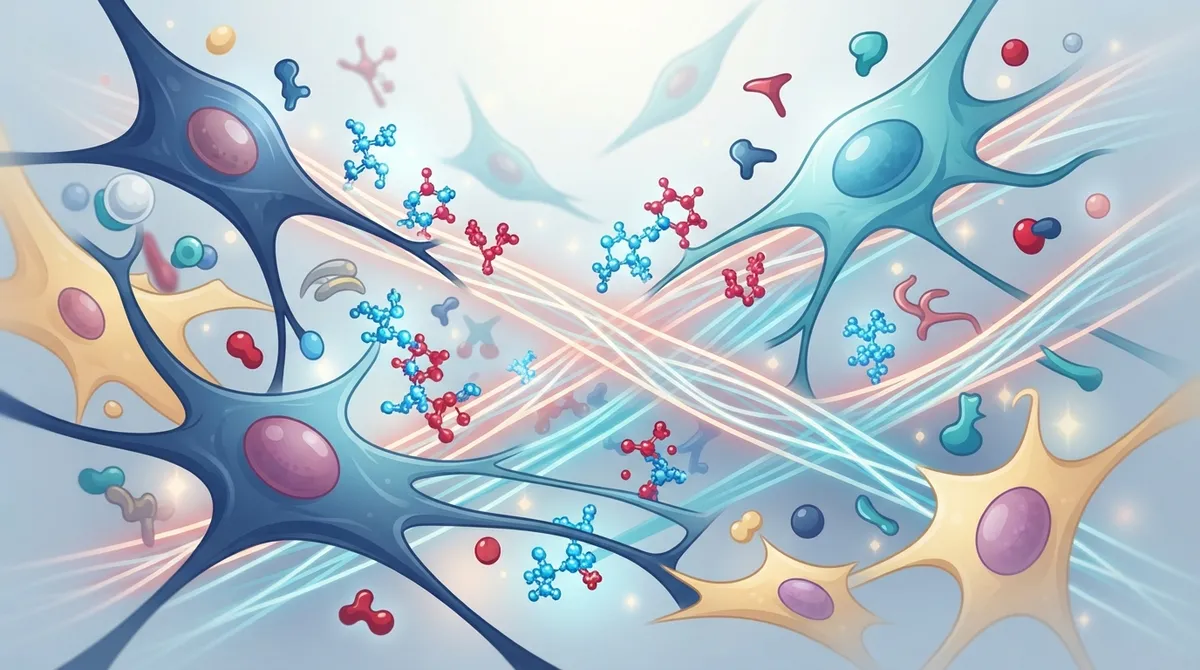
GHK-Cu stands for glycyl-L-histidyl-L-lysine bound to copper. It is a small peptide that occurs naturally in the human body. Scientists first found it in human blood plasma back in 1973, according to research published on PubMed Central.
As we age, natural GHK-Cu levels in the body tend to drop. This decline is one reason researchers became interested in its connection to tissue repair and skin aging. Connective tissue includes skin, tendons, cartilage, and the fascia that supports your muscles. GHK-Cu is studied because it may help support the structures that keep these tissues strong.
In simple terms, GHK-Cu acts like a signal. It tells your cells to ramp up repair processes. This is why it shows up in wellness product formulas and regenerative research, even though it is not yet an approved medical treatment.
2. How GHK-Cu Supports Collagen and Extracellular Matrix Health
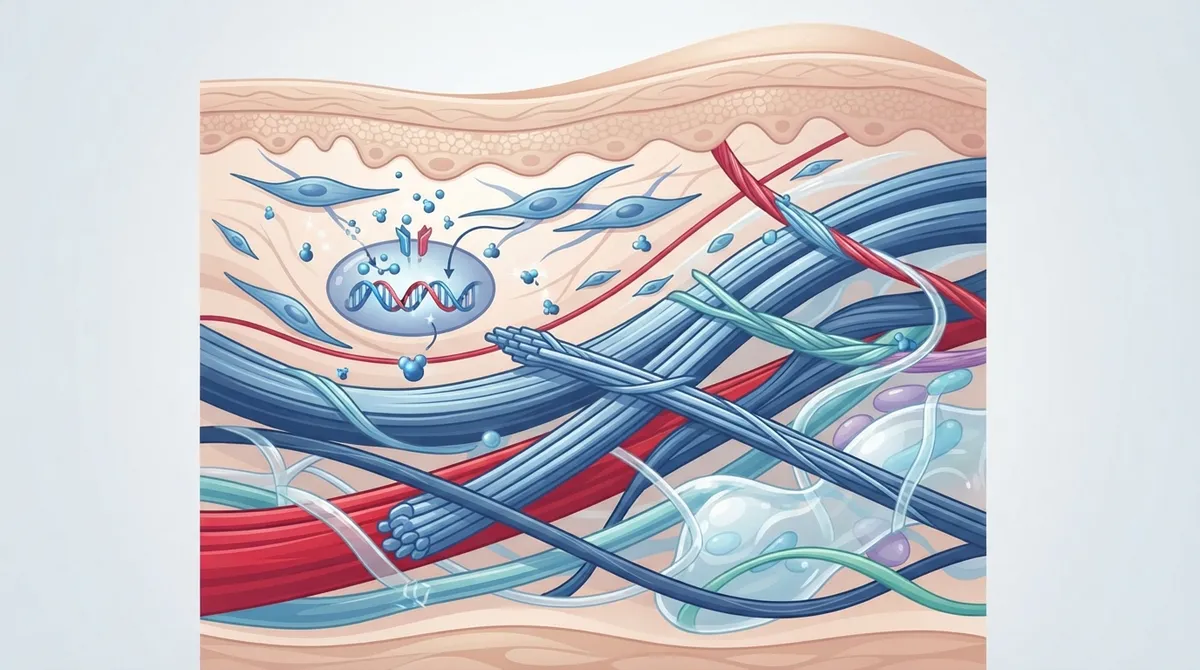
Collagen is the main protein that gives your skin, tendons, and joints their strength. Research shows GHK-Cu can stimulate cells called fibroblasts to produce more collagen. It also appears to boost other important building blocks, including glycosaminoglycans and decorin.
Together, these components make up what scientists call the extracellular matrix. Think of this matrix as the scaffolding that holds your tissues together. A study cited on PMC found that GHK-Cu increased extracellular matrix accumulation in laboratory wound models. This means the peptide may help rebuild tissue structure after injury.
Here is a quick breakdown of what GHK-Cu has been shown to influence in preclinical research:
- Collagen synthesis in fibroblast cells
- Glycosaminoglycan production, which helps tissue hold moisture
- Decorin levels, a protein that organizes collagen fibers
- Blood vessel formation, known as angiogenesis
- Overall wound repair pathways in animal models
3. What Does the Research Say About Wound Healing?
Wound healing is one of the most studied areas for GHK-Cu. A 2015 review looked at 12 animal studies and 4 human studies on this topic. The human studies were small, with sample sizes ranging from just 20 to 67 participants.
Some standardized dermal injury models reported wound closure rates that were 30 percent to 41 percent faster with GHK-Cu compared to controls. A more recent 2026 evidence summary noted a mean 41 percent reduction in wound area at 30 days in one dressing study. This was compared to an expected 25 percent reduction based on historical data, according to the Peptide Journal.
These numbers sound promising, but it is important to keep them in context. Here is what you should know:
- Most of the strongest evidence comes from lab and animal studies, not large human trials.
- Human research remains limited in scale and sample size.
- Current findings are not strong enough to support GHK-Cu as a standard medical wound treatment.
- More large-scale, controlled human studies are needed before firm conclusions can be drawn.
- Existing data still points to a promising area for future research.
4. Beyond Skin: Other Connective Tissues Under Study
While skin research gets the most attention, GHK-Cu has also been studied in other connective tissues. A 2018 review documented its regenerative activity across several tissue types, including lung connective tissue, bone, liver, and stomach lining.
Researchers have also looked at its potential role in cartilage, tendon, and fascia repair, though this research is less developed than skin studies. According to MyPeptideStory, interest in joint and tendon applications is growing, but solid clinical evidence in humans is still limited.
Here is a simple table showing where GHK-Cu research currently stands across different tissue types:
|
Tissue Type |
Research Stage |
Evidence Strength |
|---|---|---|
|
Skin |
Animal and small human studies |
Moderate |
|
Wound Healing |
Preclinical and limited clinical |
Moderate |
|
Bone |
Early laboratory research |
Low to moderate |
|
Lung Tissue |
Laboratory models |
Low |
|
Cartilage and Tendon |
Emerging interest |
Low |
|
Fascia |
Early exploratory research |
Low |
This table shows why GHK-Cu is still considered experimental outside of cosmetic skin applications. If you are curious about how peptide science fits into a broader wellness plan, our peptide therapy program in Tampa can help answer your questions.
5. Is GHK-Cu Safe, and Is It FDA Approved?
Safety data for GHK-Cu in topical products and research settings has generally been favorable. Most reported side effects are mild, such as skin irritation in sensitive individuals. However, it is important to understand what GHK-Cu is not.
GHK-Cu is not approved by the FDA for wound healing or any other medical condition. This means it should be viewed as an experimental ingredient rather than a proven treatment. Clinical guidelines do not currently support its routine use in primary care settings for connective tissue repair.
Here are key safety points to keep in mind:
- Most safety data comes from cosmetic and topical use, not injectable treatments.
- Human clinical trials remain small and limited in scope.
- GHK-Cu is not a substitute for medically proven wound care.
- Anyone considering GHK-Cu products should discuss it with a healthcare provider first.
- Quality and purity can vary widely between over-the-counter products.
Preclinical research has even linked GHK-Cu to regulation of 57 stem cell-associated genes in regenerative models, according to the Vitalis Clinic. While this sounds impressive, it reflects lab findings rather than confirmed human outcomes. Understanding this difference is part of what makes an annual wellness visit so valuable, since your doctor can help you evaluate emerging trends with a critical eye.
6. How GHK-Cu Fits Into a Whole-Body Wellness Approach
GHK-Cu should not be viewed as a stand-alone solution. Instead, think of it as one small piece of a larger puzzle. Real, lasting improvements to connective tissue health come from a combination of factors working together.
Here are proven strategies that support connective tissue health alongside any topical products you may use:
- Get regular cancer screenings and preventive checkups to catch health issues early.
- Maintain a healthy weight through a medically supervised weight loss program.
- Support hydration and nutrient levels with IV hydration and vitamin drips.
- Track your progress using advanced body composition analysis.
- Understand your personal health risks through DNA gene testing.
- Build a relationship with a trusted primary care provider who can guide your wellness decisions.
This combined approach gives your body the best chance to repair and maintain healthy tissue over time. It also helps you avoid relying on unproven ingredients alone. Many patients in Tampa and Riverview turn to InCare because our providers, including Dr. Pramjeet Ahluwalia, take time to explain the science behind wellness trends before recommending any treatment plan.
Comparing GHK and GHK-Cu: What Is the Difference?
Many people confuse GHK with GHK-Cu, but they are not exactly the same. GHK is the peptide alone, while GHK-Cu is the peptide bound to copper. This copper binding appears to be important for its biological activity.
|
Feature |
GHK |
GHK-Cu |
|---|---|---|
|
Structure |
Tripeptide only |
Tripeptide bound to copper |
|
Natural Presence |
Found in the body |
Found in human plasma since 1973 |
|
Research Focus |
Limited standalone studies |
More extensive tissue repair research |
|
Common Use |
Rarely used alone |
Common in topical wellness products |
Understanding this distinction helps you make sense of product labels and marketing claims. If a product only lists "GHK" without copper, it may not have the same research backing as GHK-Cu formulations.
Why Work With a Primary Care Team on Emerging Wellness Trends
New wellness ingredients and peptides appear in the market every year. It can be hard to know which ones are backed by solid science and which ones are simply trendy. This is where a trusted primary care partner becomes valuable.
At InCare, our providers stay current on wellness research so you do not have to sort through conflicting information alone. We combine evidence-based medicine with advanced tools like metabolic breath analysis to give you a complete picture of your health. Our Tampa and Riverview locations make it easy to get expert guidance close to home.
Patients consistently share positive experiences with our team. You can visit us on Google — InCare to read reviews from real patients about their visits. We also share wellness updates and educational content on Facebook, Instagram, and TikTok to help our community stay informed.
Final Thoughts on GHK-Cu and Connective Tissue Health
GHK-Cu remains a fascinating area of wellness research, especially for connective tissue support and skin repair. The science shows real promise in lab and animal studies, with some encouraging early human data as well. However, it is still considered experimental and is not FDA approved for medical treatment.
The best approach is to pair curiosity about new wellness trends with guidance from a trusted medical team. Our experienced providers can help you evaluate whether emerging options like GHK-Cu fit into your personal health goals. Ready to talk with a provider about your connective tissue health and overall wellness plan? Book your appointment today and take the next step toward proactive, whole-body care.
FAQs
Q: What is GHK-Cu and how does it work for connective tissue?
A: GHK-Cu is a naturally occurring copper-binding peptide studied for its ability to stimulate collagen production and support extracellular matrix repair. Research suggests it activates fibroblast cells, which help rebuild connective tissue structures like skin, tendons, and cartilage. Most evidence for these effects comes from laboratory and animal studies.
Q: Does GHK-Cu help collagen production?
A: Yes, research shows GHK-Cu can stimulate fibroblasts to increase collagen synthesis, along with other matrix components like glycosaminoglycans and decorin. These effects have been documented mainly in preclinical studies. Human clinical evidence remains limited but supportive.
Q: Is GHK-Cu effective for wound healing?
A: Preclinical studies show GHK-Cu can accelerate wound closure by 30 to 41 percent in standardized dermal injury models. A 2026 evidence summary reported a 41 percent reduction in wound area at 30 days in one study. However, this evidence is not yet strong enough to support routine medical use.
Q: Is GHK-Cu safe to use topically?
A: Safety data for topical GHK-Cu products has generally been favorable, with mild irritation being the most commonly reported issue. It is not FDA approved for any medical indication, so it should be viewed as experimental. Always consult a healthcare provider before starting new wellness products.
Q: What is the difference between GHK and GHK-Cu?
A: GHK is the peptide alone, while GHK-Cu is the same peptide bound to copper. The copper component appears essential for its biological activity in tissue repair research. Most wellness products and studies focus on GHK-Cu rather than GHK alone.