
Key Takeaways
- Most popular anti-aging peptides like BPC-157, ipamorelin, and CJC-1295 lack large human safety trials and remain experimental, unlike FDA-approved metabolic peptides such as semaglutide which have extensive clinical data.
- Growth-hormone-stimulating peptides carry specific risks including fluid retention, joint pain, blood sugar changes, and possible cardiovascular effects that require medical evaluation based on your personal health history before use.
- Compounded peptides from pharmacies have highly variable quality control and documented safety concerns; the FDA has flagged serious risks including immunogenicity and impurities in products like compounded ipamorelin.
- Topical and oral cosmetic peptides deliver only modest, localized skin improvements (hydration and slight wrinkle reduction) and cannot reverse aging throughout your body despite marketing claims.
Anti-aging peptides are everywhere right now. You see them in ads, hear about them from friends, and find them on wellness clinic menus across Tampa and Riverview. But here is the truth: not all peptides are created equal, and some are riskier than marketers admit. Before you spend money or roll up your sleeve for an injection, you need to know which mistakes could hurt your health, your wallet, or both.
Whether you are a busy parent trying to feel more energetic, a young professional exploring wellness trends, or someone who wants proactive, science-backed care, this guide breaks down the six biggest mistakes people make with anti-aging peptides. We will also explain what actually works, what does not, and how to get expert guidance instead of guessing.

Mistake 1: Believing "Anti-Aging Peptide" Is a Real Medical Category
Here is something most wellness ads will not tell you. "Anti-aging peptides" is a marketing term, not an official medical classification. Peptides are simply short chains of amino acids. Your body already uses them as signaling molecules, hormones, and enzyme helpers.
Some peptides are FDA-approved drugs with strong research behind them. Others are experimental compounds sold online with almost no human safety data. Lumping them all together under one flashy label hides these huge differences. Understanding this distinction is the first step toward making a smart decision about your health.
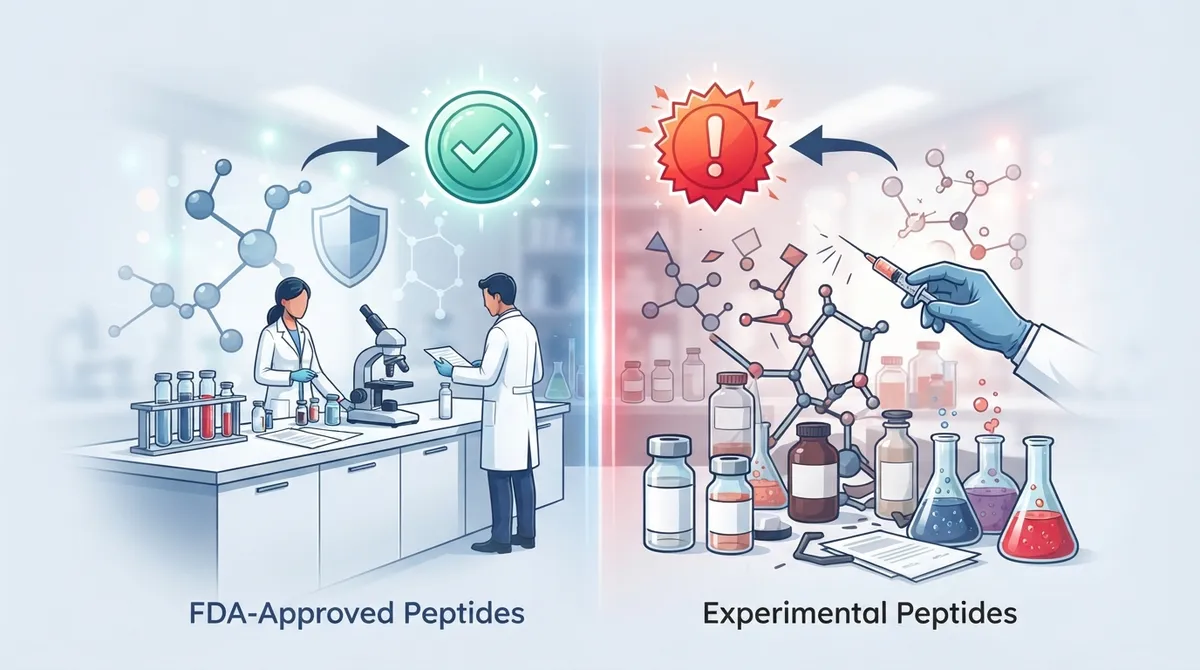
Mistake 2: Confusing FDA-Approved Peptides With Experimental Ones
This mistake can be costly. Medicines like semaglutide and tirzepatide are peptide-based drugs with large clinical trials behind them. They are FDA-approved for specific uses, like managing obesity and type 2 diabetes. However, they are not approved to reverse aging or extend your lifespan. Their connection to healthy aging is indirect. They help by improving metabolic health, which matters for long-term wellness.
On the other hand, peptides like BPC-157, TB-500, ipamorelin, CJC-1295, AOD-9604, MOTS-c, Humanin, and Epitalon are commonly promoted for anti-aging or performance benefits. According to a 2026 review of therapeutic peptides in gerontology, these products often have promising lab or animal data but lack large human trials proving they are safe or effective long term. If a clinic pitches a compound as a proven anti-aging miracle without solid trial data, be skeptical.
Quick Comparison: Evidence Levels by Peptide Type
|
Peptide Category |
Example Compounds |
Evidence Level |
FDA Status |
|---|---|---|---|
|
Approved metabolic peptides |
Semaglutide, Tirzepatide |
Large clinical trials |
FDA-approved for specific conditions |
|
Topical/oral cosmetic peptides |
Copper peptides (GHK-Cu), collagen peptides |
Modest, formulation-specific data |
Not classified as drugs |
|
Popular injectable peptides |
BPC-157, TB-500, Ipamorelin, CJC-1295 |
Mostly preclinical or small trials |
Not FDA-approved for anti-aging use |
Mistake 3: Ignoring the Real Risks of Compounded Peptides
Many injectable peptides are sold through compounding pharmacies. This might sound convenient, but it comes with real risks. The FDA has flagged specific safety concerns about several of these products.
- Compounded BPC-157 has limited or no safety data for many routes of use, according to FDA materials.
- Compounded ipamorelin has documented risks including immunogenicity and impurities.
- One published report noted serious adverse events, including death, when ipamorelin was given intravenously for a different medical purpose.
- Quality control varies widely between compounding pharmacies, meaning purity and dosing are not guaranteed.
This does not mean every route or every product carries the same danger. But it does mean you should never assume a peptide is safe just because it is available for purchase. Working with a licensed primary care provider who understands these risks is far safer than ordering products online.
Mistake 4: Overlooking Growth-Hormone-Related Peptide Risks
Peptides like ipamorelin and CJC-1295 work by stimulating growth hormone release. This sounds appealing for muscle tone and energy, but the risks are real and specific to each compound.
- Fluid retention and swelling in the hands, feet, or joints.
- Joint pain or stiffness that can worsen with prolonged use.
- Changes in blood sugar control, including glucose intolerance and insulin resistance.
- Possible effects on cardiovascular risk factors, depending on dose and duration.
- Theoretical concerns about tissue growth in people with a history of certain cancers.
These risks depend heavily on the specific peptide, dose, and route of delivery. A trained physician can assess your medical history and determine whether any peptide-based therapy makes sense for your situation. This is not a decision to make based on an online forum or an unlicensed seller's marketing claims.
Mistake 5: Expecting Copper or Collagen Peptides to Deliver Whole-Body Anti-Aging Results
Topical and oral peptides marketed for skin health are a different story. These include signal peptides, copper peptides like GHK-Cu, and collagen-derived peptides. A 2026 systematic review found some measurable benefits from these products.
- Skin hydration improved with a mean difference of 5.80 in the studies reviewed.
- Wrinkle appearance improved slightly, with a mean difference of 0.35.
- Skin brightness improved with a mean difference of 2.40.
- Skin elasticity results were minimal or inconsistent across studies.
These are modest, cosmetic-level improvements. They do not mean the peptide is working systemically to slow aging throughout your body. A separate 2025 review noted a significant shortage of in-vivo clinical trials validating many bioactive cosmetic peptides. In short, your wrinkle cream might help your skin look a bit fresher, but it will not extend your lifespan or reverse cellular aging.
Mistake 6: Skipping a Proper Medical Evaluation Before Starting Any Peptide
This might be the biggest mistake of all. Many people jump into peptide use without ever discussing it with a qualified clinician. A responsible primary care evaluation should always come first.
Before considering any peptide-related therapy, your provider should review several key factors:
- Your personal health goals and expectations.
- Your full medical history, including cancer history and pregnancy status.
- Current medications and supplements you are taking.
- Your glucose levels and cardiovascular risk factors.
- Where the product comes from and whether it is properly tested and regulated.
Skipping this step means you could be taking unnecessary risks without knowing it. At InCare, our peptide therapy team in Tampa reviews these details with every patient before recommending any treatment plan, whether that involves an FDA-approved medication or a broader wellness strategy.
What Actually Supports Healthy Aging
While peptides get a lot of buzz, the foundation of healthy aging has not changed much. Research and clinical experience continue to point to the same basics:
- Regular physical activity, including resistance training to preserve muscle mass.
- Balanced nutrition that supports metabolic health.
- Consistent, quality sleep.
- Avoiding tobacco products.
- Staying current on vaccinations and preventive screenings.
- Managing chronic conditions like high blood pressure, diabetes, and high cholesterol.
These strategies may sound less exciting than a peptide injection, but they have decades of solid evidence behind them. Pairing these habits with routine cancer screenings and regular checkups gives you a much stronger foundation than chasing unproven shortcuts.
How InCare Approaches Peptide Conversations With Patients
At InCare, we believe honesty matters more than hype. Our providers, including Dr. Naveen Paddu and Dr. Pramjeet Ahluwalia, take time to walk patients through the real evidence behind any peptide or wellness treatment. We combine this honesty with advanced tools like DNA gene testing, body composition analysis, and metabolic breath analysis to build a wellness plan around your actual biology, not marketing claims.
We also offer supportive services such as IV hydration and vitamin drips and hair restoration treatments for patients looking for evidence-supported ways to feel and look their best. Patients across Tampa and Riverview trust our team because we prioritize safety over trends. You can read what our patients say by visiting our InCare location on Google, where our clinic holds a strong reputation built on honest, personalized care.
Questions to Ask Before Trying Any Anti-Aging Peptide
Before committing to any peptide-based product, ask yourself and your provider these questions:
- Is this peptide FDA-approved, or is it considered experimental?
- What does the actual clinical evidence show, not just marketing claims?
- Where is this product sourced, and is it third-party tested?
- What are the specific risks based on my personal health history?
- Are there safer, proven alternatives that could achieve similar goals?
If a provider cannot answer these questions clearly, that is a red flag. Trustworthy clinics welcome these questions and provide transparent answers.
You can also follow InCare on Facebook or Instagram for ongoing wellness education, and check out our tips on Tik Tok for quick, science-based health insights.
Final Thoughts on Anti-Aging Peptides
Anti-aging peptides are not a single, simple category. Some, like FDA-approved metabolic medications, have strong research behind them for specific health conditions. Others, especially many injectable compounds sold at longevity clinics, remain experimental with limited human safety data. Cosmetic peptides in creams and serums may offer modest skin benefits, but they will not reverse aging throughout your body.
The smartest approach is to avoid these six mistakes, ask the right questions, and work with a licensed medical team that puts your safety first. Real, lasting wellness comes from a combination of proven medical care and honest guidance, not shortcuts.
If you are curious about which wellness strategies actually fit your health profile, our team is ready to help. Reach out to our care team today to schedule a consultation, or go ahead and book your appointment online now to start your personalized wellness journey with InCare in Tampa or Riverview.
FAQs
Q: Do anti-aging peptides actually work in humans?
A: It depends on the peptide. FDA-approved peptide medicines like semaglutide have strong clinical evidence for specific conditions such as obesity, though not for reversing aging itself. Many popular injectable peptides marketed for anti-aging lack large human trials and remain unproven for longevity benefits.
Q: Which peptides are FDA-approved, and which are experimental?
A: Semaglutide and tirzepatide are FDA-approved for conditions like obesity and diabetes, backed by extensive clinical trials. Peptides such as BPC-157, TB-500, ipamorelin, and CJC-1295 are generally considered experimental for anti-aging use and lack the same level of regulatory approval or safety data.
Q: Is BPC-157 safe or FDA-approved for anti-aging use?
A: BPC-157 is not FDA-approved for anti-aging or any other indication. The FDA has noted limited or no safety information for its proposed uses, meaning there is not enough data to confirm whether it is safe for humans in various routes of administration.
Q: What are the side effects of ipamorelin, CJC-1295, and other growth-hormone peptides?
A: Possible side effects include fluid retention, joint pain, changes in blood sugar control, and potential cardiovascular effects. The FDA has also identified concerns about immunogenicity and impurities in compounded ipamorelin, underscoring the need for medical supervision.
Q: Do copper peptides or collagen peptides reduce wrinkles?
A: A 2026 systematic review found modest improvements in skin hydration, brightness, and wrinkle appearance from topical and oral cosmetic peptides. However, these effects are formulation-specific and do not indicate any broader anti-aging benefit throughout the body.