Key Takeaways
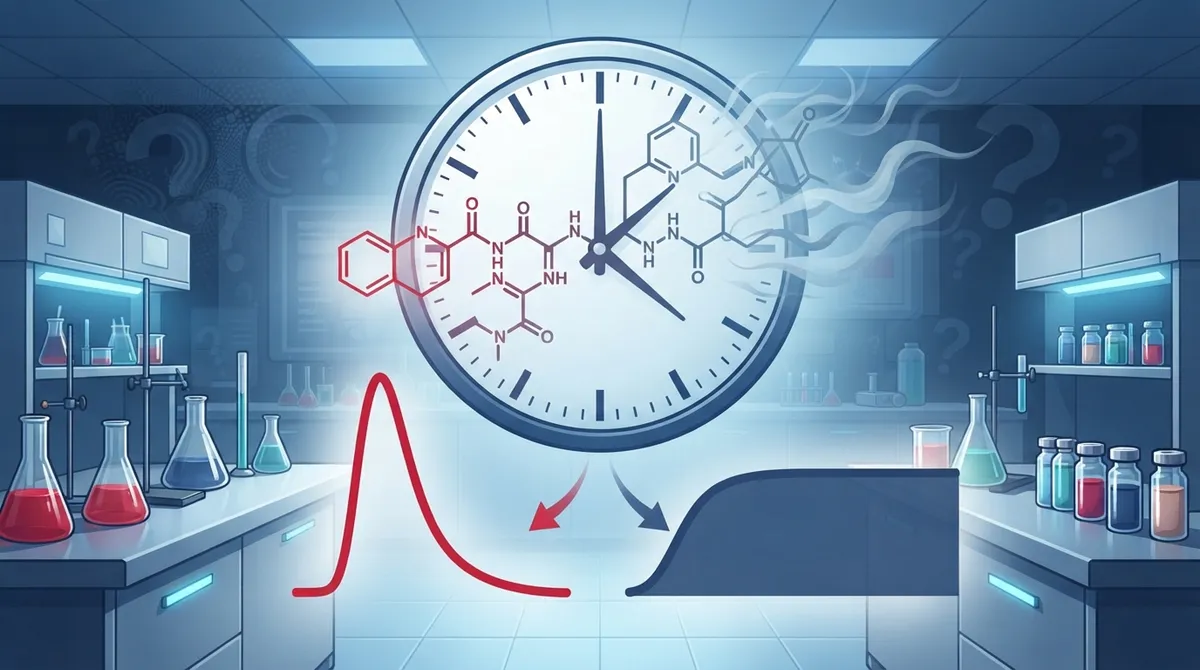
- The commonly cited 2-hour half-life comes from IV studies in 1999, not subcutaneous injections—the FDA confirmed no pharmacokinetic data exists for the typical injection method used in wellness settings.
- Half-life measures how fast a drug clears from blood, not how long its effects last; peak growth hormone response occurred at 40 minutes in studies, completely separate from the elimination half-life timing.
- Ipamorelin is not FDA-approved for any wellness claims like anti-aging, muscle recovery, or sleep improvement, and marketing assertions about these benefits lack adequate human research support.
- The FDA has flagged compounded ipamorelin as presenting significant safety risks, including potential immune system reactions, serious adverse events, and deaths reported in clinical studies.
- A 2-hour half-life should never determine your dosing schedule alone; safe dosing requires clinical guidance based on your age, health conditions, medications, and individual health goals.
- Always ask your provider for third-party testing verification, specific evidence for your exact goal, FDA safety status, and monitoring plans before considering any peptide therapy option.
If you have searched wellness forums or talked to a friend about peptide therapy, you may have heard the phrase "ipamorelin half-life" tossed around like it explains everything. It does not. This number gets misunderstood more than almost any other detail in the wellness world. People assume a short half-life means a substance is gentle, safe, or well-studied for their exact use case. None of that is automatically true.
At InCare, our primary care team in Tampa and Riverview believes patients deserve facts, not marketing buzzwords. Whether you are a busy parent squeezing in research between school drop-offs or a wellness-focused professional comparing options, you deserve a clear picture. Below, we break down five facts about ipamorelin half-life that often get twisted, ignored, or oversimplified. We will also explain why this single number cannot tell you if a peptide fits into your health plan.
1. The 2-Hour Number Comes From IV Studies, Not Everyday Use
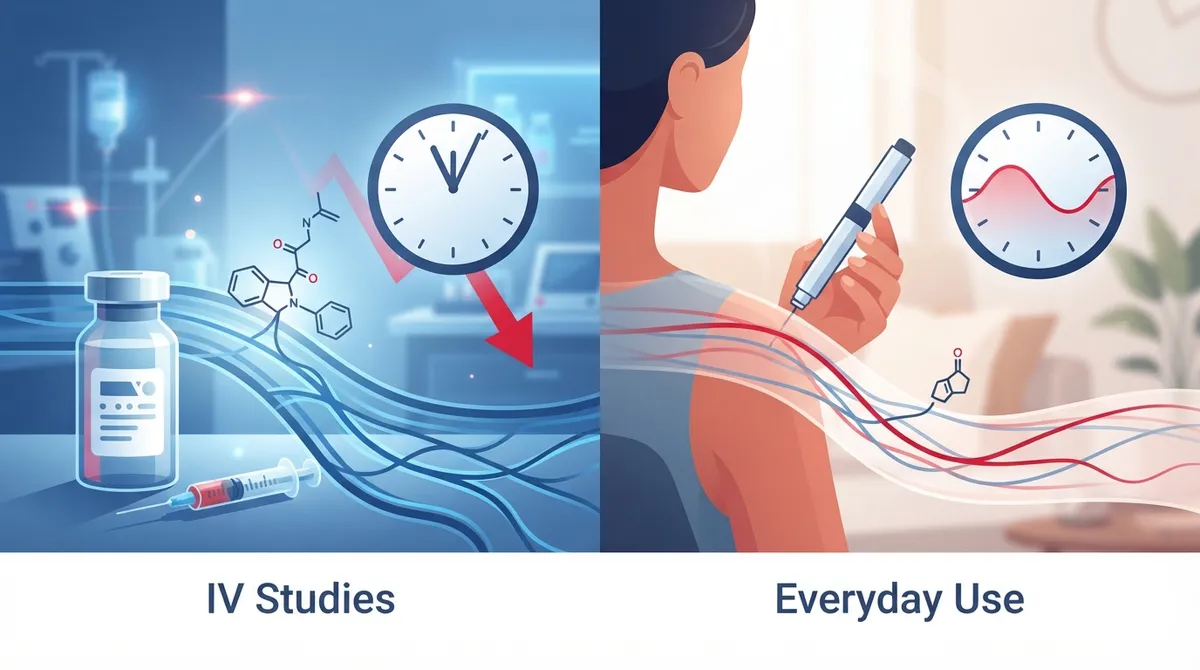
The most commonly cited figure for ipamorelin's half-life in humans is about 2 hours. This estimate comes from a 1999 pharmacokinetic study by Gobburu and colleagues, using intravenous (IV) administration in healthy volunteers. That is an important detail many wellness articles skip over.
Most people considering peptide therapy are not receiving IV infusions. They are looking at subcutaneous injections, the kind given just under the skin. The FDA's 2024 compounding advisory review specifically noted that no pharmacokinetic or pharmacodynamic data existed for the proposed subcutaneous route. In plain terms: nobody has published solid science showing how long ipamorelin stays active in the body when injected the way it is typically marketed for wellness use.
This distinction matters. Applying an IV-based number to a completely different method of delivery is like reading a recipe for grilling and assuming it works the same way in a slow cooker. The ingredients might be similar, but the process and results can differ significantly.
2. Half-Life and "How Long It Works" Are Not the Same Thing
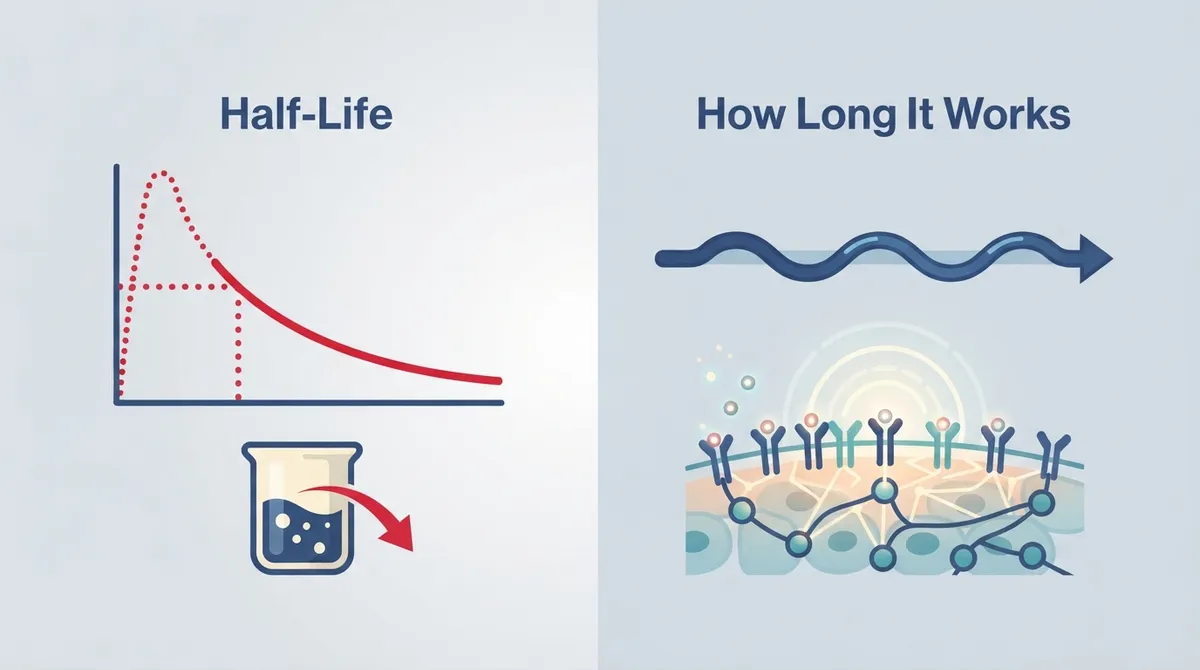
This is one of the most confusing parts of pharmacology for anyone outside a clinical setting. A drug's half-life measures how quickly it clears from your bloodstream. It does not measure how long its effects last in your body.
In the same 1999 IV study, researchers observed that growth hormone (GH) response was episodic. Peak GH levels appeared around 40 minutes after infusion, not at the same time as the drug's half-life mark. This tells us the biological response and the plasma clearance rate are two separate measurements entirely.
Here is a simple way to think about it:
- Half-life tells you how fast a substance leaves your blood.
- Biological effect duration tells you how long your body keeps responding.
- These two numbers rarely match up perfectly, and assuming they do can lead to wrong conclusions about dosing frequency.
Anyone comparing peptide options should understand this gap. A short half-life does not automatically mean you need frequent dosing, and it does not confirm how long any wellness benefit might last.
3. Ipamorelin Is Not FDA-Approved for Wellness Goals
This fact gets buried the most, and it is arguably the most important one. Ipamorelin is a ghrelin-receptor agonist and growth hormone secretagogue. Researchers have studied it for stimulating GH release in controlled settings. However, it is not FDA-approved as a treatment for anti-aging, body composition, athletic recovery, sleep improvement, or any other common wellness claim.
The human pharmacokinetic data that does exist is limited. It does not establish evidence for these popular wellness uses. When you see marketing claims connecting ipamorelin to youthful skin, faster muscle recovery, or better sleep, remember that the underlying research does not currently support those specific outcomes in the way advertisements suggest.
This is why working with a licensed clinician matters so much. A knowledgeable provider can walk you through what the science actually shows versus what marketing implies. For readers exploring hormone-related wellness options, our team of providers at InCare can offer grounded, honest guidance rather than hype.
4. The FDA Has Flagged Safety Concerns About Compounded Ipamorelin
Safety is not a side note here. It is central to the conversation. The FDA has listed ipamorelin acetate among substances that may present significant safety risks in 503B outsourcing-facility compounding. This is not a minor technical detail buried in fine print.
The agency's concerns include:
- Potential immunogenicity, meaning your immune system could react negatively to aggregation or peptide-related impurities.
- Serious adverse events, including death, reported in a published study using intravenous ipamorelin for gastric motility purposes.
- A lack of established safety data for the subcutaneous route commonly used in wellness settings.
These are not reasons to panic, but they are reasons to pause. Anyone considering compounded peptides should ask hard questions about sourcing, quality control, and what evidence actually supports the product being offered. A short half-life does not cancel out these safety considerations. Product quality and clinical oversight matter just as much, if not more.
5. Half-Life Numbers Should Never Set Your Dosing Schedule Alone
Perhaps the biggest misunderstanding is this: people assume a 2-hour half-life means they should base an injection schedule around that number. This is a mistake. The approximately 2-hour figure is not a dosing recommendation. It does not establish a safe or effective dose, injection frequency, or treatment duration for any individual.
Dosing decisions require looking at your full health picture, not one isolated lab number from a study using a different delivery method. Your age, existing conditions, medications, and overall health goals all play a role in what (if anything) makes sense for you. This is exactly the kind of nuanced decision-making that belongs in a conversation with a licensed provider, not something you calculate from an internet chart.
At InCare, we encourage patients across Tampa and Riverview to bring these questions directly to their care team. If you are curious about hormone-related wellness options, including how they fit (or do not fit) into a broader plan, our providers can walk through the evidence with you. You can also explore related topics like peptide therapy in Tampa to better understand how our clinic approaches these conversations.
Comparing What Is Known Versus What Is Marketed
To make this easier to digest, here is a simple comparison table showing the gap between commonly marketed claims and what current research actually supports.
|
Common Marketing Claim |
What Current Research Shows |
|---|---|
|
Ipamorelin has a confirmed 2-hour half-life for injections |
The 2-hour figure comes from IV studies; subcutaneous data has not been established |
|
Short half-life means it is safe |
FDA has flagged safety risks, including immunogenicity and serious adverse events |
|
Ipamorelin is proven for anti-aging and recovery |
Human evidence for these wellness uses is limited and not FDA-approved |
|
Half-life tells you how often to inject |
Half-life does not determine dosing schedules; that requires clinical guidance |
|
Peak GH response equals half-life timing |
Peak GH occurred around 40 minutes, separate from the elimination half-life |
Why Working With a Primary Care Team Matters Here
Wellness trends move fast, especially online. Something can go from obscure peptide forum chatter to mainstream wellness advice in a matter of months. But fast-moving trends do not always come with fast-moving research to back them up.
This is where a trusted primary care relationship becomes valuable. Instead of piecing together information from scattered sources, you get a single point of contact who understands your full health history. At InCare, our approach includes:
- Honest conversations about what current evidence does and does not show
- Screening and lab work to establish a baseline before considering any new therapy
- Guidance on alternatives that may better fit your specific health goals
- Ongoing monitoring if you and your provider decide a treatment path makes sense
We serve patients through our Tampa and Riverview locations, as well as virtual visits for those who prefer telemedicine. Our providers, including Dr. Naveen Paddu, Dr. Pramjeet Ahluwalia, and Dr. Teshy John, bring years of clinical experience to these conversations.
What to Ask Before Considering Any Peptide Therapy
If you are still curious about peptide options after reading this, here are smart questions to bring to your next appointment:
- What specific evidence supports this treatment for my exact goal?
- Is this product third-party tested for purity and quality?
- What does the FDA say about this substance and its compounding status?
- How will we monitor for side effects or complications?
- Are there alternative approaches with stronger safety data?
These questions apply to ipamorelin and many other peptides circulating in wellness spaces today. A good provider will not be offended by these questions. They should welcome them as part of informed, collaborative care.
The Bottom Line on Ipamorelin Half-Life
The 2-hour half-life figure is real, but it is narrower and less useful than most marketing suggests. It comes from IV research, not the subcutaneous method typically used in wellness settings. It does not tell you how long effects last, does not confirm safety, and does not set a dosing schedule. Add in the FDA's documented safety concerns about compounded ipamorelin acetate, and the picture becomes clear: this is a topic that deserves careful, clinician-guided conversation rather than quick online conclusions.
InCare has built a reputation across Tampa and Riverview for exactly this kind of grounded, patient-first approach. With a 4.8 out of 5 rating on Google from hundreds of patients, our team focuses on real answers instead of trends. You can visit us on Google — InCare to see what current patients say about their experience with our providers and staff.
We also share ongoing wellness education through our Facebook page, Instagram, and TikTok channels, where our team breaks down health trends in plain language. If you are weighing wellness options and want a clear, honest conversation about what makes sense for your body, our weight loss and wellness programs offer a science-based starting point.
Ready to talk through your options with a provider who prioritizes evidence over hype? Schedule your appointment today and get answers built on real clinical guidance, not internet guesswork.
FAQs
Q: What is the half-life of ipamorelin in humans?
A: The most cited estimate is approximately 2 hours, based on a 1999 pharmacokinetic study using intravenous administration in healthy volunteers. This figure has not been established for subcutaneous use, which is the method typically discussed in wellness settings.
Q: Does ipamorelin's half-life differ between intravenous and subcutaneous use?
A: It may, but the data simply does not exist yet to confirm this. The FDA's 2024 compounding advisory review stated it had not identified pharmacokinetic or pharmacodynamic information for the proposed subcutaneous route.
Q: How long do ipamorelin's effects last compared with its plasma half-life?
A: These are two separate measurements. In the original IV study, peak growth hormone response occurred around 40 minutes after infusion, which does not align directly with the 2-hour half-life figure. Half-life measures blood clearance, not duration of biological effect.
Q: Is ipamorelin FDA-approved for anti-aging or wellness?
A: No. Ipamorelin is not FDA-approved for wellness uses such as anti-aging, body composition, recovery, or sleep improvement. Current human research is limited and does not establish these outcomes.
Q: Is compounded ipamorelin safe, and what does the FDA say about it?
A: The FDA lists ipamorelin acetate among substances that may present significant safety risks in 503B compounding, citing potential immunogenicity and serious adverse events, including death, in a study involving intravenous use. Anyone considering this option should discuss risks thoroughly with a licensed clinician.