
Key Takeaways
- A thorough peptide therapy consultation must include full medical history screening, lab work baseline, and risk assessment for contraindications like thyroid cancer history or pancreatitis before starting treatment.
- Your provider should clearly distinguish between FDA-approved peptides (semaglutide, tirzepatide), compounded versions (unverified by FDA), and investigational peptides like BPC-157 with zero published human safety data.
- Expect honest discussion of common side effects (nausea, diarrhea, pancreatitis risk) and a concrete follow-up monitoring plan tracking weight, blood glucose, kidney function, and gastrointestinal symptoms—not a one-time prescription.
- Compounded GLP-1 shortage allowances ended in 2025; verify current FDA regulations and FDA-approval status with your clinician before starting any peptide to avoid outdated or unregulated treatments.
Peptide therapy has become one of the most talked-about topics in wellness circles across Tampa and Riverview. From weight loss injections to recovery aids, peptides are everywhere on social media. But before you try any peptide, you need a real medical consultation. Not a sales pitch. Not a quick form online. A true peptide therapy consultation checks your health history, reviews your goals, and confirms what is actually safe and legal for you.
This matters more than ever. In 2025, the FDA changed the rules around compounded GLP-1 medicines after supply shortages ended. Many peptides sold online still lack real human safety data. If you are exploring peptide therapy in 2026, you deserve a clinician who separates hype from evidence. This guide breaks down the four essential elements every peptide therapy consultation must include, so you know what to expect and what questions to ask before you start treatment at a clinic like InCare.

1. A Full Medical History and Risk Screening
The first job of any peptide therapy consultation is understanding your body. A good clinician will ask about your medical history, current medications, and family health background. This step is not optional. It protects you from serious complications.
For GLP-1 based peptides like semaglutide and tirzepatide, providers must screen for specific risks. These include:
- Personal or family history of medullary thyroid carcinoma or MEN2 syndrome
- History of pancreatitis or gallbladder disease
- Severe gastrointestinal conditions
- Kidney problems or diabetic retinopathy
- Pregnancy or plans to become pregnant
- Eating disorders or a history of disordered eating
Your provider should also review every medicine and supplement you take. Some diabetes drugs can interact with GLP-1 peptides and cause low blood sugar. This is why a consultation at a trusted primary care clinic matters more than a quick online questionnaire. A thorough review catches problems before they start.
Why Lab Work Often Comes First
Many consultations include baseline blood work. This might check kidney function, blood sugar, or thyroid markers depending on the peptide being considered. Lab results help your provider confirm the treatment fits your health picture. They also create a baseline to track your progress safely over time.
2. Clear Facts About What Is FDA-Approved vs. Investigational
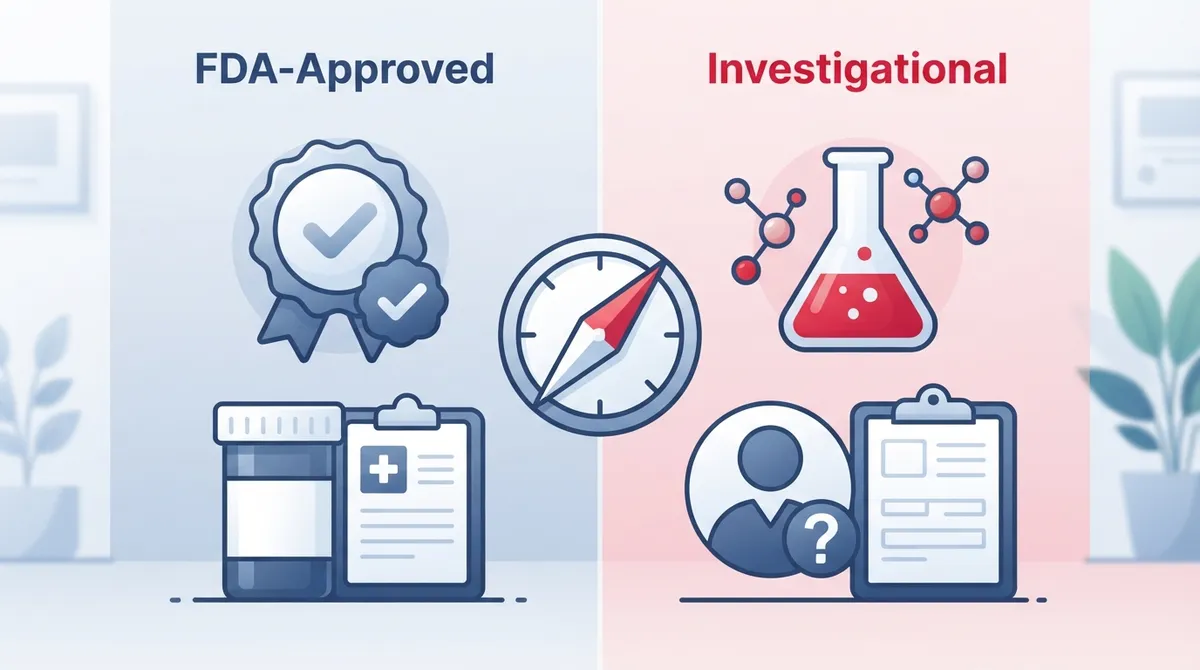
This is the part many wellness clinics skip. Not all peptides are created equal in the eyes of the law or science. A responsible consultation tells you exactly what category your treatment falls into.
|
Category |
Examples |
What This Means for You |
|---|---|---|
|
FDA-Approved |
Semaglutide (Ozempic, Wegovy), Tirzepatide (Mounjaro, Zepbound) |
Approved for specific doses, routes, and indications like diabetes or weight management |
|
Compounded |
Compounded semaglutide or tirzepatide |
Not FDA-approved; quality and safety are not verified by the FDA before sale |
|
Investigational or Unapproved |
BPC-157, TB-500, melanotan II, epitalon |
Limited or no human safety data; often sold as "research chemicals" |
According to a 2025 warning from ECRI and the Institute for Safe Medication Practices, 35 of 36 identified BPC-157 studies were done in animals only. There was no published Phase 1 human safety trial. This is an important fact many patients never hear before starting treatment. You can read more about how BPC-157 is being studied on our page covering 7 facts about BPC-157 every wellness patient should know.
The FDA also updated its shortage rules recently. Tirzepatide was removed from the drug shortage list in December 2024. Semaglutide followed in February 2025. This ended broad compounding allowances tied to shortages. If a clinic still offers compounded versions without explaining these changes, that is a red flag. Learn more about the current rules in our detailed breakdown of 15 FDA approved peptides you should know in 2026.
3. A Realistic Conversation About Benefits and Side Effects
No responsible provider will promise perfect results with zero risk. A quality peptide therapy consultation walks through both sides honestly. This is called shared decision-making, and it is a core part of good medicine.
For GLP-1 medicines, common side effects include:
- Nausea and vomiting, especially when starting or increasing the dose
- Diarrhea or constipation
- Reduced appetite
- Abdominal discomfort
- Rare but serious risks like pancreatitis, gallbladder disease, or worsening diabetic retinopathy
Postmarket safety data adds more context. As of July 31, 2025, the FDA had logged 605 adverse-event reports tied to compounded semaglutide and 545 for compounded tirzepatide. These are spontaneous reports, not proof of cause and effect. But they show why monitoring matters. Our team walks patients through this exact information during every weight loss consultation, so nothing comes as a surprise later.
Marketing terms like "anti-aging," "fast healing," or "limitless energy" deserve extra scrutiny. Strong evidence exists for some peptides and specific uses. Weak or missing evidence exists for others. A good consultation tells you which is which, instead of letting hype make the decision for you.
4. A Plan for Follow-Up and Ongoing Monitoring
Peptide therapy is not a one-time appointment. It is an ongoing relationship between you and your care team. The consultation should end with a clear follow-up plan, not just a prescription.
Depending on the treatment, follow-up visits often track:
- Body weight and blood pressure
- Blood glucose or A1C levels
- Kidney function
- Gastrointestinal symptoms and tolerance
- Nutritional intake and adherence to the plan
- Progress toward your specific health goals
This step is where many online-only peptide sellers fall short. They cannot offer real monitoring because they never see you again after the sale. A clinic-based approach, like the one used at InCare's locations in Tampa and Riverview, keeps your care connected. Peptide therapy should support your broader health plan, not replace it. That means your provider should still be tracking nutrition, sleep, mental health, and chronic disease management alongside any peptide treatment. Our peptide therapy program in Tampa is built around this whole-person model.
How to Prepare for Your First Peptide Therapy Consultation
Walking into your appointment prepared helps you get more value from the visit. Consider bringing:
- A list of current medications and supplements
- Recent lab results, if you have them
- A clear description of your health goals
- Questions about FDA approval status for any specific peptide
- Notes on any past reactions to medications
Being ready with this information helps your provider give you faster, more accurate guidance. It also shows you are serious about safe, effective care rather than a quick fix.
Why Choosing the Right Clinic Matters
Peptide therapy sits at an interesting crossroads between innovation and caution. Some treatments, like FDA-approved GLP-1 medicines, have strong clinical trial data behind them. Others remain experimental despite bold online marketing. This is exactly why the consultation step cannot be skipped or rushed.
At InCare, our providers combine advanced diagnostics with old-fashioned medical caution. We also offer supporting services like DNA gene testing and body composition analysis to build a complete picture of your health before recommending any treatment plan. This whole-body approach helps us tailor peptide therapy, or steer you away from it, based on real data rather than trends.
Patients often ask how InCare compares to typical wellness clinics. The answer lies in our credentialed medical team, including physicians like those featured on our providers page, who prioritize safety over sales targets. You can also see what real patients say about their experience by visiting our InCare location on Google, where the practice holds a strong reputation across Tampa and Riverview.
Staying Informed Beyond the Clinic
Peptide regulations and research keep changing fast. What was allowed under shortage rules in 2024 may no longer apply today. Staying informed protects you from outdated advice, whether it comes from a clinic, a supplement shop, or a social media influencer.
For general health guidance from a government source, the U.S. Food and Drug Administration publishes updates on drug shortages and compounding rules that are worth checking before starting any new peptide. You can also follow InCare's ongoing wellness updates on Facebook and Instagram for practical tips between visits. Short educational videos are also shared on TikTok for patients who prefer quick, digestible content.
Final Thoughts on Peptide Therapy Consultations
A peptide therapy consultation should never feel rushed or transactional. It should feel like a real conversation about your health, your risks, and your goals. The four pillars covered here, medical history review, honesty about FDA status, clear risk discussion, and ongoing follow-up, are what separate safe, effective care from guesswork.
If you are curious whether peptide therapy fits your health goals, the next step is simple. Speak with a licensed provider who can review your history and explain your real options, free of hype. Ready to take that step? Reach out to our team to ask questions, or go ahead and schedule your consultation today at one of our Tampa or Riverview locations.
FAQs
Q: What happens during a peptide therapy consultation?
A: A clinician reviews your medical history, medications, and health goals. They also assess contraindications, order relevant lab work if needed, and explain whether a specific peptide is FDA-approved, compounded, or investigational before creating a monitoring plan.
Q: Which peptide medications are FDA-approved for weight loss or diabetes?
A: Semaglutide products such as Ozempic and Wegovy, and tirzepatide products such as Mounjaro and Zepbound, are FDA-approved for specific diabetes and weight-management indications. Approval applies to particular doses and routes, not every peptide marketed for wellness.
Q: Are compounded peptides legal and safe to use?
A: Compounded medicines are not FDA-approved, and the FDA does not verify their safety or quality before they reach patients. Shortage-based enforcement discretion for compounded semaglutide and tirzepatide ended in 2025, so patients should confirm current rules with their provider.
Q: Is BPC-157 approved for human use?
A: No. BPC-157 is not FDA-approved for human treatment. A 2025 review found that 35 of 36 identified studies were conducted in animals, with no published human safety trial to confirm dosing or effectiveness.
Q: How often should patients follow up after starting a peptide medication?
A: Follow-up frequency depends on the treatment, but most plans include regular check-ins to monitor weight, blood pressure, blood sugar, kidney function, and side effects. Regular visits help your provider adjust the plan and confirm you are meeting your health goals safely.