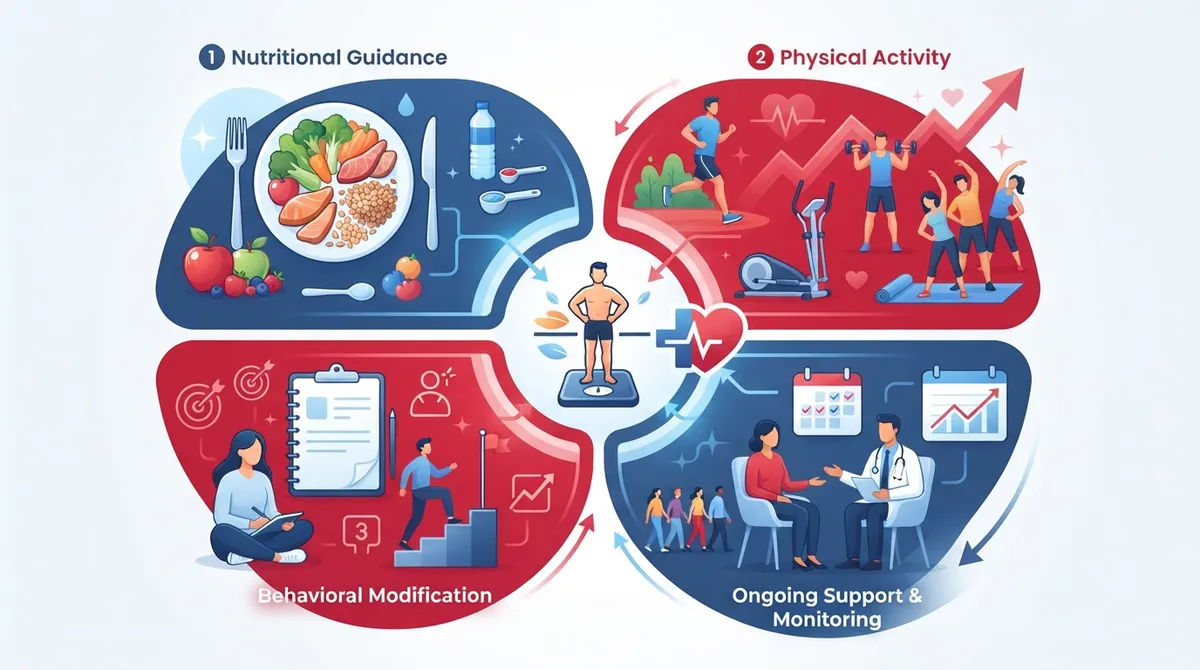
Many people try to lose weight on their own, and many feel stuck after a few weeks. Crash diets, fitness trends, and quick fixes rarely last. The reason is simple. Lasting weight change needs a plan, support, and follow-up. That is what a medical weight management program offers.
In primary care, a weight management program is a structured plan built around your health, your goals, and your daily life. It is not a short diet. It blends nutrition, movement, behavior change, and regular check-ins with a clinician. If you are a busy parent, a working professional, or someone who wants to take charge of your health in 2026, this approach can save you time and frustration.
Below, you will learn the four parts of a program that works, who qualifies, what results are realistic, and how to choose the right clinic in the Tampa Bay area.

What Is a Weight Management Program in Primary Care?
A weight management program is a long-term, evidence-based plan that helps you reach and keep a healthier weight. It is led or guided by a medical team. It looks at the whole person, not just a number on the scale.
The U.S. Preventive Services Task Force (USPSTF) recommends that clinicians offer or refer adults with a BMI of 30 or higher to intensive, multicomponent behavioral programs. These programs can happen in a primary care office or through a referral to another qualified service.
Good programs usually include:
- Goal setting that fits your health and lifestyle
- Changes to eating habits
- More physical activity
- Self-tracking, such as food logs or weigh-ins
- Help with problem-solving around barriers
- Ongoing support from professionals or peers
- A plan to maintain progress and prevent regain
This is quite different from a diet. If you want to understand the gap, read what makes medical weight loss different from dieting.

The 4 Parts of a Weight Management Program That Works
The strongest programs share four core parts. Each one supports the others. Skip one, and results often fade.
1. A Full Health Assessment
Every good plan starts with a clear picture of your health. BMI is a useful screening tool, but it does not tell the whole story. A clinician should also look at your medical history, current medicines, sleep, stress, mental health, and any weight-related conditions.
Common checks include blood pressure, blood sugar, cholesterol, and thyroid function. Advanced tools add more detail. For example, body composition analysis shows how much of your weight is fat, muscle, and water. This matters because two people with the same weight can have very different health risks.
Metabolic testing can also help. A metabolic breath analysis measures how your body uses energy, so your plan can match your real needs instead of a guess.
2. Personalized Nutrition and Activity Guidance
The best eating plan is the one you can follow for years. A strong program does not hand you a generic meal plan. It asks what you like to eat, when you eat, how you cook, and what your schedule looks like.
Activity works the same way. A new parent may start with 10-minute walks. A desk worker may build strength training into a lunch break. Small steps add up, and they feel doable.
Timing can matter too. You can learn more in these meal timing tips for weight loss.
3. Behavior Support and Regular Follow-Up
This part is where many self-guided efforts fail. Habits are hard to change alone. Research shows that program intensity matters. The USPSTF found that effective programs often lasted one to two years, and most offered at least 12 sessions in the first year.
Regular visits give you a place to review progress, fix problems, and adjust the plan. They also keep you accountable in a kind, practical way. Your clinician can help with sleep, stress, emotional eating, and plateaus.
Follow-up also catches issues early. If a medicine is affecting your weight or a health condition needs attention, you do not have to wait for a yearly physical.
4. Medical Options When They Are Appropriate
For some adults, lifestyle changes alone are not enough. In those cases, a clinician may consider prescription weight-management medication alongside lifestyle care.
The National Institute of Diabetes and Digestive and Kidney Diseases (NIDDK) describes typical eligibility as a BMI of 30 or higher, or a BMI of 27 or higher with a weight-related health problem. The NIDDK also reports that adults who take these medicines as part of a lifestyle program lose, on average, 3% to 12% more of their starting weight after one year than those in a lifestyle program without medicine.
Medicine is not right for everyone. A clinician must review your health, other medicines, and goals first. To learn more about options, see this guide on how to choose the best injection for weight loss in 2026. You can also review weight loss injection costs so there are no surprises.
What Results Should You Expect?
Realistic goals protect your motivation. A common first target is to lose at least 5% of your starting body weight. For a person who weighs 200 pounds, that is about 10 pounds.
This may sound small, but it matters. The NIDDK notes that losing 5% to 10% of body weight may improve blood sugar, blood pressure, and triglyceride levels. Many of these changes lower the risk of long-term disease.
Averages from research also help set expectations. A review for the USPSTF found average first-year losses of about 4 to 7 kg (8.8 to 15.4 pounds) among people in behavioral programs with 12 to 26 sessions. Keep in mind that these are group averages. Your own results will depend on your health, your plan, and how closely you can follow it.
|
Goal Level |
Example at 200 lb Starting Weight |
Possible Health Benefit |
|---|---|---|
|
5% loss |
About 10 lb |
Better blood sugar and blood pressure |
|
7% loss |
About 14 lb |
Lower risk markers for many patients |
|
10% loss |
About 20 lb |
Improved triglycerides and further gains in other markers |
Who Is a Good Fit for a Weight Management Program?
Many adults can benefit. You may be a good fit if you:
- Have a BMI of 30 or higher
- Have a BMI of 27 or higher plus a condition such as high blood pressure, prediabetes, or sleep apnea
- Have tried diets before and regained weight
- Want a safe, guided plan instead of guessing
- Have a health condition that makes weight changes more complex
If you live with diabetes, a medical approach can be especially helpful. Read how medical weight loss supports diabetics. For a broader view, see who can benefit from medical weight loss programs.
Care should always feel respectful and person-centered. A good clinician listens, avoids blame, and focuses on health, not appearance.
Why a Primary Care Setting Makes a Difference
Weight rarely stands alone. It connects to sleep, hormones, mood, medicines, and chronic conditions. A primary care clinic can look at all of these at once.
This matters for busy families and professionals. You can manage weight, preventive screenings, and other health needs in one place. Your care team sees the full picture, and your plan stays safe and coordinated.
It also helps with prevention. Obesity is linked to heart disease, type 2 diabetes, and some cancers. Pairing a weight plan with routine checkups and cancer screening supports long-term health. For more on this link, see how primary care doctors help prevent chronic diseases.
At InCare, this whole-body approach is the foundation. The clinic combines medical expertise with modern tools and offers a weight loss program shaped around each patient. Patients in Tampa and Riverview can also use virtual visits, which makes follow-up easier for people with tight schedules. You can read what patients say by visiting InCare on Google, where the practice holds a 4.8 rating.
How to Choose the Right Weight Management Program
Not every program is equal. Use this checklist when you compare your options.
- Check who leads the care. Look for licensed physicians or clinicians who can review your full health history.
- Ask about the assessment. A quality program starts with testing and a real conversation, not a one-size plan.
- Look at visit frequency. Regular follow-up is a mark of an effective program, especially in the first year.
- Ask about long-term support. Maintenance matters as much as the first weight loss.
- Review all costs up front. Ask what is included, such as visits, labs, and any medicine.
Avoid programs that promise fast, guaranteed results or push one product for everyone. For more tips, read 7 mistakes to avoid when choosing a weight loss clinic.
How to Keep the Weight Off After Your Program
Weight regain is common, so plan for it from day one. The USPSTF notes that ongoing maintenance support can help people hold on to their changes.
These habits help most people:
- Keep regular check-ins even after you reach your goal
- Continue tracking weight, food, or activity in a simple way
- Stay active most days of the week
- Protect sleep and manage stress
- Act early if your weight starts to creep up
Build a plan with your clinician for what to do if progress slips. This takes the shame out of setbacks and turns them into a normal part of the process. For a practical walk-through, see how to build weight loss plans that actually work, and learn what to expect from weight management programs.
Take the First Step Toward Lasting Health
A strong weight management program gives you four things: a full health assessment, a plan built for you, steady support, and medical options when needed. Together, these parts turn short-term effort into long-term change.
You do not need to figure it out alone. The InCare team in Tampa and Riverview offers personalized care backed by modern technology. You can follow InCare on Instagram, Facebook, or TikTok for wellness tips and updates.
Ready to start? Book your weight management visit with InCare today, or contact our team with questions. Your healthier future can begin with one conversation.
FAQs
Q: What does a weight management program include?
A: A weight management program typically includes a health assessment, personalized nutrition and activity guidance, behavior support, and regular follow-up visits. Some programs also add prescription medicine when a clinician finds it appropriate.
Q: Who qualifies for a medical weight management program?
A: Adults with a BMI of 30 or higher often qualify, as do adults with a BMI of 27 or higher who have a weight-related condition such as high blood pressure. A clinician must review your full health history to confirm the best plan.
Q: How much weight loss is considered clinically meaningful?
A: Losing at least 5% of your starting body weight is a common first goal. A loss of 5% to 10% may improve blood sugar, blood pressure, and triglyceride levels.
Q: How long does a weight management program usually last?
A: Programs shown to work in research often last one to two years, with at least 12 sessions in the first year. Ongoing maintenance support helps you keep your progress after the main phase ends.
Q: Can weight-loss medication be part of a primary care weight management program?
A: Yes, for eligible adults, a clinician may consider prescription medicine alongside lifestyle care. Medicine choice depends on your health, other medicines, and goals, so it requires a clinical review.