
Key Takeaways
- Retatrutide is a triple receptor agonist activating GIP, GLP-1, and glucagon receptors simultaneously, unlike approved medications that target only one or two pathways, potentially offering stronger metabolic effects but requiring careful safety monitoring.
- The compound's 39-amino-acid structure includes a fatty acid chain that binds to blood albumin, slowing its breakdown and enabling once-weekly dosing, plus modified amino acids that enhance stability and receptor binding.
- Phase 2 trial data showed approximately 24% mean weight loss in the highest dose group over 48 weeks, but retatrutide remains investigational and not FDA approved, so patients should only access it through legitimate clinical trials under medical supervision.
Retatrutide has become one of the most talked-about compounds in weight management research today. Patients often ask why this investigational peptide works differently from other options they have heard about. The answer starts with something small but mighty: its molecular structure. Understanding this structure helps explain why researchers are excited, and why patients need to approach it with caution and proper medical guidance.
At InCare, our weight loss and primary care teams stay current on emerging peptide science so patients receive accurate, honest information. This article breaks down retatrutide's molecular makeup in simple terms. We will cover its chemical formula, its amino acid design, and how these details connect to its potential effects on the body. We will also be clear about one key fact: retatrutide is not FDA approved. It remains investigational and should never be obtained outside a legitimate clinical trial or licensed medical setting.
What Is Retatrutide?
Retatrutide, also called LY3437943, is an experimental peptide developed by a major pharmaceutical company. It was designed to act on three different hormone receptors at once. This makes it different from many existing weight loss medications, which usually target only one or two receptors.
Because retatrutide is still in clinical trials, it is not available through your local pharmacy. It should never be purchased from unregulated sources online. Patients interested in weight management should instead speak with a licensed provider about weight loss options that are safe, approved, and monitored closely.
3 Ways Retatrutide's Molecular Structure Shapes Its Effects
1. Its Triple-Action Design Targets Three Hormone Receptors
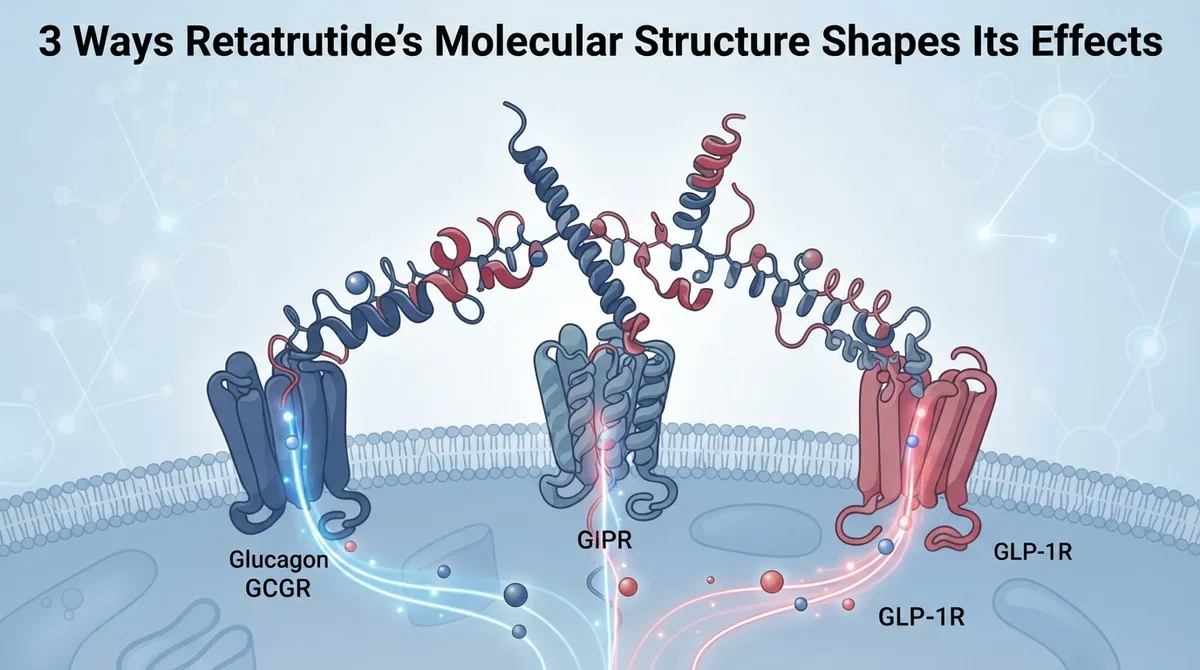
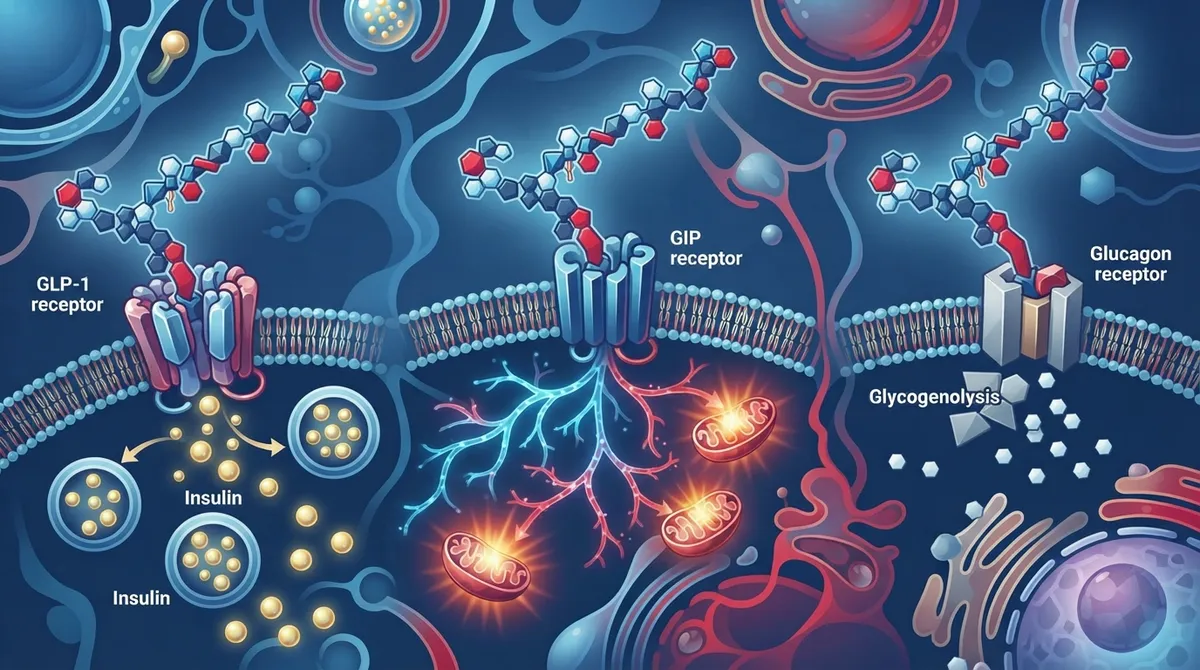
Retatrutide is built as what scientists call a "triple receptor agonist." This means one single molecule can activate three separate receptors in the body:
- GIP receptor (glucose-dependent insulinotropic polypeptide)
- GLP-1 receptor (glucagon-like peptide-1)
- Glucagon receptor (GCGR)
Each of these receptors plays a role in how the body manages blood sugar, appetite, and energy use. By activating all three at once, retatrutide is designed to influence metabolism in several ways simultaneously. This is a key difference from many current GLP-1 medications, which activate only one or two of these pathways.
According to PubChem, a chemical database maintained by the National Institutes of Health, retatrutide contains 39 amino acids arranged in a specific sequence. This sequence gives the molecule its unique three-way activity. Patients often ask how this compares to semaglutide or tirzepatide. Our providers can walk you through these differences during a primary care visit focused on metabolic health.
2. A Fatty Acid Chain Helps It Stay in the Body Longer
One of the most important design features of retatrutide is a lipid, or fat-based, side chain attached to the peptide backbone. This chain connects through a lysine amino acid using a linker made of gamma-glutamate and an AEEA-type molecule.
Why does this matter? The fatty acid chain allows the molecule to bind to albumin, a protein found in blood. This binding process slows down how quickly the body breaks down and removes the peptide. In simple terms, it helps the compound last longer in the bloodstream.
This is the same basic strategy used in several approved injectable therapies that only require once-weekly dosing. Research published in the New England Journal of Medicine in 2023 studied retatrutide's effects over 48 weeks in a phase 2 obesity trial. The highest dose group saw about 24% mean weight loss during the trial period. It is important to remember this was investigational trial data, not a proven or approved treatment outcome.
3. Modified Amino Acids Improve Stability and Receptor Binding
Retatrutide's molecular formula is listed as C221H342N46O68, with an average molecular weight of approximately 4,731 g/mol, according to PubChem records. This complex structure includes several non-standard amino acids not found in typical human proteins.
Two examples are aminoisobutyric acid (Aib) and alpha-methyl-leucine. These modified building blocks help the peptide resist breakdown by enzymes in the body. Without these changes, the molecule might degrade too quickly to have a lasting effect.
The molecule also ends in a C-terminal amide, another structural feature that adds stability. Different databases and lab reports may show slightly different representations of these details, depending on salt form or testing method. This is why it always helps to ask your provider which source they are referencing when discussing retatrutide research.
Retatrutide Structure at a Glance
|
Feature |
Detail |
|---|---|
|
Molecular Formula |
C221H342N46O68 |
|
Molecular Weight |
Approximately 4,731 g/mol |
|
Amino Acid Count |
39 residues |
|
Receptors Activated |
GIPR, GLP-1R, GCGR |
|
Key Modifications |
Aib, alpha-methyl-leucine, fatty-diacid linker |
|
Dosing Design |
Intended for once-weekly injection |
|
FDA Status |
Not approved; investigational only |
How This Connects to Weight Loss and Metabolic Research
Retatrutide's structure was intentionally designed with weight management in mind. Because it activates three hormone pathways rather than one or two, researchers believe it may offer stronger effects on appetite and blood sugar control. However, more activity does not always mean more safety. Every additional pathway can also mean more potential side effects.
In a phase 2 type 2 diabetes trial published in 2023, retatrutide was studied over 36 weeks at several dose levels. The highest dose group showed about 17% mean body weight reduction. Again, this reflects controlled trial conditions, not real-world guarantees. Results always depend on dose, trial design, and how the body responds to each ingredient.
Patients exploring medical weight loss options should understand the difference between approved medications and investigational compounds like retatrutide. Approved GLP-1 and GIP/GLP-1 medicines have gone through the full FDA review process. Retatrutide has not completed this process yet.
Why Molecular Structure Matters for Patient Safety
Understanding a compound's molecular structure is not just an academic exercise. It helps explain:
- How the drug interacts with the body's natural hormone systems
- Why certain side effects might occur
- How long the compound stays active before being cleared
- Why dosing schedules are designed the way they are
- What makes this compound different from approved alternatives
This knowledge also protects patients from misinformation. Some sellers online market unapproved peptides using vague or misleading claims. Knowing the real science behind retatrutide's structure helps patients ask better questions and avoid unsafe products.
Retatrutide vs. Semaglutide and Tirzepatide
Many patients want to know how retatrutide's structure compares to already approved medications. Semaglutide activates only the GLP-1 receptor. Tirzepatide activates both GLP-1 and GIP receptors. Retatrutide goes a step further, adding glucagon receptor activity as a third target.
This triple-action design is why some researchers refer to retatrutide as a "triple agonist." The theory is that combining three pathways could improve outcomes for both weight management and blood sugar control. But theory is not the same as proven, approved treatment. Clinical trials are still ongoing, and long-term safety data is still being collected.
What Patients Should Know Before Considering Any Peptide Therapy
If you are curious about retatrutide or other peptide-based treatments, the safest first step is a conversation with a licensed medical provider. At InCare, our team offers guidance rooted in current research and honest medical judgment, not hype.
- Always ask if a compound is FDA approved for your specific condition
- Never purchase peptides from unregulated online sellers
- Ask about clinical trial data and how it applies to your health goals
- Discuss any current medications or health conditions that could affect safety
- Request a full review of side effects and monitoring requirements
Our providers can also discuss FDA-approved alternatives, such as those covered in our guide on choosing the best injection for weight loss in 2026. These options have a track record of regulatory review that investigational compounds like retatrutide do not yet have.
Visit InCare in Tampa or Riverview
InCare proudly serves patients across Tampa and Riverview, Florida, with a focus on prevention and whole-body wellness. Our clinics combine advanced technology with real medical expertise, so you get answers you can trust. Whether you are asking about peptide science, weight loss programs, or general primary care needs, our team is here to help.
You can also connect with us and see patient experiences firsthand through our Facebook page, our Instagram account, and our Tik Tok channel. For a closer look at what current patients say about their visits, feel free to visit us on Google — InCare and read real reviews from our Tampa and Riverview locations.
Final Thoughts on Retatrutide's Molecular Structure
Retatrutide's molecular design is genuinely impressive from a scientific standpoint. Its 39 amino acids, triple receptor activity, and fatty acid stabilizer all work together in a way that reflects years of careful peptide engineering. But impressive design does not equal approved treatment. Retatrutide remains investigational, and patients should never seek it outside a proper clinical trial or regulated research setting.
If you want to explore safe, medically supervised weight loss and wellness options, our team is ready to help you build a plan based on real evidence and proven care. Book your appointment today and take the next step toward informed, guided health decisions with InCare.
FAQs
Q: What is retatrutide's molecular formula and molecular weight?
A: PubChem lists retatrutide's molecular formula as C221H342N46O68, with an average molecular weight of approximately 4,731 g/mol. Different analytical sources may report slightly varied values depending on salt form or measurement method.
Q: How many amino acids are in retatrutide?
A: Retatrutide is made up of 39 amino acid residues, according to PubChem and other peptide-chemistry databases. This includes several modified, non-natural amino acids not found in typical human hormones.
Q: What does retatrutide's fatty-acid side chain do?
A: The fatty-diacid chain helps the molecule bind to albumin, a protein in the blood. This binding slows the compound's breakdown, supporting its design as a once-weekly injectable in clinical research.
Q: How is retatrutide different from semaglutide and tirzepatide?
A: Semaglutide activates only the GLP-1 receptor, while tirzepatide activates both GLP-1 and GIP receptors. Retatrutide is designed to activate all three: GLP-1, GIP, and glucagon receptors, making it a triple agonist.
Q: Is retatrutide FDA approved or available by prescription?
A: No, retatrutide is not FDA approved. It remains an investigational compound studied in clinical trials, and it should not be obtained or used outside a legitimate, regulated research setting.