Key Takeaways
- A clinic in Riverview evaluates you and may issue a physician certification, but it does not sell cannabis; you buy products from a state-licensed Medical Marijuana Treatment Center.
- Florida law requires an in-person physical exam for the first medical cannabis certification, so an offer of first-time certification with no in-person visit is a red flag.
- To qualify, you need Florida residency, a qualifying condition diagnosed by a physician, and registry entry, then you apply separately to the OMMU for your state ID card.
- Before booking, verify the physician's Florida credentials, ask for a full fee breakdown, and avoid clinics that guarantee approval or pressure you to buy on the spot.
If you live in Riverview and wonder whether medical cannabis might fit into your care plan, you are not alone. Florida's program keeps growing. The state's Office of Medical Marijuana Use (OMMU) reported 941,963 qualified patients with active ID cards as of October 1, 2026. That is a statewide number, but it shows how many adults now explore this option with a physician.
An adult medical cannabis clinic in Riverview is a healthcare provider, not a dispensary. The clinic evaluates you, reviews your history, and may issue a certification if it is medically appropriate. You then buy products from a state-licensed treatment center. This article explains three key things to know before you book: how the process works, who qualifies, and how to choose a trustworthy clinic.
We write from a primary care point of view. Cannabis should never replace a sound health plan. It should sit inside one, guided by a physician who knows your whole health picture.
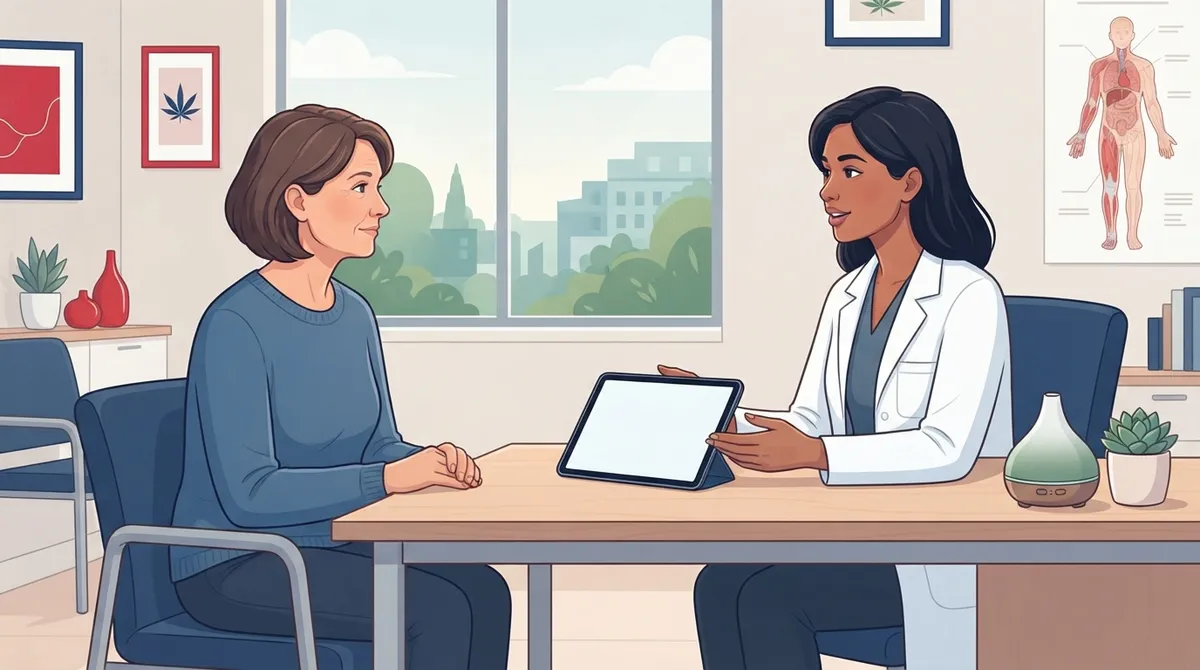
1. Understand What an Adult Medical Cannabis Clinic in Riverview Actually Does
Many people expect a clinic to hand them cannabis. That is not how Florida's program works. A clinic's role is to provide a medical evaluation and, when clinically appropriate, a physician certification. The clinic is not where you purchase products.
The Clinic's Role Versus the Treatment Center's Role
Florida separates the medical decision from the retail sale. Here is how the roles divide:
|
Step |
Who Handles It |
What Happens |
|---|---|---|
|
Medical evaluation |
Qualified physician at the clinic |
Review of history, exam, and diagnosis |
|
Certification |
Qualified physician |
Entered into the state registry if appropriate |
|
ID card |
Florida OMMU |
Patient applies for the state identification card |
|
Purchasing |
Licensed Medical Marijuana Treatment Center |
Patient buys products under the physician's order |
This split protects patients. A physician decides whether treatment is safe and useful. A separate licensed center handles product sales.
What Florida Law Requires of the Physician
Under the 2026 Florida statute, a qualified physician must complete several tasks before certifying a patient. These steps are a good checklist for you as well:
- Review your medical history in detail.
- Conduct an in-person physical examination for the initial certification.
- Diagnose a qualifying condition.
- Assess and document whether the likely benefits outweigh the health risks.
- Check the state registry and the prescription drug monitoring database.
- Document pregnancy status.
The first certification cannot be completed through telehealth alone. If a provider offers a first-time certification without any in-person exam, treat that as a red flag. Physicians must also complete a two-hour course and examination to become qualified.
Primary care physicians are well suited to this work. They already track your medications, chronic conditions, and screening results. That context helps them judge whether cannabis is a safe addition. If you want a refresher on how a primary care relationship works, read our guide on what a primary care physician does.
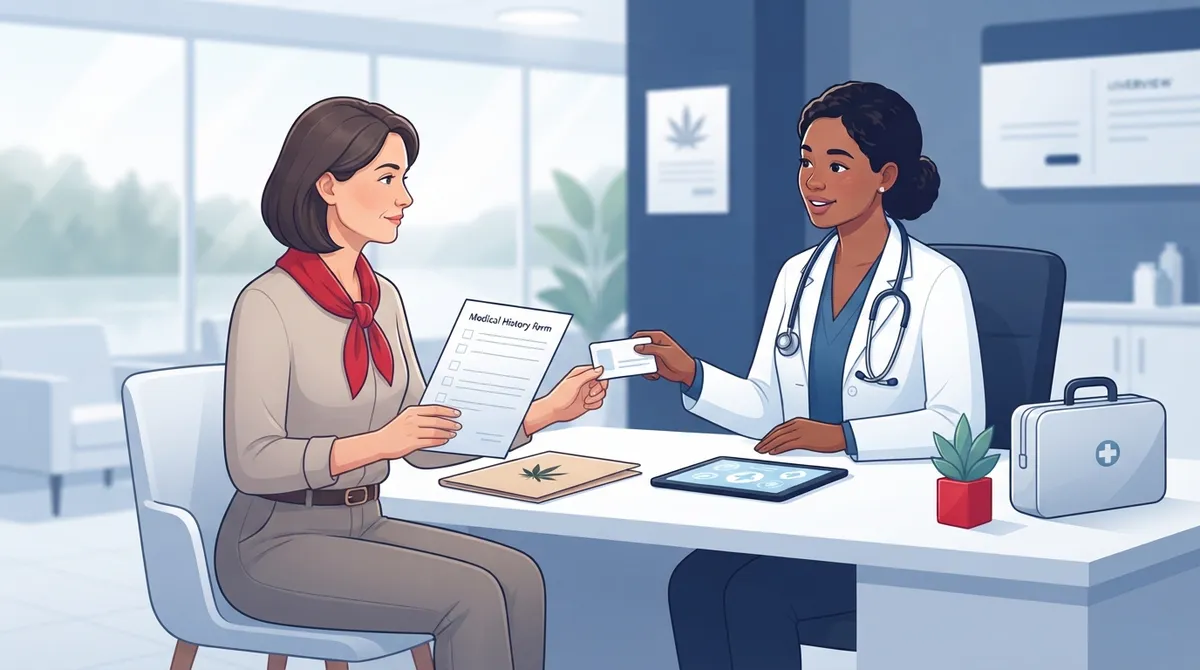
2. Know Whether You Qualify and What to Prepare
Not every adult qualifies. Florida requires a qualifying condition, residency, and enrollment in the state registry. Knowing the rules before you book saves time and money.
Core Eligibility Requirements
To take part in the program, an adult generally needs all of the following:
- Permanent or seasonal Florida residency.
- A qualifying medical condition diagnosed by a qualified physician.
- Entry into the Medical Marijuana Use Registry by that physician.
- An active registry identification card from the OMMU.
Keep one detail in mind. A physician certification is not the same as the state ID card. After your physician enters you in the registry, you apply to the OMMU for the card. The OMMU notes that an approved temporary verification email may be used with a photo ID while you wait for the permanent card.
Qualifying Conditions in Florida
The list is specific. Qualifying conditions include:
- Cancer
- Epilepsy
- Glaucoma
- HIV/AIDS
- Post-traumatic stress disorder (PTSD)
- Amyotrophic lateral sclerosis (ALS)
- Crohn's disease
- Parkinson's disease
- Multiple sclerosis
- A terminal condition diagnosed by a physician other than the certifying physician
- Chronic nonmalignant pain related to a qualifying condition
- Conditions comparable to those listed
Comparable-condition certifications require supporting documentation under Florida law. That means records matter. A physician cannot simply write a certification based on a verbal description.
What to Bring to Your First Visit
Preparation makes the appointment smoother. Gather these items before you go:
- A valid photo ID and proof of Florida residency.
- Medical records that support your diagnosis.
- A current list of medications and supplements.
- Notes on symptoms, past treatments, and what has or has not helped.
Our team created a helpful checklist in How to Prepare: What to Bring to a Medical Cannabis Visit. Reading it before your appointment can prevent a second trip.
Be honest about your health history. Cannabis can interact with some medications and may not be safe for everyone. Tell your physician about heart conditions, mental health history, substance use, and any chance of pregnancy. Full disclosure helps your physician protect you.
3. Choose the Right Clinic With a Clear Checklist
Not all clinics operate the same way. Some focus only on certifications. Others, like InCare, place cannabis evaluation inside full primary care and wellness services. For patients who want continuity, that difference is significant. Your cannabis plan can be coordinated with your blood pressure care, weight management, screenings, and prescriptions.
Questions to Ask Before You Book
Use these questions to compare any adult medical cannabis clinic in Riverview:
- Is the physician licensed in Florida and a qualified physician under state rules?
- Is the first visit in person, as the law requires?
- What are the fees for the evaluation, and are follow-ups extra?
- What records do I need to bring?
- Does the clinic help with the registry and ID card application?
- How is my health information protected?
- What does follow-up care look like?
Verify the physician's credentials through the state physician directory before your visit. Fees and availability vary, and no reliable public count of Riverview clinics exists, so confirm details directly with each provider.
Red Flags to Avoid
Be cautious if a clinic does any of the following:
- Guarantees approval before you see a physician.
- Promises a specific treatment outcome.
- Skips the in-person exam for a first certification.
- Pressures you to buy products or packages on the spot.
- Cannot explain the registry and ID card steps clearly.
No ethical physician can guarantee certification. Approval depends on your diagnosis and a documented risk-benefit review.
Why a Primary Care Setting Helps
Medical cannabis is one tool among many. A primary care clinic can pair it with lab work, medication reviews, and preventive screenings. This matters most for busy adults who want one trusted team instead of several disconnected providers. It also helps if you manage a chronic condition, since your physician can watch for changes over time.
InCare serves patients in Riverview and Tampa with primary care, urgent care, weight loss programs, cancer screenings, and wellness services under one roof. If you are weighing options, our article on how to choose the best medical marijuana doctor in Riverview offers more detail. You can also review how to get a medical marijuana card in Riverview, FL for a step-by-step walkthrough.
What to Expect After Your Evaluation
Once you leave the clinic, the process continues. Here is the usual path, in order:
- The physician enters your certification in the state registry, if approved.
- You apply to the OMMU for your registry ID card.
- You use your temporary verification email with a photo ID while waiting, if approved.
- You visit a licensed treatment center and buy products under your physician's order.
- You return for follow-up visits and renewals.
Certifications and orders follow state rules and renewal periods. Confirm your certification dates, card status, and available order amounts with your physician and the OMMU rather than relying on a clinic advertisement. Rules and patient counts can change, so a quick check with the state is wise. For renewal planning, see how to renew a medical cannabis card in Riverview.
Costs and Timing
Fees differ by clinic, and state card fees are separate from physician fees. Ask for a full cost breakdown before you commit. Timing also varies. Your physician can enter you in the registry quickly, but the permanent card takes longer, which is why the temporary verification email is useful.
Safety Reminders
Cannabis can affect alertness and judgment. Do not drive or operate machinery if you feel impaired. Store products securely away from children and pets. Keep your physician updated on any new symptoms. If something feels wrong, seek care promptly. For sudden illness or injury, urgent care is the right choice, and our team offers same-day options in Riverview.
Take the Next Step With InCare
Choosing an adult medical cannabis clinic in Riverview is a medical decision, not a shopping trip. Look for a licensed, qualified physician, an in-person first exam, clear fees, and honest answers. Prepare your records, understand the registry and ID card steps, and expect follow-up care.
Patients often say they appreciate a clinic that treats them as a whole person. InCare holds a 4.8 out of 5 rating on Google, and you can read patient feedback by choosing to visit us on Google — InCare. We also share wellness updates on Instagram, Facebook, and TikTok.
Ready to talk with a physician about whether medical cannabis fits your health goals? Book your appointment with InCare today, or contact our team with questions before you schedule.
FAQs
Q: How do I get a medical marijuana card in Riverview, Florida?
A: You must be a Florida resident with a qualifying condition and see a qualified physician for an in-person evaluation. If appropriate, the physician enters you in the state registry, and you then apply to the OMMU for your ID card.
Q: Do I need an in-person appointment for my first certification?
A: Yes. Under the 2026 Florida statute, the initial certification requires an in-person physical examination and cannot be completed solely by telehealth. Follow-up visits may have different options, so confirm with your physician.
Q: Can I buy medical cannabis at the clinic that certifies me?
A: No. A clinic provides the evaluation and certification. Patients purchase products from state-licensed Medical Marijuana Treatment Centers using their active registry ID card.
Q: What is the difference between a physician certification and the state ID card?
A: The certification is the physician's entry of your qualifying condition into the registry. The ID card is issued by the Florida OMMU after you apply, and a temporary verification email may be used with photo ID while you wait.
Q: What documents should I bring to a medical cannabis clinic?
A: Bring a valid photo ID, proof of Florida residency, medical records supporting your diagnosis, and a list of current medications. Comparable-condition certifications require supporting documentation, so complete records are especially important.