
Key Takeaways
- KPV evidence is almost entirely limited to laboratory and animal studies with no large completed human clinical trials; current evidence cannot confirm safety or effectiveness in people despite promising lab findings.
- KPV is not FDA-approved, meaning there is no official dosing, delivery method, or long-term safety data; online claims about specific doses or health benefits lack regulatory review and should not replace evidence-based treatments.
- Work with a licensed primary care provider before trying KPV to discuss known risks, potential drug interactions, and safer, already-approved alternatives for your specific condition.
- KPV is a three-amino-acid fragment of alpha-MSH studied for anti-inflammatory effects, but its exact mechanism in the body remains unclear and may differ from initial assumptions.
Peptide therapy has become one of the most searched topics in wellness circles across Tampa and Riverview. Among the many peptides gaining attention, KPV stands out for its claimed anti-inflammatory effects. But is KPV actually backed by strong science, or is the hype ahead of the research? This article breaks down what the evidence really shows, so you can make an informed decision with your primary care provider.
Many patients come across KPV on wellness blogs or social media, often with bold claims about gut healing, skin repair, and inflammation control. Before trying any peptide, it helps to understand exactly what has been studied, what has not, and where the gaps remain. At InCare, our providers believe patients deserve clear, honest information rather than marketing promises.
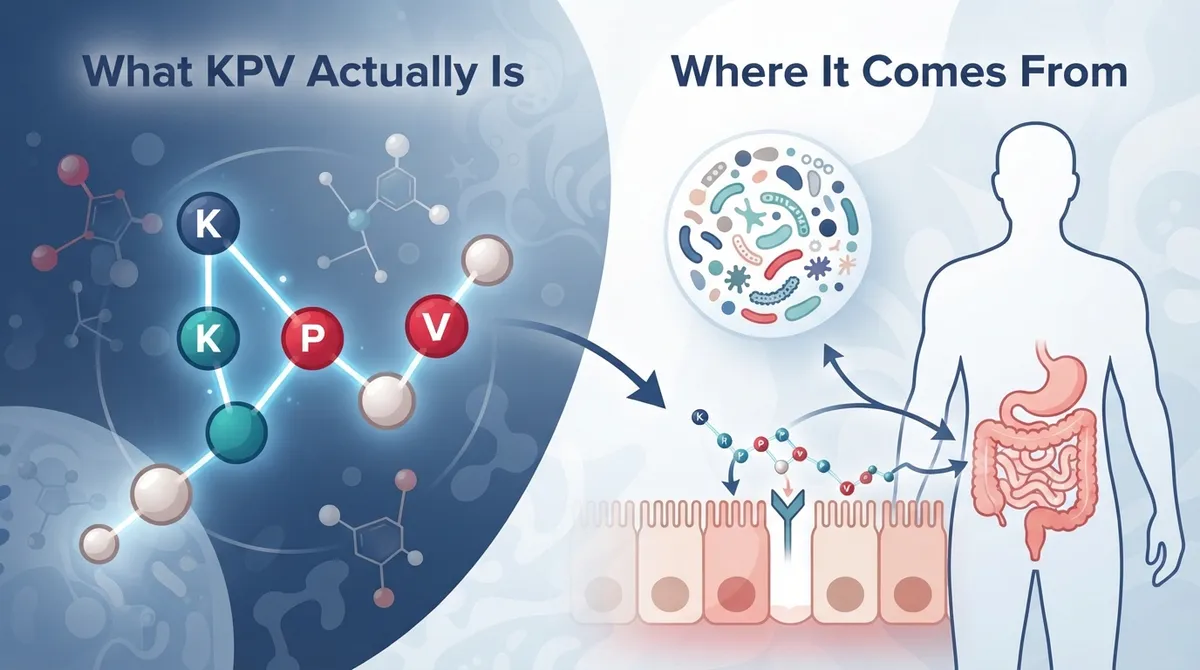
1. What KPV Actually Is and Where It Comes From
KPV stands for Lysine-Proline-Valine, a tiny three-amino-acid piece of a larger hormone called alpha-melanocyte-stimulating hormone (α-MSH). This hormone comes from a larger protein called proopiomelanocortin, or POMC, which the body naturally produces.
Researchers became interested in KPV because it may carry some of the anti-inflammatory properties of α-MSH without triggering the skin-pigmentation effects tied to the hormone's other pathways. In simple terms, scientists hoped they found a piece of a hormone that calms inflammation without unwanted side effects.
However, the exact way KPV works in the body is still not fully understood. Some studies suggest it may not even use the same receptors as α-MSH, which means its mechanism could be different than first assumed. This uncertainty is important context before assuming KPV works the same way every time.
How KPV Is Believed to Reduce Inflammation
Laboratory studies suggest KPV may affect a pathway called NF-κB, which plays a role in triggering inflammation throughout the body. Early research has shown reductions in inflammatory markers such as TNF-α, IL-6, IL-1β, and nitric oxide in cell and animal models.
These are the same markers doctors often look at when assessing chronic inflammation, autoimmune flare-ups, or slow-healing wounds. Reducing these markers in a lab setting is promising, but it does not automatically mean the same results happen in real patients.

2. What the Research Actually Shows (and What It Doesn't)
This is the most important section for anyone considering KPV for wellness purposes. The current evidence is almost entirely limited to laboratory and animal studies, not human clinical trials.
- A widely cited 2008 review in Endocrine Reviews summarized anti-inflammatory findings for α-MSH and related peptides, including effects on fever, dermatitis, joint inflammation, and gut inflammation in animal models.
- A 2003 study found that KPV reduced inflammatory cell buildup in mice with crystal-induced and IL-1β-induced peritonitis. This is animal data, not evidence from human patients.
- Research summaries through 2025 and 2026 continue to describe KPV evidence as mostly in vitro (test tube) and animal-based.
- There are currently no large, completed randomized human trials proving KPV works for any specific condition.
This distinction matters. A treatment that shows promise in mice does not guarantee the same safety or effectiveness in people. Human bodies are far more complex, and dosing, absorption, and long-term safety data are still missing pieces of the puzzle.
Conditions Being Studied in Animal and Lab Models
- Intestinal inflammation, similar to what is seen in inflammatory bowel conditions
- Skin inflammation and dermatitis-type reactions
- Airway inflammation related to asthma-like conditions
- Eye inflammation in animal eye models
- Wound healing support in lab settings
- Mucosal injury recovery in the digestive tract
While these categories sound encouraging, none of them currently have strong, peer-reviewed human trial data confirming that KPV is a proven treatment for these conditions in people.
|
Research Stage |
What Has Been Studied |
What This Means for Patients |
|---|---|---|
|
Cell (in vitro) studies |
Reduced inflammatory markers in lab dishes |
Early signal only, not proof of human benefit |
|
Animal studies |
Reduced inflammation in mice models of gut, skin, joint conditions |
Cannot be directly applied to human dosing or safety |
|
Human clinical trials |
No large completed trials identified |
No confirmed human efficacy or safety data yet |
|
FDA approval status |
Not approved for any medical use |
No standardized dose, label, or clinical guideline exists |
3. Why Clinician Guidance Matters More Than Online Claims
Because KPV is not FDA-approved, there is no official dosing chart, no approved delivery method, and no long-term safety data to guide patients. Many products sold online claim specific doses or health benefits that are not backed by any regulatory review.
This is where working with a knowledgeable primary care team becomes essential. A qualified provider can explain what is known, what is still unproven, and what safer, evidence-based options may already exist for your specific concern. If you are managing digestive issues, skin conditions, or chronic inflammation, established treatments with stronger safety records are usually the better starting point.
Our providers at InCare take time to walk patients through the difference between promising research and proven treatment. This is part of our broader approach to primary care that prioritizes prevention, transparency, and whole-body wellness.
Questions to Ask Before Trying Any Investigational Peptide
- Has this peptide been tested in human clinical trials, or only in animals?
- What are the known risks of impurities or contamination in unregulated products?
- Is there a safer, already-approved treatment for my specific condition?
- How will this interact with medications I currently take?
- What symptoms should prompt me to stop and call my doctor?
These questions apply to KPV and many other peptides currently trending in wellness spaces. If you're curious about how peptide therapy fits into a broader wellness strategy, our guide on peptide therapy in Tampa offers more detail on how our team approaches these conversations.
How InCare Approaches Inflammation and Whole-Body Wellness
Rather than relying on unproven products, InCare focuses on strategies with a stronger evidence base. This includes comprehensive lab testing, DNA gene testing to understand personal risk factors, and body composition analysis to track real changes in your health over time.
For patients dealing with chronic inflammation, gut issues, or skin concerns, our team can also discuss options like IV hydration and vitamin therapy, which have more established safety profiles for supporting recovery and overall wellness. We also help patients understand how primary doctors help manage chronic illnesses using a combination of proven treatments and lifestyle changes.
Patients in Tampa and Riverview trust InCare because we combine advanced technology with honest, evidence-focused conversations. You can see what real patients say about their experience by visiting our InCare location on Google, where our clinic maintains strong patient satisfaction ratings.
The Bottom Line on KPV Evidence
KPV is an interesting molecule with real scientific curiosity behind it. Anti-inflammatory activity in lab and animal studies is well documented, and researchers continue to explore its potential. But right now, KPV should be described as investigational, not evidence based for human treatment.
This does not mean KPV research is worthless. It means patients should treat it as a developing area of science, not a guaranteed solution. Anyone considering KPV should talk with a licensed provider first, rather than relying on unregulated online sources.
You can also follow ongoing wellness education and updates from our team on Facebook, Instagram, and TikTok, where we share simple explanations of trending health topics like this one.
Take the Next Step With a Trusted Primary Care Team
If you are curious about peptide therapy, inflammation management, or simply want a wellness plan built on solid evidence, InCare is here to help. Our Tampa and Riverview locations offer personalized care that blends modern technology with honest medical guidance.
Ready to talk with a provider about what treatments actually make sense for your health goals? Book your appointment today and get answers you can trust. You can also reach out to our team with any questions before your visit.
FAQs
Q: What is KPV peptide and how is it related to alpha-MSH?
A: KPV is a three-amino-acid fragment of alpha-melanocyte-stimulating hormone (α-MSH), made up of lysine, proline, and valine. It is being studied for anti-inflammatory effects that may occur without the pigmentation changes tied to full α-MSH activity.
Q: Is KPV FDA approved or legal for human use?
A: KPV is not FDA approved for any medical condition. There is no official dosing guideline, approved label, or clinical protocol for human use, so it should be treated as investigational rather than a proven therapy.
Q: Does KPV have proven anti-inflammatory benefits in humans?
A: No completed large human clinical trials currently confirm KPV's effectiveness. Most evidence comes from cell studies and animal models, which cannot be assumed to translate directly into human results.
Q: What conditions is KPV being studied for?
A: Preclinical research has explored KPV for gut inflammation, skin inflammation, airway inflammation, eye inflammation, and wound healing. These remain areas of ongoing study rather than confirmed treatment uses.
Q: Should my primary care doctor recommend KPV for gut or skin issues?
A: Most clinicians recommend starting with established, proven treatments for gut and skin conditions rather than substituting them with investigational peptides. A trusted primary care provider can help you understand safer, evidence-based options first.