Key Takeaways
- A Florida medical cannabis certification is a physician's recommendation entered in the state registry, separate from the state ID card, which you must apply for on your own after certification.
- A listed qualifying diagnosis does not guarantee approval; the physician must evaluate your full medical picture and confirm legal criteria are met.
- Bring government photo ID, proof of Florida residency, diagnosis records, a full medication list, and past imaging or lab results to make your evaluation smoother and safer.
- Budget for two separate costs: the clinic's evaluation fee (varies by provider) and the state ID card fee, which has been reported at $75 plus possible online charges, so confirm current amounts.
If you live in Tampa and are considering medical cannabis, you may feel unsure where to begin. The rules can seem confusing. Many people mix up the doctor's certification with the state identification card. Others assume a qualifying diagnosis guarantees approval. Neither is true.
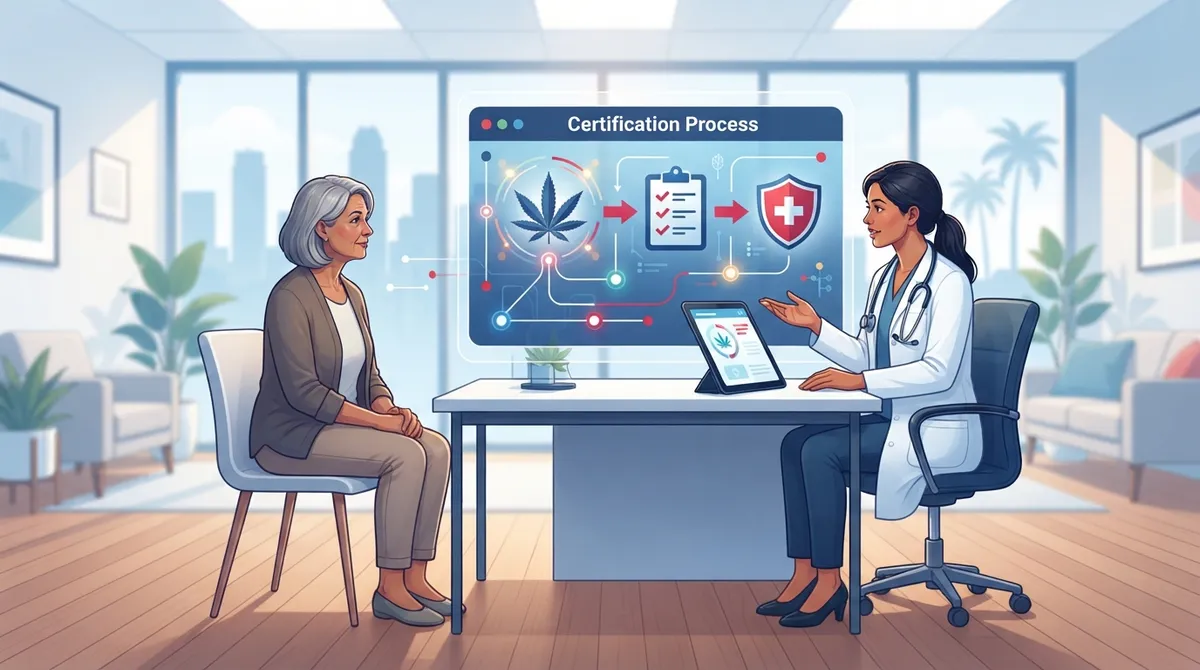
Medical cannabis certification in Tampa is a clinical process. A qualified Florida physician evaluates your health, reviews your history, and decides whether cannabis is appropriate for you. If approved, the physician records the certification in the state registry. You then complete a separate state application for your identification card.
This guide covers 14 practical points every Tampa patient should understand in 2026. It is written for busy professionals, young families, wellness-minded adults, and anyone who wants a clear, medical, and well-organized path. You will learn who qualifies, what the visit involves, what costs to expect, and how a primary care practice can help you make a safe, informed decision.
The Basics: What Certification Really Means
1. A Certification Is Not the Same as a State ID Card
In Florida, a medical cannabis certification is a physician's recommendation recorded in the Medical Marijuana Use Registry (MMUR). It is not the identification card itself. Patients generally need two things to buy products from a licensed Medical Marijuana Treatment Center: an active physician certification and a valid MMUR identification card.
Think of it as a two-step process. The doctor completes step one. You complete step two with the state.
2. The Process Follows a Clear Path
Florida's patient process is registry-based. Here is how it typically works:
- You schedule an evaluation with a qualified Florida physician.
- The physician reviews your history, medications, and goals.
- If you meet the legal criteria, the physician enters the certification in the MMUR.
- You apply for your state identification card.
- After approval, you can purchase from a licensed treatment center.
Each step has its own requirements, so it helps to prepare early.
3. Certification Is a Medical Decision
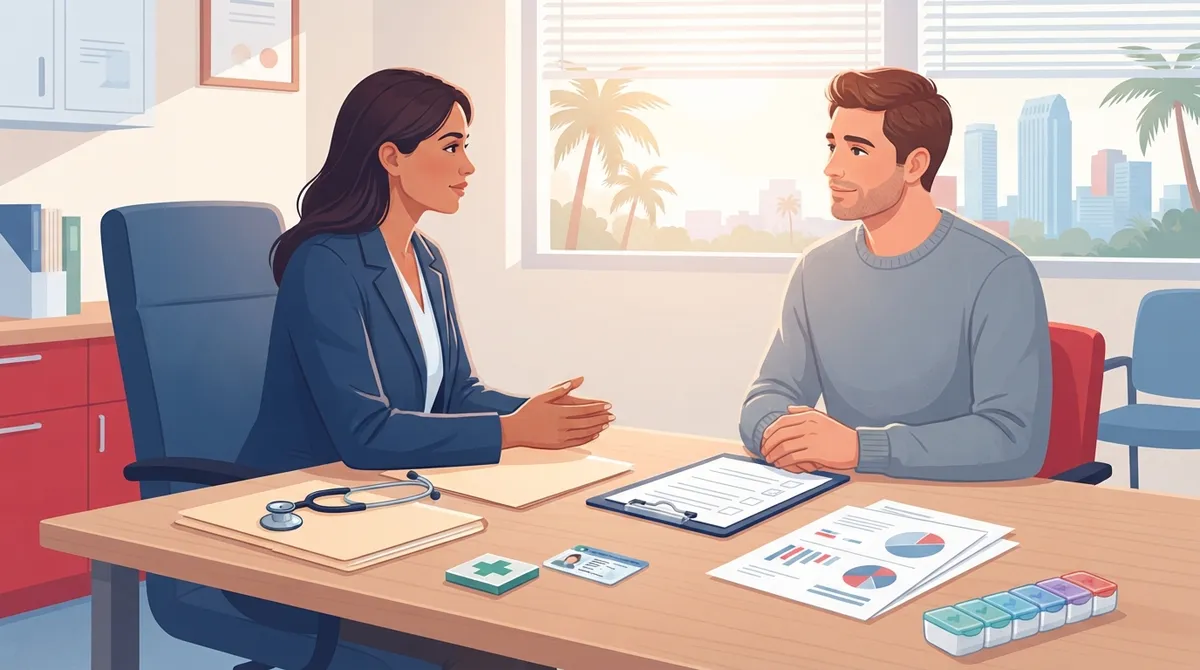
A physician must evaluate you, confirm the legal criteria are met, discuss treatment options and risks, and obtain your informed consent. This is why the visit should feel like a real medical appointment, not a formality.
A thoughtful evaluation protects you. It helps confirm that cannabis is a reasonable option and that it will not conflict with your other care.
Who Qualifies in Florida
4. Florida Lists Specific Qualifying Conditions
Florida law recognizes a defined set of conditions. The table below summarizes the main categories.
|
Qualifying Condition |
Notes |
|---|---|
|
Cancer |
Listed in Florida law |
|
Epilepsy |
Listed in Florida law |
|
Glaucoma |
Listed in Florida law |
|
HIV/AIDS |
Listed in Florida law |
|
PTSD |
Listed in Florida law |
|
ALS |
Listed in Florida law |
|
Crohn's disease |
Listed in Florida law |
|
Parkinson's disease |
Listed in Florida law |
|
Multiple sclerosis |
Listed in Florida law |
|
Terminal condition |
Diagnosed by a physician other than the certifying physician |
|
Chronic nonmalignant pain |
Caused by or originating from a qualifying condition and persisting beyond its usual course |
The law also allows certification for conditions of the same kind or class as those listed, as determined by a qualified physician.
5. A Diagnosis Does Not Guarantee Approval
Having a listed diagnosis does not automatically mean you will be certified. The physician must still evaluate you and decide whether the legal criteria are met. This is a clinical judgment, and it should be based on your full medical picture.
If you are unsure whether your condition fits, a conversation with a primary care physician is a smart first step.
6. You Must Be a Florida Resident
The state's patient guide says patients must be Florida permanent or seasonal residents. Keep proof of residency ready when you apply for your identification card.
7. Minors and Terminal Patients Have Extra Steps
Patients younger than 18 and terminal patients require a second physician's concurrence, documented in the medical record. A caregiver, when applicable, must also be added to the registry and apply for the appropriate caregiver identification card.
Families should plan extra time for these added requirements.
Preparing for Your Evaluation
8. Bring Complete Medical Records
Good records make the visit smoother and safer. Consider bringing the following items:
- A government-issued photo ID and proof of Florida residency
- Records or notes confirming your diagnosis
- A full list of current medications and supplements
- Past imaging, lab results, or specialist notes
- A short summary of what you have already tried for your symptoms
If you need help gathering paperwork, see our guide on the key steps to a medical records request in primary care.
9. Expect a Real Medical Conversation
A strong evaluation covers your history, current medications, goals, and potential risks. The physician should also discuss whether cannabis is appropriate alongside, or instead of, other treatments.
Be honest about every medication you take. Some prescriptions can interact with cannabis, and your doctor needs the full picture to guide you safely. For more on organizing your medicines, read these prescription management tips for better health in 2026.
10. Ask About Telehealth and In-Person Options
Appointment requirements vary by clinic. Some practices offer in-person visits, and others may offer virtual options. Confirm what a given clinic requires before you book, so there are no surprises on the day of your visit.
Costs, Timing, and Renewals
11. Understand the Two Separate Fees
You will generally pay two different costs: the clinic's evaluation fee and the state's identification card fee. They are not the same charge.
|
Cost Type |
Who Charges It |
What to Know |
|---|---|---|
|
Evaluation fee |
The clinic or physician |
Varies by provider. One local clinic advertises $199 for a new-patient evaluation; this is a single example, not a Tampa average. |
|
State ID card fee |
Florida Office of Medical Marijuana Use |
Reported at $75, with an added online convenience charge cited by some providers. Verify the current amount with the state. |
Fees can change. Always confirm current prices, what the visit includes, and whether follow-up visits are required directly with the practice and the state.
12. Plan for Follow-Ups and Renewals
Certification is not a one-time event. Physicians typically schedule follow-up visits to review how you are doing. Your certification and registry card also have time limits, so ask your provider about the current renewal timeline and what documentation is needed.
Tracking your renewal date prevents gaps in access.
Choosing the Right Provider
13. Look for a Practice That Treats the Whole Person
Certification works best when it fits into your overall health plan. A primary care practice can review your history, coordinate with your other providers, and monitor your progress over time. That continuity is hard to get from a one-time visit.
At InCare, we combine state-of-the-art technology with personalized medical expertise. Our team offers primary care, preventive screenings, and advanced wellness services at our Tampa and Riverview locations. You can learn more about our approach in our guide to medical cannabis guidance in Tampa and read InCare's overview of medical cannabis.
You can also see what patients say about us. Read InCare reviews on Google, where we maintain a strong rating from hundreds of Tampa Bay patients. For updates and wellness tips, follow us on Instagram, Facebook, and TikTok.
14. Know Where You Can Purchase Once Certified
Once you hold both an active certification and a valid identification card, you may purchase medical cannabis from a licensed Medical Marijuana Treatment Center. Your physician's registry entry specifies the authorized products and amounts, so follow those details closely.
Statewide data on certifications, qualifying conditions, and product forms is tracked in Florida's annual Physician Certification Pattern Review Panel report. It is a useful reference if you want to see how certification patterns look across the state.
Your Next Step
Medical cannabis certification in Tampa is a medical decision, not a shortcut. The best outcomes come from preparation, honest conversation, and a provider who looks at your whole health. Gather your records, confirm current fees, and ask clear questions before you commit.
If you want a thoughtful evaluation from a team that treats the whole person, we are ready to help. Book Now to schedule your visit, or Contact our team with questions about the process.
FAQs
Q: How do I get a medical cannabis certification in Tampa, Florida?
A: You schedule an evaluation with a qualified Florida physician, who reviews your history and decides whether you meet the legal criteria. If approved, the physician enters the certification in the state registry. You then apply separately for your state identification card.
Q: Does a qualifying diagnosis guarantee approval for a Florida medical marijuana card?
A: No. A listed diagnosis does not automatically guarantee certification. A qualified physician must evaluate you, confirm the legal criteria are met, discuss risks, and obtain your informed consent before entering the certification in the registry.
Q: How much does a medical cannabis evaluation and state card cost in Tampa?
A: Clinic evaluation fees vary by provider, and one local clinic advertises $199 for a new-patient visit as an example. The state card fee is separate and has been reported at $75, plus a possible online convenience charge. Confirm current amounts with the clinic and Florida's Office of Medical Marijuana Use.
Q: Can minors or terminally ill patients qualify for medical cannabis in Florida?
A: Yes, but extra steps apply. Patients younger than 18 and terminal patients require a second physician's concurrence, documented in the medical record. A caregiver, when applicable, must also be added to the registry and apply for the appropriate identification card.
Q: Can a primary care doctor certify me for medical cannabis in Florida?
A: A qualified physician who meets Florida's requirements can certify patients. A primary care practice adds value by reviewing your records, medications, and goals, and by coordinating cannabis use with the rest of your care.