Key Takeaways
- GHK-Cu shows effects at very low concentrations (10^-12 to 10^-9 M) in fibroblast studies, so using excessive amounts does not improve results and leads to unnecessary cost.
- Topical GHK-Cu requires 8 to 12 weeks of consistent use to show visible wrinkle reduction and elasticity improvements; expecting results within days is unrealistic.
- Most strong evidence for GHK-Cu comes from topical formulations (0.1% to 1% concentration), not oral supplements or injections, making delivery method critical for effectiveness.
- Avoid combining GHK-Cu with strong actives like retinoids or high-percentage acids without professional guidance, as this can overwhelm the skin barrier and reduce effectiveness.
- GHK-Cu research is strongest for cosmetic skin improvements, not medical treatment of skin diseases, so it should not replace professional medical care for diagnosed conditions.
- Copper peptide formulations require proper storage away from light, air, and heat to maintain ingredient stability, and patch testing is essential due to individual skin sensitivity variations.
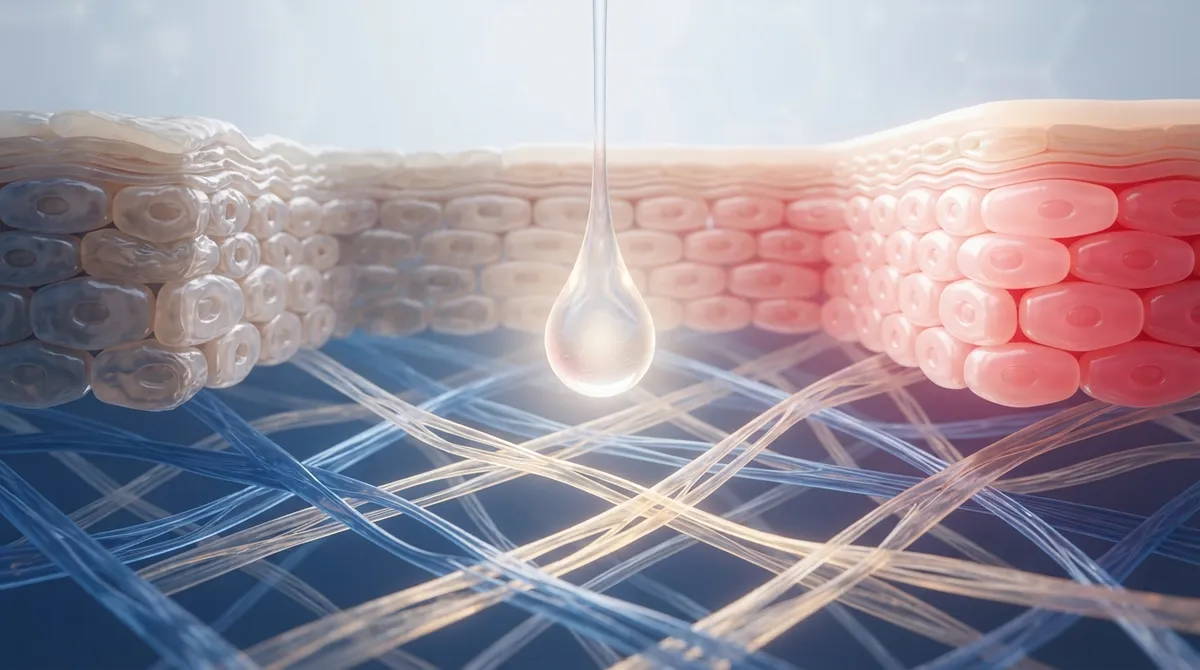
Copper peptides have become one of the most talked-about topics in skin wellness, and GHK-Cu sits at the center of that conversation. If you have researched ways to support firmer, healthier-looking skin, you have likely come across claims about GHK-Cu collagen synthesis. But separating real science from marketing hype is not always easy. Many people make avoidable mistakes when trying to use this peptide, from choosing the wrong concentration to expecting overnight results.
This guide breaks down the most common errors people make with GHK-Cu, using research-backed facts rather than exaggerated claims. Whether you are a busy parent looking for practical skin care, a wellness-focused professional exploring advanced options, or simply curious about the science, understanding these mistakes can help you make smarter decisions. At InCare, our team believes informed patients get better outcomes, which is why we focus on evidence-based guidance for every wellness topic we cover.
What Is GHK-Cu and Why Does It Matter for Collagen Synthesis?
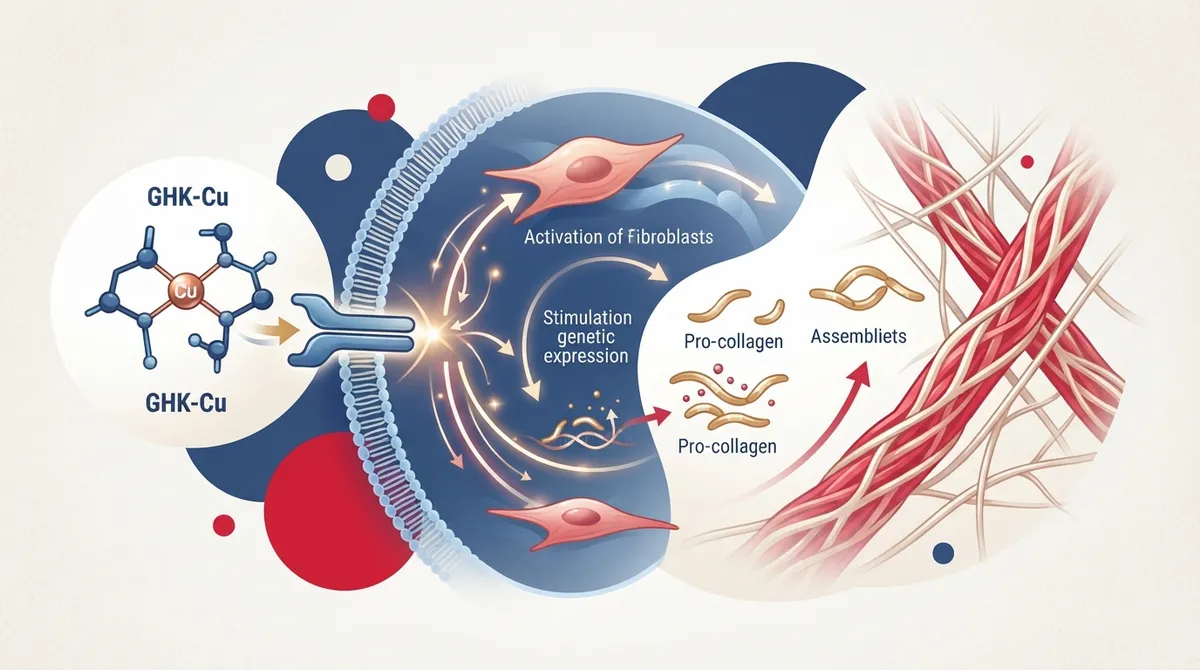
GHK-Cu is a small peptide bound to copper that occurs naturally in human blood plasma. Researchers first identified it decades ago while studying substances that help regulate tissue repair. Since then, laboratory studies have shown it plays a role in encouraging skin cells called fibroblasts to produce more collagen and elastin.
Collagen and elastin are the proteins that keep skin firm, smooth, and resilient. As people age, natural production of both declines, which contributes to fine lines and looser skin texture. This is why GHK-Cu has drawn attention from skin care researchers and wellness-focused consumers alike.
The Science Behind the Peptide
In foundational fibroblast studies, GHK-Cu stimulated collagen production at extremely low concentrations, starting around 10^-12 to 10^-11 M and peaking near 10^-9 M. This means very small amounts may trigger a biological response. Researchers have also found that GHK-Cu does more than just boost collagen. It appears to influence enzymes called matrix metalloproteinases, along with their natural inhibitors, which together control how skin tissue rebuilds itself.
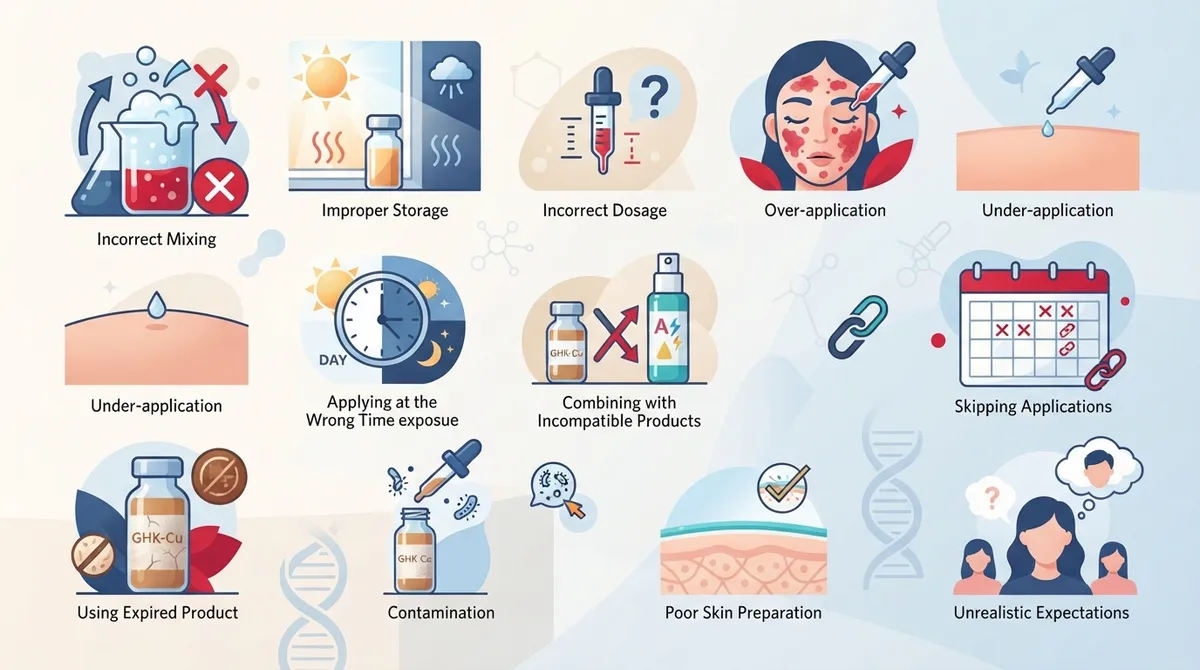
12 Common GHK-Cu Collagen Synthesis Mistakes
Below are the most frequent mistakes people make when trying to use GHK-Cu for skin support. Avoiding these can help you get more realistic, evidence-based results.
1. Expecting Oral or Injectable Results From Topical Use
Most of the strong human evidence for GHK-Cu comes from topical skin care formulations, not oral supplements or injections. Assuming these delivery methods work the same way is a common misunderstanding.
2. Ignoring Concentration Guidelines
Secondary research sources report that topical formulations are commonly studied in the 0.1% to 1% range, with some cosmetic studies using concentrations closer to 1 to 10 parts per million. Using a product with an unclear or unverified concentration makes it difficult to know what you are actually applying.
3. Expecting Immediate Results
Published research summaries describe wrinkle-depth reductions and elasticity improvements after 8 to 12 weeks of consistent topical use. Expecting visible change within days sets unrealistic expectations.
4. Skipping a Patch Test
Even though topical GHK-Cu has a generally favorable safety profile, skin sensitivity varies. Skipping a patch test before full application increases the risk of irritation.
5. Combining Too Many Active Ingredients at Once
Layering GHK-Cu with strong actives like retinoids or high-percentage acids without guidance can overwhelm the skin barrier. This may reduce comfort and effectiveness.
6. Assuming It Replaces Medical Treatment for Skin Conditions
GHK-Cu research is strongest for cosmetic and dermal quality improvements, not for treating diagnosed skin diseases. It should not be viewed as a substitute for medical care.
7. Overlooking Product Storage Requirements
Copper peptide formulations can be sensitive to light, air, and heat. Improper storage may reduce the stability of the active ingredient over time.
8. Ignoring Formulation Quality
Not all products labeled as containing GHK-Cu use the same sourcing or manufacturing standards. Because standardized dosing guidance is still limited, product quality varies widely across the market.
9. Believing More Is Always Better
Because fibroblast studies showed effects even at very low concentrations, using excessive amounts does not necessarily improve results. This mistaken belief can lead to overuse and unnecessary cost.
10. Failing to Track Progress Consistently
Skin changes are gradual, so people often miss subtle improvements without proper tracking. Photos taken under consistent lighting every few weeks help measure real change.
11. Comparing It Directly to Retinol or Vitamin C Without Context
GHK-Cu works through a different biological pathway than retinol or vitamin C. Comparing them as if they do the same thing oversimplifies the science.
12. Not Discussing Use With a Healthcare Provider
Because everyone's skin history and health needs differ, skipping a conversation with a knowledgeable provider is a missed opportunity for personalized advice. This is especially important for people with existing skin conditions or sensitivities.
GHK-Cu Research Snapshot
|
Research Area |
Reported Finding |
|---|---|
|
Fibroblast collagen stimulation |
Effects observed starting at 10^-12 to 10^-11 M, peaking near 10^-9 M |
|
Facial laxity and firmness study |
Improvement reported over 12 weeks in 67 women with mild to moderate photodamage |
|
Type I and III collagen expression |
Some cosmetic-research summaries cite increases of 70% to 90% in fibroblast models |
|
Common topical concentration range |
0.1% to 1%, with some studies using 1 to 10 ppm |
|
Time to visible results |
Typically 8 to 12 weeks of consistent use |
How GHK-Cu Compares to Other Common Skin Support Approaches
Understanding how GHK-Cu fits alongside other well-known skin care ingredients can help set realistic expectations.
|
Approach |
Primary Mechanism |
Evidence Strength |
|---|---|---|
|
GHK-Cu topical |
Fibroblast stimulation, matrix remodeling |
Moderate, mostly cosmetic research |
|
Retinol |
Cell turnover, collagen signaling |
Strong, widely studied |
|
Vitamin C serum |
Antioxidant support, collagen synthesis cofactor |
Strong, widely studied |
|
Professional skin treatments |
Varies by procedure |
Strong when performed by trained providers |
Steps to Approach GHK-Cu Responsibly
If you are considering adding GHK-Cu to your skin care routine, follow these steps to reduce risk and improve your chances of a positive experience.
- Research the product's concentration and sourcing before purchasing.
- Perform a patch test on a small area of skin first.
- Introduce the product gradually rather than combining it with multiple new actives.
- Store the product according to manufacturer instructions.
- Track your skin's progress with consistent photos every few weeks.
- Give the product at least 8 to 12 weeks before evaluating results.
- Discuss your plan with a knowledgeable healthcare provider, especially if you have sensitive skin or existing conditions.
Why Whole-Body Wellness Matters More Than a Single Ingredient
Skin health does not exist in isolation. Sleep quality, hydration, nutrition, and hormone balance all influence how your skin looks and feels. This is why many wellness-focused patients pair topical strategies with broader health support.
- Proper hydration supports skin elasticity and overall cellular function.
- Balanced nutrition provides the building blocks for natural collagen production.
- Regular health screenings help catch issues that may affect skin and overall wellness.
- Personalized health data, such as DNA gene testing, can reveal predispositions that affect skin aging and repair.
- Consistent primary care visits help track changes in overall health that may show up on the skin.
At InCare, patients exploring advanced wellness options often start with a broader health assessment before adding targeted treatments. Services like body composition analysis and IV hydration and vitamin drips can support overall tissue health, which may complement topical skin strategies. For patients specifically interested in regenerative approaches, our guide on how to use GHK-Cu safely for skin and wellness offers additional detail.
Who Should Be Cautious With GHK-Cu
While topical GHK-Cu is generally well tolerated, certain groups should approach it carefully.
- People with known copper sensitivities or metal allergies
- Individuals with active skin infections or open wounds without medical guidance
- Pregnant or breastfeeding individuals, due to limited safety data
- Anyone using multiple strong actives who has not consulted a provider
Because high-quality long-term studies and standardized dosing guidance remain limited, caution is always reasonable. A conversation with a primary care provider can help you weigh the potential benefits against your personal health history.
How InCare Supports Your Wellness Goals
InCare combines advanced diagnostic technology with personalized care plans across our Tampa and Riverview, Florida locations. Our providers, including those featured on our providers page, take a whole-body approach rather than focusing on a single product or trend. This means your skin goals are considered alongside your metabolic health, hormone balance, and overall wellness picture.
Patients interested in peptide therapy in Tampa often appreciate having a knowledgeable team guide them through options responsibly. You can also explore our cellular aging reversal treatments backed by science to see how targeted therapies fit into a broader longevity strategy. Many of our Riverview and Tampa patients also follow us on Facebook and Instagram for wellness tips, or watch quick educational clips on TikTok.
Reading Product Labels the Right Way
Not every product marketed with copper peptides is created equally. Look for the following details before purchasing.
- Confirm the ingredient list specifically states GHK-Cu or copper tripeptide-1.
- Check whether the product discloses its concentration percentage.
- Look for packaging that protects the formula from light and air exposure.
- Research the manufacturer's reputation and manufacturing standards.
- Avoid products making exaggerated medical claims rather than cosmetic ones.
Frequently Overlooked Details in GHK-Cu Research
Some nuances get lost in popular summaries of GHK-Cu studies. For example, its effects appear to involve more than simple collagen stimulation. It also modulates matrix remodeling by influencing metalloproteinases and their inhibitors, a more complex process than most marketing materials describe. Understanding this helps set accurate expectations rather than relying on oversimplified claims.
Evidence quality is also stronger for cosmetic and dermal applications than for broad medical claims. This distinction matters because it means GHK-Cu should not be presented as a proven treatment for disease, even though its cosmetic research is promising.
For patients in the Tampa and Riverview area who want a trusted second opinion on skin wellness strategies, our team welcomes the conversation. You can also visit us on Google — InCare to see feedback from patients who have worked with our providers on personalized wellness plans.
Bringing It All Together
GHK-Cu remains one of the more scientifically interesting peptides in skin wellness research, but avoiding common mistakes is essential to using it wisely. From understanding realistic timelines to recognizing the limits of current evidence, informed use leads to better outcomes and fewer disappointments.
If you want personalized guidance on skin wellness, peptide therapy, or broader preventive health strategies, our team at InCare is ready to help. Book your appointment today and take the next step toward a comprehensive, evidence-based wellness plan tailored to your goals.
FAQs
Q: What is GHK-Cu and how does it work?
A: GHK-Cu is a naturally occurring copper peptide studied for its role in tissue repair and skin health. Research shows it stimulates fibroblast activity, which supports collagen and elastin production while also influencing enzymes involved in matrix remodeling.
Q: Does GHK-Cu really increase collagen synthesis?
A: Laboratory studies on human dermal fibroblasts show GHK-Cu increases collagen production, with effects observed at very low concentrations. Some cosmetic-research summaries report increases in type I and type III collagen expression, though results vary by study and formulation.
Q: Is topical GHK-Cu safe for daily use?
A: Safety summaries describe generally low rates of irritation for topical GHK-Cu, with serious adverse events rarely reported in cosmetic settings. However, long-term studies and standardized dosing guidance remain limited, so a patch test and provider guidance are recommended.
Q: How long does it take for GHK-Cu to show results?
A: Published research on topical GHK-Cu formulations typically describes wrinkle-depth reductions and elasticity improvements after 8 to 12 weeks of consistent use. Results vary based on formulation, concentration, and individual skin factors.
Q: Is GHK-Cu better than retinol or vitamin C for skin aging?
A: GHK-Cu works through a different biological pathway than retinol or vitamin C, so it should not be viewed as a direct replacement. Each ingredient has its own body of evidence, and many wellness providers consider them complementary rather than competing options.