
Key Takeaways
- BPC-157 and TB-500 lack FDA approval and solid human clinical evidence for injury recovery; most positive research comes from animal studies, not controlled human trials, so claims should be treated with caution.
- Unregulated injectable peptides sold online carry serious risks including infections, abscesses, allergic reactions, and dosing errors due to uncertain purity and concentration—always use licensed medical providers only.
- Proven rehabilitation with physical therapy, activity modification, adequate sleep, and protein intake remains the most reliable treatment for soft tissue injuries over 6-12 weeks, with no peptide proven to replace this process.
- Athletes are prohibited from using BPC-157, TB-500, CJC-1295, sermorelin, ipamorelin, and MK-677 under 2026 WADA rules; oral collagen peptides show modest results for pain when combined with rehab but lack strong evidence for actual tissue healing.
Scrolling social media, you have likely seen bold claims about peptides for injury recovery. Influencers promise faster healing for sprains, torn muscles, and stubborn joint pain. But what does the actual science say? If you are dealing with an injury and considering peptide therapy, you deserve clear, honest facts before spending your money or risking your health.
This guide breaks down what peptides for injury recovery really are, which ones have evidence behind them, and which ones carry serious risks. Whether you are an athlete, a busy parent trying to get back to daily activities, or someone exploring wellness options, this article will help you make an informed decision. At InCare, our providers in Tampa and Riverview believe every patient deserves accurate information and a proper medical evaluation before trying any new treatment.
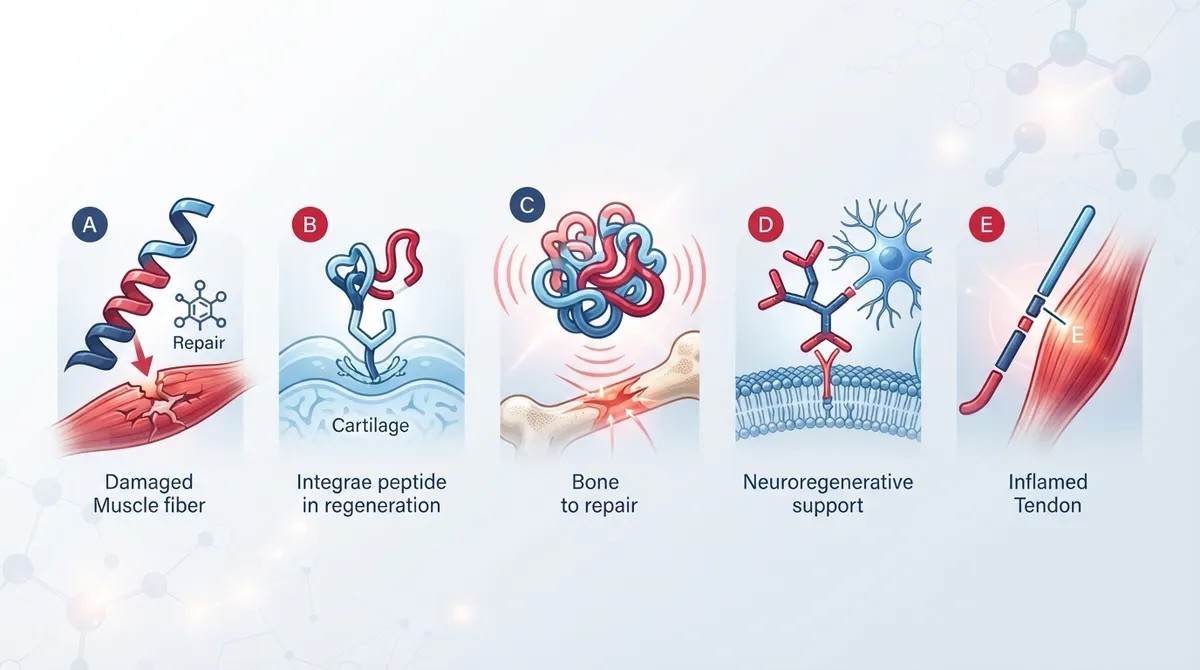
1. Peptides for Injury Recovery Are Not All the Same
The phrase "peptides for injury recovery" covers several very different products. People often lump them together, but they work differently and carry different risks.
- BPC-157 and TB-500 (thymosin-β4 derivatives) — experimental injectable peptides
- Growth-hormone secretagogues like ipamorelin, CJC-1295, and sermorelin
- Oral collagen peptides — a common supplement, not injectable
These three categories are biologically different. They also face different levels of regulation. Treating them as one single therapy is a mistake that can lead to confusion about safety and effectiveness. Learn more about the science behind these compounds in our guide to what peptides actually are.
2. BPC-157 Has No FDA-Approved Use
BPC-157 is one of the most talked-about peptides for injury recovery. It is marketed for tendon, ligament, and muscle repair. However, it has no FDA-approved therapeutic use in humans.
Most of the positive research comes from laboratory and animal studies, not human clinical trials. This means we simply do not have strong proof that it works safely in people. If you are curious about the details, our team has written an in-depth piece on whether BPC-157 actually works.
3. TB-500 Faces Similar Evidence Gaps
TB-500 is often marketed alongside BPC-157 as a tissue-repair peptide. It is related to a naturally occurring protein called thymosin-β4. Like BPC-157, it lacks FDA approval for routine injury recovery.
High-quality human trials on dosing, safety, and effectiveness are still missing. Anyone considering TB-500 should understand that most claims come from limited or animal-based research, not solid human data.
4. Growth Hormone Secretagogues Carry Endocrine Risks
Peptides like ipamorelin, CJC-1295, and sermorelin work by stimulating your body's own growth hormone release. Some people use them hoping for faster injury healing. But they are not established treatments for routine musculoskeletal injuries.
These compounds can affect your hormone system. Possible side effects include:
- Fluid retention and swelling
- Blood sugar abnormalities
- Joint discomfort from rapid tissue changes
- Changes in other hormone levels over time
Before starting any hormone-related peptide, a full medical evaluation is essential. Our primary care team can review your health history and flag any concerns.
5. Online and Unregulated Peptides Carry Real Dangers
Many peptides sold online are labeled "research use only." This label is a warning sign, not a safety guarantee. These products often have uncertain identity, concentration, and sterility.
Injectable products from unregulated sources can cause:
- Infections at the injection site
- Abscesses requiring medical treatment
- Allergic reactions
- Dosing errors due to unclear labeling
- Unknown systemic effects on your body
If you are exploring peptide therapy, always work with a licensed clinic that uses tested, verified products.
6. Oral Collagen Peptides Are a Different Story
Not all peptides carry the same risk profile. Oral hydrolyzed collagen, often sold as a supplement, is different from injectable experimental peptides. It has undergone more research, though results are still modest.
A 2026 review of low-molecular-weight collagen peptides found a cautiously positive signal for pain, function, and reduced pain medication use. However, evidence for actually healing torn tendons or ligaments remains sparse and low certainty. Collagen may work best as an add-on to rehabilitation, not a stand-alone cure.
7. Athletes Face Strict Anti-Doping Rules
If you compete in sports, peptide use requires extra caution. The World Anti-Doping Agency updates its prohibited list every year, and the 2026 version has clear rules about these substances.
|
Peptide/Category |
2026 WADA Status |
Applies To |
|---|---|---|
|
BPC-157 |
Prohibited (non-approved substance) |
At all times |
|
Thymosin-β4 / TB-500 |
Prohibited (growth factor) |
At all times |
|
CJC-1295 |
Prohibited (growth hormone secretagogue) |
At all times |
|
Sermorelin |
Prohibited (growth hormone secretagogue) |
At all times |
|
Ipamorelin |
Prohibited (growth hormone secretagogue) |
At all times |
|
MK-677 (Ibutamoren) |
Prohibited (growth hormone secretagogue) |
At all times |
Even peptides not specifically named may raise concerns if they are biologically similar to banned classes. Athletes should always talk to a doctor before considering any peptide product for recovery.
8. No Solid Data Proves Faster Recovery Times
Despite the hype, there are no reliable population-level statistics proving that BPC-157, TB-500, or similar peptides speed up recovery time in humans. There is also no strong evidence they improve return-to-sport rates or surgical outcomes.
This does not mean these compounds definitely do not work. It means the science has not caught up to the marketing claims yet. Be skeptical of before-and-after photos and personal testimonials, since they cannot replace controlled clinical research.
9. A Proper Medical Evaluation Comes First
Before considering any peptide treatment, a thorough evaluation is critical. Your doctor should:
- Assess the injury and confirm the diagnosis
- Rule out fractures, tendon ruptures, or infections
- Check for nerve or blood vessel damage
- Review your current medications and supplements
- Recommend evidence-based treatment first
Skipping this step and jumping straight to an unproven peptide could delay proper treatment and make your injury worse. Our providers, including Dr. Naveen Paddu and Dr. Pramjeet Ahluwalia, take this careful approach with every patient.
10. Rehabilitation Still Wins for Most Injuries
The most reliable way to heal from a tendon, ligament, or muscle injury remains proven rehabilitation. This includes:
- Progressive physical therapy exercises
- Smart activity modification during healing
- Quality sleep to support tissue repair
- Adequate protein intake
- Managing underlying health issues like diabetes or poor circulation
Most soft tissue injuries improve steadily over six to twelve weeks with consistent rehab. Severe tears may take several months. There is no shortcut that replaces this process, even with peptide therapy added on.
11. Peptides Should Never Replace Surgery or Therapy
Some patients hope peptides can help them avoid surgery or skip physical therapy altogether. This is a risky assumption. No peptide, proven or experimental, has been shown to replace these standard treatments.
If your injury requires surgical repair, delaying that care in favor of an unproven peptide could lead to permanent damage. Peptides, at best, may serve as a supportive addition alongside standard care, not a replacement for it.
12. Work With a Trusted Wellness Clinic
Given the risks tied to unregulated products, choosing a reputable clinic matters more than ever. A trustworthy provider will be honest about what peptides for injury recovery can and cannot do. They will also prioritize your safety over selling you a trend.
At InCare, our Tampa and Riverview locations combine advanced technology with careful medical oversight. We offer peptide therapy consultations alongside full injury evaluations, so you get an honest picture of your options. You can also explore our body composition analysis and DNA gene testing services to better understand your overall health picture before starting any new treatment.
How InCare Approaches Injury Recovery
Our team believes in combining evidence-based medicine with personalized care. Instead of pushing trendy treatments, we start with a full diagnostic workup. This helps identify the true cause of your pain or limited mobility.
From there, we build a recovery plan that may include physical therapy referrals, lifestyle changes, and, when appropriate, a conversation about peptide options backed by real data. You can read what real patients say by visiting InCare on Facebook or following our wellness tips on Instagram. We also share quick health education videos on TikTok to help our community stay informed.
Curious what other patients experience at our clinics? You can visit us on Google — InCare to read reviews from people in Tampa and Riverview who trusted our team with their health goals.
Making a Safe, Informed Decision
Injury recovery is personal. What works for one person may not work for another. The most important step is getting an accurate diagnosis and understanding your treatment options, including their risks and evidence base.
If you are dealing with a nagging injury and want honest answers about peptides for injury recovery, our providers are ready to help. We serve patients across Tampa Bay with both in-person and virtual visit options for your convenience.
Ready to talk with a provider about your injury and recovery options? Schedule your appointment today or reach out to our team with any questions about peptide therapy and safe injury recovery.
FAQs
Q: Do peptides such as BPC-157 actually speed up injury recovery?
A: There is no reliable human clinical evidence proving BPC-157 speeds up recovery. Most positive results come from animal and lab studies, not controlled human trials. Patients should treat these claims with caution until stronger research exists.
Q: Are BPC-157 and TB-500 FDA approved for tendon, ligament, or muscle injuries?
A: No. Neither BPC-157 nor TB-500 has FDA approval for any human therapeutic use. They remain classified as experimental compounds without established routine clinical indications.
Q: What are the risks of buying injectable peptides online or from a wellness clinic?
A: Unregulated products may have uncertain purity, concentration, and sterility. This raises risks of infection, allergic reactions, dosing errors, and other systemic health problems. Always choose a licensed medical provider for any peptide-related treatment.
Q: Are oral collagen peptides useful for tendon and ligament recovery?
A: Some studies show modest improvements in pain and function when collagen peptides are combined with rehabilitation exercises. However, evidence for actually healing torn tendons or ligaments remains limited and low certainty.
Q: Which peptides are prohibited for athletes under WADA rules?
A: The 2026 WADA Prohibited List bans BPC-157, thymosin-β4 derivatives like TB-500, and growth hormone secretagogues including CJC-1295, sermorelin, ipamorelin, and MK-677. These restrictions apply at all times, both in and out of competition.