
Key Takeaways
- Longevity peptides is a marketing label, not a medical category: it can mean an FDA-approved drug, a compounded preparation, or an unapproved product, each with different legal and evidence profiles.
- OTC supplements are not FDA-approved for safety or effectiveness before sale, and manufacturers are responsible for safety and truthful claims, so look for third-party quality testing.
- Peptides are usually injected or used nasally or topically, which raises risks like dosing errors, contamination, and immune reactions that oral supplements rarely pose.
- Human evidence for longevity is often thin or absent for peptides like BPC-157, so ask a clinician what human data supports the exact product and claim before spending money.
Search for ways to age well, and you will quickly find two crowded categories: longevity peptides and over-the-counter (OTC) supplements. Both promise support for energy, recovery, and healthy aging. But they are not the same kind of product, and treating them as interchangeable can lead to wasted money or avoidable risk.
If you have wondered how do longevity peptides differ from OTC supplements, the short answer is this: the differences come down to regulation, quality control, evidence, route of use, and medical oversight. "Longevity peptide" is a marketing label, not a medical category. It can describe an FDA-approved prescription drug, a compounded preparation, or an unapproved product sold online. OTC supplements, by contrast, are regulated as dietary products.
Neither group should be sold as a proven anti-aging treatment without evidence for the specific product and use. This guide walks through ten practical differences so you can ask better questions and make safer choices. Whether you are a busy professional, a wellness-minded parent, or someone exploring prevention for the first time, a primary care team can help you sort hype from help.
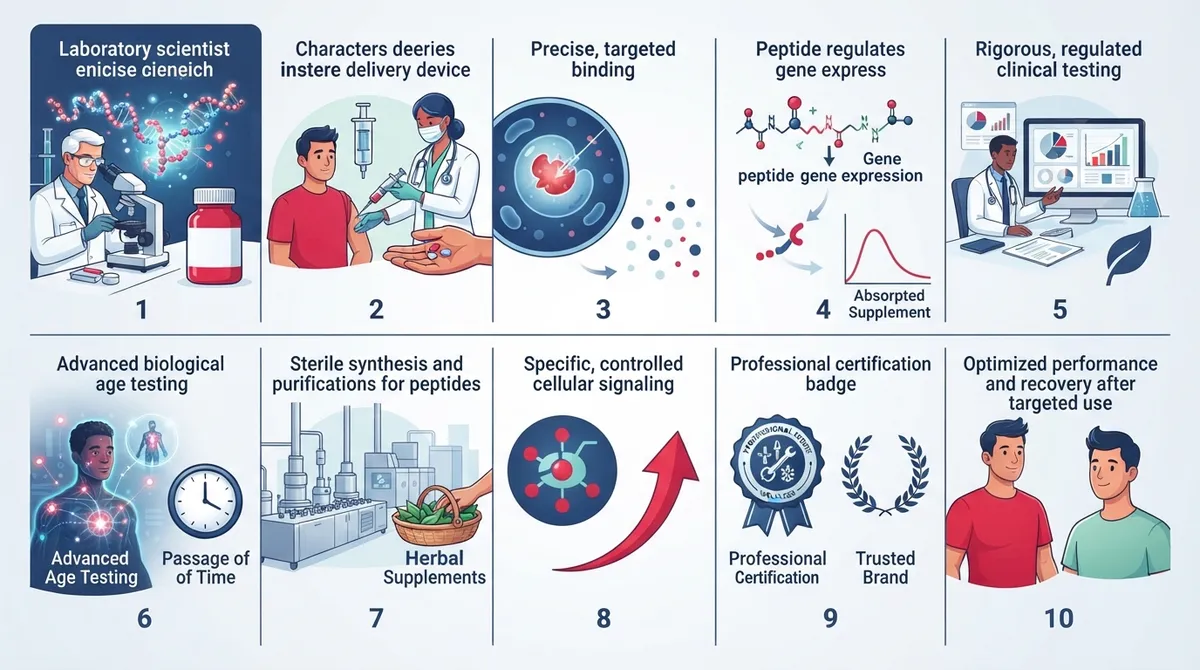
10 Differences at a Glance
|
Factor |
Longevity Peptides |
OTC Supplements |
|---|---|---|
|
Regulatory status |
Varies: approved drug, compounded, or unapproved |
Dietary supplement rules |
|
Premarket FDA review |
Approved drugs only, for specific uses |
No approval for safety or effectiveness |
|
Typical route |
Often injection, sometimes nasal or topical |
Mostly oral |
|
Medical oversight |
Should involve a licensed clinician |
Self-directed |
|
Human evidence for longevity |
Often limited or absent |
Varies widely by ingredient |
|
Main risk types |
Dosing errors, contamination, immune reactions |
Interactions, inconsistent contents |

1. Regulatory Status Is Not the Same
This is the biggest difference. The term "longevity peptides" does not describe one standardized category. A product under that label may be an FDA-approved medicine, a compounded preparation, or an unapproved item promoted for aging or recovery. Each has a different legal and evidence profile.
OTC supplements follow a different path. According to the NIH Office of Dietary Supplements, they are products meant to add to the diet, such as vitamins, minerals, herbs, and amino acids. They are regulated differently from drugs.
2. Premarket Review Works Differently
FDA-approved medicines go through premarket review for their approved uses. Dietary supplements generally do not. The FDA does not approve supplements for safety or effectiveness before they are sold. Manufacturers are responsible for product safety and for making truthful, non-misleading claims.
There is one narrow exception. If a supplement contains a qualifying new dietary ingredient, the maker generally must notify the FDA at least 75 days before marketing and explain why the ingredient is reasonably expected to be safe. That is a notification step, not an approval.
3. An Approved Peptide Drug Is Not an Anti-Aging Drug
Some peptide medicines are FDA-approved. That approval is real and meaningful, but it is narrow. It covers a specific condition, dose, formulation, and route of administration.
Approval does not mean the drug slows aging. It also does not mean the drug is right for general wellness use. This is a common point of confusion in clinics and online marketing.
4. Compounded Peptides Sit in a Gray Zone
Compounded drugs are not FDA-approved. Compounding can be appropriate for an individual patient when legal requirements are met. But it does not offer the same FDA review of safety, effectiveness, or manufacturing quality as an approved drug.
The FDA has also raised concerns about certain bulk substances used in compounding. Restrictions can vary by substance and can change over time. If a provider offers a compounded peptide, ask where it is made, how it is tested, and why it was chosen for you.
5. The Route of Use Changes the Risk
Most OTC supplements are swallowed. Many peptides are injected, and some are used as nasal sprays or topical products. Route matters because it changes how the body is exposed to the product.
Injectable or unapproved peptides can carry risks beyond uncertain benefit. These include:
- Dosing or product identity errors
- Contamination
- Immune reactions
- Route-specific complications, such as injection-site problems
This does not mean every peptide is unsafe. It means the exact product, source, and method deserve careful review.
6. Human Evidence Is Often Thinner for Peptides
Many peptides promoted online or in wellness settings lack strong controlled human evidence for longevity benefits. This includes BPC-157 and some growth-hormone-related peptides. Findings from lab or animal studies cannot show that a product works or is safe in people.
No reliable population-level statistic was found showing that marketed longevity peptides extend human lifespan. Claims should not be treated as established clinical outcomes. If you want a plain-language primer, see what peptides are and how they relate to longevity and wellness.
7. Supplements Vary Widely in Quality Too
It would be unfair to treat supplements as automatically safe. Evidence varies a great deal by ingredient. Some, such as vitamin D when a deficiency exists, have clear uses. Others have little support.
The FDA requires supplement makers to follow current good manufacturing practices. But it does not routinely check each product's contents or effectiveness before sale. Look for third-party quality testing where available, and review the ingredient list and dose. Our guide on signs a supplement has high-grade bioavailability can help you read labels with a sharper eye.
8. Medical Oversight Is a Major Dividing Line
OTC supplements are self-directed. You can buy them without a visit, a lab, or a plan. Peptides that carry real medical weight should involve a licensed clinician who reviews your history, medications, and goals.
That oversight matters even more for people managing chronic conditions or taking prescriptions. A clinician can check for interactions, order baseline labs, and decide whether a proven option already exists. For context on how a clinic can evaluate options safely, read our peptide therapy safety guide.
9. Cost and Value Look Different
Supplements are usually cheaper per month and easy to find. Peptide programs can cost more, especially when they include consultations, labs, and follow-up. Price alone says little about value.
Ask what you are paying for. Is it a product with human evidence? Is it a service that includes monitoring? Spending more does not make an unproven product more effective. Spending less does not make a supplement safe.
10. The Right Choice Starts With a Better Question
The most useful question is not "peptide or supplement?" It is "what exact ingredient, product, and goal are we talking about?" A good clinician looks at:
- The specific ingredient and product
- The claim being made
- The route of use
- Regulatory status
- Quality of human evidence
- Your personal risks and medications
- Whether a proven intervention is already available
For many people, the strongest longevity moves are not products at all. Blood pressure control, cancer screening, sleep, strength, and metabolic health do more than most add-ons. See how longevity medicine starts with primary care.
How a Primary Care Team Evaluates a Product
When a patient asks about a peptide or supplement, a careful review often follows these steps:
- Identify the exact product and its listed ingredients and dose.
- Check its regulatory status and where it was made.
- Review the human evidence for the specific claim.
- Screen for drug interactions and personal risk factors.
- Order baseline labs when appropriate.
- Compare it against proven options, then agree on a monitored plan.
This process protects you from both overpromising and unnecessary fear. It keeps the focus on safety and measurable results.
Where InCare Fits In
InCare is a personalized primary care and wellness clinic serving Tampa and Riverview, Florida. Our team pairs medical expertise with advanced tools such as DNA gene testing, metabolic breath analysis, and body composition tracking to build prevention-first plans. If you are weighing a peptide or supplement, we can review it with you in the context of your full health picture.
You can also see what patients say. Read InCare reviews on Google or follow our updates on Instagram, Facebook, and TikTok. Explore our broader primary care services to see how prevention and optimization work together.
Conclusion
So, how do longevity peptides differ from OTC supplements? They differ in regulatory status, premarket review, route of use, quality control, evidence, and the level of medical oversight they should receive. Neither group is a proven fountain of youth. The safest path is to evaluate the exact product, check the human evidence, and work with a clinician who knows your history.
Ready for a clear, evidence-based conversation about your options? Book your visit with InCare today, or contact our team with questions.
FAQs
Q: What are longevity peptides, and which products are included in that term?
A: "Longevity peptides" is a marketing umbrella, not a single medical category. It can refer to FDA-approved prescription peptide drugs, compounded preparations, or unapproved products promoted for aging, recovery, or metabolic effects. Each has different evidence and regulatory status.
Q: Are longevity peptides FDA-approved to slow aging or extend lifespan?
A: No peptide is FDA-approved to slow aging or extend human lifespan. Some peptide drugs are approved, but only for specific conditions, doses, and routes. Approval for one use does not support a general anti-aging claim.
Q: How are dietary supplements regulated in the United States?
A: Dietary supplements are regulated differently from drugs. The FDA does not approve them for safety or effectiveness before they are sold, and manufacturers are responsible for safe products and truthful claims. Makers must follow current good manufacturing practices.
Q: What are the risks of buying peptides online or through a wellness clinic?
A: Risks include dosing or identity errors, contamination, immune reactions, and route-specific complications, especially with injectable or unapproved products. Evidence for longevity benefit is also often limited. Working with a licensed clinician and asking about sourcing and testing can lower these risks.
Q: How can a primary care clinician evaluate a supplement or peptide product for safety?
A: A clinician reviews the exact ingredient, dose, regulatory status, and human evidence for the claim. They also screen for medication interactions and personal risk factors, and may order baseline labs. The goal is to decide whether the product is appropriate or whether a proven option exists.