
Key Takeaways
- Longevity-focused primary care targets healthspan, the years you stay active and independent, and builds a long-term plan around your history, risks, and goals rather than promising a specific lifespan.
- Proven prevention comes first: blood pressure and cholesterol checks, age-appropriate cancer and diabetes screenings, vaccines, and daily habits like exercise, sleep, and not smoking.
- No current test or therapy has been shown to reliably extend human lifespan, so ask what problem each treatment addresses, what the evidence shows, its risks, and its cost before starting.
- Verify credentials by checking board certification and an active Florida medical license, and confirm the clinic offers ongoing chronic disease management and specialist coordination, not just one-time wellness services.
More Tampa residents are asking a simple question: how can I stay healthy for more years, not just live longer? That question is at the heart of longevity-focused primary care. It blends proven preventive medicine with a personal, long-term plan built around your health history, risks, and goals.
The term can be confusing. Some clinics use it to describe solid, evidence-based prevention. Others use it to sell tests and treatments that have little proof behind them. Knowing the difference helps you choose care that is safe, useful, and worth the cost.
This guide covers ten key things to know before you choose a provider in the Tampa Bay area. Whether you are a busy parent, a tech-savvy professional, or someone who has never had a regular doctor, you will learn what to look for, what to question, and how to get started in 2026.

1. What Longevity-Focused Primary Care Actually Means
Longevity-focused primary care is ordinary primary care with a longer view. The goal is to protect your "healthspan," which means the years you stay active, clear-minded, and independent. It does not promise a specific lifespan.
In practice, it usually includes longer visits, lifestyle coaching, age-appropriate screening, lab review, and steady follow-up. The doctor looks at the whole picture instead of treating one problem at a time. A clinic like InCare's primary care team builds this kind of ongoing relationship so small issues are caught early.
For more background, read why longevity medicine starts with primary care.
2. How It Differs From Regular Primary Care
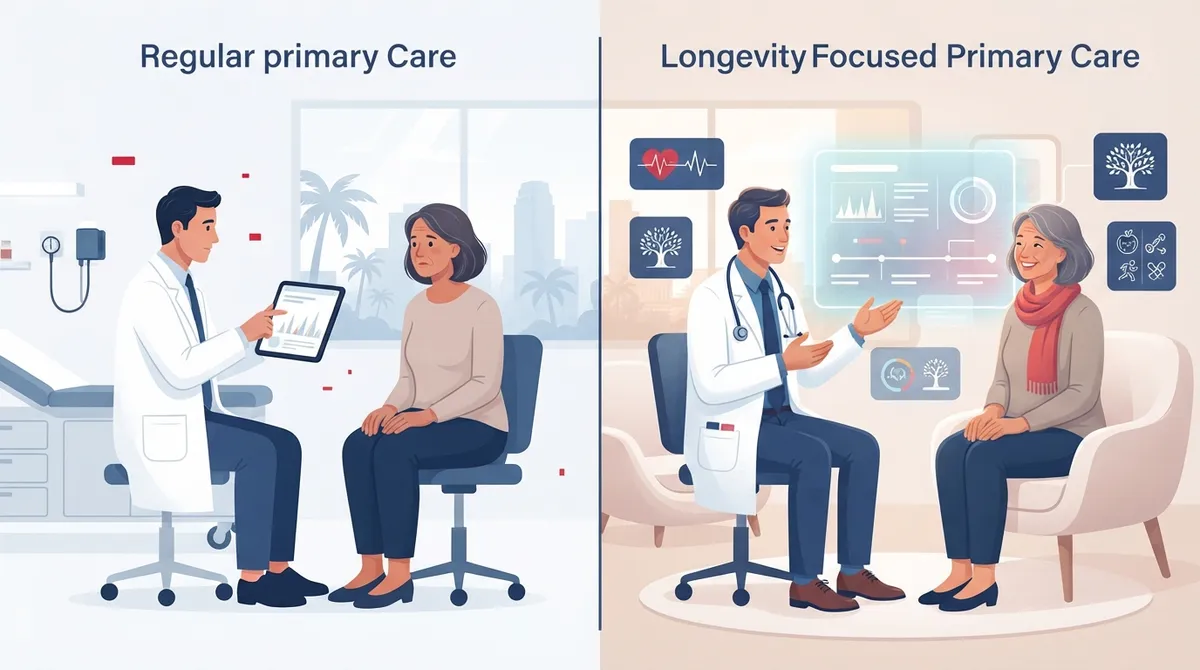
Regular primary care often focuses on sick visits, refills, and yearly checkups. Longevity-focused care adds planning. It asks what could affect your health in 10, 20, or 30 years and builds a strategy around it.
|
Feature |
Typical Visit |
Longevity-Focused Care |
|---|---|---|
|
Visit length |
Short, problem-based |
Longer, planning-based |
|
Main goal |
Treat current issues |
Prevent future problems |
|
Follow-up |
As needed |
Scheduled and ongoing |
|
Lifestyle support |
Brief advice |
Structured guidance |
|
Risk review |
Basic |
Personal and family history |
The best programs keep the strengths of regular care. They still manage chronic conditions, review medicines, and coordinate with specialists. You can learn more in how primary doctors help manage chronic illnesses.
3. Proven Prevention Is the Foundation
The strongest evidence for a longer, healthier life comes from basic preventive care. A good longevity plan starts here, before any advanced testing.
- Risk review: Your personal and family health history
- Screenings: Age- and risk-based tests for cancer, diabetes, and heart disease
- Vaccines: Stay current based on your age and health
- Blood pressure and cholesterol: Check and manage them early
- Daily habits: Exercise, nutrition, sleep, stress, and quitting tobacco
These steps are well established. If a clinic skips them but pushes expensive extras, that is a warning sign. See why preventive health care is key to a longer life for more detail.
4. Screenings That Matter Most
Screening finds disease before symptoms appear. Which tests you need depends on your age, sex, family history, and risk factors. Your doctor should explain why each test is recommended and what the result could change.
- Blood pressure checks at every visit
- Cholesterol and blood sugar testing
- Cancer screenings suited to your age and risk
- Bone, vision, and hearing checks as you age
- Mental health and sleep screening
InCare offers cancer screening as part of whole-body prevention. You can also review which screenings adults should get every year.
5. What to Expect at Your First Visit
A strong first visit feels like a conversation, not a rush. Expect your doctor to ask about your past illnesses, family history, medicines, habits, and goals. Bring a list of current medicines and any past lab results.
Most new patients leave with a clear next-step plan. That may include lab work, screening referrals, and a follow-up date. Our guide on what to expect and how to prepare for a new patient appointment walks through the process.
Busy families and young professionals can save time with same-day and virtual options. See same-day appointments for fast primary care to learn how.
6. Where Technology Helps
Technology can make longevity planning more precise when it answers a real clinical question. Several tools are now common in Tampa-area wellness practices.
- Body composition scans: Track muscle and fat over time with body composition analysis
- Metabolic testing: Learn how your body uses energy with metabolic breath analysis
- Genetic insights: Understand certain inherited risks through DNA gene testing
- Virtual visits: Handle follow-ups from home
The key is purpose. A test should help guide a decision, not just produce a number. Ask your doctor how each result would change your care.
7. Be Careful With Unproven Treatments
Some Tampa wellness practices advertise hormone optimization, peptide therapy, IV treatments, biological-age tests, or very broad lab panels. These are not the same as proven preventive care. Evidence, risks, rules, and costs vary a great deal.
No current test or therapy has been shown to reliably extend human lifespan. That does not mean every option is useless. It means you should ask careful questions before you start.
- What exact problem does this test or treatment address?
- What does the research show, and in which patients?
- What are the risks and side effects?
- How will the result change my care?
- What will it cost, and is it covered?
Where a treatment is appropriate, it should be guided by a licensed clinician with proper monitoring. If you are curious, review what peptides are and what they may offer, or how BHRT compares with traditional HRT.
8. Understand Costs and Insurance
Pricing models differ widely. Some clinics bill insurance for primary care. Others use cash-pay or membership plans. Some mix both. Before you commit, ask for a clear list of what is included.
- Are visits, labs, and procedures covered by the fee?
- Is insurance billed separately?
- Are medicines or urgent visits included?
- Does the fee cover referrals and specialist coordination?
- Are there extra charges for tests or add-ons?
If you use Medicare, check network rules first. Our guide to finding doctors accepting new patients can help you start.
9. How to Check a Provider's Credentials
Longevity is a popular marketing word, so verify the clinician behind it. Look for board certification, a valid Florida license, and clear information about who will treat you. A good practice will gladly share this.
You can review the physicians at InCare on the providers page, including Dr. Naveen Paddu, Dr. Pramjeet Ahluwalia, and Dr. Teshy John. Patient feedback also matters. Read what neighbors say on our testimonials page and see InCare reviews on Google.
Also confirm that the clinic provides real primary care, including chronic disease management and coordination with specialists. A one-time wellness service is not a substitute. For help with this step, read seven signs you have found the right primary care practice.
10. Why InCare Is a Strong Choice in Tampa Bay
InCare combines everyday primary care with advanced wellness tools under one roof. Patients can see a physician for checkups and chronic conditions, then add services like medical weight loss, IV hydration, and body and metabolic testing when they make sense.
With locations in Tampa and Riverview, plus virtual visits, care fits real schedules. You can see all InCare locations and learn more about our approach. The focus stays on prevention, clear explanations, and plans built around you. We also share health tips on Instagram.
For a deeper look at local options, see our guide to the best longevity clinic in Tampa.
Putting Statewide Numbers in Context
Florida Health CHARTS reports that life expectancy at birth in the state was 80.4 years in 2024. By sex, that was 77.9 years for males and 83.0 years for females. These are statewide figures, not Tampa-specific measures. They also do not prove that any one clinic or program extends life.
What they do show is that many years of health depend on risk factors you can often influence. Blood pressure, blood sugar, weight, activity, and early screening all play a part. That is why steady, personal primary care is so valuable.
Take the Next Step Toward Healthier Years
The best longevity plan is simple and honest. It starts with proven prevention, adds technology only when it helps, and keeps you connected to a doctor who knows your story. Ask questions, check credentials, and choose a team that explains its reasoning.
Ready to build a plan for your healthspan? Book your visit with InCare today, or contact our team with questions. We would be glad to help you take the first step.
FAQs
Q: What is longevity-focused primary care, and how is it different from regular primary care?
A: Longevity-focused primary care is regular primary care with a stronger focus on prevention and long-term planning. It usually means longer visits, personalized risk review, lifestyle coaching, and ongoing follow-up aimed at protecting your healthspan, or the years you stay healthy and active.
Q: Are hormone therapy, peptides, or IV treatments proven to extend lifespan?
A: No current treatment has been proven to reliably extend human lifespan. Some may help specific conditions or symptoms when used appropriately, so ask your clinician what problem each treatment addresses, what the evidence shows, and what the risks and costs are.
Q: What should I expect at a longevity-focused primary care appointment?
A: Expect a detailed review of your health history, family risks, medicines, and daily habits. Your doctor will likely order age-appropriate screenings and labs, then set a follow-up plan tailored to your goals.
Q: Can a longevity-focused primary care doctor manage chronic conditions?
A: Yes, a true primary care doctor can manage conditions like high blood pressure, diabetes, and high cholesterol. They can also review medicines and coordinate care with specialists, which is what separates ongoing care from a one-time wellness service.
Q: How can I check a Tampa provider's credentials?
A: Look for board certification and an active Florida medical license, and ask who will be treating you. Reputable clinics share this information openly, and reading verified patient reviews can add helpful context.