Key Takeaways
- Injectable GHK-Cu carries far greater risk than topical cosmetic products. The FDA flags it as a bulk substance with significant compounding safety concerns, including immune reactions and impurities.
- GHK-Cu is not FDA-approved for anti-aging, hair growth, or wound healing. Ask any clinic to state this plainly and verify the provider's license through the Florida Department of Health before booking.
- Human evidence for GHK-Cu is very limited, mostly small studies of topical cosmetics. Be wary of any clinic promising dramatic skin, hair, or healing results.
- Call the clinic directly to confirm which GHK-Cu form it offers, request written pricing and risk information, and insist on a medical consultation before any treatment.
Copper peptides have moved from skincare shelves to wellness clinic menus, and many people now search for a GHK-Cu peptide clinic in Riverview hoping to find a quick path to better skin, hair, or healing. The interest is understandable. GHK-Cu is a naturally occurring copper-binding tripeptide that researchers have studied for skin repair and wound healing. But the science is still young, and the rules around different forms of GHK-Cu are changing in 2026.
That is why choosing a clinic takes more than a Google search. You need a medical team that explains what is known, what is not, and which products are actually safe to use. This guide gives you 10 practical questions to ask before you begin. It also explains the difference between topical and injectable products, and how to protect yourself along the way.
Whether you are a busy parent, a wellness-minded professional, or someone new to peptides, these questions will help you separate marketing from medicine. For ongoing care that goes beyond any single trend, you can explore the primary care services at InCare, which serves patients in Riverview and Tampa.

What Is GHK-Cu and Why Is It Popular?
GHK-Cu stands for glycyl-L-histidyl-L-lysine copper. It is a short chain of three amino acids that binds copper. Researchers have studied it for possible effects on skin repair, collagen-related processes, and wound healing.
Much of the mechanism research comes from laboratory and animal studies. Human evidence is limited and mostly comes from small studies of topical cosmetic products. A 2024 review of local and systemic peptide therapies noted that large human clinical studies of GHK-Cu are very limited.
In plain terms, GHK-Cu is interesting, but it is not proven to treat disease. You can read more in our overview of what GHK-Cu is and how it fits into wellness care.
Topical vs. Injectable GHK-Cu: Know the Difference
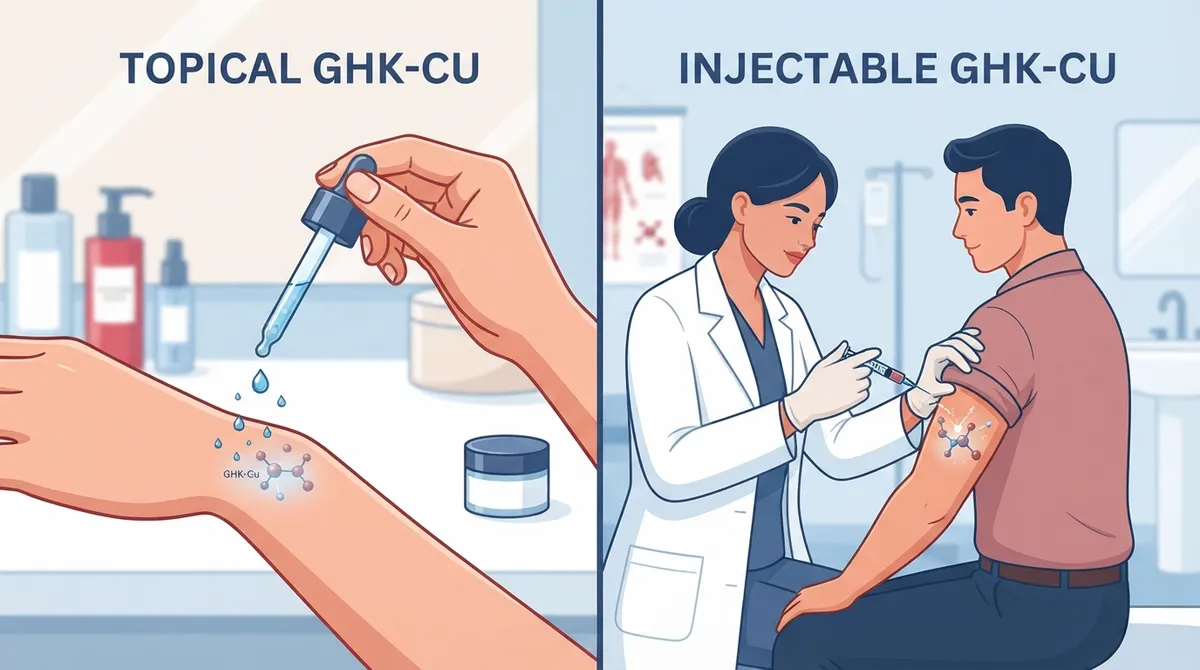
This is the most important distinction to understand before you visit any clinic. The two forms carry very different levels of evidence and risk.
|
Feature |
Topical GHK-Cu |
Injectable GHK-Cu |
|---|---|---|
|
Typical use |
Serums, creams, and masks for skin |
Compounded products given by injection |
|
Human evidence |
Small studies of cosmetic formulas |
Very limited safety data |
|
FDA status |
Sold as a cosmetic, not an approved drug |
Not an approved drug; flagged for compounding safety risks |
|
Main concerns |
Skin irritation or contact dermatitis |
Dose uncertainty, sterility, impurities, immune reactions |
A topical product sold as a cosmetic is not FDA-approved to treat or prevent any condition. Injectable GHK-Cu raises extra concerns. The FDA lists it among bulk substances that may present significant safety risks in compounding, citing possible immune reactions from peptide aggregation and impurities, plus limited human safety data.
10 Questions to Ask a GHK-Cu Peptide Clinic in Riverview
Use these questions as a checklist. A trustworthy clinic will welcome them and answer clearly.
1. Which form of GHK-Cu do you offer?
Ask whether the product is topical or injectable. Many people assume all GHK-Cu is the same. It is not. The form determines the risk level, the regulatory status, and the kind of evidence behind it.
2. Is this product FDA-approved?
The honest answer is no. GHK-Cu is not an FDA-approved drug for anti-aging, hair growth, wound healing, or any other medical use. A clinic should say this plainly rather than imply approval.
3. Where is the product made?
Ask about the source and manufacturing standards. Product quality matters a great deal with peptides. Impurities and poor sterility are real concerns, especially for injections.
4. What is the current FDA and state guidance on compounding?
Compounding status is specific to the route of use and can change. Non-injectable GHK-Cu has been considered separately from injectable GHK-Cu, with FDA review still in progress. A responsible clinic keeps up with current guidance and applicable Florida rules. You can review the FDA's list of bulk substances that may present significant safety risks yourself.
5. What does the evidence actually show?
Ask the clinician to describe the research without exaggeration. Strong answers mention that most evidence is preclinical or based on small topical studies. Be cautious of anyone who promises dramatic skin, hair, or healing results. Our look at GHK-Cu research vs. hype explains this in more detail.
6. Who will supervise my care?
Peptide use should be overseen by a licensed medical professional who reviews your history, medications, and goals. Ask for the provider's name, license, and training. Verify the license through the Florida Department of Health before you commit.
7. What side effects should I watch for?
Topical products may cause redness, itching, or contact dermatitis. Injections add risks such as immune reactions and infection. Ask what symptoms should prompt a call or a visit. Our guide to GHK-Cu side effects covers what to monitor.
8. Will you review my other medications and conditions?
A proper evaluation looks at your full health picture. This includes allergies, current prescriptions, pregnancy plans, and skin conditions. Peptides should never be layered onto your routine without that review.
9. How will we measure whether it is working?
Good clinics set clear, realistic goals and track progress. This might include dated photos, symptom notes, and follow-up visits. If you are curious about timelines, see how to track GHK-Cu results week by week.
10. What will it cost, and what is included?
Ask for full pricing in writing, including consultation fees, products, and follow-ups. Compare this against the strength of the evidence. For a budgeting framework, read how to budget for GHK-Cu cost at a wellness clinic.
Red Flags to Watch For
Some warning signs should make you pause before booking. Keep this list handy as you compare options.
- Claims that GHK-Cu cures disease, reverses aging, or regrows hair with certainty
- Suggesting that a cosmetic product is an approved medical treatment
- No clear information on product source, purity, or sterility
- Pressure to buy packages before a medical evaluation
- No licensed clinician involved in your care
- Dismissing questions about side effects or FDA status
If you notice any of these, step back and ask more questions. A peptide trend should never replace sound medical judgment.
Why Local Claims Need Verification
The keyword mentions Riverview, but a search alone cannot confirm that any specific local clinic offers GHK-Cu, what it charges, or what credentials its staff hold. Do not assume a service exists because a webpage mentions it.
Before you visit, take these steps:
- Check the clinic's current website for the exact service and product form.
- Call the office and ask directly whether GHK-Cu is offered and in what form.
- Confirm the provider's license and board certification.
- Ask for written information about risks, costs, and follow-up care.
- Request a consultation before agreeing to any treatment.
This simple process protects you from outdated listings and unsupported claims. For related local guidance, see our article on what to know before GHK-Cu therapy in Riverview.
Safer Ways to Support Skin and Healing Today
You do not need to wait for peptide science to catch up to take care of your skin and recovery. Several proven steps work well and carry less uncertainty.
- Use daily sunscreen and a gentle cleanser
- Choose evidence-backed ingredients your clinician recommends
- Keep chronic conditions like diabetes well controlled, since they affect healing
- Eat enough protein and stay hydrated
- Avoid smoking, which slows tissue repair
- Get regular checkups so small concerns are caught early
Our guide to skin repair steps doctors recommend in 2026 walks through these basics. Many patients find that a solid foundation delivers more benefit than any single trending product.
How a Primary Care Clinic Fits In
A primary care team can help you decide whether a peptide even makes sense for you. They can order labs, review your medications, and flag risks you might miss on your own. They can also point you toward options with stronger evidence.
This is where a whole-body approach matters. At InCare, patients in Riverview and Tampa receive personalized care that blends preventive medicine with advanced wellness services. The goal is to guide you toward choices that are safe, honest, and tailored to you. If you want to learn more about peptides in general, our article on how to evaluate peptide therapy for wellness safely is a helpful next read.
You can also see what other patients say. Read feedback and visit us on Google as InCare to learn about the Riverview experience before you book. Our team also shares health education on Instagram, Facebook, and TikTok.
Conclusion
Finding a GHK-Cu peptide clinic in Riverview is less about locating a name and more about asking the right questions. Know whether a product is topical or injectable. Understand that GHK-Cu is not FDA-approved as a treatment. Verify credentials, sourcing, and costs before you commit. And remember that human evidence remains limited, so realistic expectations are your best protection.
If you want a trusted medical partner to talk through peptides, skin health, or your broader wellness goals, we are here to help. Book your visit with InCare to start with a thoughtful, evidence-based conversation. Prefer to ask a question first? Contact our team and we will point you in the right direction.
FAQs
Q: What is GHK-Cu peptide, and what is it used for?
A: GHK-Cu is a naturally occurring copper-binding tripeptide studied for possible effects on skin repair, collagen-related processes, and wound healing. Most of the supporting research is laboratory or animal-based, and human evidence is limited to small studies of topical products.
Q: Is GHK-Cu FDA-approved?
A: No. GHK-Cu is not an FDA-approved drug for anti-aging, hair growth, wound healing, or other medical uses. A topical product sold as a cosmetic is not approved to treat or prevent a condition.
Q: Is injectable GHK-Cu safe to receive from a wellness clinic?
A: The FDA has identified injectable GHK-Cu as a bulk substance that may present significant safety risks in compounding, including possible immune reactions and limited human safety data. Patients should ask about product quality, sterility, and current FDA and state guidance before considering any injection.
Q: How can I verify whether a Riverview clinic offers GHK-Cu?
A: Check the clinic's current website, call the office to ask which form it offers, and confirm the provider's license through the Florida Department of Health. Request written details on risks, costs, and follow-up care before agreeing to treatment.
Q: What risks should I ask about before using GHK-Cu?
A: Topical products may cause irritation or contact dermatitis. Injections add concerns such as uncertain dosing, impurities, infection, and immune reactions, so ask a licensed clinician to review your health history and medications first.