
Key Takeaways
- Kisspeptin is a brain chemical that triggers the reproductive hormone chain; breastfeeding suppresses it through prolactin, which is why nursing mothers experience lactational amenorrhea (delayed periods).
- Never use kisspeptin products at home—it is not FDA-approved for personal use, safety during lactation is unestablished, and it cannot be assumed to boost milk supply or restore fertility.
- You can become pregnant before your first postpartum period returns while breastfeeding; lactational amenorrhea as birth control only works if your baby is under 6 months old and you exclusively breastfeed frequently.
- Human research on kisspeptin and breastfeeding remains very limited; most evidence comes from mouse studies, and a 2017 study found no significant difference in blood kisspeptin levels between breastfeeding and cycling women.
- See a doctor if your period hasn't returned months after weaning, you experience unexplained weight loss or hair loss, severe headaches, or low energy—these may indicate hormone imbalances beyond normal postpartum changes.
- Track nursing frequency and watch for returning fertility signs; discuss backup contraception early and schedule a postpartum wellness visit within the first few months to monitor your reproductive health.
Many new mothers notice their periods disappear for months after giving birth, especially while nursing. Behind this natural pause is a tiny brain chemical called kisspeptin. Understanding how kisspeptin and breastfeeding interact can help you make sense of your body's changes, know what is normal, and recognize when you should ask a doctor for guidance.
This topic matters for busy parents trying to plan their next steps, for women without a regular primary care provider, and for anyone curious about the science behind postpartum fertility. Below, we break down what kisspeptin does, how breastfeeding affects it, and why this hormone should never be used at home without medical supervision. If you have questions about your own postpartum health, the team at Primary Care at InCare can help you find real answers.
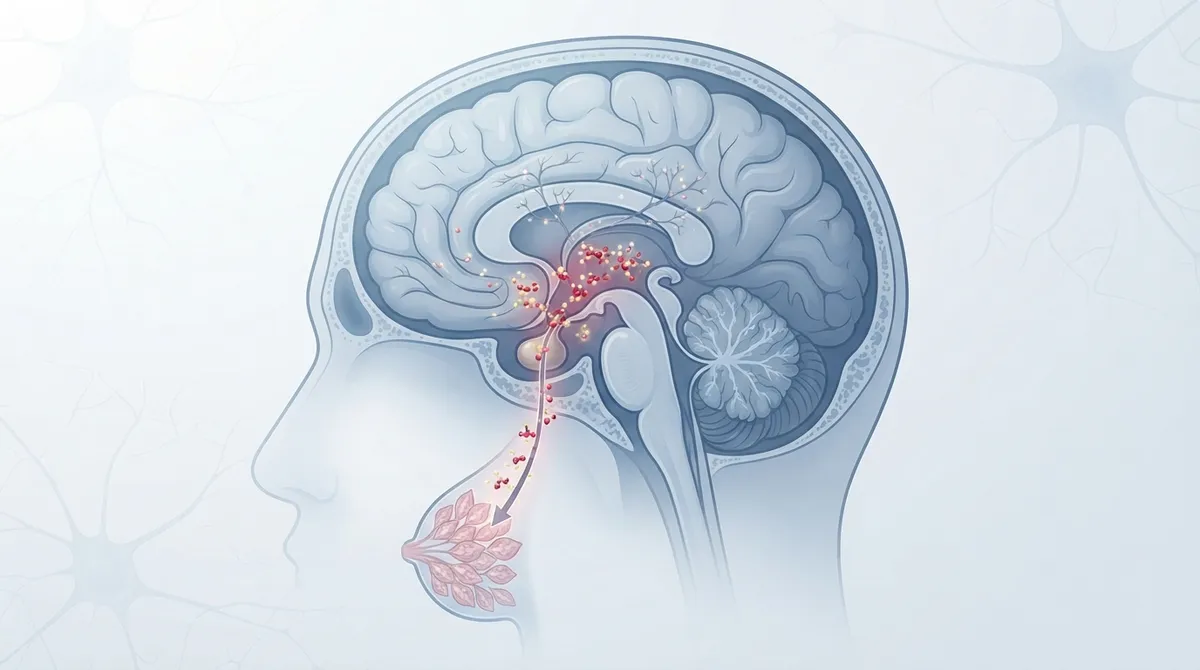
What Is Kisspeptin and Why Does It Matter?
Kisspeptin is a small protein made in the brain. It acts like a switch that turns on your body's reproductive system. This tiny molecule tells another brain chemical, called GnRH, to get moving. GnRH then signals two other hormones, LH and FSH, to control ovulation and your monthly cycle.
Without enough kisspeptin activity, this entire chain slows down. That is exactly what happens during breastfeeding. Your body naturally lowers kisspeptin signals to help delay your next pregnancy while you care for your newborn.
The Brain-to-Ovary Connection
Think of kisspeptin as the first domino in a line of hormones. Once it falls, it pushes GnRH, which pushes LH and FSH, which then push your ovaries to release an egg. Breastfeeding interrupts this chain early, right at the kisspeptin step.
- Kisspeptin starts the reproductive hormone chain reaction
- GnRH is released next in response to kisspeptin signals
- LH and FSH follow, controlling ovulation and periods
- Breastfeeding lowers kisspeptin activity to delay this process
- Prolactin, the milk-making hormone, is believed to be a key suppressor
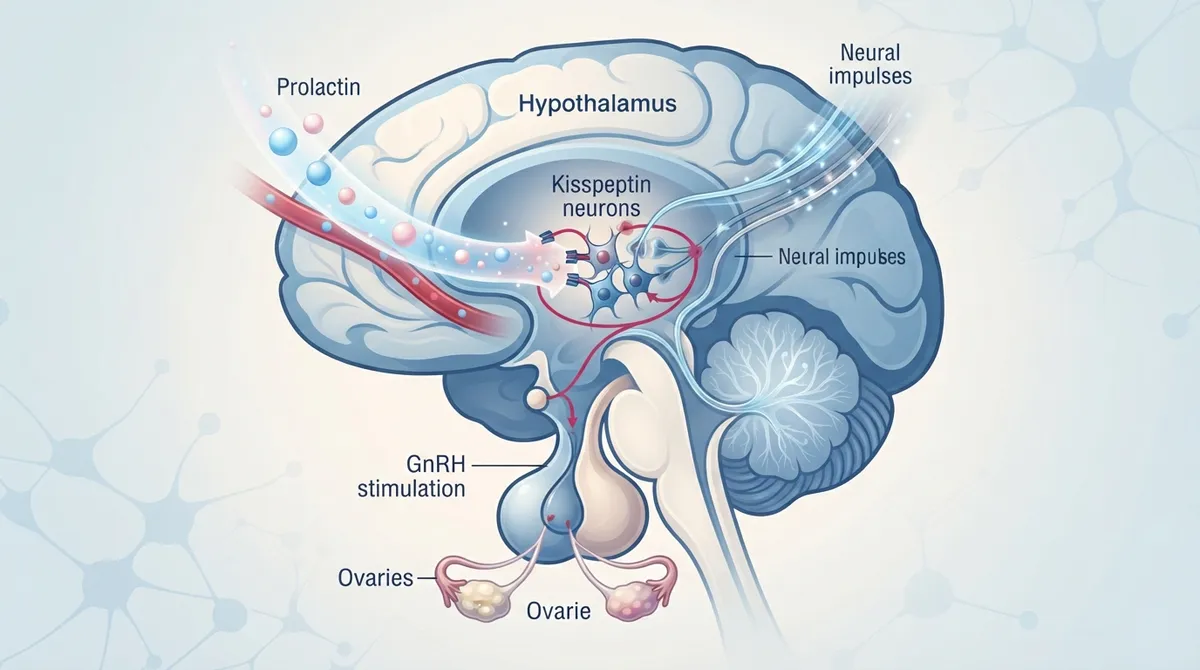
How Breastfeeding Suppresses Kisspeptin Activity
When you breastfeed, your body makes more prolactin. Prolactin helps your body produce milk. Research suggests prolactin also quiets down the brain cells that make kisspeptin. This is part of why many nursing mothers do not get their period for months.
Doctors call this natural pause lactational amenorrhea. It happens because reduced kisspeptin signals mean less GnRH, less LH, and no ovulation. The stronger and more frequent the nursing, the longer this suppression tends to last.
What Animal Studies Show
Much of what we know comes from mouse studies rather than human trials. A 2025 study found that prolactin acting on kisspeptin brain cells was necessary to keep fertility suppressed during lactation in mice. These findings are promising, but they cannot be assumed to work the same way in people.
What Human Research Shows
Human data on kisspeptin and breastfeeding remains limited. One small 2017 study looked at blood kisspeptin levels in women with lactational amenorrhea. The results were surprising in some ways.
|
Group |
Number of Women |
Average Plasma Kisspeptin |
|---|---|---|
|
Lactational amenorrhea |
11 |
15.2 ± 2.5 fmol/mL |
|
Regular menstrual cycles |
4 |
16.5 ± 4.8 fmol/mL |
|
Pathological amenorrhea |
4 |
5.8 to 13.7 fmol/mL |
The difference between the breastfeeding group and the cycling group was not statistically significant. This suggests that blood kisspeptin levels may not fully reflect what is happening inside the brain, where the real action occurs. Source: Gynecological Endocrinology, 2017.
Common Questions About Kisspeptin and Breastfeeding
New parents often have practical concerns beyond the science. Here are the most common questions patients bring to their Providers during postpartum visits.
Can Kisspeptin Bring Back Ovulation While Nursing?
Kisspeptin is being studied as a possible tool for restoring ovulation in certain fertility treatments. However, it has no approved role for restarting ovulation specifically during breastfeeding. Any changes to your cycle should happen naturally or under a doctor's care.
Does Kisspeptin Help Increase Milk Supply?
No. There is no established evidence that kisspeptin boosts breast milk production. Milk supply is driven mainly by prolactin and how often and effectively a baby nurses, not by kisspeptin levels.
Is Kisspeptin Safe to Use While Breastfeeding?
Kisspeptin is still an investigational compound. It is not approved for use during breastfeeding. Most clinical trials exclude pregnant and breastfeeding participants because there is not enough safety data on infant exposure through breast milk.
Why You Should Never Self-Use Kisspeptin Products
Some wellness forums and online sellers promote kisspeptin as a fertility or energy booster. This is risky and not supported by solid human evidence for breastfeeding mothers.
- Kisspeptin research compounds are not FDA-approved for personal use
- Dosing safety during lactation has not been established
- There is no proof it improves milk supply or fertility in nursing mothers
- Clinical trials typically exclude breastfeeding women for safety reasons
- Self-treatment can delay proper diagnosis of real hormone issues
Interestingly, kisspeptin levels in the blood naturally rise 7,000 to 10,000 times higher during pregnancy compared to before pregnancy. This shows how much the body relies on natural, internally produced kisspeptin. It does not mean that taking extra kisspeptin as a supplement or injection is safe or helpful.
Current Research on Kisspeptin Therapy
Kisspeptin is being tested in supervised clinical trials for conditions unrelated to breastfeeding. These include infertility treatment, hypothalamic amenorrhea, and helping with ovulation induction during IVF.
|
Research Area |
Study Population |
Purpose |
|---|---|---|
|
General kisspeptin trials |
150+ subjects |
Testing safety in healthy volunteers and patients |
|
IVF-related kisspeptin-54 studies |
100+ women, 30+ live births |
Ovulation trigger research in fertility clinics |
|
Breastfeeding-specific studies |
Very limited |
Mostly animal-based, human data still sparse |
Source: ClinicalTrials.gov protocol NCT05901467. None of this research supports using kisspeptin outside of a monitored study, and none of it applies specifically to nursing mothers trying to manage their cycles at home.
Lactational Amenorrhea as Birth Control: How Reliable Is It?
Many women wonder if breastfeeding alone can prevent pregnancy. The lactational amenorrhea method, or LAM, can work but only under strict conditions.
- Your baby must be under six months old
- You must be exclusively or almost exclusively breastfeeding
- Your period must not have returned yet
- Feedings need to happen frequently, day and night
If any of these conditions change, your risk of ovulating and getting pregnant goes up. This is because kisspeptin suppression weakens once nursing frequency drops or your baby starts sleeping longer stretches. Many women find they can get pregnant again before their first postpartum period even returns.
Steps to Protect Your Reproductive Health After Birth
- Track your nursing frequency and any signs of returning fertility
- Talk to your provider about backup contraception options early
- Schedule a postpartum wellness visit within the first few months
- Watch for unusual symptoms like extreme fatigue or mood changes
- Ask about hormone testing if your cycle does not return as expected
When Should You See a Doctor About Postpartum Amenorrhea?
Most breastfeeding mothers do not need testing for a delayed period. But certain signs mean it is time for a checkup. A trip to Urgent Care or a scheduled visit with a primary care provider can bring peace of mind.
- Your period has not returned after weaning for several months
- You notice unexplained weight changes or hair loss
- You experience severe headaches or vision changes
- You have signs of low energy that do not improve with rest
- You are planning another pregnancy and want fertility guidance
A women's wellness visit can include hormone panels, thyroid checks, and a full review of your health history. This is also a good time to discuss Cancer Screening options and other preventive care you may have delayed during pregnancy and early motherhood.
How InCare Supports Postpartum and Women's Wellness
At InCare, our providers understand that postpartum health involves more than just checking a box. Dr. Pramjeet Ahluwalia Md and the rest of our care team offer thorough evaluations that look at your whole hormonal picture, not just one number on a lab report.
We also offer services that support long-term wellness beyond the postpartum period, including Dna Gene Testing for personalized health insights and Iv Hydration Vitamin Drips to help restore energy during recovery. Our patients in Tampa and Riverview appreciate having one trusted place for both urgent needs and ongoing wellness care.
Many new mothers also ask about Weight Loss support once they are cleared by their doctor, since postpartum weight changes are common and manageable with the right plan. You can read what real patients say about their experience by checking Visit us on Google — InCare before booking your own appointment.
Staying Informed and Connected
Hormone science moves quickly, and kisspeptin research is still developing. Staying connected with trustworthy sources helps you separate real medical evidence from online myths. You can follow health updates and patient stories on our Facebook page, see wellness tips on Instagram, or catch quick health explainers on Tik Tok.
For deeper reading on reproductive hormone science, medical databases like the National Library of Medicine offer peer-reviewed studies you can review with your doctor. Reliable sources matter, especially when new peptide therapies get a lot of buzz online without solid human safety data.
Final Thoughts on Kisspeptin and Breastfeeding
Kisspeptin plays a real and important role in why breastfeeding delays your period. But it is not a tool you should use yourself, and it has no approved role in boosting milk supply or restoring fertility on demand. The safest path is understanding your body's natural process and getting personalized guidance when something feels off.
If you are navigating postpartum changes, planning your next pregnancy, or simply want a thorough wellness checkup, our team is ready to help. Reach out to our care team today or schedule your appointment online now to get expert, judgment-free answers about your postpartum health.
FAQs
Q: What is kisspeptin and how does it affect breastfeeding?
A: Kisspeptin is a brain chemical that starts the hormone chain controlling ovulation and periods. Breastfeeding lowers kisspeptin activity, which is a key reason periods often pause during nursing.
Q: Does breastfeeding lower kisspeptin levels?
A: Breastfeeding appears to reduce kisspeptin activity in the brain, largely due to rising prolactin levels. However, a small 2017 human study found no significant difference in blood kisspeptin between breastfeeding and cycling women, suggesting blood levels may not reflect brain activity.
Q: Can kisspeptin increase breast milk supply?
A: No, kisspeptin has no established role in increasing milk production. Milk supply is primarily driven by prolactin and how often your baby nurses, not by kisspeptin levels.
Q: Is kisspeptin safe to use while breastfeeding?
A: Kisspeptin remains an investigational compound with no approved use during breastfeeding. Clinical trials generally exclude breastfeeding participants because safety data on infant exposure is insufficient.
Q: Can I get pregnant before my period returns while breastfeeding?
A: Yes, ovulation can happen before your first postpartum period returns, especially if breastfeeding frequency decreases. This is why the lactational amenorrhea method only works reliably under specific, strict conditions.