

Key Takeaways
- Verify your primary care doctor is in-network before enrolling in any plan, as a low premium means little if you cannot see the doctor who manages your health and coordinates your care.
- Compare total yearly costs (premiums, deductibles, copays, and out-of-pocket limits) rather than premium alone, since $0-premium plans still require copayments and the $202.90 monthly Part B premium in 2026.
- Check each plan's drug formulary and pharmacy network against your actual medications and preferred pharmacy, as needed prescriptions may cost significantly more than expected in certain plans.
- Medicare Advantage (HMO/PPO) and Original Medicare with Medigap differ in network flexibility and cost structure; HMOs limit out-of-network care but cost less, while Medigap offers nationwide access at higher premiums.
- Review and compare plans every year because networks, drug lists, costs, and benefit eligibility change annually—a plan that worked in 2025 may not be the best fit in 2026.
- Confirm all plan details in official Evidence of Coverage documents and Medicare.gov provider directories before enrolling, as eHealth is a private marketplace and directories can be outdated.
Choosing a Medicare plan is one of the biggest health decisions many adults make. The choice shapes which doctors you can see, how much you pay, and how easily you get preventive care. Many people start their search on eHealth, an online marketplace that lets you compare plans in one place. But the real question is not which plan looks cheapest. It is which plan lets you keep a trusted primary care relationship and stay well in 2026.
This guide explains what eHealth Medicare plans are and how they work. It also shows how to compare them through a primary care and wellness lens. Whether you are helping a parent, planning your own coverage, or simply learning how Medicare works, you will find clear steps and checklists below.

What Are eHealth Medicare Plans?
eHealth is a private online insurance marketplace and licensed agency. It is not Medicare, and it is not a government agency. It helps people compare and enroll in plans sold by private insurers. Because of this, the term "eHealth Medicare plans" really means the plans you can browse and enroll in through that marketplace.
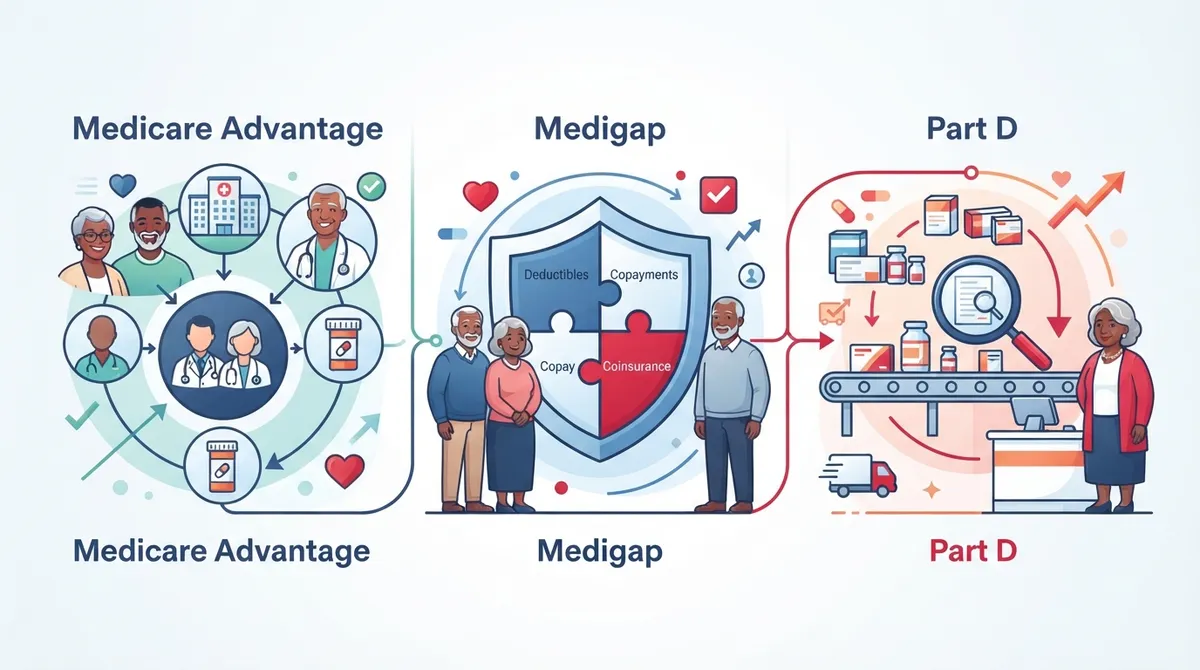
Those plans fall into three main groups:
- Medicare Advantage (Part C): Plans from private insurers that bundle your hospital and medical coverage, and often drug coverage too.
- Medicare Supplement (Medigap): Policies that help pay costs left over after Original Medicare pays its share.
- Medicare Part D: Standalone prescription drug plans.
Plan availability and benefits change by ZIP code and by year. Always confirm details in the plan's official documents or on Medicare.gov before you enroll.
How Do Medicare Advantage, Medigap, and Part D Differ?
Each option solves a different problem. The table below gives a quick comparison.
|
Option |
What It Does |
Doctor Access |
Typical Cost Structure |
|---|---|---|---|
|
Medicare Advantage (Part C) |
Replaces Original Medicare with a private plan that covers Parts A and B, often with drug coverage and extras |
Usually a network (HMO or PPO) |
Plan premium, copays, coinsurance, and a yearly out-of-pocket limit |
|
Original Medicare + Medigap |
Keeps Original Medicare and adds a policy that fills cost gaps |
Any provider nationwide who accepts Medicare |
Part B premium plus a separate Medigap premium |
|
Part D (standalone) |
Covers prescription drugs |
Pharmacy network applies |
Plan premium and drug cost-sharing |
Original Medicare with a Medigap policy generally lets you visit any provider who accepts Medicare. Medigap and drug coverage are separate policies, each with its own costs and enrollment rules. Many Medicare Advantage plans, by contrast, use provider networks.
Why Does Your Primary Care Doctor Matter So Much?
Your primary care clinician is the person who knows your full health story. They track your blood pressure, screen for cancer, manage chronic conditions, and coordinate specialists. When a plan forces you to leave that relationship, care can become fragmented. To see why, read about fragmented care versus coordinated care.
For this reason, the first question to ask about any plan is simple: is my doctor in the network? A low premium means little if you cannot see the person who manages your health. A strong primary care relationship also helps you prevent chronic diseases before they start.
How Do HMO and PPO Plans Affect Primary Care Access?
Plan type changes how you get care day to day.
HMO Plans
HMO plans generally use a provider network. Many ask you to pick a primary care provider. They often require referrals before you see a specialist. HMOs can cost less, but they offer less flexibility outside the network. If you want to learn more, see this guide on what a Medicare HMO is and how it works.
PPO Plans
PPO plans generally offer more out-of-network flexibility. In exchange, you usually pay more. They can suit people who travel often or want a wider choice of clinicians.
Original Medicare With Medigap
This path avoids networks and referrals in most cases. You pay separate premiums, and you must also add Part D drug coverage on your own. It offers the widest access, but it can cost more each month.
What Do eHealth Medicare Plans Really Cost in 2026?
Premiums are only part of the picture. Here are key 2026 figures from federal sources:
- The standard Medicare Part B premium is $202.90 per month. Higher earners may pay more.
- The Part B annual deductible is $283.
- The out-of-pocket cap for covered Part D drugs is $2,100 per year.
- The 2026 national base Part D premium is $38.99. This is a benchmark, not what every person pays.
- CMS reported an average Medicare Advantage premium of $15.11 per month for 2026, up from $12.38 in 2025.
CMS also reported that everyone with Medicare has access to at least one Medicare Advantage plan. The lowest monthly premium is $0. However, a $0 premium does not mean free care. You will still owe copays or coinsurance, and you generally must keep paying the Part B premium. Costs and benefits vary by location, so check your own ZIP code.
Which Wellness Benefits Might a Plan Include?
Many Medicare Advantage plans add extras beyond Original Medicare. These can include dental, vision, hearing, fitness, or wellness programs. Benefits differ widely from one plan to another, so verify them in the plan's current Evidence of Coverage.
When you compare wellness features, look for:
- Coverage of your annual wellness visit and preventive screenings
- Telehealth options for routine and follow-up care
- Care coordination support for chronic conditions
- Fitness or gym benefits you will actually use
- Clear referral rules for specialists
Knowing what to expect at your yearly checkup helps here. Learn what happens during an annual wellness visit so you can check that your plan supports it.
How Do You Compare Plans Step by Step?
A clear process keeps you from getting overwhelmed. Follow these steps:
- List your clinicians. Write down your primary care doctor, specialists, preferred clinic, and hospital.
- List your medications. Include dose and how often you take each one. Note your preferred pharmacy.
- Check networks. Use each plan's provider directory to confirm your doctors and pharmacy are in-network.
- Review the formulary. Make sure your drugs are covered and see what tier each falls into.
- Compare total yearly cost. Add premiums, deductibles, copays, and the out-of-pocket limit.
- Check extras. Review dental, vision, hearing, fitness, and telehealth benefits.
- Verify in official materials. Confirm everything in the Evidence of Coverage or on Medicare.gov.
Keeping your prescriptions in order makes step two easier. These prescription management tips can help you stay organized.
How Can You Check If a Clinic Is In-Network?
Never assume a clinic accepts a plan. Instead, confirm it directly. Use these methods:
- Search the plan's online provider directory by clinic name and doctor name.
- Call the clinic's front desk and ask whether they accept your exact plan name and plan ID.
- Call the plan's member services number to verify network status.
- Ask whether your doctor is accepting new patients under that plan.
Directories can be out of date, so a phone call is a smart final check. If you are looking for a new clinician, this guide on finding doctors accepting new patients can save time. You can also review the traits of a strong Medicare provider for primary care.
When Can You Enroll or Change Your Medicare Plan?
Medicare has set enrollment windows. Most people can enroll when they first become eligible. After that, there is an annual period each fall to review and switch plans, and other periods for certain changes. Dates and rules can change, so confirm current deadlines at Medicare.gov before you act.
Review your plan each year. Networks, drug lists, and costs can shift from one year to the next. A plan that worked well in 2025 may not be the best fit in 2026.
How Does a Medicare-Friendly Clinic Support You?
A good primary care clinic does more than treat sickness. It helps you stay well. For example, a clinic can run preventive screenings, manage blood pressure and diabetes, and review your medications. You can read more about what a Medicare doctor actually does for you.
InCare is a personalized primary care and wellness clinic with locations in Tampa and Riverview, Florida. The team combines modern technology with medical expertise to focus on prevention and whole-body health. Services include primary care, cancer screening, and advanced wellness tools. If you live nearby, you can learn about Medicare care in Riverview. You can also follow clinic updates on Facebook, Instagram, and TikTok.
To see what patients say about their visits, read InCare reviews on Google by using this link: Visit us on Google — InCare.
What Mistakes Should You Avoid?
Many people choose a plan quickly and regret it later. Watch out for these common errors:
- Picking by premium alone. A low premium can hide high copays.
- Skipping the network check. Your doctor may not be covered.
- Ignoring your drug list. A needed medication may cost more than expected.
- Forgetting the Part B premium. You generally keep paying it on a Medicare Advantage plan.
- Not reviewing yearly. Plans change every year.
Why Verification Matters
eHealth can make comparison easier, but it does not replace official sources. Plan details change, and ZIP code affects what is available. Before you enroll, read the Evidence of Coverage, check the provider directory, and confirm your medications. When in doubt, talk to your primary care team. They know your health needs and can help you judge which plan type fits best.
Conclusion
eHealth Medicare plans give you a convenient way to compare Medicare Advantage, Medigap, and Part D options. Still, the best plan is the one that keeps your primary care relationship intact, covers your medications, and supports your wellness goals at a cost you can manage. Start with your doctors and prescriptions, compare total costs, and verify every detail in official documents.
Ready to build a stronger primary care foundation? Book your visit with InCare today, or contact our team with questions about Medicare-friendly primary care in Tampa and Riverview.
FAQs
Q: What are eHealth Medicare plans, and is eHealth part of Medicare?
A: eHealth is a private online marketplace and licensed agency, not Medicare or a government agency. It helps people compare and enroll in Medicare Advantage, Medigap, and Part D plans sold by private insurers. Plan details vary by ZIP code and year, so verify them on Medicare.gov.
Q: Can I keep my current primary care doctor with a Medicare Advantage plan?
A: Only if your doctor is in the plan's network. HMO plans generally require in-network care and often a chosen primary care provider, while PPO plans offer more out-of-network flexibility at a higher cost. Confirm your doctor's status through the plan directory and by calling the clinic before you enroll.
Q: Does a $0-premium Medicare Advantage plan mean I will have no healthcare costs?
A: No. A $0 plan premium does not make care free, because you may still owe copayments, coinsurance, and deductibles up to the plan's annual out-of-pocket limit. You also generally must keep paying the Medicare Part B premium, which is $202.90 per month in 2026.
Q: How do I compare Medicare plans based on my prescriptions and doctors?
A: List every medication, your preferred pharmacy, and each clinician you see. Then check each plan's formulary, pharmacy network, and provider directory, and compare total yearly costs. Verify the final details in the plan's Evidence of Coverage.
Q: Do Medicare Advantage plans include dental, vision, hearing, or fitness benefits?
A: Many do, but benefits vary by plan and location. Extras such as dental, vision, hearing, fitness, or wellness programs are plan-specific, so confirm them in the current Evidence of Coverage before enrolling.


