Key Takeaways
- A Primary Care Provider (PCP) acts as your healthcare quarterback, coordinating all aspects of care including routine visits and specialty referrals, leading to better health outcomes and fewer hospitalizations.
- Modern family health clinics now offer advanced wellness services like IV hydration, DNA gene testing, metabolic analysis, and 3D body composition imaging alongside traditional primary care.
- Preventive care is the foundation of family health clinics—early detection through annual exams, cancer screenings, and genetic testing identifies risks before they become serious, saving lives and reducing long-term costs.
- Family health clinics serve all ages from infants to seniors under one roof, eliminating the need to juggle multiple specialists and locations while ensuring continuity of care across life stages.
- When choosing a clinic, verify providers are board-certified, confirm it accepts your insurance, check same-day appointment availability, and confirm telehealth options are available for follow-ups.
- Technology integration including AI-powered diagnostics, patient portals for real-time lab results, and 24/7 virtual care access makes modern clinics faster, more accurate, and better suited for digital-first patients.
Finding the right place for your family's healthcare matters more than most people realize. A family health clinic is not just a building where you go when you're sick. It's a central hub for your family's overall well-being — from annual checkups and chronic disease management to advanced wellness services and preventive screenings. Whether you're a busy parent juggling schedules, a young professional focused on longevity, or someone simply looking for a trusted primary care team, the right clinic can make all the difference.
In 2026, healthcare has evolved significantly. Patients now expect more than a 10-minute appointment and a prescription. They want comprehensive, personalized care that meets them where they are. This guide breaks down what a family health clinic truly offers, how to evaluate your options, and what to look for when choosing the right provider for your household.

What Is a Family Health Clinic?
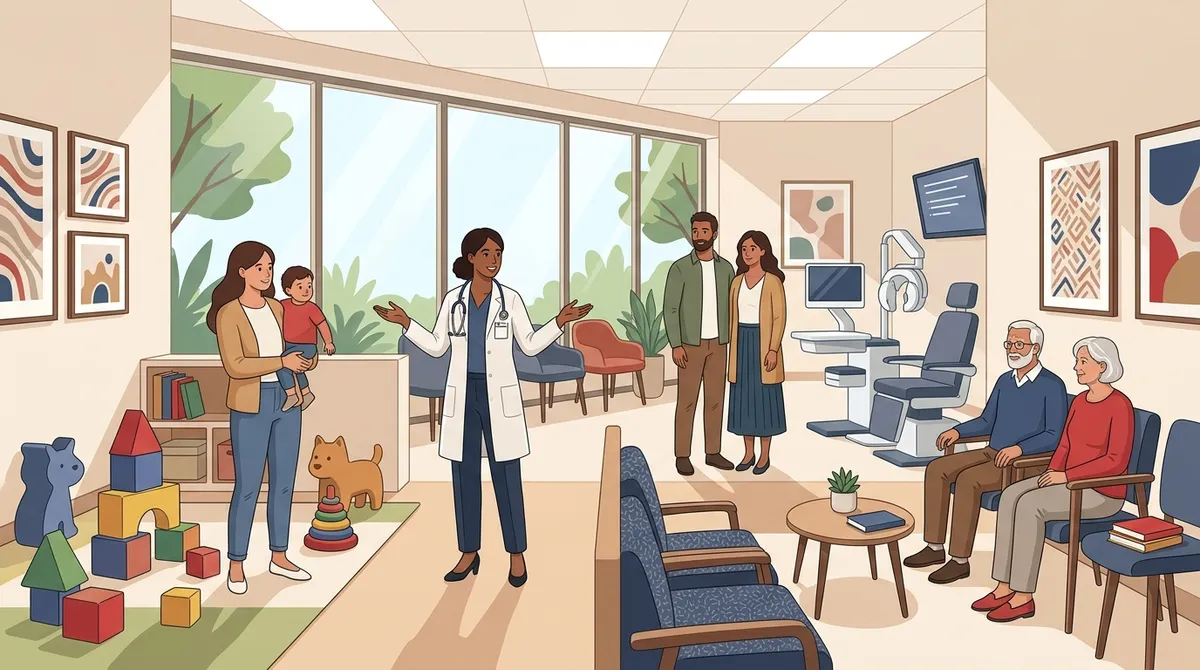
A family health clinic is a primary care facility that serves patients of all ages — from newborns to seniors. These clinics offer a wide range of services under one roof, making it easier for families to manage their health without juggling multiple specialists and locations.
Care is typically coordinated by a Primary Care Provider (PCP), who may be a physician, a family nurse practitioner, or a physician assistant. This provider leads a multidisciplinary team that may include nurses, medical assistants, and patient advocates. Think of your PCP as your healthcare quarterback — guiding every aspect of your care from routine visits to specialty referrals.

Core Services Offered at a Family Health Clinic
The best family health clinics go well beyond treating colds and flu. They provide a full spectrum of care designed to keep every member of your family healthy throughout every stage of life. Primary care forms the foundation, but modern clinics have expanded their offerings significantly.
Service Category Examples Who Benefits Preventive Care Annual physicals, immunizations, health screenings All ages Chronic Disease Management Diabetes, hypertension, asthma management Adults and seniors Urgent Care Infections, minor injuries, flu treatment All ages Wellness Services Weight loss, IV hydration, metabolic analysis Adults seeking optimization Advanced Diagnostics Cancer screenings, DNA gene testing, body composition Adults focused on prevention Women's Health Well-woman exams, prenatal referrals, screenings Women of all ages
These services are not separate silos. In a well-run family health clinic, they work together. Your PCP knows your full health history and ensures that every service you receive connects back to your overall wellness goals.

How a Family Health Clinic Differs from Urgent Care and Specialty Clinics
Many patients confuse family health clinics with urgent care centers or specialist offices. Understanding the difference helps you use each appropriately — and saves time and money.
Feature Family Health Clinic Urgent Care Center Specialty Clinic Ongoing Relationship Yes — your PCP knows your history No — one-time or episodic visits Limited — condition-specific only Preventive Focus Strong emphasis on prevention Minimal — reactive only Varies by specialty Age Range Served All ages — infants to seniors Usually all ages Typically condition-specific Coordination of Care PCP coordinates all care No coordination Refers back to PCP Advanced Wellness Often included (IV therapy, gene testing, etc.) Rarely offered Rarely offered
That said, many top-tier family health clinics also offer urgent care services on-site. This means you can get same-day treatment for sudden illnesses while still benefiting from your established care relationship with your provider.

Why Preventive Care Is the Heart of a Family Health Clinic
Prevention is always more effective — and more affordable — than treatment. A quality family health clinic focuses on identifying risks before they become serious problems. This includes annual wellness exams, routine lab work, and age-appropriate screenings.
Early detection saves lives. For example, cancer screenings can identify abnormalities before symptoms develop, dramatically improving treatment outcomes. Similarly, tools like DNA gene testing can reveal genetic predispositions to certain conditions — giving patients and providers valuable information to guide long-term health planning.
Key Preventive Services to Look For
- Annual physical exams and wellness check-ins
- Blood pressure, cholesterol, and blood sugar monitoring
- Age-appropriate cancer screenings (mammograms, colonoscopies, PSA tests)
- Immunizations and vaccine management for all ages
- Body composition analysis using advanced 3D imaging
- Metabolic assessment to optimize energy and weight
Clinics that prioritize prevention help patients build healthier habits over time. This leads to fewer emergency visits, better quality of life, and lower long-term healthcare costs. Learn more about body composition analysis and metabolic breath analysis as part of a comprehensive wellness approach.
Advanced Wellness Services at Modern Family Health Clinics
The best family health clinics in 2026 have expanded far beyond traditional medicine. They now offer wellness services that were once reserved for high-end concierge practices. These services appeal especially to health-conscious individuals who want to optimize their well-being — not just manage illness.
Popular Advanced Wellness Options
- IV Hydration and Vitamin Drips — Deliver nutrients directly into the bloodstream for fast, effective results. Ideal for energy support, immune function, and recovery.
- Weight Loss Programs — Personalized, medically supervised plans that go beyond diet advice to include metabolic testing, medication management, and ongoing coaching.
- DNA Gene Testing — Analyzes your genetic makeup to reveal health predispositions and guide personalized treatment and lifestyle recommendations.
- Hair Restoration Treatments — Innovative, non-surgical approaches to address hair loss using the latest clinical technology.
- Metabolic Breath Analysis — Measures your metabolic rate at rest to create precise, personalized nutrition and fitness plans.
Clinics like InCare, with locations in Tampa and Riverview, Florida, have integrated these advanced services alongside traditional primary care. This creates a truly whole-body approach to health that serves both immediate needs and long-term wellness goals. You can explore IV hydration and vitamin drip services or personalized weight loss programs as part of a comprehensive care plan.
What to Look for When Choosing a Family Health Clinic
Not all family health clinics are equal. Choosing the right one requires evaluating several key factors. Use this checklist to guide your decision.
Top Criteria for Selecting a Family Health Clinic
- Qualified, Experienced Providers — Look for board-certified physicians and credentialed nurse practitioners with strong patient reviews. Research the clinic's provider team carefully before committing.
- Comprehensive Service Offerings — The clinic should offer preventive care, chronic disease management, urgent care, and wellness services all in one place.
- Accessible Locations and Hours — Convenient locations and extended or flexible hours are essential for busy families.
- Telehealth Availability — Virtual care options allow you to access your provider without leaving home — a major advantage for minor concerns or follow-up consultations.
- Patient-Centered Philosophy — The best clinics treat patients as partners in their healthcare journey, not just appointment slots to fill.
- Strong Patient Reviews — Check Google, Healthgrades, and social media for honest feedback. A high rating with a large number of reviews signals consistent, quality care.
Questions to Ask Before Your First Visit
- Does the clinic accept my insurance, and what are the out-of-pocket costs?
- How quickly can I get a same-day or next-day appointment?
- Will I see the same provider at each visit?
- Does the clinic offer telehealth for follow-ups?
- What wellness services are available beyond standard primary care?
The Role of Technology in Today's Family Health Clinics
Technology has transformed what a family health clinic can do for patients. From AI-powered body composition tracking to real-time lab results through patient portals, modern clinics use technology to make care faster, more accurate, and more personalized.
Telehealth has become a standard offering rather than a novelty. Many clinics now provide 24/7 virtual access for non-emergency concerns, medication refills, and follow-up visits. This is particularly valuable for millennials and Gen Z patients who prefer digital-first interactions and may not have the flexibility for in-person visits during standard hours.
Advanced diagnostics are another technological leap. Tools like genetic testing and 3D body composition imaging give providers a far more complete picture of a patient's health than traditional methods alone. This depth of insight supports better, more targeted treatment planning.
InCare: A Family Health Clinic Built for Modern Wellness
InCare is a personalized healthcare clinic that combines medical expertise with state-of-the-art technology to deliver comprehensive primary care, urgent care, and advanced wellness services. With locations in Tampa and Riverview, Florida, InCare serves patients across all stages of life with a prevention-first philosophy.
The clinic's team includes highly qualified physicians and providers, including Dr. Naveen Paddu, Dr. Pramjeet Ahluwalia, and Dr. Teshy John. InCare holds a 4.8 out of 5 rating on Google based on 359 reviews, reflecting a consistent commitment to quality care and patient satisfaction. You can visit InCare on Google to read patient reviews and learn more about the practice.
InCare also stays active and connected with patients through social media. You can follow their health tips and clinic updates on Facebook, Instagram, and TikTok to stay informed about new services, wellness content, and special programs.
Comparing Family Health Clinic Services by Life Stage
A true family health clinic tailors care to the specific needs of each life stage. Here's a quick overview of how services typically align with age groups.
Life Stage Key Services Needed Recommended Frequency Infants and Children Well-child visits, immunizations, developmental screenings Multiple times per year in early childhood Teens and Young Adults (18–25) Annual physicals, mental health check-ins, preventive screenings Annually Adults (26–50) Chronic disease prevention, weight management, cancer screenings, wellness optimization Annually or as needed Adults (50+) Chronic disease management, advanced cancer screenings, cardiovascular health Annually or more frequently
Understanding your family's specific needs by life stage helps you have more productive conversations with your provider — and ensures you're getting the right screenings and services at the right time. Resources like how primary doctors help manage chronic illnesses offer deeper insight into building a long-term health strategy.
Why Families in the Tampa Bay Area Choose InCare
For families in the Tampa and Riverview areas, access to a high-quality family health clinic is no longer a challenge. InCare offers a broad menu of services, a compassionate provider team, and technology-driven care that keeps patients informed and engaged in their health journey.
From same-day urgent care visits to personalized wellness plans, InCare delivers exactly what modern families need in a primary care partner. Discover why InCare is considered the best primary care choice in Riverview and explore what it means to visit a trusted primary care doctor in your community.
If you're ready to take control of your family's health with a clinic that truly puts you first, it's time to take the next step. Schedule your appointment with InCare today and experience comprehensive, personalized family healthcare designed for the way you live in 2026.
FAQs
Q: What services are typically included in a family health clinic visit?
A: A family health clinic visit can include a wide range of services depending on your needs. These commonly include annual physical exams, immunizations, chronic disease management, lab work, health screenings, and referrals to specialists. Many modern clinics also offer advanced wellness services such as IV hydration, metabolic testing, and DNA gene analysis.
Q: How does a family health clinic differ from an urgent care center?
A: A family health clinic focuses on long-term, continuous care with an established provider who knows your full health history. An urgent care center handles immediate, episodic concerns without the continuity of an ongoing relationship. The best family health clinics often offer both services under one roof, giving patients the benefits of both models.
Q: What is a Primary Care Provider (PCP) and why does my family need one?
A: A Primary Care Provider is a physician, nurse practitioner, or physician assistant who serves as the central coordinator of your healthcare. Your PCP manages preventive care, treats acute and chronic conditions, and ensures smooth coordination when specialist referrals are needed. Having an established PCP leads to better health outcomes, fewer hospitalizations, and more personalized care over time.
Q: Can a family health clinic provide care for all ages, including children and seniors?
A: Yes. A true family health clinic is designed to serve patients across every stage of life, from infants receiving their first vaccinations to seniors managing chronic conditions. This continuity makes it easier for families to consolidate their healthcare needs with one trusted clinical team rather than managing multiple providers across different facilities.
Q: Do family health clinics offer telehealth or virtual care options?
A: Many modern family health clinics now offer telehealth services as a standard part of their care model. Virtual visits are ideal for follow-up consultations, minor illness assessments, medication management, and general health questions. This option is especially valuable for busy families and patients who prefer digital-first healthcare interactions.