Key Takeaways
- Tesamorelin is a prescription synthetic growth hormone-releasing hormone analogue that prompts the pituitary to release the body's own growth hormone, rather than injecting growth hormone directly.
- In the US, tesamorelin (Egrifta SV) is FDA-approved only to reduce excess abdominal visceral fat in adults with HIV-associated lipodystrophy, not for general weight loss or anti-aging.
- Trial results show visceral fat reductions in HIV-associated lipodystrophy patients, but these are group averages from imaging, so a scale alone cannot track progress.
- Key safety concerns include raised IGF-1 levels, worsened blood sugar control, fluid retention, joint pain, numbness or tingling, and injection-site reactions, requiring clinician monitoring.
- Visceral fat can return after tesamorelin is stopped, so it is not a one-time fix and continued use needs regular review of benefit, safety, and goals.
- Tesamorelin is given as a daily subcutaneous injection, a real long-term commitment, and should be used only after clinician screening of cancer, pituitary, and medication history.
If you have seen tesamorelin mentioned in wellness circles, you may wonder what it really does. So, what is tesamorelin? It is a prescription medication that signals the body to release its own growth hormone. In the United States, it has one clear approved use: reducing excess belly fat in adults with HIV-associated lipodystrophy.
That narrow approval matters. Online chatter often lumps tesamorelin in with general weight loss, anti-aging, and performance products. The facts are more focused. This guide explains how the drug works, what the evidence shows, who it may help, and what safety steps are needed. It also shows how a primary care and wellness clinic like InCare can help you sort fact from hype and decide whether a conversation about tesamorelin makes sense for you.

What Is Tesamorelin?
Tesamorelin is a synthetic version of growth hormone-releasing hormone, also called growth hormone-releasing factor. It is a prescription injectable. It does not contain growth hormone itself. Instead, it prompts the pituitary gland to release the body's own growth hormone, which then raises a protein called insulin-like growth factor 1 (IGF-1).
The FDA first approved tesamorelin in 2010. The branded product is Egrifta SV. Its approved purpose is to reduce excess abdominal fat in adults with HIV-associated lipodystrophy. It is not approved as a general weight-loss drug, an obesity treatment, or an anti-aging or bodybuilding product.
Quick Facts at a Glance
- Drug type: Growth hormone-releasing hormone analogue
- Form: Daily subcutaneous (under the skin) injection
- FDA approval: 2010, for HIV-associated lipodystrophy
- Target: Visceral fat, the fat deep around abdominal organs
- Availability: Prescription only, with clinical monitoring
How Tesamorelin Works in the Body
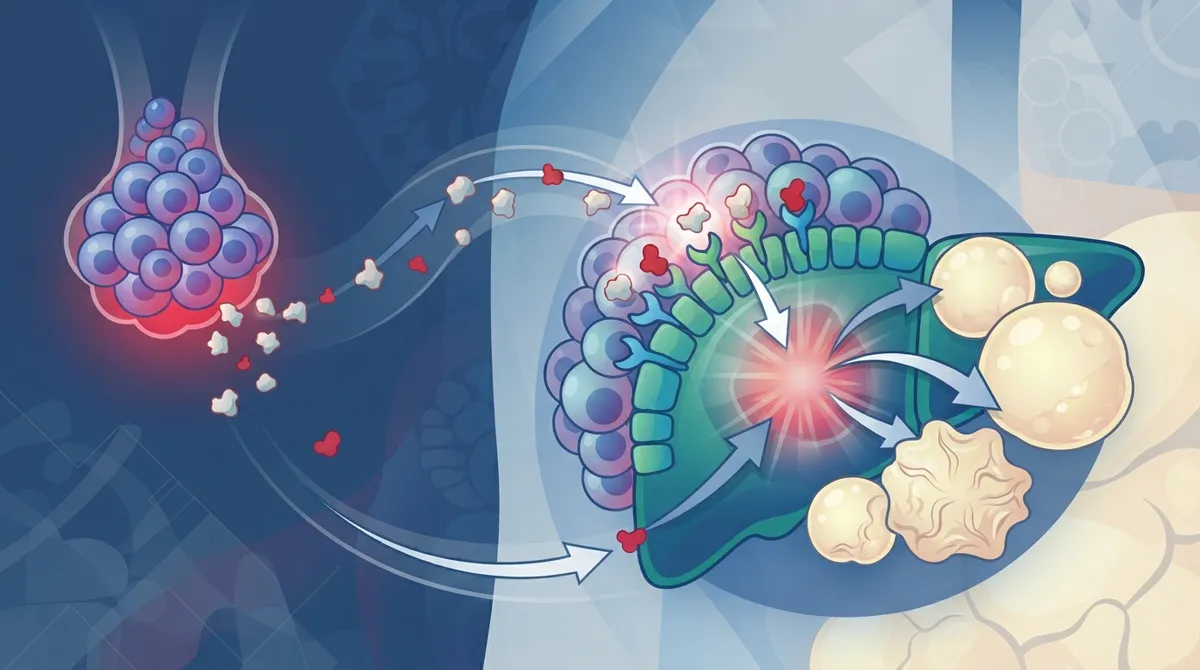
Growth hormone helps regulate how the body stores and burns fat, builds tissue, and manages energy. In some people with HIV who have taken long-term antiretroviral therapy, fat shifts toward the abdomen. This is called lipodystrophy. The extra fat sits around internal organs, which is known as visceral adipose tissue (VAT).
Tesamorelin works in a sequence:
- The injection mimics growth hormone-releasing hormone.
- The pituitary gland responds by releasing growth hormone in natural pulses.
- Growth hormone raises IGF-1 levels in the blood.
- Over time, these changes are associated with a drop in visceral fat in the target population.
Because the drug works through the body's own signaling, it is different from taking synthetic growth hormone directly. It is also different from fat-loss drugs that act on appetite. You can read more about how related peptides behave in our guide to CJC-1295 vs Tesamorelin.
What Is Tesamorelin Approved to Treat?
The only FDA-approved use is reducing excess abdominal fat in adults with HIV-associated lipodystrophy. That means a person must have both HIV and a specific pattern of belly fat accumulation. The drug is not meant for everyone who wants a smaller waistline.
It is also important to know what tesamorelin does not do. It is not designed to remove subcutaneous fat, the softer fat just under the skin. It may also not change total body weight or body mass index in a meaningful way. The target is visceral fat, which is linked to cardiometabolic risk.
Some wellness clinics discuss tesamorelin for other goals. That is called off-label use. Any off-label discussion should be open and honest, with clear talk about limited evidence. You can explore this question further in our article on whether tesamorelin is right for reducing belly fat.
What the Research Shows
Clinical trials in adults with HIV-associated lipodystrophy found that tesamorelin lowered visceral fat compared with placebo. Results vary by study and by person, so these numbers describe groups, not guaranteed outcomes.
|
Study or Source |
Finding |
|---|---|
|
NIH HIV clinical guidance (pivotal trials) |
13.1% drop in visceral fat from baseline over 26 weeks, or a 15.4% relative reduction versus placebo |
|
NIH guidance, extended treatment |
17.5% drop from baseline through 52 weeks among those who continued treatment |
|
Clinical review of two pivotal trials |
Visceral fat reductions versus placebo of 19.6% in one trial and 11.7% in the other at week 26 |
|
2024 randomized analysis (38 people on integrase inhibitor regimens) |
Median visceral fat change of -25 cm² with tesamorelin versus +14 cm² with placebo at 12 months; reduced liver fat also noted |
A small 2024 analysis also reported that 67% of participants on tesamorelin reached a clinically meaningful visceral fat reduction of at least 8%, compared with a smaller share on placebo. That subgroup was small, so it should be read with care.
How to Read These Numbers
- The data come from adults with HIV-associated lipodystrophy, not the general public.
- Group averages do not predict what one person will experience.
- Visceral fat is measured by imaging, so you cannot judge progress by a scale alone.
How Tesamorelin Is Given
The FDA-approved Egrifta SV formulation is a once-daily subcutaneous injection at 1.4 mg. Different tesamorelin products and formulations have different strengths and mixing instructions. Always follow the prescribing information for the exact product your clinician prescribes.
Because it is a daily injection, a clinician usually teaches the patient how to prepare and inject the medicine. They also explain how to rotate injection sites and store the product. Daily dosing is a real commitment, which is one reason a candid talk about goals and expectations matters before starting.
Side Effects and Safety Considerations
Tesamorelin raises IGF-1, and that effect drives many of its safety concerns. The FDA label lists warnings and contraindications that a clinician must review. Common and important concerns include:
- Higher IGF-1 levels: These require monitoring over time.
- Blood sugar changes: The drug may worsen glucose control or raise diabetes risk.
- Fluid retention: Swelling can occur.
- Joint or muscle pain: Some patients report aches.
- Numbness or tingling: This can affect the hands or feet.
- Injection-site reactions: Redness, itching, or irritation may occur.
Who Should Not Use Tesamorelin
The label includes contraindications. These include active malignancy, pregnancy, and disruption of the hypothalamic-pituitary axis. A full review of your cancer history, pituitary history, and current medicines is essential. Never start the drug without a clinician checking the current product label for complete details.
Does the Benefit Last After You Stop?
This is a key point many people miss. Trial evidence and NIH guidance report that visceral fat can return after treatment stops. That means tesamorelin is not a one-time fix. Ongoing use needs regular review of benefit, safety, and your personal goals.
This pattern is also seen with other injectable therapies, where stopping can reverse results. If you want a broader view of why that happens, see our article on why weight returns after stopping tirzepatide. A good clinician will talk about this early, so there are no surprises later.
What Monitoring Looks Like
Safe use of a growth hormone-releasing peptide depends on follow-up. A typical monitoring plan may include:
- A baseline review of HIV and lipodystrophy history, glucose status, and cancer and pituitary history.
- A full medication review to spot interactions.
- Blood tests for IGF-1 and blood sugar markers.
- Regular check-ins to track side effects and benefit.
- A decision point to continue, adjust, or stop based on results.
For a deeper look at this process, read what monitoring is needed with growth hormone peptides.
Tesamorelin in a Primary Care and Wellness Setting
Tesamorelin is a specialist-level option for a narrow, defined use. It is not a replacement for standard weight management. For most adults who want to lose weight, proven steps come first: nutrition, movement, sleep, stress care, and, when appropriate, approved medications. Our guide to how medically supervised weight loss works explains those options.
A primary care and wellness clinic adds value in several ways:
- Honest screening: A clinician checks whether your history truly fits the approved use.
- Whole-person review: Labs, medications, and risk factors are reviewed together.
- Clear communication: Off-label use and limited evidence are discussed openly.
- Coordinated follow-up: Monitoring stays in one place with a team that knows you.
At InCare, patients in Tampa and Riverview, Florida can talk with clinicians who combine medical expertise with advanced tools such as body composition analysis, metabolic breath analysis, and in-house labs. That approach helps you understand your own numbers before you make any decision about peptides. If you are curious about local care, see tesamorelin peptide care in Tampa or how to choose a tesamorelin peptide clinic in Riverview.
Common Myths About Tesamorelin
|
Myth |
Reality |
|---|---|
|
It is a general weight-loss drug. |
It is approved only for excess abdominal fat in adults with HIV-associated lipodystrophy. |
|
It removes all belly fat. |
It targets visceral fat, not subcutaneous fat, and may not change total weight or BMI. |
|
Results are permanent. |
Visceral fat can return after treatment stops. |
|
It is the same as growth hormone. |
It prompts your body to make its own growth hormone through a different pathway. |
|
It is risk-free because it acts naturally. |
It raises IGF-1 and can affect blood sugar, fluid balance, and more. |
Questions to Ask Before You Consider Tesamorelin
If this medicine comes up in a visit, bring a list of questions. Good ones include:
- Does my medical history fit the FDA-approved use?
- What tests do I need before starting and while taking it?
- How will my blood sugar and IGF-1 be tracked?
- What happens to my results if I stop?
- Are there safer or better-proven options for my goal?
Asking these questions helps you stay in control of your care. It also helps you spot clinics that make bold promises without a clear safety plan. Our article on what questions you should ask a peptide clinic offers more guidance.
Take the Next Step With InCare
Understanding what tesamorelin is, and what it is not, is the first step toward a smart decision. The drug can be a useful tool for a specific group of adults, but it needs careful screening, daily commitment, and steady monitoring. For everyone else, evidence-based weight and metabolic care usually comes first.
InCare offers personalized primary care and wellness services in Tampa and Riverview, with a team that listens and explains your options clearly. You can book your appointment online or contact our team with questions. You can also read InCare reviews on Google to see what patients say, and follow updates on Instagram, Facebook, and TikTok.
FAQs
Q: What is tesamorelin and how does it work?
A: Tesamorelin is a prescription synthetic analogue of growth hormone-releasing hormone. It prompts the pituitary gland to release the body's own growth hormone, which raises IGF-1 levels. In adults with HIV-associated lipodystrophy, this process is associated with a reduction in visceral abdominal fat.
Q: Is tesamorelin FDA-approved for weight loss or obesity?
A: No. The FDA approved tesamorelin (Egrifta SV) to reduce excess abdominal fat in adults with HIV-associated lipodystrophy. It is not approved for general weight loss, routine obesity care, or anti-aging use, and it may not meaningfully change overall body weight or BMI.
Q: What are the main side effects and risks of tesamorelin?
A: Key concerns include higher IGF-1 levels, possible worsening of blood sugar control, fluid retention, joint or muscle pain, numbness or tingling, and injection-site reactions. The label also lists contraindications such as active malignancy and pregnancy, so a clinician must review your full history.
Q: Does abdominal fat return after stopping tesamorelin?
A: It can. Trial evidence and NIH guidance report that visceral fat may return after treatment ends. For that reason, any decision to continue should involve regular clinician review of benefit, safety, and your personal goals.
Q: What is the approved dose and how is tesamorelin given?
A: The FDA-approved Egrifta SV formulation is a once-daily subcutaneous injection at 1.4 mg. Other tesamorelin products have different strengths and preparation steps, so dosing and administration should always follow the specific product's prescribing information.