
Key Takeaways
- Kisspeptin-54 may reduce ovarian hyperstimulation syndrome (OHSS) risk in IVF by creating a natural hormone surge; a 2017 study showed zero moderate OHSS cases with double-dose treatment versus one case with single-dose.
- Kisspeptin works earlier in the hormone pathway than current treatments by triggering GnRH release naturally, rather than mimicking or forcing hormones directly like hCG or testosterone therapy do.
- Short-term safety data from over 1,000 research participants shows no adverse effects on blood pressure, heart rate, or cortisol levels, but long-term safety data for ongoing use remains unknown.
- Kisspeptin is currently investigational only and not FDA-approved for any condition; it remains unavailable outside clinical trials despite promising fertility and hormone balance research.
- Kisspeptin shows early potential for hypothalamic amenorrhea and low testosterone treatment, but evidence is limited and small-scale; addressing root causes like nutrition and stress remains essential.
- Kisspeptin-54 lasts longer and reaches deeper brain pathways than kisspeptin-10, making it the preferred form in clinical studies, typically administered via injection, subcutaneous injection, or nasal spray.
A small brain hormone called kisspeptin is changing how scientists think about fertility and hormone health. Researchers are testing it as a gentler way to boost reproductive hormones. If you have heard about kisspeptin therapy research and wondered what it means for your health, you are not alone. Patients across Tampa and Riverview ask their primary care providers about new hormone treatments every week.
This article breaks down what kisspeptin therapy research actually shows. We will cover how the hormone works, what studies have found, and why it remains an experimental treatment. We will also explain where this fits into whole-body wellness care today. Our goal is to give you clear, honest information, not hype.
Kisspeptin research matters most for people dealing with fertility struggles, low reproductive hormones, or unexplained hormone imbalances. It also matters for anyone curious about the future of hormone-based medicine. Let's look at the science behind this promising but still-developing treatment.
What Is Kisspeptin and Why Does It Matter?
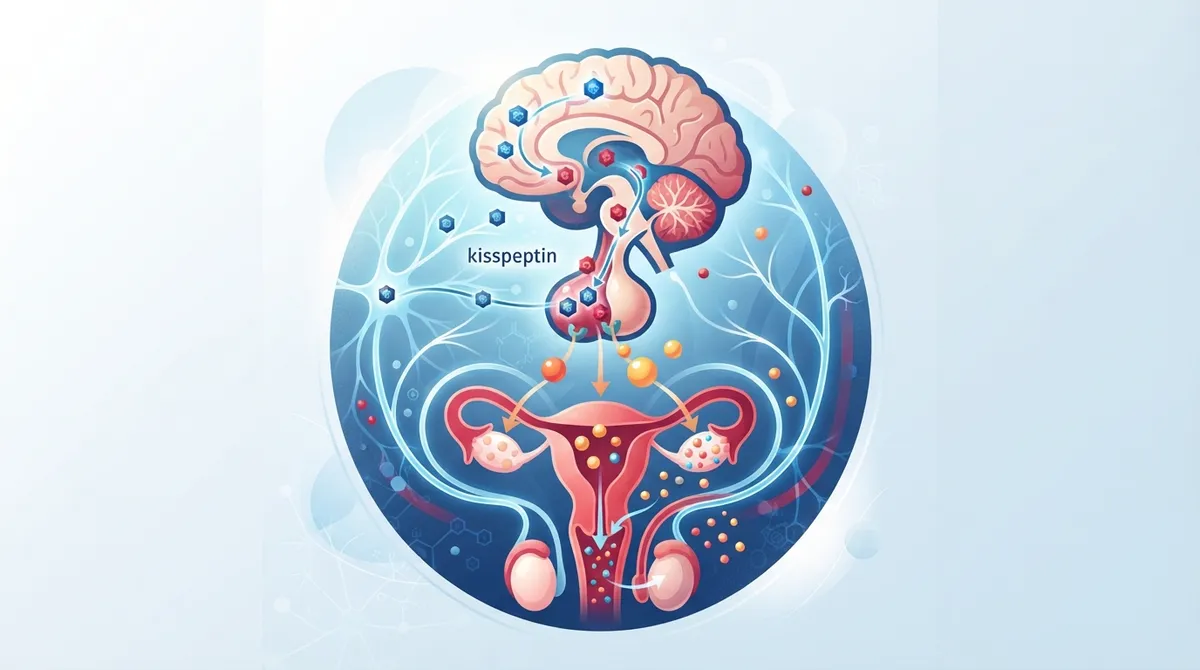
Kisspeptin is a natural hormone made in the brain. It plays a key role in starting and controlling your reproductive system. Think of it as a messenger that tells your brain to release other important hormones.
When kisspeptin activates its receptor, it triggers a chain reaction. This chain leads to the release of gonadotropin-releasing hormone (GnRH). GnRH then signals your body to make luteinizing hormone (LH) and follicle-stimulating hormone (FSH). These two hormones control ovulation in women and testosterone production in men.
Researchers believe kisspeptin could offer a more natural way to restore hormone balance. This is different from older treatments that force hormone levels up without following the body's normal signals.
The Two Main Forms Used in Research
Scientists have studied two versions of this hormone in human trials:
- Kisspeptin-54, which lasts longer in the body and reaches deeper brain pathways
- Kisspeptin-10, which acts faster but does not last as long
- Both forms can be given through injection, under the skin, or as a nasal spray
- Kisspeptin-54 is the more common choice in serious clinical studies
- Researchers chose kisspeptin-54 because it creates a longer, steadier hormone signal
Understanding these basics helps explain why so many fertility clinics are watching this research closely.
How Kisspeptin Therapy Research Is Being Used in Fertility Care
The most advanced use of kisspeptin right now is in fertility treatment. Specifically, doctors are studying it as a trigger shot during in-vitro fertilization (IVF).
During IVF, patients normally receive a hormone called hCG to trigger their eggs to mature. But hCG can cause a serious problem called ovarian hyperstimulation syndrome, or OHSS. This condition causes swollen, painful ovaries and can be dangerous in severe cases.
Kisspeptin-54 may offer a safer option for patients at high risk of OHSS. It creates a hormone surge that looks more like your body's natural process.
What the Research Actually Found
A 2017 study published in Human Reproduction looked closely at this approach. Researchers found that kisspeptin-54 produced an LH surge lasting about 12 to 14 hours. This mimics what happens naturally during ovulation.
A separate Phase 2 trial tested 62 women at high risk for OHSS. Here is what the numbers showed:
- Researchers gave one group a single dose of kisspeptin-54
- A second group received two doses, ten hours apart
- The double-dose group had better egg yield results overall
- Only 1 of 31 women in the single-dose group developed moderate OHSS
- Zero women in the double-dose group developed moderate OHSS
- This suggested the double-dose approach was both effective and safer
These results are encouraging. But they come from a small study group. Larger trials are still needed before this becomes standard care everywhere.
Kisspeptin Research Beyond Fertility Treatment
Fertility trigger shots are not the only area researchers are exploring. Scientists are testing kisspeptin for several other hormone-related conditions.
Hypothalamic Amenorrhea
This condition happens when women stop having periods due to low body weight, stress, or too much exercise. It disrupts the normal hormone signals needed for a menstrual cycle.
A 2010 study tested twice-weekly kisspeptin injections over about two months in women with this condition. The therapy successfully stimulated reproductive hormone release. However, researchers noted that treating the root causes, like nutrition and stress, remains essential. Hormone therapy alone is not a complete fix.
Low Testosterone and Male Hormone Health
Kisspeptin is also being studied for men with hypogonadism, a condition marked by low testosterone. Since kisspeptin triggers the same GnRH pathway in men, researchers hope it could offer a more natural alternative to standard testosterone therapy.
Other Areas Under Investigation
Here is a list of conditions researchers are studying kisspeptin for:
- Polycystic ovary syndrome (PCOS)
- High prolactin levels (hyperprolactinemia)
- Low sexual desire disorders
- Obesity-related reproductive hormone problems
- Diabetes-linked fertility issues
- Bone health tied to hormone balance
Evidence for these uses is much less developed than the fertility trigger research. Most of these studies are small and early-stage.
Recent Data From 2025 Studies
New research keeps building on what we know about kisspeptin. A 2025 systematic review looked at 33 kisspeptin-related clinical trial records. After careful screening, researchers included 29 interventional trial reports through February 2023.
Another 2025 study tested intranasal kisspeptin-54 in healthy men and women, plus participants with hypothalamic amenorrhea. The nasal spray quickly stimulated gonadotropin hormones. Importantly, researchers reported no adverse events and no changes in blood pressure or heart rate tied to the dose.
A different 2025 study published in the Journal of Clinical Endocrinology & Metabolism found something similar. A biologically active kisspeptin dose significantly raised LH levels compared to placebo. But it did not cause meaningful changes in anxiety, cortisol, blood pressure, or heart rate.
What This Means for Safety
Across all these studies, one theme keeps showing up. Short-term kisspeptin use appears safe for most healthy participants. Clinical reviews report more than 1,000 people have taken part in kisspeptin research overall.
However, short-term safety is not the same as long-term safety. Researchers still need years of follow-up data before they can say kisspeptin is safe for regular, ongoing use.
Comparing Kisspeptin to Other Hormone Treatments
It helps to see how kisspeptin stacks up against treatments already used in clinics today. The table below compares key features.
|
Treatment |
How It Works |
Approval Status |
Main Use Today |
|---|---|---|---|
|
Kisspeptin-54 |
Triggers natural GnRH release |
Investigational only |
IVF trigger research, hormone studies |
|
hCG |
Mimics LH directly |
FDA approved |
Standard IVF trigger shot |
|
GnRH agonists |
Overstimulates then blocks GnRH receptors |
FDA approved |
IVF trigger, hormone suppression |
|
Testosterone therapy |
Replaces testosterone directly |
FDA approved |
Male hypogonadism treatment |
This comparison shows why kisspeptin stands out. It works earlier in the hormone chain, closer to how your body naturally starts the process. This is part of why researchers are so interested in it.
Why Kisspeptin Therapy Is Still Experimental
Despite promising results, kisspeptin therapy is not an approved treatment. It has not received approval from the FDA for any use, including fertility care, hormone balancing, or weight management.
This means you cannot walk into a clinic today and receive kisspeptin as a standard treatment option. It remains part of research studies and clinical trials only.
What Still Needs to Be Answered
Researchers point to several gaps in current knowledge:
- Long-term safety data is still missing
- Standard dosing guidelines have not been established
- Effectiveness across different conditions needs more proof
- Regulatory approval has not been granted anywhere yet
- Larger, more diverse patient groups need testing
Until these questions are answered, kisspeptin should be viewed as a promising research tool rather than a ready-to-use therapy.
What This Means for Your Primary Care Visits
You might wonder how this research applies to your own health journey. Here is the honest answer: kisspeptin is not something your primary care doctor will prescribe today. But it does highlight something important.
Hormone health touches nearly every part of your wellness. Fertility, energy, mood, weight, and metabolism all connect back to your hormone balance. This is why comprehensive primary care matters so much.
At InCare, our providers stay current on hormone research and reproductive health topics. While kisspeptin therapy remains experimental, we can help you address hormone concerns through proven, established options. Our team offers thorough evaluations and connects patients with the right specialists when needed.
Steps to Take If You Have Hormone Concerns
If you suspect a hormone imbalance, here is what we recommend:
- Schedule a visit with your primary care provider to discuss symptoms
- Ask about basic hormone panel testing to check current levels
- Discuss lifestyle factors like sleep, stress, and nutrition that affect hormones
- Get referred to a reproductive endocrinologist if fertility is a concern
- Ask about clinical trial options if you want to explore new treatments
- Follow up regularly to track any changes in your hormone health
Our providers are ready to guide you through each of these steps with care and expertise.
How InCare Supports Whole-Body Hormone Wellness
While kisspeptin therapy stays in research labs, InCare offers many services that support your overall hormone health today. We combine advanced technology with real medical expertise across our Tampa and Riverview locations.
Our approach includes:
- Comprehensive DNA gene testing to understand your unique health risks
- Body composition analysis using 3D imaging and AI tracking
- Personalized weight loss programs that address hormone-related weight challenges
- Metabolic breath analysis to optimize your body's energy use
- IV hydration and vitamin drips to support energy and recovery
- Thorough cancer screenings for early detection and peace of mind
These services work together to support your body's natural hormone balance while research on newer treatments like kisspeptin continues to develop.
Following the Science Responsibly
New hormone treatments generate excitement, and rightfully so. Kisspeptin research shows real promise for fertility care and hormone health. But responsible healthcare means separating hope from proven fact.
Short-term studies show kisspeptin is generally well tolerated. It does not appear to raise blood pressure, heart rate, or stress hormones in a meaningful way. It also successfully raises LH levels in the body, confirming it activates the reproductive hormone pathway as expected.
Still, we do not yet know how kisspeptin performs over months or years of use. We do not have approved dosing charts. And we do not have FDA approval for any condition. Patients deserve honest information, not premature promises.
You can follow along with primary care insights and wellness updates through our Facebook page, or see daily health tips on our Instagram account. We also share quick wellness content on Tik Tok to help make health information easier to understand.
Choosing the Right Path for Your Hormone Health
Whether you are dealing with fertility struggles, low energy, or unexplained hormone symptoms, you deserve a care team that stays current on research while offering safe, proven solutions today. InCare has built a strong reputation across Tampa and Riverview for exactly this kind of balanced approach.
Our patients consistently rate us highly, with a 4.8 out of 5 star rating from hundreds of reviews. Many patients highlight our friendly staff and the thorough, attentive care from providers like Dr. Ahluwalia. You can read more patient experiences and visit us on Google — InCare to see what our community says.
If you have questions about hormone health, fertility concerns, or want to explore our wellness services, we are here to help. Our team takes time to listen and creates a plan built around your specific needs and goals.
Conclusion: Staying Informed While Care Continues to Evolve
Kisspeptin therapy research represents an exciting chapter in hormone science. It offers a more natural approach to triggering reproductive hormones, especially for IVF patients at risk of OHSS. Small studies also point to potential benefits for hypothalamic amenorrhea and low testosterone, though much more research is needed.
For now, kisspeptin remains an investigational treatment. It is not approved, not standardized, and not available as routine care. The smart approach is to stay informed while relying on established, safe treatments for your current hormone needs.
Ready to talk about your hormone health with a team that puts your safety first? Reach out to our team today to schedule a consultation, or book your appointment now and take the next step toward whole-body wellness.
FAQs
Q: What is kisspeptin and how does it affect reproductive hormones?
A: Kisspeptin is a natural brain hormone that activates a receptor to trigger GnRH release. This chain reaction increases LH and FSH, the hormones that control ovulation and testosterone production.
Q: Is kisspeptin therapy FDA approved or available by prescription?
A: No, kisspeptin therapy is not FDA approved for any use. It remains investigational and is only available through qualified clinical trials or research studies at this time.
Q: Can kisspeptin be used as an IVF trigger to reduce ovarian hyperstimulation syndrome?
A: Research suggests kisspeptin-54 may lower OHSS risk compared to standard hCG triggers. A 2017 study found improved egg yield and lower OHSS rates with a double-dose approach, though more research is needed.
Q: What are the side effects and long-term risks of kisspeptin therapy?
A: Short-term studies show kisspeptin is generally well tolerated, with no major effects on blood pressure, heart rate, or cortisol. However, long-term safety data does not yet exist, so risks over time remain unknown.
Q: Does kisspeptin help with libido, sexual desire, weight loss, or obesity?
A: Early, small studies are exploring these uses, but evidence remains limited and inconclusive. Kisspeptin should not be considered a proven treatment for libido, weight loss, or obesity at this time.