Key Takeaways
- Kisspeptin increased penile tumescence by 56% in men with HSDD and significantly altered brain sexual-processing activity (P=.02), but remains investigational and not yet approved for clinical treatment of low libido.
- In women with HSDD, kisspeptin raised LH by 2.14 IU/L and FSH by 0.28 IU/L while reducing sexual aversion, but did not significantly change sex hormone levels in short-term studies.
- Kisspeptin is not yet a proven fertility treatment or diagnostic tool for PCOS despite promising early research; it remains limited to research settings and should not be self-treated as an unproven wellness product.
- Short-term kisspeptin studies showed good tolerability with no major adverse effects, but long-term safety data is lacking for chronic dosing, pregnancy, cardiovascular conditions, and unsupervised use.
- Before considering experimental kisspeptin, pursue comprehensive hormone testing, lifestyle evaluation, and evidence-based treatments with a primary care provider to identify underlying causes of low libido or fertility issues.
- Kisspeptin acts as a brain switch that triggers GnRH release, which then stimulates LH and FSH to control ovulation and reproductive function, making it central to puberty, menstrual cycles, and fertility regulation.
If you have spent time researching low libido, fertility struggles, or hormone health, you may have come across kisspeptin. This hormone has gained attention after several small clinical trials suggested it could influence sexual desire and reproductive hormones. But what do the actual kisspeptin study results show, and what do they mean for your health? This article breaks down the science in plain language, so you can talk to your primary care provider with confidence.
Kisspeptin is not a fad supplement or a quick fix. It is a naturally occurring hormone that plays a central role in puberty, menstrual cycles, and fertility. Recent research has explored whether giving people extra kisspeptin could help with low sexual desire or reproductive hormone imbalances. The findings are promising but early. Understanding the details can help you separate real science from wellness hype.
What Is Kisspeptin and Why Does It Matter?
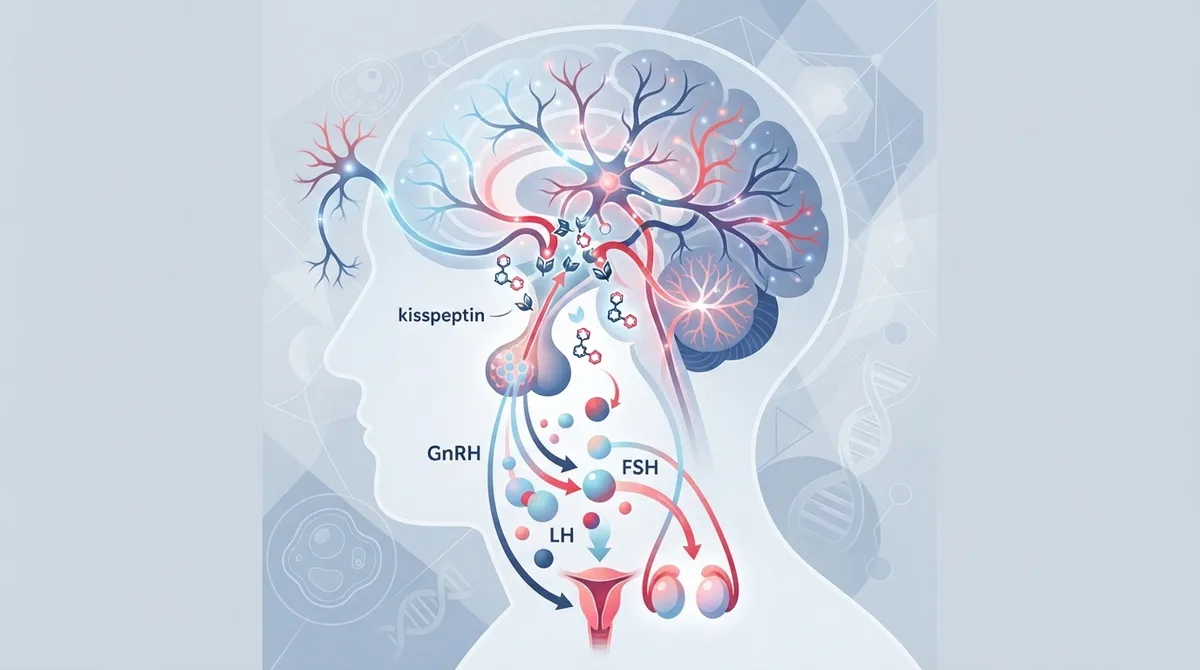
Kisspeptin is a signaling hormone made in the brain. It activates special receptors called kisspeptin-1 receptors. This action triggers the release of another hormone called gonadotropin-releasing hormone, or GnRH. GnRH then tells the body to release luteinizing hormone (LH) and follicle-stimulating hormone (FSH). These two hormones control ovulation, sperm production, and the menstrual cycle.
In simple terms, kisspeptin acts like a switch. It turns on the reproductive hormone system. Without enough kisspeptin activity, puberty may be delayed, and adult reproductive function can suffer. This is why researchers are so interested in studying it further.
Key Roles of Kisspeptin in the Body
- Triggers the start of puberty in adolescents
- Regulates the menstrual cycle in women
- Supports ovulation and fertility
- Influences sexual desire and arousal pathways in the brain
- Plays a role in adult reproductive hormone balance

What Do the Latest Kisspeptin Study Results Show?
Two notable randomized clinical trials, published in JAMA Network Open, looked at kisspeptin's effects on people with hypoactive sexual desire disorder (HSDD). This condition involves a persistent lack of interest in sex that causes personal distress. The results give us the clearest picture yet of what kisspeptin can and cannot do.
Kisspeptin Study Results in Men
A 2023 trial studied 32 men with HSDD. Researchers gave participants an intravenous dose of kisspeptin and measured brain activity along with physical responses. The results were notable:
- Kisspeptin significantly changed activity in brain regions tied to sexual processing, compared with placebo.
- Penile tumescence, or swelling during erotic stimulation, increased by up to 56% compared with placebo.
- The mean difference in physical response was 0.28 units, a statistically meaningful result (95% CI, 0.04–0.52; P=.02).
- Brain activity changes had a reported effect size of 0.81, considered a strong signal (95% CI, 0.41–1.21; P=.003).
Kisspeptin Study Results in Women
A related 2022 trial tested kisspeptin in 32 premenopausal women with HSDD. Researchers focused on brain response and reproductive hormone changes. Here is what they found:
- Kisspeptin altered brain responses to erotic images and attractive faces.
- LH levels rose by an average of 2.14 IU/L (95% CI, 0.41–3.90; P=.02).
- FSH levels increased by 0.28 IU/L on average (95% CI, 0.00–0.55; P=.049).
- Estradiol, progesterone, and testosterone levels did not change significantly during the short study period.
- Brain activity changes correlated with reduced sexual aversion (r=0.476; P=.005) and with baseline sexual distress (r=0.469; P=.007).
Kisspeptin Study Results Summary Table
|
Study Focus |
Participants |
Key Finding |
Statistical Significance |
|---|---|---|---|
|
Men with HSDD |
32 men |
56% increase in penile tumescence vs. placebo |
P=.02 |
|
Men with HSDD |
32 men |
Altered brain sexual-processing activity |
P=.003 |
|
Women with HSDD |
32 women |
LH increased by 2.14 IU/L |
P=.02 |
|
Women with HSDD |
32 women |
FSH increased by 0.28 IU/L |
P=.049 |
Can Kisspeptin Help With Fertility or PCOS?
Beyond sexual desire, researchers are curious about kisspeptin's role in fertility treatment. Because kisspeptin stimulates the body's own GnRH release, it may offer a more natural way to trigger ovulation compared with some conventional fertility medications. Some early research suggests this approach could reduce the risk of ovarian overstimulation, a common concern with standard fertility drugs. However, this application remains under investigation and is not yet a routine treatment.
Polycystic ovary syndrome (PCOS) is another area of interest. A 2019 systematic review and meta-analysis looked at 12 studies involving 660 people with PCOS and 600 without the condition. The review found that people with PCOS tended to have higher kisspeptin levels overall, especially those with obesity, high LH, or signs of high androgen levels. This is an association, not proof that kisspeptin testing or treatment can diagnose or manage PCOS. If you are dealing with PCOS symptoms, a primary care visit is still the best first step toward a proper diagnosis and treatment plan.
Common Questions About Kisspeptin and Reproductive Health
- Does kisspeptin directly raise testosterone or estrogen? Current data shows it raises LH and FSH, not sex hormones directly, in short-term studies.
- Can kisspeptin treat infertility today? Not yet. Studies remain in early, proof-of-concept stages.
- Is kisspeptin linked to ovulation induction? Yes, this is an active area of research, but it is not an established therapy.
- Does kisspeptin testing diagnose PCOS? No, elevated levels are associated with PCOS but are not diagnostic on their own.
Is Kisspeptin Safe? What the Research Says About Side Effects
Short-term studies in both men and women reported good tolerability. No major adverse effects were noted during monitored, single-dose administration in a research setting. That said, researchers caution that safety data is limited. We do not yet know how kisspeptin behaves with repeated use, in people with heart conditions, or during pregnancy.
What We Still Don't Know
- Long-term safety with repeated or chronic dosing
- Optimal dosing schedules for different conditions
- Effects in people with existing endocrine or cardiovascular disease
- Safety during pregnancy or breastfeeding
- Whether unsupervised wellness use carries hidden risks
Because of these gaps, kisspeptin-based products should not be marketed or used as proven treatments for low libido, erectile dysfunction, infertility, menopause symptoms, or PCOS. It is still a research tool, not a clinical therapy.
Kisspeptin vs. Established Treatments: A Quick Comparison
|
Factor |
Kisspeptin (Current Status) |
Established Hormone Therapies |
|---|---|---|
|
Clinical Approval |
Investigational only |
FDA-approved options available |
|
Evidence Base |
Small, short-term trials |
Large, long-term trials |
|
Dosing Guidelines |
Not yet established |
Well-defined protocols |
|
Availability |
Research settings only |
Prescribed in clinical practice |
How Primary Care Providers Interpret Kisspeptin Research
At a wellness-focused clinic, providers stay current on hormone research like this so they can guide you honestly. If you struggle with low libido, irregular cycles, or fertility concerns, your provider can order proper hormone testing and rule out other causes. This is a smarter first step than trying an unproven peptide on your own.
InCare offers thorough DNA gene testing and hormone-focused evaluations that go beyond a basic checkup. Our providers, including those featured on our providers page, can help you understand what is really driving your symptoms. For women without an established primary care relationship, a comprehensive wellness visit can uncover issues that a routine OB/GYN visit may not fully address.
Steps to Take If You Have Low Libido or Fertility Concerns
- Schedule a comprehensive wellness visit to review your full health history.
- Ask about hormone panel testing, including LH, FSH, and thyroid function.
- Discuss lifestyle factors like sleep, stress, and body composition that affect hormones.
- Explore evidence-based treatment options with your provider before considering experimental peptides.
- Follow up regularly to track progress and adjust your care plan.
Why Whole-Body Wellness Matters More Than a Single Hormone
It is tempting to focus on one hormone as a magic fix. But sexual desire, fertility, and hormone balance depend on many factors working together. Sleep, stress, nutrition, and body composition all play a role. This is why a whole-body approach to weight loss and metabolic health often improves hormone function more reliably than chasing a single compound.
InCare's body composition analysis and metabolic breath analysis services give a fuller picture of your health. These tools help identify underlying issues that may be affecting your hormones, energy, and overall wellness. Combined with routine cancer screenings and preventive care, this approach supports long-term health rather than short-term fixes.
Signs You May Benefit From a Comprehensive Hormone Evaluation
- Persistent low interest in sex that causes personal distress
- Irregular or absent menstrual cycles
- Difficulty conceiving after several months of trying
- Unexplained fatigue or mood changes
- Family history of PCOS or reproductive hormone conditions
If any of these apply to you, it may be time to reach out to our care team for a personalized evaluation rather than waiting or self-treating with unproven products.
What the Future May Hold for Kisspeptin Research
Researchers continue to study kisspeptin for potential use in fertility clinics, hormone disorder treatment, and sexual health care. Larger trials with longer follow-up periods are needed before it becomes a standard option. For now, the results are encouraging but preliminary. According to the Society for Endocrinology, this research represents an exciting but early chapter in hormone science.
As new data emerges, InCare stays informed so we can offer accurate guidance rather than jumping on unproven trends. Our goal is to help you make decisions based on real evidence, not marketing claims.
How InCare Supports Your Hormone and Wellness Goals
With locations in Tampa and Riverview, Florida, InCare combines advanced technology with a personal touch. Our team, including Dr. Naveen Paddu, Dr. Pramjeet Ahluwalia, and Dr. Teshy John, works with patients on everything from primary care to advanced wellness testing. You can also connect with us on Facebook, follow our wellness tips on Instagram, or catch quick health facts on TikTok.
Many patients also check out what others are saying before booking an appointment. You can visit us on Google — InCare to read real patient reviews and see why our Tampa and Riverview clinics maintain a strong reputation for personalized care.
Frequently Asked Questions About Kisspeptin Study Results
Explore common questions below to better understand what current research really tells us about this hormone.
Final Thoughts on Kisspeptin Study Results
Kisspeptin research offers a fascinating look into the biology of desire, fertility, and reproductive hormones. The studies so far show real promise, especially for brain activity changes and short-term hormone shifts. But the science is not ready for routine clinical use. If you are dealing with low libido, irregular cycles, or fertility challenges, the smartest move is a thorough evaluation with a trusted provider.
Our team at InCare is ready to help you explore your hormone health with evidence-based care. Book your appointment today and take the first step toward answers that are backed by real science, not hype.
FAQs
Q: What is kisspeptin and how does it affect reproductive hormones?
A: Kisspeptin is a hormone made in the brain that triggers the release of GnRH, which then stimulates LH and FSH. These hormones control ovulation, menstrual cycles, and sperm production, making kisspeptin central to reproductive health.
Q: Can kisspeptin increase testosterone, estrogen, LH, or FSH?
A: Clinical trials show kisspeptin can raise LH and FSH levels within hours of administration. However, studies have not shown significant short-term changes in testosterone, estrogen, or progesterone levels.
Q: Is kisspeptin a proven treatment for low sexual desire or erectile dysfunction?
A: Not yet. Small clinical trials show kisspeptin can alter brain activity and physical arousal responses, but it remains an investigational compound rather than an approved treatment for these conditions.
Q: Can kisspeptin help with fertility, ovulation, or PCOS?
A: Researchers are studying kisspeptin's potential for ovulation induction and fertility treatment because it stimulates natural GnRH release. It is also linked to PCOS in observational studies, but it is not yet a diagnostic tool or treatment for the condition.
Q: Is kisspeptin safe, and what side effects have been reported?
A: Short-term studies report good tolerability with no major adverse effects during monitored administration. However, safety data is limited for long-term use, pregnancy, and people with existing health conditions, so it should only be considered within a research or clinical setting.