
Key Takeaways
- Topical GHK-Cu shows the strongest clinical evidence with 70% of participants demonstrating improved collagen production compared to vitamin C (50%) and retinoic acid (40%), making it the most studied form for skin firmness and anti-aging benefits.
- Injectable and systemic GHK-Cu claims lack sufficient human clinical data; most non-topical research comes from cell or animal models, so whole-body regeneration and cognitive health benefits remain unproven in humans.
- Active Phase 2 clinical trials are now evaluating topical GHK-Cu gel for acute wound healing, moving research beyond lab observations toward real monitored human outcomes with measurable tissue repair metrics.
- Topical GHK-Cu is generally well-tolerated in studies, but safety data for injectable or high-dose systemic use remains limited, requiring caution and consultation with healthcare providers before non-topical application.
Copper peptides have become a hot topic in skin health and wellness circles, and GHK-Cu sits at the center of that conversation. If you have searched for real evidence behind the claims, you already know the internet is full of bold promises but short on facts. This article breaks down what GHK-Cu scientific studies actually show, using data from clinical trials and research reviews rather than marketing hype.
Whether you are a wellness-focused professional exploring proactive health options, a busy parent researching skin recovery products, or someone simply curious about anti-aging peptides, this guide gives you a clear, honest picture. We will walk through the human studies, the lab research, and the safety data so you can make an informed choice. For patients considering advanced wellness options, understanding the science first is always the smartest first step.
What Is GHK-Cu and Why Is It Being Studied?
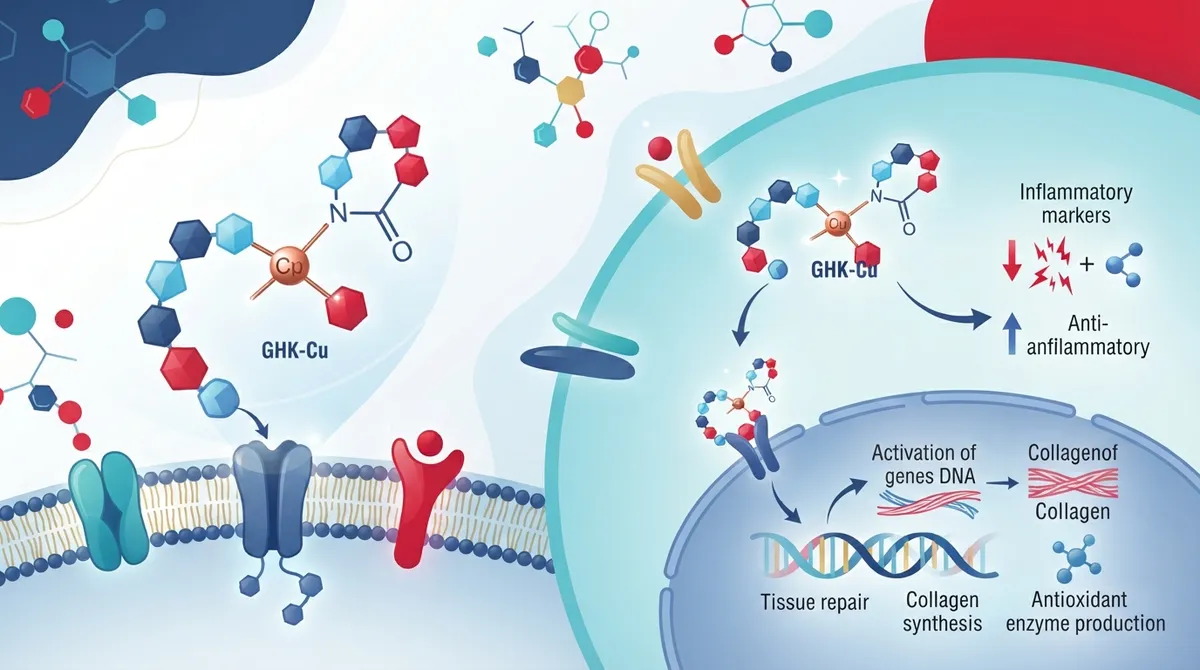
GHK-Cu is the copper complex of a small protein called glycine-histidine-lysine. Scientists first identified this tripeptide because it naturally occurs in human blood plasma. Researchers noticed that levels of GHK-Cu drop as people age, which sparked interest in whether replacing it could support tissue repair.
Since that discovery, GHK-Cu has become one of the most studied copper peptides in skin science. It appears in cosmetic dermatology research, wound healing studies, and cell biology literature. The peptide's ability to bind copper appears to play a role in how it interacts with skin cells and connective tissue.
The Core Science Behind GHK-Cu
At a basic level, GHK-Cu is believed to signal cells to produce more collagen and other proteins that keep skin firm. Review literature describes its effects on extracellular matrix components, including collagen and glycosaminoglycans, which are building blocks for healthy skin structure. This is why most GHK-Cu scientific studies focus heavily on skin rather than other body systems.
Human Clinical Evidence: What the Studies Actually Found
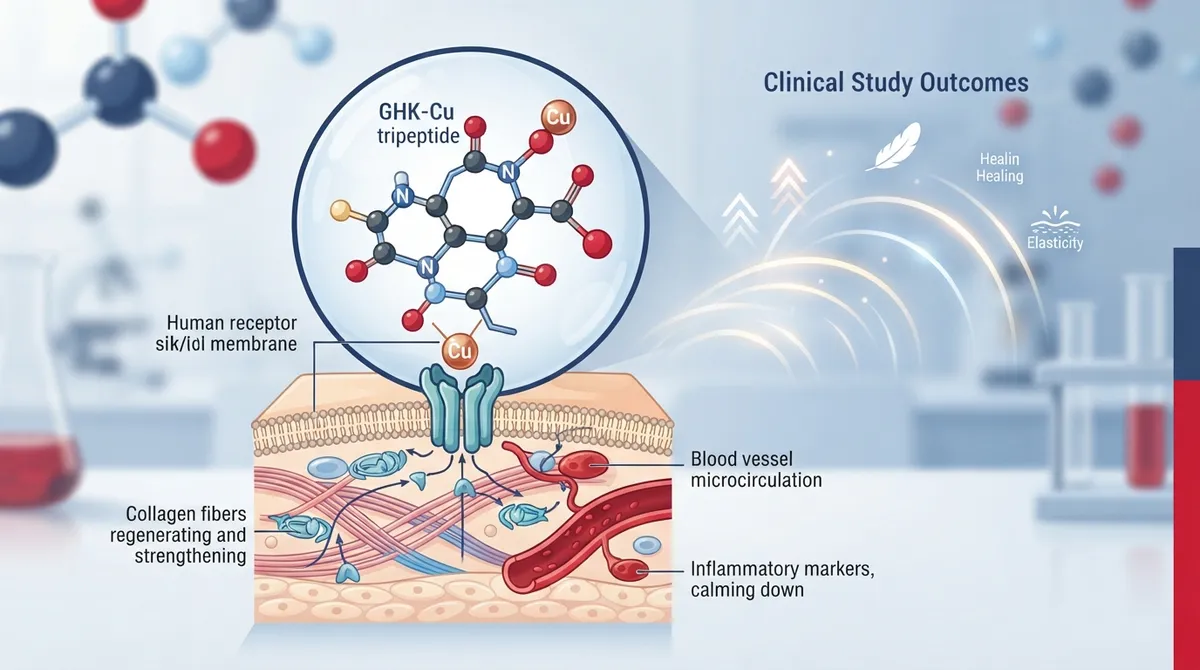
The strongest human evidence for GHK-Cu comes from topical skin studies. These are placebo-controlled trials where researchers compared GHK-Cu creams against other common skincare ingredients.
- Improved skin density and firmness after weeks of consistent use
- Reduced appearance of fine lines in treated participants
- Better skin tone and reduced pigmentation irregularities
- Higher collagen production compared to some standard actives
- Generally good tolerability in cosmetic study settings
One frequently cited placebo-controlled study, summarized in a 2018 review, compared GHK-Cu cream to vitamin C cream and retinoic acid cream. The results were notable enough that they are still referenced in current research discussions.
Collagen Production Comparison
|
Treatment |
Participants Showing Improved Collagen Production |
|---|---|
|
GHK-Cu Cream |
70% |
|
Vitamin C Cream |
50% |
|
Retinoic Acid Cream |
40% |
These numbers are meaningful, but it is important to remember this reflects one study population using topical application. It does not confirm the same results for injectable or oral forms of the peptide.
Wound Healing Research: A Growing Area of Interest
Beyond anti-aging claims, GHK-Cu has drawn attention in wound care research. Preclinical and review literature link the peptide to anti-inflammatory activity, antioxidant support, and stimulation of tissue repair processes.
This interest has moved into active clinical testing. A registered Phase 2 clinical trial is currently evaluating a topical GHK-Cu gel for acute skin wound healing in healthy adults. This kind of study matters because it moves GHK-Cu research from lab observations toward real, monitored human outcomes.
Steps Researchers Follow in Wound Healing Trials
- Identify healthy adult participants with similar wound types
- Apply topical GHK-Cu gel under controlled, monitored conditions
- Compare healing speed and tissue quality against a placebo group
- Track side effects and skin tolerance throughout the trial
- Analyze final wound closure and scarring outcomes
This structured process is what separates genuine clinical research on GHK-Cu from casual online claims. Results from trials like this one help clarify what the peptide can realistically deliver.
What the Research Does Not Yet Confirm
It is just as important to understand the limits of current science. Many bold claims about GHK-Cu go far beyond what human studies support.
- Whole-body regeneration claims remain unproven in humans
- Cognitive or brain health benefits are based mostly on animal studies
- Longevity or anti-aging claims beyond skin lack strong clinical backing
- Injectable and systemic use has limited human safety data
- Most non-topical research comes from cell or animal models, not people
A broader literature review that included clinical and preclinical studies reported a combined total of 1,124 participants across all included research. That number sounds substantial, but much of it comes from smaller trials or lab-based work rather than large, standardized human trials. This is a common pattern in peptide research across the wellness industry.
Topical vs Injectable GHK-Cu: A Quick Comparison
|
Factor |
Topical GHK-Cu |
Injectable/Systemic GHK-Cu |
|---|---|---|
|
Human Clinical Evidence |
Strongest available data |
Very limited |
|
Common Use Case |
Skin aging, wound care |
Not well supported by studies |
|
Safety Data |
Generally well tolerated in trials |
Insufficient for confident conclusions |
|
Regulatory Status |
Used in cosmetic formulations |
Not established for medical use |
Why Understanding the Evidence Matters for Your Health Decisions
Wellness trends move fast, and it is easy to get swept up in exciting claims. But making informed choices about your body means looking past marketing and toward actual data. This is especially true for anyone exploring advanced wellness options like peptide-based skin treatments or regenerative therapies.
At InCare, our approach is built on this same principle. Our providers rely on current, evidence-based research to guide every conversation about weight loss, DNA gene testing, and other advanced wellness services. If you are curious how peptide science fits into a broader health strategy, our providers can walk you through what is realistic and what is still unproven.
Questions Worth Asking Before Trying Any Peptide Product
- Is this backed by human clinical trials or only lab studies?
- What form is being used: topical, oral, or injectable?
- Who is supervising the treatment plan?
- What side effects have been reported in published research?
- Is the product sourced from a reputable, tested supplier?
These questions apply to GHK-Cu and any other emerging peptide you may encounter during your wellness research.
Safety Considerations Based on Current Research
Published reviews generally describe topical GHK-Cu as well tolerated in cosmetic and wound-care research settings. However, public safety data for broader medical use remains limited. This means caution is warranted, especially for injectable or high-dose applications that fall outside of studied topical use.
- Most safety data applies to topical skin application only
- Longer-term systemic safety has not been thoroughly studied
- Individual skin sensitivities can vary between users
- Sourcing quality plays a major role in safety outcomes
Because safety data is still developing, working with a knowledgeable healthcare team matters. Personalized guidance helps you weigh potential benefits against unknowns, particularly if you are also managing other health conditions.
How InCare Approaches Peptide and Wellness Science
Primary care today goes beyond treating illness. Preventive strategies, skin health, and cellular wellness are becoming part of comprehensive checkups. InCare combines traditional primary care with advanced wellness services, including IV hydration and vitamin drips and body composition analysis, so patients get a full picture of their health.
Our Tampa and Riverview locations serve patients who want more than a quick checkup. Many local patients come to us after researching peptide therapy options and want a professional opinion grounded in real science. You can also see what our InCare patients say by visiting our Google Business Profile page before booking your first visit.
Why Evidence-Based Care Matters More Than Trends
Social media moves fast, but good health decisions take time. Reviewing peer-reviewed studies, not viral claims, protects your long-term wellness. This is true whether you are exploring hair restoration, cancer screening, or newer options like copper peptide research.
If you want to follow ongoing wellness education and updates, you can also connect with InCare on Facebook, Instagram, and TikTok for practical health tips grounded in real research.
Key Takeaways From Current GHK-Cu Research
Reviewing the research landscape gives a clearer, more balanced view of what GHK-Cu can and cannot do right now.
- Topical GHK-Cu has the strongest human clinical support
- Skin firmness, tone, and collagen production show measurable improvement in studies
- Wound healing research is active, including ongoing Phase 2 trials
- Systemic and injectable claims remain largely unproven in humans
- Safety data is promising for topical use but limited elsewhere
Staying informed helps you separate legitimate preclinical and pharmacological research from exaggerated online claims. As more studies emerge, including the ongoing wound healing trial listed on ClinicalTrials.gov, our understanding of GHK-Cu will continue to evolve.
Ready to Discuss Advanced Wellness Options With a Trusted Team?
Understanding the science behind trending wellness treatments is the first step toward better health decisions. If you want personalized guidance on skin health, peptide therapy questions, or broader wellness planning, our team is ready to help. Reach out to our care team today or schedule your appointment now to start a conversation grounded in real evidence, not internet trends.
FAQs
Q: What are the scientific benefits of GHK-Cu?
A: Research points to improved skin firmness, density, and collagen production with topical GHK-Cu use. Studies also link it to anti-inflammatory and antioxidant activity, though most of this evidence comes from skin-focused clinical trials.
Q: Does GHK-Cu really work for skin aging?
A: Clinical studies show topical GHK-Cu can improve skin firmness, fine lines, and pigmentation with consistent use. The strongest data supports twelve-week application periods, though individual results vary.
Q: Are there human clinical studies on GHK-Cu?
A: Yes, several placebo-controlled human trials have tested topical GHK-Cu against other skincare actives like vitamin C and retinoic acid. A Phase 2 trial is currently evaluating GHK-Cu gel for wound healing in healthy adults.
Q: Is GHK-Cu safe for topical use?
A: Review literature describes topical GHK-Cu as generally well tolerated in cosmetic and wound-care research settings. However, safety data for injectable or systemic use remains limited and less established.
Q: What is the difference between topical and injectable GHK-Cu?
A: Topical GHK-Cu has the strongest human clinical evidence, particularly for skin health and wound healing. Injectable and systemic forms rely mostly on animal and cell studies, with far less human safety data available.