Key Takeaways
- Diagnosis of low testosterone requires two separate early-morning total testosterone tests plus compatible symptoms; a single or afternoon test is not enough, and clinics that skip this are a warning sign.
- FDA 2025 labeling: testosterone products are approved only for low T tied to a medical condition, not age-related decline, and blood pressure must be checked before and during treatment.
- Testosterone therapy can suppress sperm production, and the AUA advises against it for men currently trying to conceive, so ask about fertility before starting.
- Ongoing monitoring is part of safe treatment: retest levels every 6 to 12 months once stable and watch hematocrit, since 54% or higher during therapy warrants intervention.
Men searching for a Tampa Bay testosterone clinic often arrive with the same questions: Why am I tired all the time? Why has my drive faded? Is it low testosterone, or something else? The answer matters, because the type of clinic you choose shapes how those questions are answered.
In 2026, two main paths exist. One is a standalone clinic built around hormone therapy. The other is a primary care practice that evaluates testosterone as part of your whole health. Both can prescribe treatment, but they differ in how they diagnose, monitor, and manage risk.
This article compares the two approaches using current guidance from the American Urological Association (AUA) and the U.S. Food and Drug Administration (FDA). You will learn how diagnosis should work, what safe treatment looks like, and which questions to ask before you commit. Whether you are a busy professional, a young father, or a wellness-minded man in your 30s or 40s, the goal is the same: clear, accurate information so you can choose with confidence.
What a Tampa Bay Testosterone Clinic Should Actually Do
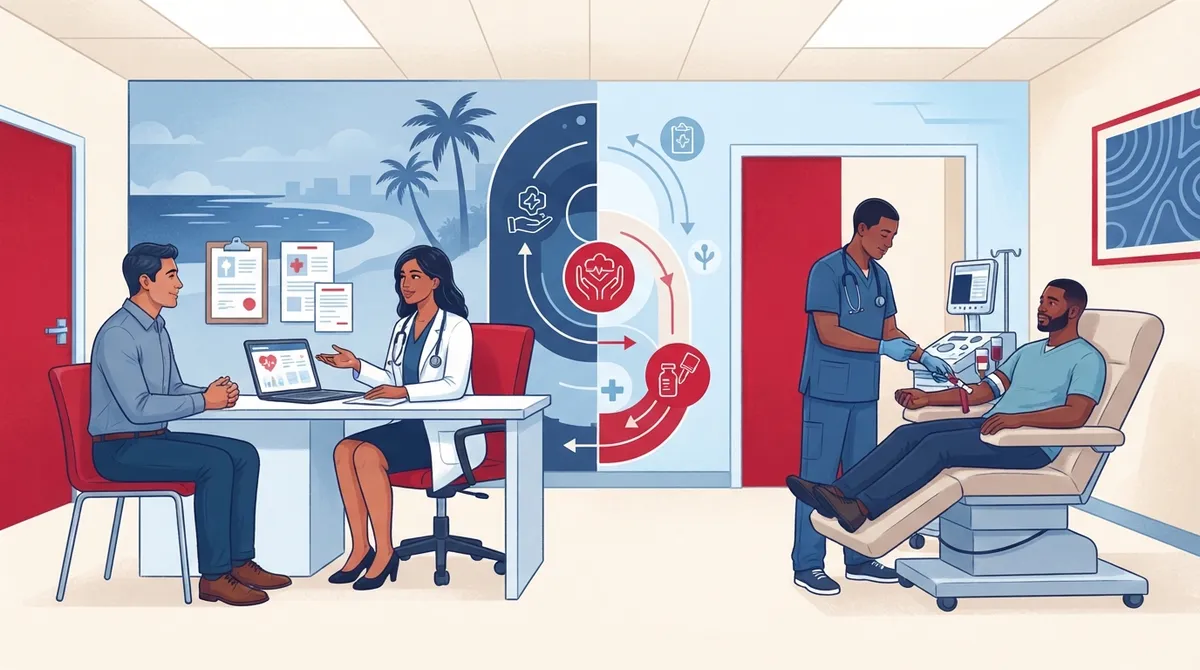
A Tampa Bay testosterone clinic should be understood as a medical service that evaluates possible testosterone deficiency. It should not be simply a source of hormone optimization packages. Good care starts with your symptoms, your medical history, and a physical exam. Lab work confirms or rules out the diagnosis.
The AUA recommends diagnosing low testosterone only after two separate early-morning total testosterone measurements. Results must be read alongside compatible symptoms or signs and your overall health. A single test, or a test taken in the afternoon, is not enough.
Common symptoms that prompt an evaluation include:
- Reduced sexual desire or erectile changes
- Persistent fatigue and low energy
- Loss of muscle mass or increased body fat
- Low mood or trouble concentrating
- Reduced bone density in some cases
These symptoms overlap with sleep apnea, thyroid problems, diabetes, depression, and medication side effects. That overlap is the main reason the setting of your evaluation matters.
Primary Care vs. Standalone Low-T Clinic: Side-by-Side
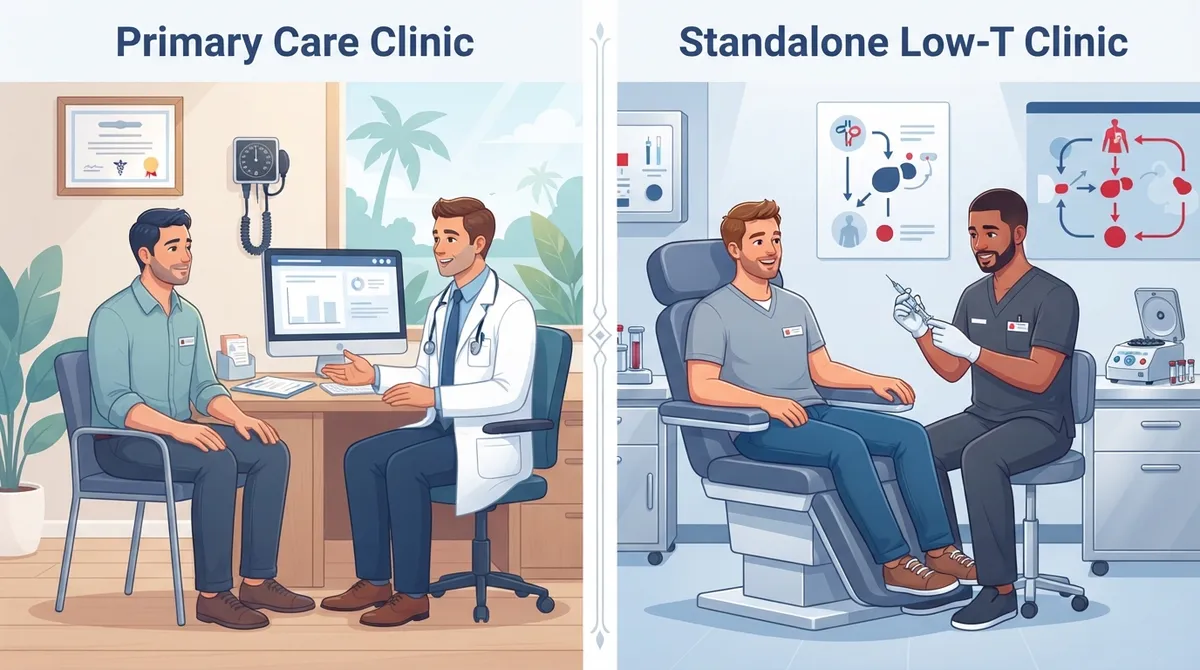
The table below summarizes how the two models typically differ. Individual clinics vary, so use this as a framework rather than a rule.
|
Factor |
Primary Care Practice |
Standalone Low-T Clinic |
|---|---|---|
|
Starting point |
Full health history, exam, and broad lab review |
Often a hormone-focused intake |
|
Other causes checked |
Sleep, thyroid, blood sugar, mood, medications |
May be limited to hormone panels |
|
Diagnosis standard |
Two early-morning tests plus symptoms |
Varies by clinic; verify this |
|
Risk review |
Blood pressure, heart health, and clotting risk reviewed in context |
Depends on clinic protocols |
|
Fertility counseling |
Part of the discussion |
Should be asked directly |
|
Ongoing care |
Same team manages other conditions |
Focused on the hormone program |
The key difference is context. Testosterone does not act alone. Weight, sleep, blood pressure, and blood sugar all influence it, and testosterone therapy can influence them in return.
How Low Testosterone Is Diagnosed
Responsible diagnosis follows a clear sequence. Here is how it should look at any clinic you consider:
- Symptom and history review. Your clinician asks about energy, sexual function, mood, sleep, medications, and family planning.
- Physical examination. This includes blood pressure, body composition, and a review of signs that point to other conditions.
- First early-morning blood test. Total testosterone is measured in the morning, when levels are typically highest.
- Second early-morning blood test. A separate morning test confirms the first result. The AUA calls for two measurements on separate occasions.
- Baseline safety labs. Hemoglobin and hematocrit are checked before any treatment begins.
- Cause and alternatives discussion. Your clinician explains possible causes and non-hormonal options before recommending therapy.
If a clinic offers to start treatment after one test, or without a physical exam, treat that as a warning sign. Speed is not a substitute for accuracy.
Understanding the FDA's 2025 Labeling Changes
The FDA updated testosterone product labeling in 2025, and the changes affect how you should think about treatment. Three points stand out.
- Approved use is specific. Testosterone products are approved for men with low testosterone associated with a medical condition. They are not approved simply for age-related decline.
- Boxed-warning language changed. After reviewing the TRAVERSE trial, the FDA removed the class-wide boxed-warning language about increased adverse cardiovascular outcomes.
- Blood pressure is now highlighted. Postmarket ambulatory blood-pressure studies found increased blood pressure across testosterone products as a class. The size of the effect varies by formulation. Products are not recommended for patients with uncontrolled hypertension.
This is good news for many men, but it comes with a responsibility. Blood pressure must be measured before treatment and tracked afterward. A practice that already manages hypertension and heart health day to day is well positioned to do that. If you want to learn more about this topic, see 12 Proven Strategies for Blood Pressure Management in 2026.
Treatment Options and How They Differ
If low testosterone is confirmed, several forms of treatment exist. The right choice depends on your diagnosis, preferences, cost, and ability to follow product-specific instructions.
|
Form |
How It Is Used |
Key Considerations |
|---|---|---|
|
Injections |
Prescription injections on a set schedule |
Requires regular dosing; levels can vary between doses |
|
Topical gels |
Applied to the skin daily |
Can transfer to others through skin contact, including children |
|
Patches |
Worn on the skin |
Possible skin irritation |
|
Oral or buccal products |
Taken by mouth or applied to the gum |
Product-specific instructions apply |
Families should pay close attention to the skin-transfer risk. If you share a home with young children, ask your clinician how to prevent accidental exposure. To learn more about what to expect from therapy at our practice, read What Is Testosterone Replacement Therapy at InCare.
Fertility: The Question Many Men Forget to Ask
Testosterone therapy can suppress sperm production and impair fertility. The AUA advises against prescribing exogenous testosterone to men who are currently trying to conceive. This matters most for men in their late 20s, 30s, and early 40s who plan to have children.
If fertility is a concern, ask about reproductive evaluation and alternatives before you begin. A clinician who skips this conversation is not giving you the full picture. Our guide on sperm production and ways to improve it offers helpful background.
Monitoring Is Part of Treatment, Not an Add-On
Starting therapy is only the first step. Safe treatment depends on follow-up, and the AUA is specific about what that looks like.
- Testosterone levels: Measured after treatment begins, then every 6 to 12 months once target levels are established.
- Hematocrit: Baseline above 50% should be investigated before starting. A hematocrit of 54% or higher during treatment warrants intervention.
- Blood pressure: Checked regularly, given the FDA's labeling update.
- Symptoms and side effects: Reviewed at each visit to confirm the treatment is helping.
This is where a primary care relationship shines. Your clinician can compare your results with your broader health data, adjust other medications, and catch changes early. For a look at how ongoing care works, see how primary doctors help manage chronic illnesses.
Questions to Ask Any Tampa-Area Clinic
Marketing is not a substitute for independent verification. Before you book, ask these questions and expect clear answers:
- Who evaluates me and who prescribes? What are their licenses and qualifications?
- Do you require two early-morning tests before diagnosis?
- How do you check for other causes of my symptoms?
- What baseline tests do you order, including hemoglobin and hematocrit?
- How do you address fertility and the option of stopping treatment?
- What follow-up schedule do you use, and what does it cost?
- How do you handle blood pressure and other risks?
- What costs and insurance coverage apply?
Insurance coverage varies by plan and by diagnosis, so confirm details with both the clinic and your insurer before you start.
Why Many Patients Choose InCare
InCare is a personalized healthcare practice that combines advanced technology with medical expertise. With locations in Tampa and Riverview, plus virtual visits, our team treats testosterone as one part of a complete health picture. That means your evaluation can sit alongside primary care, cancer screening, body composition analysis, metabolic testing, and weight management, all under one roof.
This integrated model suits busy professionals who want one trusted team rather than several disconnected providers. It also suits young families who need efficient, coordinated care. Meet our clinicians on the providers page, or explore our primary care services. If your search began with symptoms like fatigue or weight gain, our weight loss program and metabolic breath analysis can help uncover related factors.
InCare holds a 4.8 out of 5 rating on Google across 359 reviews. You can see what InCare patients say on Google and judge our care for yourself. We also share health updates on Instagram, Facebook, and TikTok.
The Verdict: Which Is Better?
For most men, a primary care approach offers the stronger foundation. It checks for other causes first, applies the two-test diagnostic standard, reviews blood pressure and heart health in context, and builds monitoring into long-term care. A standalone clinic can be appropriate if it meets the same standards, but you must verify that yourself.
The best Tampa Bay testosterone clinic is the one that diagnoses carefully, treats only when it is medically appropriate, discusses fertility honestly, and follows you over time. If you are ready to start with a full evaluation, book your appointment with InCare or contact our team with questions. We are here to help you understand your results and decide on the next step, with accuracy and respect.
FAQs
Q: How do I find a reputable testosterone clinic in Tampa Bay?
A: Look for a clinic that evaluates symptoms, medical history, and lab results before recommending treatment. Ask who prescribes, what their qualifications are, and how follow-up is handled. Independent verification matters more than marketing claims.
Q: Do I need two testosterone blood tests before starting TRT?
A: Yes. The American Urological Association recommends diagnosing low testosterone only after two separate early-morning total testosterone measurements. Results should be interpreted alongside compatible symptoms and your overall health.
Q: Can testosterone therapy affect fertility or sperm count?
A: Yes. Testosterone therapy can suppress sperm production and impair fertility. The AUA advises against prescribing it to men currently trying to conceive, so discuss reproductive evaluation and alternatives with your clinician first.
Q: How often should testosterone levels and hematocrit be monitored on TRT?
A: AUA guidance calls for testing after treatment begins and every 6 to 12 months once levels are established. Clinicians should also track hematocrit, blood pressure, and symptoms. A hematocrit of 54% or higher during therapy warrants intervention.
Q: Does the FDA approve testosterone therapy for age-related decline?
A: No. The FDA states that testosterone products are approved for men with low testosterone associated with a medical condition, not simply for age-related decline. Labeling updated in 2025 also highlights increases in blood pressure.