Key Takeaways
- Children receiving regular pediatric primary care are 40% less likely to be hospitalized for preventable illnesses, demonstrating that consistent, ongoing care with the same provider significantly protects children's health.
- Pediatric family medicine allows seamless care transitions from childhood to adulthood with the same provider, avoiding gaps that occur when patients must switch from a pediatrician to an adult provider around age 18-21.
- A family medicine doctor can treat your entire family under one roof, reducing scheduling complexity and providing better health insights by understanding hereditary conditions and family health patterns across generations.
- Modern pediatric family medicine now includes advanced wellness services like DNA gene testing, body composition analysis, and cancer screening for parents, enabling early risk identification and proactive health optimization.
- A provider with continuous knowledge of your child's growth patterns, developmental milestones, and family medical history can catch warning signs earlier and connect unrelated symptoms that a new provider might miss.
- Pediatric family medicine practices with integrated acute and urgent care services can handle common childhood illnesses like fevers and ear infections directly, avoiding unnecessary emergency room visits and keeping care in a familiar setting.
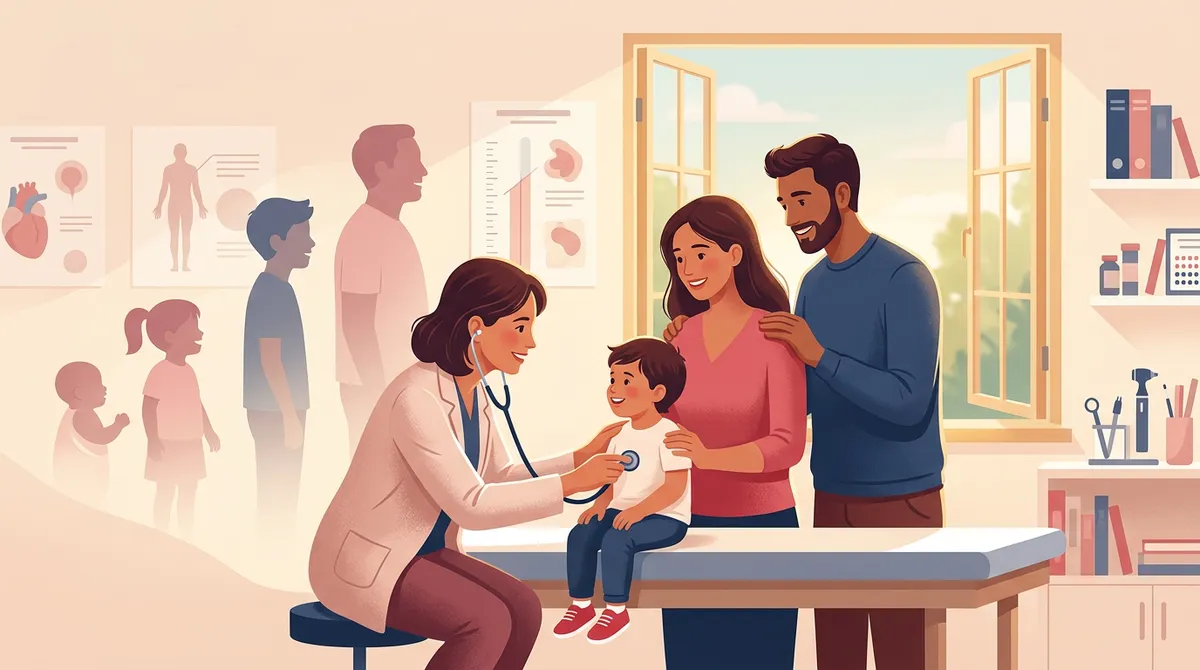
Your child's health is one of your most important priorities. But navigating the healthcare system can feel overwhelming, especially when you are trying to figure out which type of doctor is best for your family. Pediatric family medicine offers a solution that many families are discovering: comprehensive, continuous care that serves children and adults under one roof.
Whether you have a newborn, a teenager, or a multi-generational household, understanding pediatric family medicine helps you make smarter healthcare decisions. This guide breaks down exactly what it is, how it works, and why it may be the right choice for your family in 2026.

What Is Pediatric Family Medicine?
Pediatric family medicine is an approach to primary care that combines broad family medicine training with specialized pediatric expertise. Family medicine physicians are trained to treat patients of all ages — from newborns to seniors. When a family medicine doctor focuses on pediatric care, they bring that same whole-family perspective to children's health.
This model is different from seeing a standalone pediatrician. A family medicine doctor with pediatric expertise can treat your child and other family members, creating a connected, coordinated healthcare experience. They understand your family's full medical history, which leads to better, more personalized care decisions.

Pediatrician vs. Family Medicine Doctor: Key Differences
Many parents wonder whether to choose a pediatrician or a family medicine doctor. Both are qualified primary care providers, but there are important distinctions worth understanding before making a choice.
Feature Pediatrician Family Medicine Doctor Patient Age Range Birth through early adulthood All ages — infants to seniors Training Focus Exclusively child health Broad multi-generational care Family Care Children only Entire family together Continuity of Care Transitions at adulthood Lifelong care relationship Preventive Services Pediatric-focused screenings Preventive care for all ages Specialist Coordination Pediatric specialists Full network of specialists
The right choice depends on your family's needs. Families with young children who also want care for parents and grandparents often find family medicine more convenient and comprehensive. You can explore InCare's team of providers to learn more about the expertise available to your family.

Why Continuity of Care Matters for Children
One of the biggest benefits of pediatric family medicine is continuity of care. When your child sees the same physician over months and years, that doctor builds a deep understanding of your child's health history, growth patterns, and family background.
Research supports this clearly. Children who receive regular pediatric primary care are 40% less likely to be hospitalized for preventable illnesses. That statistic is significant — it shows that consistent, ongoing care is not just convenient, it is genuinely protective for your child's health.
Continuity also means better communication. A doctor who knows your family is more likely to catch warning signs early, understand patterns, and connect the dots between symptoms that might otherwise seem unrelated.

Core Services in Pediatric Primary Care
Pediatric family medicine covers a wide range of services. These services are designed to keep children healthy at every stage of development, from infancy through the teenage years.
Preventive Care and Wellness Visits
Regular wellness visits are the foundation of good pediatric care. These visits are not just for when your child is sick — they serve a proactive purpose. During a wellness visit, your provider will:
- Monitor your child's growth, weight, and developmental milestones
- Administer recommended vaccinations on schedule
- Screen for vision, hearing, and developmental delays
- Provide age-appropriate health and nutrition counseling
- Review any concerns or behavioral changes you have noticed
These visits create a baseline health record that helps your doctor identify changes over time. Children who receive timely preventive care are also more likely to stay current on vaccinations, which protects both the individual child and the broader community.
Acute and Urgent Care for Children
Children get sick — often unexpectedly. When your child has a fever, ear infection, rash, or injury, fast access to care is essential. A family medicine doctor with pediatric expertise can handle many of these situations directly, without requiring a trip to an emergency room.
When immediate care is needed, urgent care services can bridge the gap between a scheduled appointment and an emergency visit. This keeps care within a familiar, trusted setting rather than an unfamiliar emergency department.
Chronic Condition Management
Some children live with ongoing conditions such as asthma, allergies, ADHD, or type 1 diabetes. Managing these conditions requires consistent follow-up and a provider who understands the child's full picture. Primary care doctors play a central role in coordinating chronic illness management, adjusting treatment plans as the child grows, and referring to specialists when needed.
Preventive Care Milestones by Age
Understanding what to expect at each stage of your child's development helps you stay ahead of their healthcare needs. The following table outlines key preventive care milestones.
Age Range Key Milestones Recommended Services Newborn – 12 Months Rapid growth, early development Multiple well-baby visits, vaccinations, hearing screening 1 – 4 Years Language, motor skills, social development Annual well-child visits, developmental screening, dental referral 5 – 11 Years School readiness, physical activity Annual physicals, vision and hearing tests, sports physicals 12 – 18 Years Puberty, mental health, identity Annual exams, mental health screening, sexual health education
How Family Medicine Supports Whole-Family Health
One of the most underappreciated benefits of family medicine is its ability to see the family as a unit. Health does not exist in isolation. A child's environment, parental stress levels, family diet, and household routines all influence their wellbeing.
A family medicine provider can:
- Treat multiple family members in one practice, reducing scheduling complexity
- Identify hereditary conditions or genetic risk factors across generations
- Provide consistent messaging on nutrition, sleep, and activity to the whole family
- Offer weight management programs for parents and children together
- Coordinate care across specialists to avoid duplication and gaps
This integrated view is especially valuable for busy families. Instead of managing three or four separate medical relationships, you can consolidate care with a provider who knows everyone in the household. For families in the Tampa Bay area, InCare's locations in Tampa and Riverview make this type of whole-family care accessible and convenient.
Advanced Wellness in Pediatric Family Medicine
Modern pediatric family medicine is expanding beyond basic checkups. In 2026, leading primary care practices are integrating advanced wellness tools into family care. These services help identify risks early and optimize health proactively, rather than waiting for problems to develop.
DNA Gene Testing for Family Health Insights
Genetic testing is becoming a powerful tool in preventive family medicine. DNA gene testing can reveal inherited health predispositions that affect both parents and children. Understanding these risks early allows families to make informed choices about lifestyle, screenings, and monitoring.
Body Composition and Metabolic Analysis
Tracking a child's growth is standard in pediatric care. Advanced practices now use tools like body composition analysis and metabolic breath analysis to get a more complete picture of a child's physical health beyond height and weight measurements alone.
Cancer Screening for Parents
While children are the focus of pediatric care, family medicine also supports parental health. Cancer screenings for parents within the same practice allow the whole family to prioritize prevention together. Keeping parents healthy is, after all, essential to keeping children healthy too.
Choosing the Right Pediatric Family Medicine Provider
Not all primary care practices are the same. When selecting a pediatric family medicine provider, there are several important factors to evaluate.
- Training and experience: Look for a physician with documented experience caring for children across different age groups and conditions.
- Range of services: A practice that offers both preventive and acute care under one roof reduces the need for referrals and multiple providers.
- Technology and tools: Modern practices use advanced diagnostic tools, electronic health records, and telehealth to improve care quality and access.
- Patient relationship: Choose a provider who listens, explains clearly, and makes children feel comfortable during visits.
- Location and availability: Access matters. A conveniently located practice with flexible scheduling reduces barriers to consistent care.
You can learn more about the qualified physicians at InCare, including Dr. Naveen Paddu, Dr. Pramjeet Ahluwalia, and Dr. Teshy John, to understand the depth of expertise available at their Tampa and Riverview locations.
What to Expect at a Pediatric Primary Care Visit
For families new to pediatric family medicine, knowing what happens during a visit can reduce anxiety — for parents and children alike. Here is a general overview of what a typical well-child visit includes:
- Review of the child's growth measurements and comparison to prior visits
- Physical examination from head to toe
- Assessment of developmental and behavioral milestones
- Discussion of nutrition, sleep habits, screen time, and physical activity
- Vaccination review and administration if due
- Time for parent questions and concerns
Urgent care visits follow a more targeted format focused on diagnosing and treating the immediate issue, while chronic care visits emphasize monitoring trends and adjusting long-term treatment plans.
The Role of Technology in Modern Pediatric Family Care
Technology is changing how pediatric family medicine is delivered. Telehealth visits allow parents to consult with a doctor from home for minor concerns, follow-ups, and prescription renewals. This is a significant benefit for busy parents who cannot always take time off work for routine questions.
Digital health records give every member of your care team access to your child's complete health history, reducing errors and improving coordination. AI-powered diagnostic tools are also beginning to support early detection of developmental issues and chronic conditions.
Stay connected with InCare's latest updates and health tips by following them on Facebook and Instagram, or catch short wellness content on TikTok.
Transitioning from Pediatric to Adult Care
One of the most practical advantages of family medicine is how it handles the transition from childhood to adulthood. With a standalone pediatrician, patients must transfer to an adult provider at a certain age — often around 18 to 21. This transition can create gaps in care if not managed well.
With a family medicine approach, the transition is seamless. The same practice — sometimes even the same doctor — can continue caring for the patient as they move into adulthood. This preserves the medical history, the relationship, and the continuity that makes care more effective.
Comparing Care Models: What Families Need to Know
Care Aspect Stand-Alone Pediatric Care Pediatric Family Medicine Family Integration Child only Full family Transition at Adulthood New provider required Seamless continuation Medical History Access Child's records only Full family health context Scheduling Convenience Multiple practices for family One practice for everyone Wellness Services Pediatric-focused Full-spectrum for all ages Chronic Disease Management Pediatric conditions All ages, all conditions
Getting Started with Pediatric Family Medicine in Tampa Bay
InCare serves families across Tampa and Riverview with a comprehensive model of primary care that integrates pediatric expertise, advanced wellness services, and state-of-the-art technology. The practice holds a 4.8 out of 5 rating on Google with hundreds of patient reviews, reflecting consistently high-quality care and a welcoming environment for families.
Whether you are establishing care for a newborn, managing a child's chronic condition, or simply looking for a trusted provider for your whole family, InCare offers the expertise and services to meet your needs. You can visit InCare on Google to read patient reviews and get directions to the nearest location.
Taking the first step toward better family health is simple. Schedule your family's first appointment today and experience the difference that personalized, whole-family primary care can make for your children and everyone you love.
FAQs
Q: What is the difference between a pediatrician and a family medicine doctor?
A: A pediatrician is a specialist who focuses exclusively on the health of children from birth through early adulthood. A family medicine doctor is trained to care for patients of all ages, including infants, children, adults, and seniors, often serving multiple generations of the same family within one practice.
Q: Can a family medicine doctor provide quality pediatric care?
A: Yes. Family medicine physicians receive training that includes pediatric care, and many develop specialized expertise in treating children. Their ability to understand a child's full family health context often enhances the quality of care they provide.
Q: What preventive care services are included in pediatric primary care?
A: Pediatric primary care typically includes well-child visits, vaccinations, growth and developmental monitoring, vision and hearing screenings, nutritional counseling, and early detection of chronic or developmental conditions. These services are designed to keep children healthy and catch issues before they become serious.
Q: At what age do children transition from pediatric to adult care?
A: With a standalone pediatrician, the transition to an adult provider typically occurs between ages 18 and 21. In a family medicine setting, this transition is seamless — the same practice, and often the same doctor, can continue providing care as the patient moves into adulthood.
Q: Why is continuity of care important for children's health?
A: Continuity of care means your child sees the same provider consistently over time, allowing the doctor to build a detailed understanding of their health history and family background. Research shows that children with regular primary care access are 40% less likely to be hospitalized for preventable illnesses, demonstrating the real health impact of consistent care.