Key Takeaways
- Exercise naturally increases your MOTS-c levels and is backed by decades of peer-reviewed research, making it a proven strategy for mitochondrial health; MOTS-c injections remain unapproved and unproven in humans despite promising animal studies.
- MOTS-c activates the AMPK pathway to improve glucose uptake and energy efficiency, but human clinical evidence is limited to early-stage trials and observational studies; marketing claims about weight loss or anti-aging far exceed current scientific support.
- Proven metabolic health strategies available today include regular exercise (cardio and strength training), quality sleep, medical weight management, and metabolic testing—all backed by clinical evidence and safer than experimental MOTS-c products.
- A Phase 2a clinical trial is currently testing MOTS-c effects on insulin sensitivity and prediabetes in humans; results from this trial are necessary before efficacy claims can be made or clinical use considered.
Your cells run on tiny power plants called mitochondria. When these structures slow down, you may feel tired, gain weight more easily, or struggle with blood sugar control. Scientists have discovered a small molecule called MOTS-c that seems to talk to your muscles and help them use energy better. But how does this compare to something you already have access to: regular exercise? This question matters for anyone in Tampa or Riverview who wants real answers about mitochondrial health, not just wellness trends.
At InCare, our team believes patients deserve clear, honest information about emerging science. MOTS-c is exciting to researchers. It is not yet an approved treatment. This article breaks down what MOTS-c actually does, what exercise already proves it can do, and how you can support your metabolic health today using tools with real clinical backing.
What Is MOTS-c and How Does It Affect Mitochondrial Function?
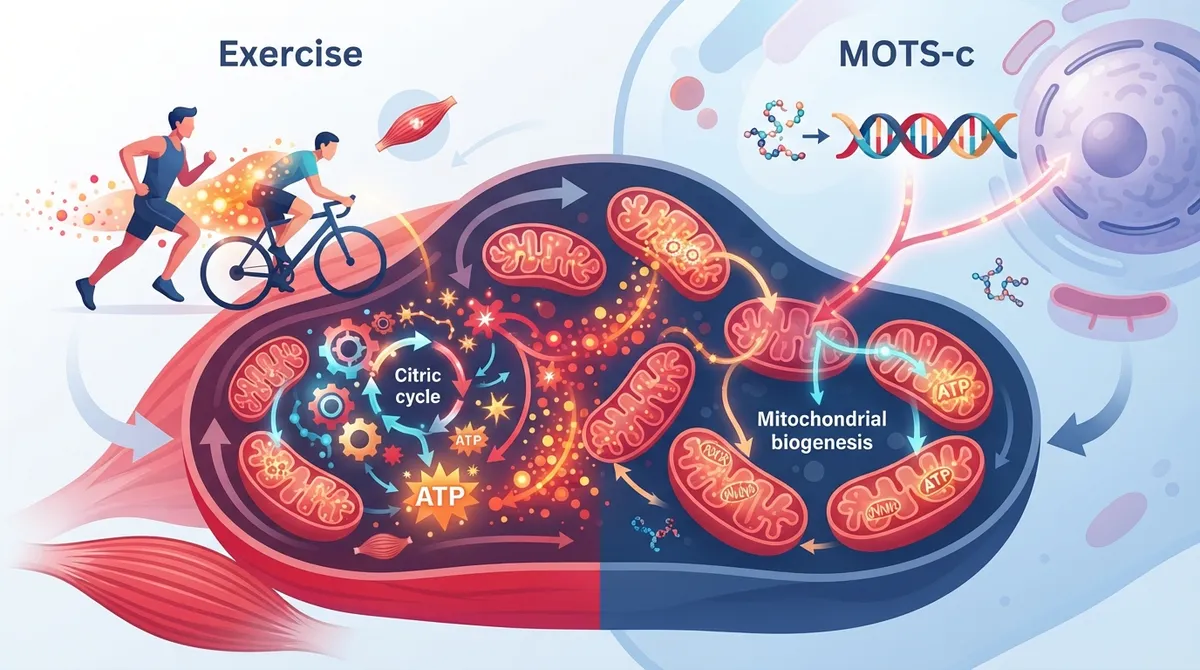
MOTS-c stands for mitochondrial open reading frame of the 12S rRNA type-c. That is a mouthful, so think of it simply: it is a small protein made inside your mitochondria. Scientists first described it in 2015. It contains just 16 amino acids, making it one of the smallest known signaling molecules in the body.
Unlike most mitochondrial parts, MOTS-c does not just sit inside the cell. It travels through your bloodstream. This means it may act like a hormone, sending messages between your muscles and other organs. Researchers believe skeletal muscle is one of its main targets, based on preclinical and observational studies.
The Science Behind the Signal
Laboratory studies suggest MOTS-c activates a pathway called AMPK. Think of AMPK as your body's energy switch. When it turns on, your cells start pulling in more glucose and burning it more efficiently. Animal studies also link MOTS-c to changes in the folate-methionine cycle, which affects how cells manage stress and energy production.
These mechanisms may explain why MOTS-c is linked to better insulin sensitivity in mice and cell studies. However, most of this evidence comes from labs, not from large human trials. That distinction matters if you are considering any product marketed around this peptide.
MOTS-c vs. Exercise: Comparing the Evidence
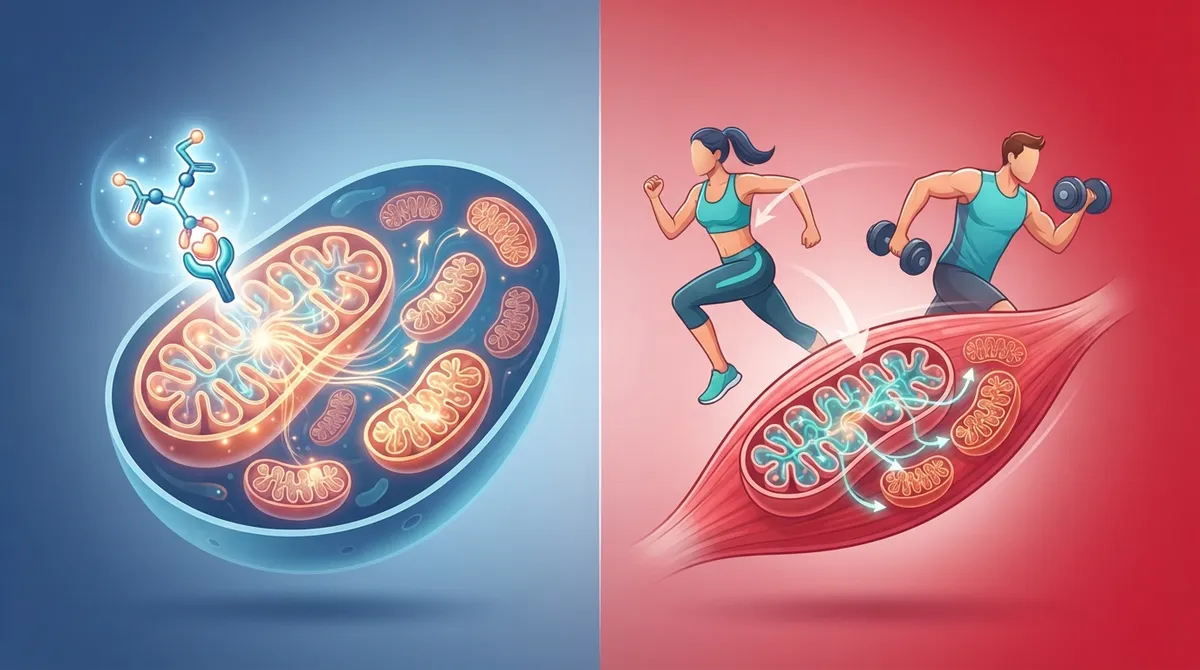
Exercise has decades of solid, peer-reviewed research behind it. MOTS-c has promising early data. Here is how the two compare on key measures related to mitochondrial and metabolic health.
|
Factor |
MOTS-c (Investigational) |
Exercise (Established) |
|---|---|---|
|
Human clinical evidence |
Limited; Phase 2a trial ongoing |
Decades of large-scale studies |
|
FDA approval status |
Not approved for any use |
Not applicable; a lifestyle behavior |
|
Effect on glucose uptake |
Shown in rodent models |
Well documented in humans |
|
Effect on MOTS-c levels |
N/A |
Increases skeletal muscle MOTS-c |
|
Cost and accessibility |
Varies; often unregulated products |
Free or low-cost |
|
Safety profile |
Not established in humans |
Well-established safety guidelines |
Interestingly, research shows exercise itself raises your natural MOTS-c levels. A 2023 review found that activities like stationary cycling can significantly boost MOTS-c in skeletal muscle and blood. This means you may already be triggering this pathway every time you work out.
What Does Human Research Actually Show?
Human data on MOTS-c is still developing. One age-comparison study reviewed in 2023 looked at 75 people split into three age groups: 18 to 30, 45 to 55, and 70 to 81 years old. Researchers found that plasma MOTS-c levels were lower in the middle-aged and older groups compared to young adults.
This is an interesting observation. But it does not prove that low MOTS-c causes aging or disease. It also does not prove that raising MOTS-c levels artificially would reverse these changes. Correlation is not the same as causation, especially in early-stage research.
What About Diabetes and Obesity?
Some studies have measured circulating MOTS-c in people with type 2 diabetes, obesity, and sleep apnea. These conditions are linked to changes in MOTS-c levels. However, there is no validated reference range for routine testing in a primary care setting yet.
A registered Phase 2a clinical trial is currently examining 12 weeks of MOTS-c treatment versus placebo in adults with prediabetes and excess weight. Planned outcomes include insulin sensitivity measures, HbA1c, fasting glucose, and body weight changes. Results from this type of trial are necessary before anyone can make solid efficacy claims.
Steps to Support Your Mitochondrial Health Today
You do not need to wait for more MOTS-c research to start improving your metabolic health. Here are proven steps backed by clinical evidence:
- Move your body regularly. Aim for a mix of cardio and strength training most days of the week.
- Prioritize quality sleep. Poor sleep disrupts insulin sensitivity and energy metabolism.
- Manage your weight with medical guidance. A structured weight loss program can improve insulin sensitivity more reliably than unproven supplements.
- Get your metabolic health checked. A metabolic breath analysis can show how efficiently your body burns fuel.
- Track your body composition. Tools that measure body composition give a clearer picture than the scale alone.
- Talk to a primary care provider. Chronic conditions like prediabetes and metabolic syndrome need ongoing, evidence-based management.
Should You Consider MOTS-c Injections or Supplements?
Many wellness clinics and online sellers now market MOTS-c products for weight loss, anti-aging, or energy. These claims move far ahead of the actual science. Here is what you should know before considering any such product.
- MOTS-c is not FDA approved for any human use.
- Compounded or unregulated MOTS-c products lack proven safety and dosing data in people.
- Marketing claims about weight loss, diabetes reversal, or anti-aging are not supported by strong clinical trials.
- The strongest current evidence comes from animal and cell studies, not humans.
- Ongoing clinical trials, including a Phase 2a study on prediabetes, may change this picture over time.
Until more human trials are published, it is wise to treat MOTS-c as a research topic to watch, not a treatment to try. Our providers, including Dr. Naveen Paddu and Dr. Pramjeet Ahluwalia, focus on treatments with strong clinical support while staying informed on emerging peptide research through resources like peptide therapy education.
How MOTS-c Differs From Other Mitochondrial Supplements
You may have heard of CoQ10 or NAD+ supplements marketed for energy and aging. These are different from MOTS-c in important ways.
CoQ10 and NAD+ vs. MOTS-c
CoQ10 is a compound your body already makes and uses directly in the mitochondria to produce energy. NAD+ is a coenzyme involved in hundreds of metabolic reactions. Both have more established, though still limited, human research behind their use as supplements.
MOTS-c is different because it is a peptide, not a vitamin-like compound. It requires injection in research settings and is not sold as an approved oral supplement. Its signaling role in the body is still being mapped out, while CoQ10 and NAD+ have longer histories of study, even if their clinical benefits remain debated.
Why Primary Care Should Be Your Starting Point
If you are curious about mitochondrial health, metabolic testing, or emerging peptide science, the safest first step is a conversation with a trusted primary care provider. At InCare, our providers can review your health history, run appropriate lab work, and help you separate solid science from marketing hype.
Our Tampa and Riverview locations offer comprehensive primary care services alongside advanced wellness testing, including DNA gene testing and cancer screening. This whole-body approach helps you build a health plan based on evidence, not trends.
Patients who want extra energy support without unproven peptides often explore our IV hydration and vitamin drip therapy, which uses established nutrients to support wellness. You can also read patient experiences and feedback by visiting our clinic profile; many share their stories after visiting us, and you can visit us on Google — InCare to see what real patients say about their care.
Staying Informed as the Science Evolves
MOTS-c research is moving quickly. The Phase 2a trial in adults with prediabetes may offer clearer answers within the next few years. Reviews published in 2022 and 2023 already flag important gaps, including questions about trial registration and publication status for earlier peptide analog studies.
Until then, patients are best served by pairing curiosity with caution. Follow updates from credible academic sources, and avoid products that promise dramatic results without solid backing. You can also follow InCare's ongoing wellness updates on Facebook, Instagram, and TikTok for accessible explanations of new research as it becomes available.
Final Thoughts on MOTS-c and Mitochondrial Function
MOTS-c offers a fascinating window into how your muscles and mitochondria communicate. The early science is promising, but it is not yet ready for clinical use. Exercise, sleep, and medically supervised weight management remain your most reliable tools for supporting mitochondrial and metabolic health right now.
If you want a clear, personalized plan for your metabolic health, our team is ready to help. You can reach out to our care team with questions, or go ahead and schedule your visit today to start with a comprehensive evaluation grounded in real science, not hype.
FAQs
Q: What is MOTS-c and how does it affect mitochondrial function?
A: MOTS-c is a 16-amino-acid peptide made inside mitochondria that appears to act as a signaling molecule. Research suggests it activates the AMPK pathway, which may improve how cells use glucose and manage energy. Most of this evidence comes from lab and animal studies rather than large human trials.
Q: Can MOTS-c improve insulin sensitivity or blood sugar control?
A: Animal studies show MOTS-c may improve glucose tolerance and insulin action, including data from clamp experiments in rodents. Human research is still limited, with a Phase 2a trial currently studying its effects on insulin sensitivity in adults with prediabetes. It is too early to confirm benefits for blood sugar control in people.
Q: Does exercise naturally increase MOTS-c levels?
A: Yes. Research shows that exercise, including cycling, can significantly raise MOTS-c levels in skeletal muscle and circulation. This suggests physical activity may already trigger some of the pathways researchers are studying with MOTS-c peptide therapy.
Q: Are MOTS-c injections safe and effective for weight loss or anti-aging?
A: MOTS-c is not FDA approved for weight loss, anti-aging, or any other human use. Compounded or commercially sold MOTS-c products lack established human safety and dosing data. Claims about proven results should be viewed with caution until more clinical trials are completed.
Q: How is MOTS-c different from CoQ10 or NAD+ supplements?
A: CoQ10 and NAD+ are compounds your body already produces and uses directly in energy metabolism, with more established supplement research. MOTS-c is a peptide studied mainly through injection in research settings, and its role as a therapy is still investigational rather than proven or approved.