
Key Takeaways
- MOTS-c is not FDA-approved and has no completed human trials proving weight loss effectiveness; all strong evidence comes from mouse studies, making it fundamentally different from approved medications like semaglutide.
- Online MOTS-c products carry significant safety risks including uncertain identity, sterility issues, improper storage, self-injection complications, and unknown drug interactions with common medications.
- A Phase 2a clinical trial is currently testing MOTS-c in humans with prediabetes and obesity, but results are not yet available, so honest answers about its effectiveness won't exist for several years.
- Proven weight management alternatives like personalized nutrition counseling, behavioral programs, FDA-approved medications, and addressing underlying metabolic conditions are available now and should be explored with a licensed provider instead.
Search interest in MOTS-c weight loss has grown fast across wellness forums and social media. Many people ask if this experimental peptide can help them shed pounds. Before you consider any peptide product, it helps to know what the science actually says. This guide breaks down the research in plain language so you can make an informed decision with your doctor.
At InCare, our providers in Tampa and Riverview believe patients deserve honest, evidence-based answers about trending treatments. MOTS-c sounds promising in early lab studies, but it is not the same as an approved weight loss medication. Understanding the difference matters for your health and your wallet.
What Is MOTS-c?
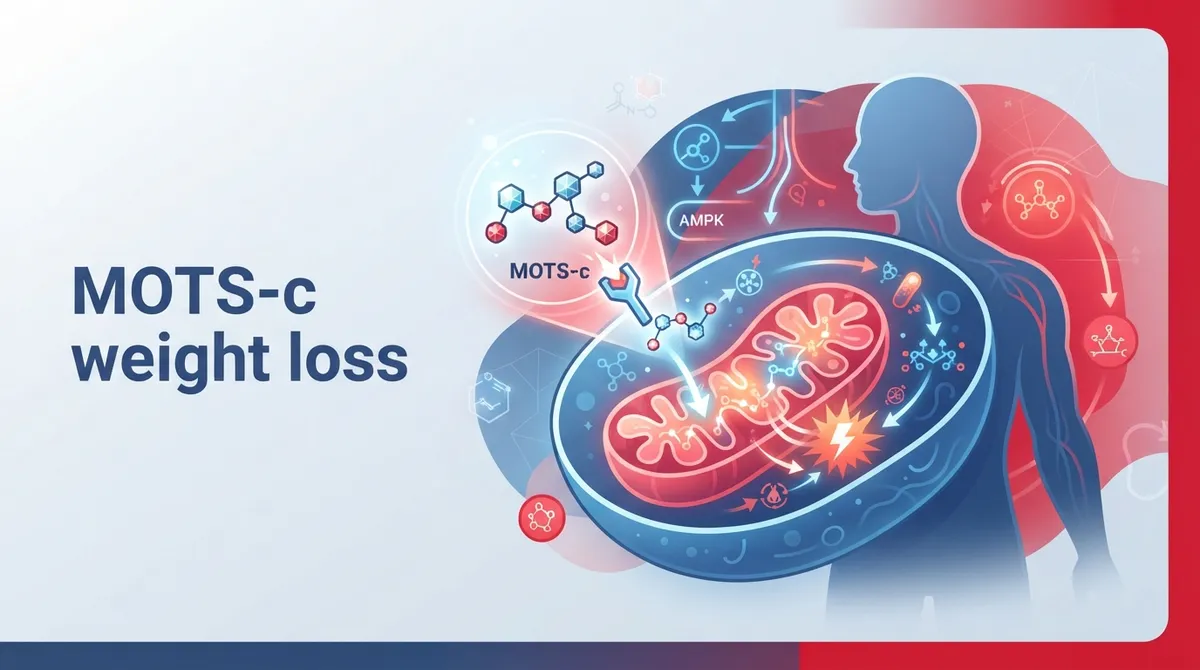
MOTS-c stands for mitochondrial open reading frame of the 12S rRNA-c. It is a small peptide made by your mitochondria, the tiny structures inside cells that produce energy. Scientists first identified it because it seemed to play a role in how your body handles glucose and stress.
Researchers have studied MOTS-c mainly in mice. Some early findings suggest it may affect insulin sensitivity and energy metabolism. These are interesting clues, but they do not prove the peptide works the same way in people.

Does MOTS-c Actually Cause Weight Loss?
This is the most common question patients ask, and the honest answer is: we don't know yet. No completed human trial has shown that injected MOTS-c leads to meaningful weight loss. The strongest evidence so far comes from mouse studies, not people.
In one animal study, mice given MOTS-c gained less weight when fed a high-fat diet. But mice on a normal diet showed no change. This tells us the effect, if it exists in humans, may depend heavily on diet and metabolic state. Animal results simply cannot predict human outcomes with certainty.
What Human Studies Actually Show
Most human research so far has looked at natural MOTS-c levels in the blood, not at giving people the peptide as a treatment. Scientists wanted to see if MOTS-c levels connect to obesity, aging, or insulin resistance. The results have been mixed and sometimes contradictory.
- A 2018 study compared 20 adults — 10 lean and 10 with obesity — and found almost no difference in blood MOTS-c levels (about 0.48 ng/mL versus 0.52 ng/mL).
- A separate 2018 study of 97 children and teens found lower MOTS-c levels in those with obesity compared to those without.
- Other studies report different patterns based on age, sex, and insulin resistance status.
These inconsistent findings mean scientists still don't fully understand how MOTS-c relates to body weight. Observing a link is very different from proving that giving someone the peptide will help them lose weight.
Is MOTS-c FDA-Approved for Weight Loss?
No. MOTS-c is not approved by the FDA for weight loss, obesity, diabetes, or any other medical condition. There is no official, tested dose for humans trying to lose weight. Any dosing schedule you see online comes from vendors, not from medical research.
This is an important distinction. FDA-approved medications go through years of testing to prove they are safe and effective. MOTS-c has not completed that process. It remains an investigational compound.
Current Clinical Trial: What's Being Tested Right Now
There is active research happening. A Phase 2a study listed on ClinicalTrials.gov is testing MOTS-c in adults with prediabetes and overweight or obesity. Here's what the study involves:
- Approximately 120 adult participants with prediabetes and excess weight
- A randomized, double-blind, placebo-controlled design
- 12 weeks of treatment with either MOTS-c or a placebo
- Lifestyle counseling included alongside the study drug
- Four weeks of follow-up safety monitoring after treatment ends
This trial tracks adverse events, vital signs, heart rhythm (ECG), lab results, and immune responses. That level of safety monitoring shows researchers still have real questions about how the body responds to this peptide. Results are not yet available, so we simply cannot say whether MOTS-c will work for weight loss in humans.
MOTS-c vs. GLP-1 Medications: A Key Difference
Patients often ask how MOTS-c compares to semaglutide or tirzepatide. The difference is significant. GLP-1 medications have gone through large clinical trials and are FDA-approved for weight management. MOTS-c has not.
|
Factor |
MOTS-c |
FDA-Approved GLP-1 Medications |
|---|---|---|
|
FDA Approval Status |
Not approved |
Approved for weight loss |
|
Human Weight-Loss Trials |
None completed |
Multiple large trials completed |
|
Established Dosing |
No validated dose |
Clear, tested dosing schedules |
|
Long-Term Safety Data |
Not established |
Years of safety monitoring |
|
Product Quality Assurance |
Variable, unregulated sources |
Pharmacy-grade, regulated |
If you're exploring medically supervised options, our team can walk you through how GLP-1 medications work and whether they fit your health goals.
Safety Concerns With MOTS-c Products
Because MOTS-c is unregulated, products sold online carry real risks. Here are the main concerns your primary care provider wants you to understand:
- Uncertain identity and concentration: What's in the vial may not match the label.
- Sterility issues: Poor manufacturing can introduce bacteria or contaminants.
- Storage problems: Improper shipping or storage can degrade the peptide or make it unsafe.
- Self-injection risks: Infection, dosing errors, and allergic reactions are all possible.
- Unknown drug interactions: No formal studies exist on how MOTS-c interacts with common medications.
These risks are why a trusted primary care provider should always be part of the conversation before you try any peptide product.
Is MOTS-c Safe for People With Diabetes or Other Conditions?
Because MOTS-c has no established human safety profile, people with diabetes, prediabetes, hypertension, or kidney disease should be especially cautious. There is no validated interaction data for common chronic disease medications. Stopping a prescribed treatment to try an unproven peptide could put your health at serious risk.
What Should You Ask Your Doctor Before Considering MOTS-c?
If you're curious about MOTS-c, bring your questions to a licensed clinician rather than relying on online vendors. Consider asking:
- What does the current research actually show about this peptide?
- Are there proven treatments that might work better for my situation?
- How would this interact with my current medications or health conditions?
- What are the realistic risks compared to the uncertain benefits?
- Is there a clinical trial I could consider joining instead?
A good clinician will assess your body composition, waist circumference, existing health conditions, medications, sleep habits, and personal goals before recommending any weight management approach.
Proven Options for Weight Management
While MOTS-c remains investigational, there are evidence-backed paths to weight loss that your doctor can help you access today. These include:
- Personalized nutrition and physical activity counseling
- Behavioral treatment programs
- Management of underlying conditions like thyroid issues or insulin resistance
- FDA-approved anti-obesity medications, when appropriate
- Bariatric procedures for eligible patients
Our weight loss programs at InCare combine these proven strategies with technology like metabolic breath analysis to build a plan tailored to your body, not a one-size-fits-all approach.
Can a Wellness Clinic Legally Prescribe MOTS-c?
Because MOTS-c is not FDA-approved, most licensed clinics will not offer it as a treatment. Some compounding pharmacies may produce peptides for research purposes only, but this differs greatly from an approved prescription medication. Patients should be skeptical of any clinic promising guaranteed results from an unapproved compound.
Responsible providers, including our physicians such as Dr. Naveen Paddu and Dr. Pramjeet Ahluwalia, focus on treatments with solid clinical evidence behind them.
When Will We Know If MOTS-c Works?
The ongoing Phase 2a trial should offer real answers within the next few years. Until results are published and reviewed by other scientists, no one can honestly claim MOTS-c is a proven weight loss solution. Patience and caution are the safest paths forward.
In the meantime, our team stays current on peptide therapy research so we can give you accurate, up-to-date guidance rather than marketing hype.
Why Choose Medical Guidance Over Online Peptide Vendors
Many patients feel tempted by online ads promising fast results with MOTS-c. But these products often skip essential safety steps. Working with a licensed clinic means your treatment plan is based on your actual health data, not a generic protocol pulled from a website.
Our providers in Tampa and Riverview take time to understand your full health picture, including genetic factors that may affect your metabolism. This kind of personalized care leads to safer, more effective outcomes than chasing unproven trends.
You can also follow our updates on Facebook, Instagram, and TikTok for the latest wellness research explained in simple terms.
Take the Next Step Toward Safe, Effective Weight Loss
MOTS-c may become a useful tool someday, but the science isn't there yet. Right now, the safest and most effective path to weight loss runs through proven medical care, not unregulated peptides. Our team at InCare is ready to build a plan that actually works for your body and your goals.
Ready to explore real, science-backed weight loss options? Book your appointment today and start your journey with a team that puts your safety first. You can also reach out to our team with any questions, or see what other patients say by visiting InCare on Google.
FAQs
Q: Does MOTS-c actually cause weight loss in humans?
A: No completed human trial has shown that MOTS-c causes meaningful weight loss. Most evidence comes from mouse studies, and human research has mainly measured natural MOTS-c levels rather than testing it as a treatment.
Q: Is MOTS-c FDA-approved for weight loss?
A: No, MOTS-c is not FDA-approved for weight loss, obesity, or any other medical condition. It remains an investigational compound with no validated human dose.
Q: How is MOTS-c different from semaglutide or tirzepatide?
A: Semaglutide and tirzepatide are FDA-approved after large clinical trials proved their safety and effectiveness. MOTS-c has not completed this process and lacks established dosing and long-term safety data.
Q: What are the risks of trying MOTS-c from an online vendor?
A: Online peptides may have uncertain purity, incorrect labeling, and sterility issues. Self-injection also carries risks like infection, allergic reactions, and unknown drug interactions.
Q: When will we know if MOTS-c works for weight loss?
A: A Phase 2a clinical trial is currently testing MOTS-c in adults with prediabetes and obesity. Results are not yet available, so patience is needed before drawing conclusions.