

Key Takeaways
- Obesity is a chronic disease requiring ongoing medical care, not a quick fix—medically supervised programs blend nutrition, physical activity, behavior support, and regular check-ins for long-term success.
- Medical weight loss programs personalize care based on your health history, medications, and conditions, unlike generic diets that focus only on calories and willpower.
- A safe program should include a full health assessment, personalized nutrition guidance, physical activity support, behavior coaching, progress monitoring, and a maintenance plan from day one.
- Weight loss medications like semaglutide and tirzepatide qualify for adults with BMI ≥30 or ≥27 with weight-related conditions, but work best alongside lifestyle changes, not as replacements.
- Healthy weight loss is gradual; even modest loss of 5-10% can significantly improve blood pressure, blood sugar, and joint pain—avoid programs promising rapid or guaranteed results.
- Modern clinics use metabolic breath analysis, 3D body scanning, and DNA testing to personalize plans beyond the scale, helping track fat versus muscle changes and individual metabolism patterns.
Many people try diet after diet and see the weight come back. That cycle is frustrating, and it is not a personal failing. Obesity is a chronic disease, and it often needs ongoing medical care, not a quick fix. According to CDC data, 40.3% of U.S. adults had obesity between August 2021 and August 2023, and 9.7% had severe obesity.
This is where medically supervised weight loss programs come in. A good program in a primary care setting is not a short-term diet or an app. It is ongoing, personalized care. It blends nutrition, physical activity, behavior support, regular check-ins, and a plan to keep results for the long term.
This guide explains what a strong program includes, who may qualify for medication, what to watch out for, and how to choose a safe option. Whether you are a busy parent, a young professional, or someone who wants advanced wellness tools, you will learn what real, evidence-based care looks like in 2026.

What Are Weight Loss Programs in Primary Care?
In a primary care clinic, weight loss programs are built around your health, not a one-size-fits-all meal plan. A clinician reviews your history, your goals, your medications, and any conditions that affect your weight. Then the team builds a plan that fits your life.
Core features of a medically guided program include:
- Individualized care: Your plan reflects your health risks, habits, and preferences.
- Ongoing follow-up: Regular visits track progress and adjust the plan.
- Respectful communication: Care should be free from stigma and based on shared decision-making.
- A maintenance plan: Keeping weight off is part of the program from day one.
This is why many people choose a clinic that also offers primary care. Your weight, blood pressure, blood sugar, and cholesterol are connected. One team can look at the full picture.
Why Medical Programs Differ From Dieting
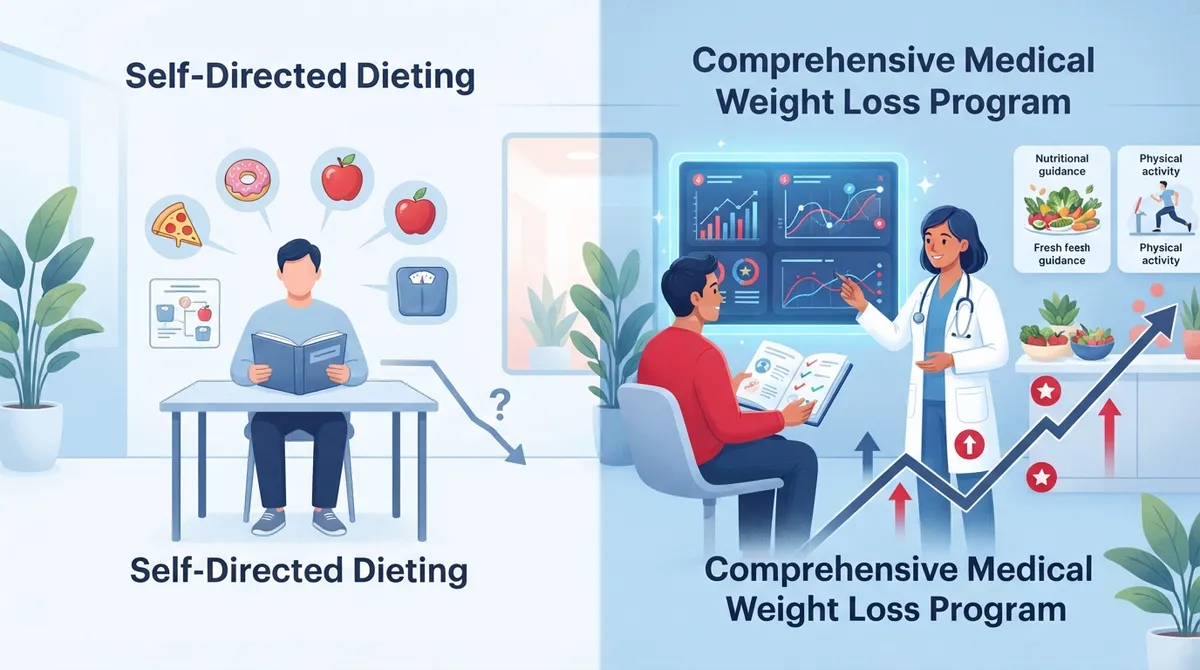
Dieting alone often focuses on calories and willpower. Medical care looks at the biology behind weight. Hormones, sleep, stress, medications, and genetics can all play a role. Understanding these factors makes a plan more realistic.
To see how the two approaches compare, read what makes medical weight loss different from dieting. The table below gives a quick overview.
|
Feature |
Typical Diet or App |
Medical Weight Loss Program |
|---|---|---|
|
Personalization |
Often generic |
Based on your health history and labs |
|
Clinician oversight |
None |
Regular visits with a licensed provider |
|
Medication option |
Not available |
Considered when clinically appropriate |
|
Health screening |
Rarely included |
Checks for related conditions |
|
Maintenance plan |
Usually missing |
Built into the program |
What a Safe, Effective Program Should Include
Not every program is created equal. A safe, evidence-based plan should have several key parts. Look for these elements when you compare options.
1. A Full Health Assessment
Your first visit should include a review of your medical history, current medications, and weight-related conditions. Your provider may check blood pressure, blood sugar, cholesterol, thyroid function, and more. BMI is a helpful screening tool, but it should be read in context, not on its own.
2. Nutrition Guidance
There is no single diet that works for everyone. A clinician may tailor your eating plan or refer you to a registered dietitian. The goal is a pattern you can follow for years, not weeks.
3. Physical Activity Support
NIDDK describes 150 to 300 minutes or more of physical activity per week as a general target for adults. Your plan should be adapted to your health, ability, and schedule. Even small steps count when you are just starting.
4. Behavior and Lifestyle Coaching
Sleep, stress, meal timing, and daily habits all affect weight. A strong program helps you build skills, not just follow rules. For ideas on eating patterns, see these meal timing tips for weight loss.
5. Progress Monitoring
Regular check-ins help you stay on track and let your provider adjust the plan. Tools like body composition analysis show changes in fat and muscle, which the scale alone cannot show.
6. A Plan for Maintenance
Losing weight is only half the journey. A good program prepares you to keep your results with ongoing support and follow-up.
Who Qualifies for Prescription Weight Loss Medication?
Medication can be a helpful tool for some adults, but it is not right for everyone. U.S. clinical guidance commonly considers anti-obesity medication for adults with:
- A BMI of 30 or higher, or
- A BMI of 27 or higher with a weight-related health condition, such as high blood pressure, type 2 diabetes, or sleep apnea.
These thresholds are a starting point. Your clinician also reviews benefits, risks, side effects, possible drug interactions, cost, and your personal preferences. Medication is generally used alongside lifestyle care, not in place of it.
FDA-Approved Options
Several prescription options are FDA-approved for chronic weight management. These include semaglutide, tirzepatide, liraglutide, phentermine/topiramate, naltrexone/bupropion, and orlistat. Approval details, availability, and insurance coverage can vary. A clinician should confirm current labeling and whether a given option suits you.
If you want to learn more about this class of treatment, explore these guides on choosing the best injection for weight loss and weight loss injection costs in 2026.
Benefits and Risks of Weight Loss Medications
Like any medical treatment, these medications have both upsides and trade-offs. Talk openly with your provider before you start.
|
Possible Benefits |
Possible Risks or Considerations |
|---|---|
|
Reduced appetite and cravings |
Nausea, constipation, or diarrhea |
|
Improved blood sugar and blood pressure |
Not safe for everyone; some conditions rule them out |
|
Support for lifestyle changes |
Possible weight regain after stopping |
|
Lower weight-related health risks |
Cost and insurance coverage can vary |
Weight regain can happen after stopping anti-obesity medication. For some patients, long-term treatment and follow-up are needed to hold onto the benefits. Never start or stop these medications without a clinician's guidance.
How Much Weight Loss Is Realistic?
Healthy weight loss is usually gradual. Rapid, extreme results are a warning sign, not a goal. Even modest weight loss can improve blood pressure, blood sugar, joint pain, and energy. Set goals with your provider based on your health, not on a number from social media.
Be cautious of any program that promises fast or guaranteed results. Supplements and so-called nutraceuticals are not proven replacements for evidence-based obesity care.
How to Choose the Right Weight Loss Program
Use this simple checklist when you compare clinics. A trustworthy program should do most or all of the following:
- Start with a medical evaluation. Look for a licensed provider who reviews your history and runs appropriate tests.
- Offer personalized plans. Avoid programs that give everyone the same menu or the same medication.
- Explain risks and benefits clearly. You should never feel rushed or pressured.
- Provide regular follow-up. Ongoing visits matter more than a single consultation.
- Include a maintenance strategy. Ask how the program helps you keep weight off.
- Be transparent about cost. Ask what is covered and what is not before you enroll.
For more guidance, read these mistakes to avoid when choosing a weight loss clinic.
Advanced Tools That Make Programs Smarter
Modern clinics can use technology to remove guesswork. This is especially helpful for tech-savvy patients and wellness seekers who want data, not just advice.
- Metabolic breath analysis: Measures how your body uses energy so your plan can match your metabolism. Learn more about metabolic breath analysis.
- 3D body scanning and AI tracking: Shows real changes in fat and lean mass over time.
- DNA gene testing: May offer insight into how your body responds to food and exercise. See DNA gene testing for details.
These tools do not replace good clinical judgment. They help your care team build a sharper, more personal plan.
Weight Loss Programs for Busy Families and Different Life Stages
Time is the biggest barrier for many parents. A primary care clinic can make healthy changes easier by combining services in one place. Preventive screenings, family care, and weight support can all fit into a single, coordinated plan. Telemedicine visits also help when you cannot get to the office.
Women and men may face different challenges, such as hormonal changes, stress, or sleep problems. Young adults may want prevention-focused care before problems start. A good program meets you where you are.
If you have diabetes or prediabetes, weight management can be especially valuable. See how medical weight loss supports diabetics for more on this topic.
Does Insurance Cover Weight Loss Programs?
Coverage varies widely by plan. Some plans cover visits, lab work, or certain medications, while others do not. Ask your insurer and your clinic about costs before you begin. A transparent clinic will help you understand what to expect so there are no surprises.
Why Patients Choose InCare for Weight Management
InCare offers personalized weight management backed by medical expertise and modern technology. With locations in Tampa and Riverview, plus virtual visits, the team pairs weight loss services with primary care, so your whole health is addressed in one place. Patients can also use tools like body composition analysis and metabolic breath analysis to guide their plans.
InCare holds a 4.8 out of 5 rating on Google across more than 350 reviews, and patients often mention the friendly staff and caring providers. You can read InCare reviews on Google to see what real patients say. To learn more about the team, visit the providers page, or follow InCare on Instagram, Facebook, and TikTok for health tips and updates.
Take the First Step Toward Lasting Results
The best weight loss programs treat you as a whole person. They combine medical insight, healthy habits, helpful technology, and long-term support. If you are ready for a plan built around your health and your life, InCare is here to help.
Book your weight loss consultation today or contact our team with any questions. Your healthier future can start with one conversation.
FAQs
Q: What should a medically supervised weight loss program include?
A: A strong program includes a full health assessment, personalized nutrition and activity guidance, behavior support, regular follow-up, and a plan for maintaining results. Medication may be considered when it is clinically appropriate.
Q: Can a primary care doctor help with weight loss?
A: Yes. A primary care provider can assess weight-related health conditions, review your medications, and build a personalized plan. They can also refer you to a dietitian or structured program when needed.
Q: Who qualifies for prescription weight loss medication?
A: U.S. guidance commonly considers medication for adults with a BMI of 30 or higher, or a BMI of 27 or higher with a weight-related condition. Your clinician will also review risks, side effects, interactions, and your preferences.
Q: Do I need to stay on weight loss medication long term?
A: Some people regain weight after stopping, so ongoing treatment and follow-up may be needed to maintain results. Always talk with your clinician before starting or stopping any medication.
Q: How much weight loss is realistic and healthy?
A: Healthy weight loss is usually gradual, and even modest loss can improve blood pressure, blood sugar, and energy. Be cautious of programs that promise rapid or guaranteed results.


