
Key Takeaways
- KP-10 in health insurance refers to a $10 copay for primary care visits, but it only covers eligible in-network office visits—specialist visits, labs, imaging, and prescriptions have separate costs.
- Kisspeptin-10 is an experimental peptide studied for hormone regulation, but current research involves small sample sizes and short study periods with no long-term safety data or FDA approval for wellness use.
- Mixing up these two meanings can cause real problems: people may miss affordable primary care benefits they already have, or waste money on unproven peptide treatments marketed without scientific backing.
- Check your insurance plan's Summary of Benefits and Coverage before appointments to confirm which services qualify for the $10 copay and avoid unexpected billing surprises.
If you searched for "KP-10 health benefits," you may be looking for two very different things. Some people mean a health insurance plan with a low $10 primary care copay. Others mean kisspeptin-10, a peptide being studied for hormone health. This mix-up happens a lot, and it can lead to confusing or even risky decisions about your health.
This guide breaks down both meanings clearly. We will explain what a KP-10 insurance benefit really covers. We will also look at what science actually says about kisspeptin-10. Our goal is to give you facts you can trust, so you can make smart choices about your primary care and wellness needs. At InCare, we believe patients deserve clear answers, not confusing shortcuts or unproven trends.
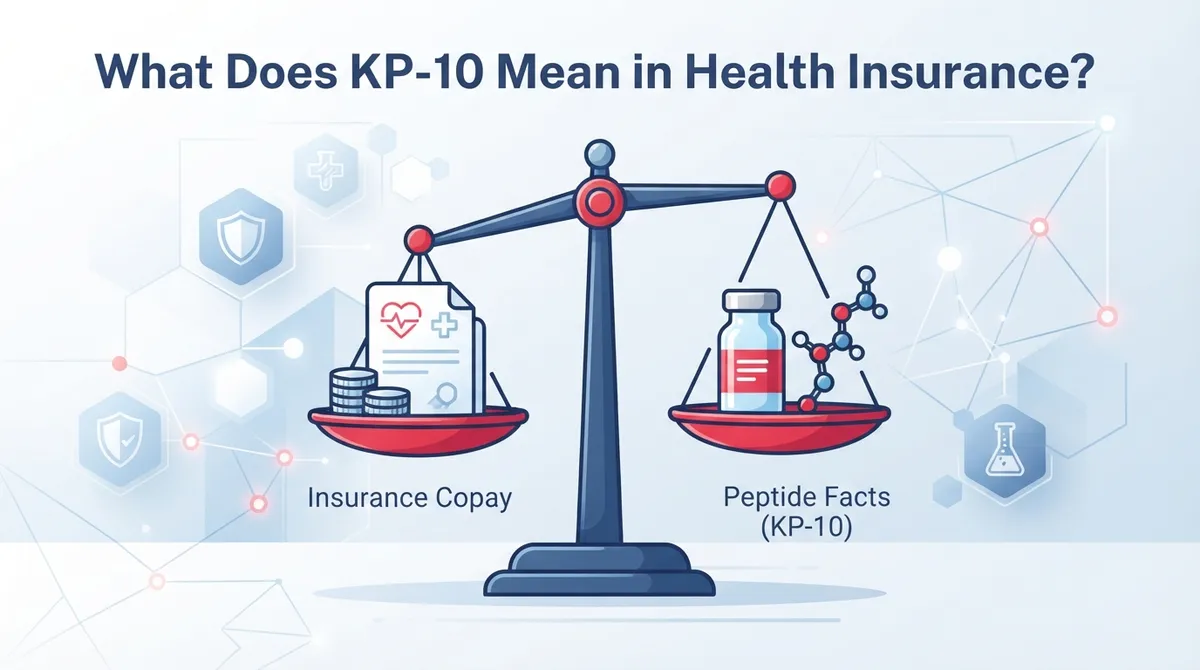
What Does KP-10 Mean in Health Insurance?
In many health plans, "KP-10" is shorthand for a $10 copay on primary care visits. This term often shows up with Kaiser Permanente plans or certain employer-sponsored health plans. The "10" simply refers to the dollar amount you pay at the time of your visit.
This benefit is about affordability, not medical treatment. It helps make it easier to see a doctor without a big bill. However, the exact rules depend on your specific plan. Always check your Summary of Benefits and Coverage before assuming what is included.
What a $10 Copay Usually Covers
A KP-10 copay typically applies to eligible primary care office visits. But it does not cover everything you might need. Here is what to expect:
- Routine primary care office visits with an in-network doctor
- Some preventive care visits, depending on plan rules
- Basic check-ins for ongoing health concerns
Services that often fall outside the $10 copay include specialist visits, lab tests, imaging, and prescription drugs. These usually have their own separate costs. This is why understanding your primary care benefits in detail matters so much.
Preventive Care and KP-10 Plans
Many health plans cover preventive services at no extra cost. This can include annual wellness visits, certain screenings, and vaccines. But this depends on the visit being classified as preventive, not problem-focused.
If your visit turns into a discussion about a specific health issue, it may be billed differently. This is a common source of confusion for patients. A helpful comparison chart can make this easier to understand.
|
Service Type |
Typically Covered by $10 Copay? |
Notes |
|---|---|---|
|
Primary care office visit |
Often yes |
Must be in-network |
|
Annual wellness visit |
Sometimes free |
Depends on preventive classification |
|
Specialist visit |
No |
Separate copay or coinsurance |
|
Lab tests and imaging |
No |
Billed separately |
|
Urgent care visit |
No |
Different copay structure |

What Is Kisspeptin-10 (Also Called KP-10)?
The other meaning of KP-10 refers to kisspeptin-10. This is a small piece, or fragment, of a hormone called kisspeptin. Researchers are studying it because it plays a role in the body's hormone signaling system.
Kisspeptin-10 interacts with the hypothalamic-pituitary-gonadal axis. This is the system that controls reproductive hormones. Scientists are especially interested in how it affects gonadotropin-releasing hormone, luteinizing hormone, and follicle-stimulating hormone.
What Early Research Shows
Some small human studies have looked at kisspeptin-10 and short-term hormone changes. These studies are early-stage and often involve very few people. For example, one study on insulin response included just 14 participants.
This sample size is far too small to prove any lasting benefit. Most studies use short, controlled infusions lasting only a few hours. These findings show the peptide is biologically active. They do not prove it helps with fertility, weight loss, or anti-aging over time.
Key Limits of Current Kisspeptin-10 Research
Before drawing conclusions about kisspeptin-10, it helps to understand the current research gaps. Here are the main limitations:
- Small sample sizes, often under 30 participants
- Short study periods, sometimes just hours
- Uncertain and inconsistent dosing methods
- No long-term safety data available
- No FDA-approved formulation for any wellness use
Because of these gaps, no primary care provider should treat kisspeptin-10 as a proven supplement. It remains a research compound, not a wellness treatment.
KP-10 Insurance vs. Kisspeptin-10: A Side-by-Side Look
Since both meanings share the same shorthand, it helps to see them compared directly. This table can help clear up any lingering confusion.
|
Feature |
KP-10 Insurance Copay |
Kisspeptin-10 Peptide |
|---|---|---|
|
What it is |
A $10 primary care copay benefit |
An experimental hormone peptide fragment |
|
Main benefit |
Lower cost access to doctor visits |
Short-term hormone signaling changes in studies |
|
Evidence level |
Defined by insurance contract |
Early-phase, small human studies |
|
FDA status |
Not applicable |
Not FDA-approved for wellness use |
|
Where to verify |
Your plan's Summary of Benefits |
Peer-reviewed medical research |
Why This Confusion Matters for Your Health
Mixing up these two meanings can lead to real problems. Someone hoping for a low-cost doctor visit might instead find information about an unproven injectable peptide. Someone curious about hormone health might miss out on affordable primary care benefits they already have.
This is why working with a trusted clinic matters. A knowledgeable primary care team can help you sort through confusing health terms. They can also guide you toward services that are actually backed by strong evidence.
Steps to Take If You See "KP-10" on Your Insurance Card
If your insurance card or plan documents mention KP-10, follow these steps to avoid surprises:
- Request or download your Summary of Benefits and Coverage
- Confirm which visit types qualify for the $10 copay
- Ask your insurer if preventive visits are included at no cost
- Check whether your primary care clinic is in-network
- Call member services if anything is unclear before your visit
Taking these steps before your appointment can prevent billing surprises later. It also helps you get the most value from your plan.
Should You Consider Kisspeptin-10 for Wellness Goals?
Some wellness marketing suggests kisspeptin-10 can boost fertility, testosterone, or metabolism. As of now, there is no solid evidence supporting these claims for general use. The research is too limited, too short, and too small in scale.
There is also no established, safe dosing protocol for self-use. People should never purchase or inject kisspeptin-10 outside of a qualified research or medical setting. Doing so carries real risks with no proven reward.
Warning Signs of Unreliable Kisspeptin-10 Claims
When researching kisspeptin-10 online, watch for these red flags:
- Claims of guaranteed fertility or testosterone boosts
- Sellers offering it as a general wellness supplement
- No mention of clinical trial data or sample sizes
- Products marketed for weight loss with no scientific backing
- Lack of any FDA approval status disclosure
If you see these signs, treat the claims with caution. Trustworthy health information always points back to real, verifiable research.
How InCare Approaches Hormone Health and Primary Care
At InCare, we focus on services backed by real evidence and sound medical practice. Whether you are managing chronic conditions or exploring DNA gene testing for personalized insights, our team prioritizes your safety first.
We also help patients understand their insurance benefits clearly. If you are unsure what your plan actually covers, our staff can walk you through it during your visit. This kind of guidance is part of what makes our approach to care different.
Comprehensive Services Beyond the Copay Question
Whether your goal is affordable primary care or advanced wellness optimization, InCare offers a range of services to support you:
- Routine and preventive primary care visits
- Early detection through cancer screening programs
- Personalized weight loss support
- IV hydration and vitamin drips for energy and recovery
- Body composition analysis using advanced imaging
Our providers, including those featured on our providers page, are trained to separate evidence-based treatment from unproven trends. This protects you from wasting money or risking your health on unverified claims.
Finding the Right Primary Care Partner in Tampa or Riverview
Choosing a primary care clinic is about more than convenience. It is about finding a team that gives you honest, science-based answers. Patients across Tampa and Riverview trust InCare for exactly this reason.
Many of our patients also follow us for health tips and updates on Facebook and Instagram. We also share quick wellness insights on Tik Tok. These channels help patients stay informed between visits.
You can also see what real patients say about their experience by checking reviews for our InCare location on Google. With a 4.8 out of 5 rating from hundreds of reviews, our Tampa and Riverview locations are known for friendly, knowledgeable care.
Why Clarity Matters in Modern Healthcare
Health terms like KP-10 show how easily confusion can spread online. Insurance shorthand and scientific research names sometimes overlap in ways that mislead patients. This makes it even more important to work with a clinic that values clear communication.
Our providers take time to explain your benefits, your test results, and your treatment options in plain language. This reduces confusion and builds trust over time. It also helps you make informed choices about services like metabolic breath analysis or hair restoration.
Conclusion: Get Clear Answers About Your Health Benefits
KP-10 can mean two very different things. One is a helpful insurance benefit that lowers your primary care costs. The other is an experimental peptide still under early research, with no proven wellness benefits yet.
Understanding this difference protects your wallet and your health. If you have questions about your insurance plan or want to explore evidence-based wellness services, our team is here to help. Reach out to our team today to get clear, honest answers about your care options, or schedule your appointment now to start your journey toward better health with a partner you can trust.
FAQs
Q: What does KP-10 mean in health insurance?
A: KP-10 is informal shorthand for a health plan with a $10 copay for primary care office visits. The exact benefits and covered services depend on your specific insurer and plan year, so it's best to check your Summary of Benefits and Coverage.
Q: Does a KP-10 plan really cover primary care visits for $10?
A: In most cases, yes, but only for eligible in-network primary care office visits. Specialist care, labs, imaging, and prescriptions typically have separate costs outside the $10 copay.
Q: Is KP-10 the same as kisspeptin-10?
A: No. KP-10 in insurance refers to a copay amount, while kisspeptin-10 is an experimental peptide studied for its role in hormone regulation. These are unrelated topics that happen to share the same abbreviation.
Q: What are the proven health benefits of kisspeptin-10?
A: Current research shows kisspeptin-10 can cause short-term hormonal changes in small, controlled studies. However, there is no established evidence that it provides lasting benefits for fertility, testosterone, or weight loss.
Q: Is kisspeptin-10 FDA-approved and safe to use?
A: No, there is no FDA-approved kisspeptin-10 formulation for wellness or fertility use. It should not be purchased or self-administered outside of qualified medical or research oversight.