
Key Takeaways
- Kisspeptin is not FDA-approved and has only been studied as a potential trigger for final egg maturation during IVF, not as a replacement for proven fertility drugs like letrozole, clomiphene, or injectable FSH.
- Current kisspeptin research remains in early phases with only small, uncontrolled studies; an FDA advisory committee voted 0-11 against including kisspeptin-10 on the compounding list in October 2024 due to safety concerns.
- Kisspeptin may offer promise for patients at high risk of ovarian hyperstimulation syndrome due to its natural signaling pathway, but this remains under investigation with no established treatment protocol.
- Avoid unregulated online peptide products claiming fertility benefits; instead, start with a primary care evaluation if trying to conceive for 12 months (or 6 months if over 35) to access proper testing and specialist referrals.
Many people trying to grow their families search online for new fertility options, and kisspeptin has recently caught attention. Patients often ask if this hormone could replace the fertility drugs their doctors already recommend. The truth is more nuanced, and understanding the difference matters for your health and your treatment success.
This guide breaks down what kisspeptin actually is, how it compares to proven fertility drugs, and why primary care plays a key role in your fertility journey. Whether you are just starting to explore your options or have already spoken with a specialist, this information can help you make safer, smarter choices. At InCare, our providers in Tampa and Riverview help patients understand these emerging topics while guiding them toward evidence-based care.

What Is Kisspeptin?
Kisspeptin is a hormone your body makes naturally. It activates a receptor called KISS1, which then signals your brain's hypothalamus to release another hormone called GnRH. This chain reaction tells your pituitary gland to release two more hormones, LH and FSH, both essential for reproduction.
In simple terms, kisspeptin acts like a switch that turns on your body's reproductive hormone system. Researchers have studied it mainly in the context of IVF, where it may help trigger the final step of egg maturation before egg retrieval.
How Kisspeptin Differs From Standard Fertility Drugs
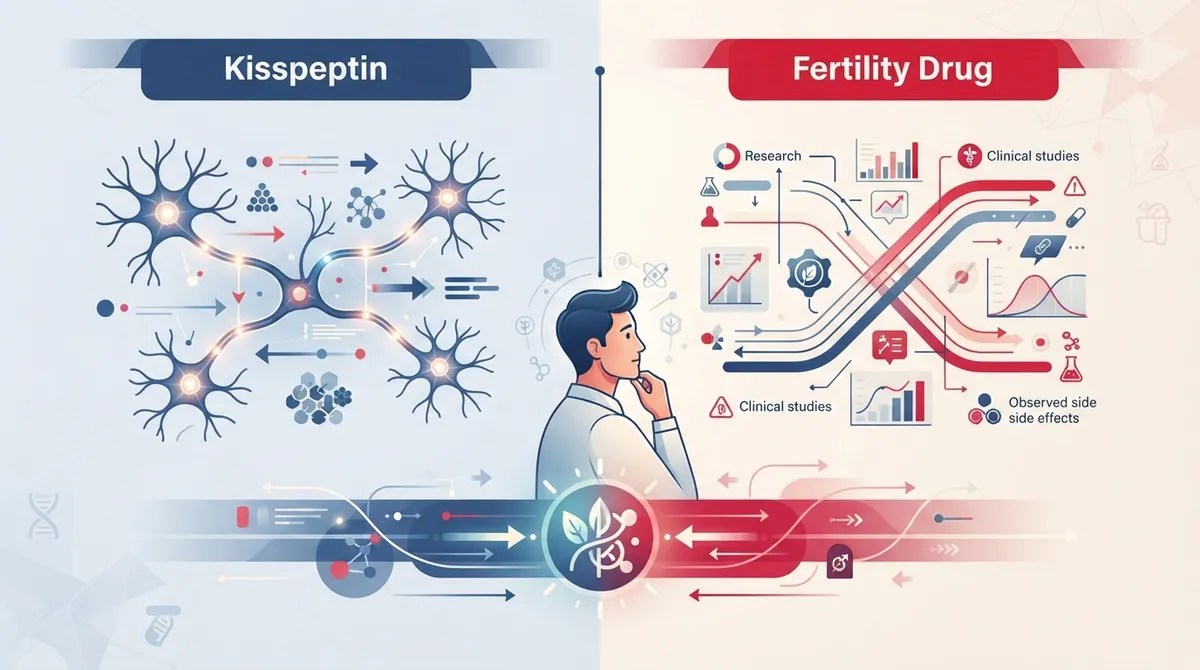
Traditional fertility drugs work at different points in the reproductive process. Kisspeptin has only been studied as a trigger step, not as a full replacement for the medications that grow and mature eggs during a treatment cycle.
- Letrozole and clomiphene help induce ovulation in women who do not ovulate regularly
- Injectable FSH and human menopausal gonadotropin stimulate the ovaries to grow multiple follicles
- hCG or a GnRH agonist is used to trigger final egg maturation before retrieval
- Kisspeptin has only been tested as a possible alternative to this last trigger step
What Does the Research Actually Show?
A notable 2014 study looked at kisspeptin-54 in 53 women going through IVF. All participants had already completed standard ovarian stimulation before receiving a single kisspeptin injection.
- Doses ranged from 1.6 to 12.8 nmol/kg, with most women receiving the higher doses
- 49 of 53 patients, or 92 percent, went on to have fertilization and embryo transfer
- The biochemical pregnancy rate was 40 percent, or 21 of 53 patients
- The clinical pregnancy rate was 23 percent, or 12 of 53 patients
These numbers sound encouraging, but the study did not compare kisspeptin directly against standard trigger shots. That means we cannot say kisspeptin works better or worse than proven options. A more recent 2025 review confirmed that kisspeptin fertility protocols remain experimental, with only phase 1 and phase 2 research completed so far.
Why Ovarian Hyperstimulation Syndrome Matters
One area where kisspeptin shows promise is in patients at high risk for ovarian hyperstimulation syndrome, or OHSS. This condition happens when the ovaries overreact to fertility medications, causing swelling and fluid buildup.
Because kisspeptin works through the body's natural signaling pathway, some researchers believe it may offer more control than hCG for patients prone to OHSS. A clinical trial listed on ClinicalTrials.gov, known as NCT01667406, specifically studied this question with dose-ranging groups and a high-risk OHSS arm. However, this remains an area of ongoing study, not an established treatment protocol.
Kisspeptin vs Fertility Drugs: A Side-by-Side Comparison
|
Factor |
Kisspeptin |
Standard Fertility Drugs |
|---|---|---|
|
FDA Approval for Fertility |
No |
Yes, for specific approved uses |
|
Clinical Experience |
Limited, early-phase only |
Decades of use and data |
|
Role in Treatment |
Possible trigger only |
Ovulation induction, stimulation, and trigger |
|
OHSS Risk Management |
Being studied as an option |
Established protocols exist |
|
Available Through Primary Care |
Not recommended |
Prescribed by fertility specialists |
Why the FDA Has Not Approved Kisspeptin
In October 2024, the FDA's Pharmacy Compounding Advisory Committee reviewed kisspeptin-10 for inclusion on the 503A bulk-drug list. The vote was 0 in favor and 11 against. This decision reflects safety and regulatory concerns about compounding kisspeptin, not proof that the hormone fails to work.
This distinction matters. A rejected regulatory application is different from a failed clinical trial. Still, it means kisspeptin-10 and kisspeptin-54 do not currently have an approved fertility indication in the United States.
The Risks of Unapproved Peptide Products
Because kisspeptin has generated buzz online, some sellers market unregulated peptide products claiming fertility or hormone benefits. These products are not the same as medically supervised treatments used in research settings.
- Online peptides may lack quality control or proper dosing
- Products may be contaminated or mislabeled
- There is no guarantee of safety or effectiveness
- Using unapproved products can delay proper fertility evaluation and treatment
If you have questions about peptide therapy in general, our peptide therapy team in Tampa can help you understand what is medically appropriate and what is not.
What Role Does Primary Care Play in Fertility?
Many patients are surprised to learn that primary care plays an important part in the fertility process, even though specialists handle advanced treatment. Your primary care provider is often the first person to notice signs that warrant further evaluation.
Steps Your Primary Care Doctor May Take
- Review your medical history and menstrual cycle patterns
- Check for underlying conditions like thyroid disorders or PCOS
- Order baseline bloodwork and hormone panels
- Discuss lifestyle factors such as weight, stress, and sleep
- Refer you to a reproductive endocrinologist when appropriate
At InCare, our primary care services are designed to catch these early signs before they become bigger problems. We also offer DNA gene testing and body composition analysis, which can reveal health patterns that affect fertility and overall wellness.
Common Fertility Drug Options and Their Risks
Understanding standard treatments helps put kisspeptin research into perspective. Each medication serves a different purpose in the fertility process.
- Letrozole is often used first for ovulation induction and carries a lower multiple pregnancy risk than older drugs
- Clomiphene has a longer history of use but may cause thinning of the uterine lining in some patients
- Injectable FSH and hMG require close monitoring due to OHSS risk
- hCG trigger shots carry a higher OHSS risk in sensitive patients compared to GnRH agonist triggers
These medications have been studied extensively over many years, giving doctors a clear understanding of dosing, side effects, and success rates. Kisspeptin has not yet reached this level of evidence.
Male Fertility and Kisspeptin
Kisspeptin also plays a role in male reproductive health, since it helps regulate testosterone production through the same GnRH pathway. Some researchers are exploring its potential for men with low testosterone linked to hypothalamic or pituitary problems.
However, this research is still in early stages. Men experiencing fertility or testosterone concerns should speak with a primary care provider about proper testing rather than seeking unapproved peptide products online.
When Should You Seek a Fertility Evaluation?
Knowing when to ask for help can save valuable time. Consider scheduling an evaluation if any of these apply to you.
- You have been trying to conceive for 12 months without success, or 6 months if you are over 35
- You have irregular or absent menstrual cycles
- You have a history of pelvic infections, endometriosis, or previous surgery
- Your partner has known fertility concerns
- You simply want a baseline check before starting to try
Our team can help coordinate this first step. You can reach out to our care coordinators to schedule a consultation, or book an appointment online at a time that works for your schedule.
How InCare Supports Your Wellness Journey
While InCare does not provide specialized fertility treatments like IVF, our primary care team plays a critical role in preparing your body for a healthy pregnancy. We offer comprehensive wellness visits, hormone testing, and referrals to trusted specialists when needed.
- Comprehensive annual wellness exams to establish your health baseline
- Hormone and thyroid testing to rule out common fertility barriers
- Weight management support through our medical weight loss programs
- IV hydration and vitamin therapy to support overall wellness through our IV hydration services
Patients across Tampa and Riverview trust our providers, including Dr. Pramjeet Ahluwalia and our full team listed on our providers page, to guide them through complex health questions with clear, honest answers. You can see what our patients say by visiting our InCare location on Google, where we maintain a strong reputation for compassionate, science-based care.
Staying Informed the Right Way
Fertility research moves quickly, and it is easy to feel overwhelmed by new terms and treatments. Following trusted medical sources helps you separate fact from marketing hype.
You can also stay connected with InCare through our social channels, where we share health tips and clinic updates. Follow us on Facebook, Instagram, or TikTok for accessible, easy-to-understand wellness content.
Final Thoughts on Kisspeptin and Fertility Drugs
Kisspeptin represents an exciting area of fertility research, but it is not yet a proven replacement for standard fertility drugs. Current evidence is limited to small, early-phase studies focused mainly on IVF trigger protocols. Standard treatments like letrozole, clomiphene, and injectable gonadotropins remain the backbone of fertility care because they have years of clinical experience behind them.
If you are considering starting or growing your family, the safest first step is a conversation with a primary care provider who can guide your next move. Our team at InCare is ready to help you build a health plan that supports your goals, whether that means routine screenings, hormone testing, or a referral to a trusted fertility specialist. Reach out to our team to schedule your consultation today and take the next step toward informed, confident care.
FAQs
Q: What is kisspeptin and how does it affect fertility?
A: Kisspeptin is a natural hormone that activates a receptor called KISS1, which signals your brain to release GnRH. This triggers the release of LH and FSH, hormones essential for ovulation and reproduction. Researchers have primarily studied kisspeptin as a trigger for final egg maturation during IVF.
Q: Is kisspeptin better than hCG for IVF ovulation triggering?
A: Early research suggests kisspeptin may offer better control for patients at high risk of ovarian hyperstimulation syndrome because it works through a more natural pathway. However, studies so far have been small and uncontrolled, so we cannot yet say kisspeptin is superior to hCG or GnRH agonist triggers.
Q: Can kisspeptin replace letrozole, clomiphene, or injectable FSH?
A: No. Kisspeptin has only been studied as a possible trigger for final egg maturation, not as a replacement for medications that induce ovulation or stimulate follicle growth. Letrozole, clomiphene, and injectable FSH remain the standard tools for these earlier treatment stages.
Q: Is kisspeptin FDA-approved for infertility treatment?
A: No, kisspeptin-10 and kisspeptin-54 do not have FDA approval for any fertility indication. In October 2024, an FDA advisory committee voted against including kisspeptin-10 on the approved compounding list, reflecting ongoing safety and regulatory concerns.
Q: When should a primary care patient be referred for fertility evaluation?
A: You should consider a referral if you have been trying to conceive for 12 months without success, or 6 months if you are over 35. Irregular cycles, a history of pelvic conditions, or known partner fertility issues are also strong reasons to seek an evaluation sooner.