
Key Takeaways
- Kisspeptin remains investigational with no approved dosing or long-term safety data; proven alternatives like testosterone replacement therapy (TRT) for men without fertility goals and letrozole/clomiphene for ovulation problems have years of clinical evidence backing them.
- TRT suppresses sperm production, making it inappropriate for men trying to conceive; those seeking fertility should instead use hCG/FSH therapy or pulsatile GnRH to stimulate natural sperm production while preserving reproductive capability.
- A proper diagnosis requires comprehensive testing including morning testosterone levels, LH/FSH, prolate and thyroid checks, and semen/ovulation analysis before starting any hormone treatment to match the actual underlying cause.
- Lifestyle factors like sleep quality, balanced nutrition, stress management, and avoiding extreme exercise significantly support hormone health and should complement medical treatment rather than replace it.
If you have researched kisspeptin online, you have probably noticed a gap between the hype and the science. Kisspeptin is a hormone that helps trigger your body's reproductive signals. It is still being studied and is not an approved treatment for low testosterone, infertility, or low libido. That leaves many patients asking a fair question: what actually works right now?
The good news is that primary care and wellness medicine already offers proven paths forward. Whether you are a busy parent trying to conceive, a man noticing low energy and low testosterone, or a woman with irregular cycles, there are established treatments backed by real research. This guide compares the two main routes patients consider: testosterone replacement therapy versus targeted fertility medications. We will break down who each option fits, what the evidence shows, and how a personalized evaluation at a clinic like InCare can help you choose the right path.
What Is Kisspeptin, and Why Isn't It a Standard Treatment Yet?
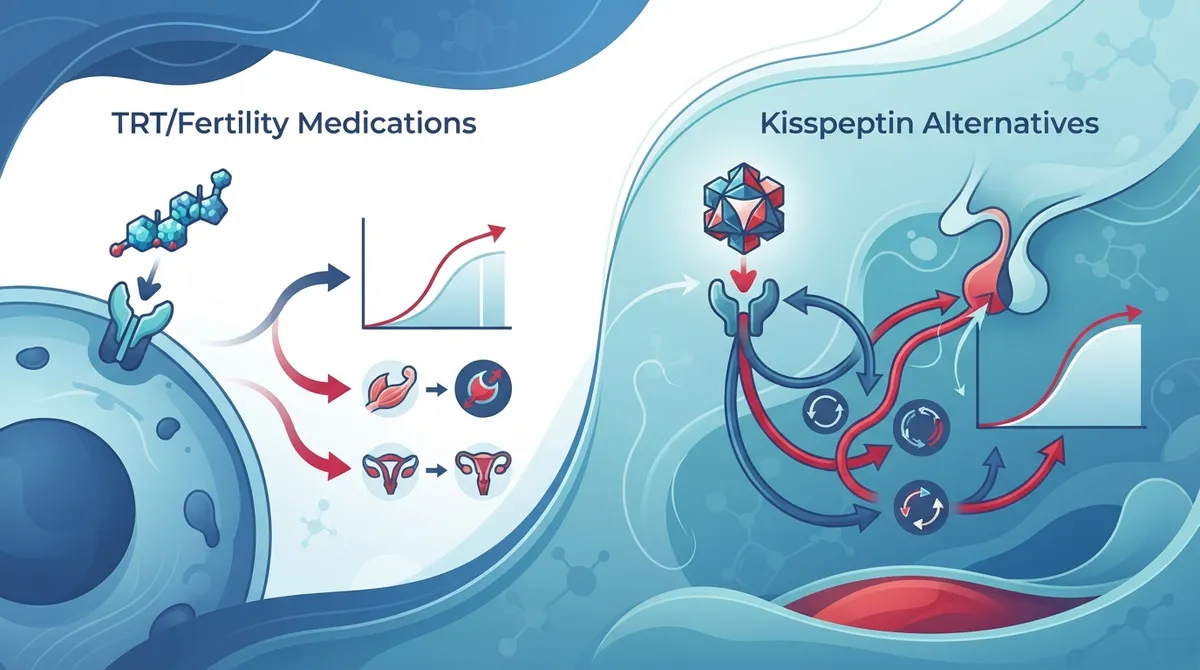
Kisspeptin is a natural hormone that signals your brain to release other reproductive hormones, called LH and FSH. In theory, boosting kisspeptin could help with low testosterone, fertility problems, or low libido. In practice, most studies have only measured short-term hormone changes, not real-world results like pregnancy or restored sperm counts.
Because of this, kisspeptin remains investigational. There is no approved dosing, no long-term safety data, and no guarantee it works better than existing treatments. This is why doctors currently rely on other options that have years of clinical evidence behind them.
Why This Matters for Your Health Decisions
Choosing a treatment based on hype rather than evidence can delay real progress. A proper diagnosis matters more than any single hormone or peptide. Your treatment plan should match your specific cause of low testosterone or infertility, not a one-size-fits-all approach.
Kisspeptin Alternative Treatments: The Two Main Paths
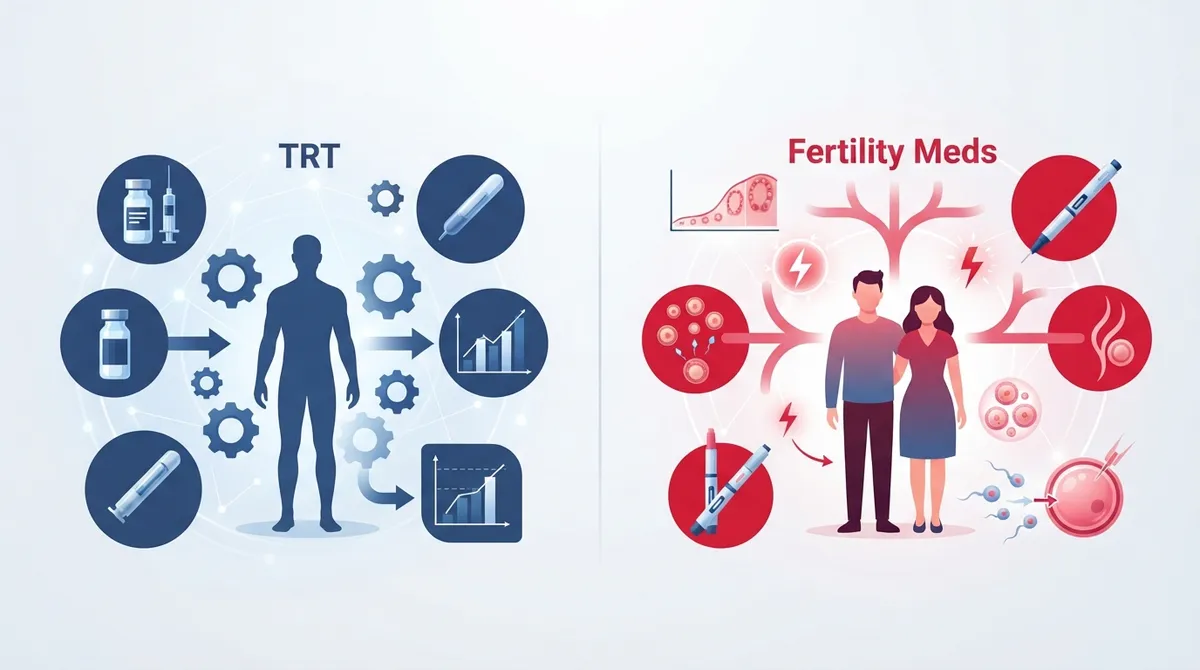
Most patients exploring kisspeptin alternatives fall into one of two categories. Understanding which one applies to you is the first step toward getting real results.
- Testosterone replacement therapy (TRT) — for men with confirmed low testosterone who are not trying to conceive
- Fertility-focused treatments — for men and women who want to preserve or restore the ability to have children
These two paths do not overlap well. In fact, testosterone therapy can shut down natural fertility, which is why the right diagnosis is so important before starting any treatment.
Testosterone Replacement Therapy: What It Treats
TRT is well-studied and widely used for men with symptomatic hypogonadism, meaning low testosterone plus real symptoms like fatigue, low libido, or muscle loss. According to Endocrine Society guidelines, diagnosis requires consistent symptoms along with repeated low morning testosterone readings, not just a single blood test.
- Restores energy and libido for many men with true testosterone deficiency
- Requires ongoing monitoring of testosterone and blood counts
- Not appropriate for men trying to conceive
- Available through gels, injections, or pellets depending on your needs
If you are considering testosterone replacement therapy, monitoring is key. Guideline-based care typically includes testosterone and blood count checks around 3, 6, and 12 months, then yearly after that, according to European Association of Urology guidance.
Fertility-Focused Treatments: What They Treat
For men with secondary hypogonadism who want to have children, testosterone is actually the wrong choice. It suppresses the pituitary signals needed for sperm production. Instead, specialists use combined hCG and FSH therapy, or in some cases pulsatile GnRH therapy, to stimulate natural sperm production.
For women dealing with ovulation problems, the approach is different. Letrozole is often the first choice for ovulation induction, especially for women with polycystic ovary syndrome (PCOS). Clomiphene is another established option. Injectable gonadotropins may be used when oral medications do not work, but they require careful monitoring due to risks like ovarian hyperstimulation.
Testosterone Therapy vs. Fertility Treatments: Side-by-Side Comparison
|
Factor |
Testosterone Replacement Therapy |
Fertility-Focused Treatments |
|---|---|---|
|
Best for |
Men with confirmed low T, not seeking fertility |
Men or women trying to conceive |
|
Effect on fertility |
Suppresses sperm production |
Designed to support or restore fertility |
|
Common options |
Gels, injections, pellets |
Letrozole, clomiphene, hCG/FSH, gonadotropins |
|
Monitoring needed |
Testosterone and hematocrit checks |
Hormone levels, ultrasound (for women), semen analysis (for men) |
|
Evidence base |
Well-established, decades of use |
Well-established, guideline-supported |
How to Know Which Path Fits Your Situation
The right treatment depends entirely on your diagnosis and your goals. Here is a simple way to think through your options before your appointment.
- Get tested first. Do not start any hormone treatment without bloodwork confirming the underlying issue.
- Clarify your fertility goals. This single factor changes the entire treatment plan.
- Rule out other causes. Thyroid disease and high prolactin levels can mimic hormone problems and are often treatable on their own.
- Ask about monitoring. Any hormone therapy should include a follow-up schedule to track progress and safety.
- Consider lifestyle factors. Sleep, nutrition, and stress all affect hormone health and should be part of your plan.
Common Causes Behind Low Testosterone and Fertility Issues
Not every case is the same, and the underlying cause changes which treatment makes sense. Some of the most common conditions include:
- Primary gonadal failure (the testes themselves are not working properly)
- Secondary or hypogonadotropic hypogonadism (a signaling problem from the brain)
- Polycystic ovary syndrome (PCOS) causing irregular ovulation
- Functional hypothalamic amenorrhea, often linked to stress or low energy intake
- Unexplained infertility, where no clear cause is found after testing
Each of these requires a different plan. For example, gonadotropins generally do not help men with primary testicular failure because the problem is inside the testes, not the signaling pathway. In these cases, assisted reproductive techniques or donor options may be discussed instead.
What a Proper Diagnostic Workup Looks Like
Before starting any treatment, a thorough evaluation helps confirm the real cause of your symptoms. A typical workup may include:
- A detailed reproductive and symptom history
- Physical examination
- Morning testosterone or estradiol testing
- LH and FSH levels
- Prolactin and thyroid testing
- Semen analysis for men with fertility concerns
- Ovulation tracking for women with irregular cycles
This kind of comprehensive testing is exactly what you can expect during a wellness visit or primary care appointment at InCare. Rather than guessing, your provider builds a plan based on your actual results.
The Role of Lifestyle in Hormone and Fertility Health
Medication is not the only piece of the puzzle. Lifestyle habits can support hormone balance, though they should not replace medical treatment when it is needed. Helpful habits include:
- Eating a balanced diet with enough calories and nutrients
- Avoiding extreme exercise or very low calorie intake
- Quitting smoking and limiting alcohol
- Managing weight through a supervised weight loss program
- Prioritizing consistent, quality sleep
- Reviewing current medications that may affect hormone levels
Many patients find that combining lifestyle changes with medical care produces the best outcomes. Our DNA gene testing and body composition analysis services can also provide extra insight into how your body responds to diet and exercise changes.
Why Choose InCare for Hormone and Fertility Evaluation
Patients in Tampa and Riverview trust InCare because we combine advanced testing with a personal touch. Our providers, including those featured on our providers page, take time to understand your goals before recommending any treatment. We do not push one-size-fits-all solutions.
Instead of jumping straight to investigational therapies, our team starts with proven diagnostic tools and evidence-based treatment options. If testosterone therapy is right for you, we will walk you through monitoring and expectations. If fertility is your goal, we can guide you toward the right specialist referral or manage appropriate testing in-house.
You can see what real patients say about their experience by visiting our InCare location on Google, where our Tampa and Riverview clinics maintain strong satisfaction ratings. We also share patient stories and health tips on Facebook, Instagram, and TikTok.
Questions to Ask Before Starting Any Hormone Treatment
Before committing to testosterone therapy, fertility medication, or any other approach, bring these questions to your appointment:
- What specific tests confirm my diagnosis?
- Does this treatment affect my fertility goals?
- What side effects should I watch for?
- How often will I need follow-up testing?
- Are there lifestyle changes that could improve my results?
These questions help you and your provider build a plan that fits your actual needs, not just a trending peptide or supplement.
Take the Next Step Toward Real Answers
Kisspeptin may eventually become a mainstream option, but for now, proven treatments offer a safer and more reliable path forward. Whether you need testosterone evaluation, fertility support, or general hormone health guidance, our team at InCare is ready to help you find real answers backed by science.
Ready to get started? Reach out to our team to schedule a consultation, or go ahead and book your appointment online today.
FAQs
Q: What is kisspeptin therapy, and is it approved for fertility or low testosterone?
A: Kisspeptin is an investigational hormone therapy that stimulates the brain's reproductive signaling pathway. It is not currently an approved, routine treatment for low testosterone, infertility, or low libido, and most research has only measured short-term hormone changes rather than long-term outcomes.
Q: What are the safest alternatives to kisspeptin for male hypogonadism?
A: For men with confirmed symptomatic low testosterone who are not trying to conceive, medically supervised testosterone replacement therapy is a well-established option. This requires proper diagnosis with repeated morning testosterone testing and ongoing monitoring.
Q: Can testosterone replacement be used if I am trying to conceive?
A: No, testosterone therapy is not recommended for men trying to conceive because it suppresses the pituitary signals needed for sperm production. Men in this situation should discuss gonadotropin therapy or pulsatile GnRH treatment with a specialist instead.
Q: Is letrozole or clomiphene a better alternative to kisspeptin for ovulation problems?
A: Letrozole is generally considered a first-line option for ovulation induction, particularly for women with PCOS, while clomiphene is another established alternative. The best choice depends on your specific diagnosis, so proper testing is essential before starting either medication.
Q: What tests should be completed before starting hormone or fertility treatment?
A: A thorough workup typically includes reproductive history, physical exam, morning testosterone or estradiol levels, LH and FSH testing, prolactin and thyroid checks, and semen analysis or ovulation tracking as needed. This diagnostic approach ensures treatment matches your actual underlying cause.