Key Takeaways
- IV injections deliver medication quickly (under 5 minutes) with small doses, while IV infusions provide larger volumes of fluids and nutrients over 30 minutes to hours—choose based on whether you need fast relief or sustained wellness support.
- IV therapy bypasses digestion for faster absorption, with providers claiming 90-100% absorption rates compared to 20-50% for oral supplements, making it effective for energy, hydration, and nutrient deficiency recovery.
- Most wellness IV sessions cost $150-$250 and aren't covered by insurance, but medically necessary treatments tied to diagnoses may have different coverage—confirm pricing and insurance details with your provider before treatment.
- Frequency depends on your goals: weekly sessions for 4-6 weeks for active symptoms, then monthly maintenance, with effects lasting 8-21 days depending on the formula and individual response.
If you have ever felt run down, dehydrated, or in need of a quick health boost, you may have heard about IV therapy. But many people confuse the terms "IV injection" and "IV infusion," and this mix-up can lead to confusion about what actually happens during treatment. Understanding the difference matters, especially when you are choosing between a quick vitamin shot and a full hydration drip.
In primary care and wellness settings, IV therapy has grown into one of the most requested services. It offers a fast way to deliver fluids, vitamins, and medications straight into your bloodstream. This guide breaks down how IV injections and infusions work, when each makes sense, and what to expect from a professional visit. Whether you are a busy parent, a wellness-focused professional, or someone simply trying to feel better fast, this comparison will help you make an informed choice.

What Is IV Injection and IV Infusion?
IV injection and IV infusion both involve placing a needle or small tube, called a cannula, into a vein. From there, fluids or medications enter your bloodstream directly. This method skips the digestive system entirely, which means your body absorbs the treatment much faster than swallowing a pill or drinking a supplement.
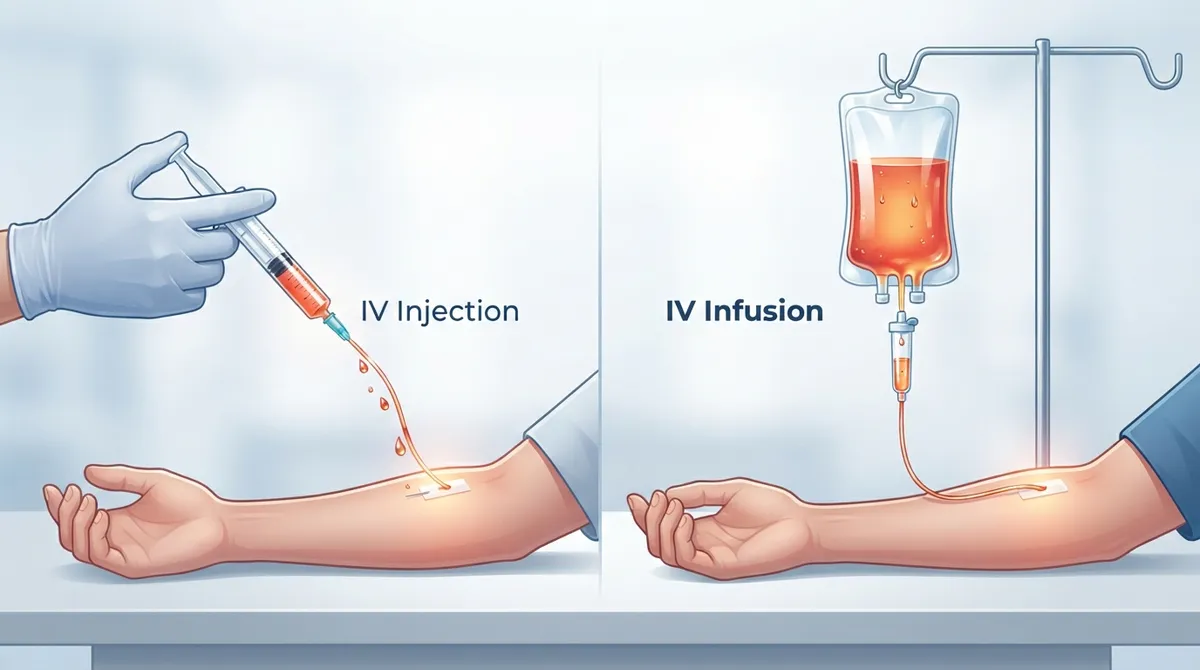
The key difference lies in speed and volume. An IV injection is typically a single, quick push of medication or a small dose given over a few minutes. An IV infusion, on the other hand, involves a slower, steady drip that can last anywhere from 30 minutes to a few hours. Both methods are considered the most common invasive medical procedures performed by healthcare professionals today.
How the Process Works
During either treatment, a licensed provider follows a clear, careful process to keep you safe and comfortable.
- A clinician reviews your health history and current symptoms.
- The provider selects a vein, usually in your arm, and cleans the area.
- A small cannula is inserted into the vein.
- The IV bag or syringe is connected, and fluid begins to flow.
- You relax while your body absorbs the treatment.
- The cannula is removed once the session ends, and a bandage is applied.
This structured approach is why IV hydration and vitamin drips have become such a popular wellness option. The process is quick, and most people feel little discomfort beyond a small pinch during insertion.

IV Injection vs. IV Infusion: Key Differences
Choosing between an injection and an infusion depends on your goals, your schedule, and what your provider recommends after evaluating your health. The table below breaks down the core differences.
FeatureIV InjectionIV InfusionDelivery SpeedFast, usually under 5 minutesSlow and steady, 30 minutes to a few hoursVolume of FluidSmall doseLarger volume of fluid or nutrientsCommon UsesMedication boosts, vitamin shotsHydration, vitamin therapy, nutrient replacementSession LengthVery short visitLonger appointment timeTypical SettingPrimary care or urgent careWellness clinic or primary care
When Each Option Makes Sense
An IV injection may be the right choice if you need a quick medication dose, such as certain antibiotics or anti-nausea treatments. This is common during urgent care visits when time matters and symptoms need fast relief.
An IV infusion works better when your goal is hydration, energy support, or a full nutrient reset. Many wellness seekers choose infusions for immune support, athletic recovery, or general wellness optimization. Your provider will help determine which method fits your specific needs after a full evaluation.
Why Primary Care Clinics Use IV Therapy
IV therapy is not only for wellness boosts. In primary care, it plays an important medical role for patients who cannot absorb nutrients or fluids properly through food alone.
- Treating dehydration from illness, heat exposure, or intense exercise
- Delivering medications when oral intake is not effective
- Supporting patients with limited nutrient absorption
- Assisting with recovery after certain procedures
- Providing rapid relief for migraines or severe nausea
- Supplying essential vitamins for patients with deficiencies
This dual purpose, medical and wellness-focused, is part of why more people are turning to comprehensive clinics that combine both approaches under one roof. At InCare, this kind of coordinated care means patients do not have to choose between traditional medicine and modern wellness support.
Common Ingredients in Wellness IV Drips
Wellness-focused IV drips often include a blend of vitamins, minerals, and electrolytes designed to support specific goals. Common ingredients include:
- Vitamin C for immune support
- B-complex vitamins for energy
- Magnesium for muscle relaxation and recovery
- Zinc for immune function
- Electrolytes for hydration balance
- Glutathione for antioxidant support
Some providers claim that IV vitamin therapy can achieve absorption rates near 90 to 100 percent, compared to 20 to 50 percent for oral supplements. While this is often cited by wellness clinics, it should be viewed as a general industry claim rather than a universal clinical standard. Still, the direct bloodstream delivery does offer a faster route than digestion allows.
Who Should Consider IV Therapy?
IV therapy appeals to a wide range of people, each with different goals in mind.
- Busy professionals looking for quick energy support between meetings
- Parents managing family health who need fast recovery from illness
- Fitness enthusiasts wanting quicker recovery after intense workouts
- Individuals recovering from dehydration due to illness or heat
- Wellness-focused adults pursuing proactive, whole-body health strategies
If you are new to primary care or have not established a regular provider, IV therapy can also serve as an entry point into more comprehensive health services, including cancer screening and DNA gene testing, both of which support long-term prevention goals.
Safety, Risks, and What to Expect
Like any medical procedure, IV therapy carries some risk, even though it is generally considered safe when performed by trained professionals.
- Bruising or mild bleeding at the injection site
- Swelling or inflammation of the vein
- Rare cases of vessel damage
- Temporary discomfort during needle insertion
- Possible allergic reaction to specific vitamins or minerals
Choosing a licensed clinic with experienced providers greatly reduces these risks. Responsible IV therapy should always follow a proper medical evaluation, including a review of your labs, symptoms, and overall health goals. This is why working with a trusted healthcare provider matters just as much as the treatment itself.
How Often Should You Get IV Therapy?
The right frequency depends on your specific health goals and the condition being treated. Some general guidelines include:
GoalSuggested FrequencyGeneral wellness maintenanceOnce monthlyActive symptom relief (fatigue, dehydration)Weekly for 4 to 6 weeks, then taperAthletic recoveryAfter intense training sessionsImmune support during illnessAs needed, based on provider guidance
Some clinic sources note that treatment plans often start weekly for four to six weeks before shifting to monthly maintenance visits, depending on your specific condition. Effects can last anywhere from 8 days to 3 weeks, depending on the formula used and your individual response.
Cost Considerations
Most single IV therapy sessions range between $150 and $250, and many insurance plans do not cover wellness-focused treatments. Medical uses tied to specific diagnoses, such as severe dehydration treated in a primary care setting, may be covered differently. It is always best to ask your provider directly about pricing and insurance coverage before your visit.
Choosing the Right Clinic for IV Therapy
Not all clinics offer the same level of expertise or personalized care. When choosing where to receive IV therapy, consider these factors:
- Licensed medical staff overseeing every treatment
- A full evaluation before recommending any IV formula
- Clean, comfortable treatment environments
- Transparent pricing with no hidden fees
- A track record of positive patient experiences
InCare, with locations in Tampa and Riverview, Florida, combines advanced wellness services with the oversight of experienced primary care physicians like Dr. Naveen Paddu and Dr. Pramjeet Ahluwalia. This means patients receive both the medical expertise and wellness support needed for safe, effective IV therapy. You can also explore more about why IV vitamin infusion may be the secret to feeling your best or read about the key benefits of vitamin drips for your health in 2026.
Patients considering IV therapy alongside other wellness goals may also benefit from pairing treatment with medical weight loss programs or body composition analysis to track overall progress. Many patients also follow InCare on Instagram and Facebook for wellness tips and clinic updates, while others discover new health content through TikTok.
Final Thoughts on IV Injection and Infusion Therapy
IV injection and infusion therapy both offer fast, effective ways to support your health, whether you need quick medication delivery or a longer wellness-focused treatment. The right choice depends on your goals, your health history, and guidance from a qualified provider. With locations in Tampa and Riverview, InCare offers both the medical expertise and modern wellness technology needed to make informed, safe decisions about your care.
Patients across the Tampa Bay area continue to share positive experiences, and you can visit us on Google — InCare to read real reviews from people who have experienced these services firsthand. If you are ready to explore whether IV therapy fits your health goals, our team is here to help you every step of the way.
Ready to feel your best? Book your appointment today or reach out to our team to learn more about how IV therapy can support your wellness journey.
FAQs
Q: What is the main difference between IV injection and IV infusion?
A: An IV injection delivers a small dose of medication quickly, often in under five minutes. An IV infusion delivers a larger volume of fluid or nutrients slowly over 30 minutes to a few hours.
Q: Is IV vitamin therapy effective for energy and hydration?
A: Many patients report improved energy and hydration after IV therapy, since nutrients bypass digestion and enter the bloodstream directly. Results vary by individual, so a provider evaluation helps determine if this approach fits your specific needs.
Q: What are the risks of IV injections or infusions?
A: Common risks include bruising, swelling, and mild vein inflammation at the injection site. Choosing a licensed clinic with experienced providers significantly reduces these risks.
Q: How often should someone get IV therapy?
A: Frequency depends on your health goals, ranging from weekly sessions for four to six weeks to monthly maintenance visits. Your provider will recommend a schedule based on your symptoms and treatment goals.
Q: Does insurance cover IV therapy at a primary care or wellness clinic?
A: Most wellness-focused IV treatments are not covered by insurance, with typical costs ranging from $150 to $250 per session. Medically necessary IV treatments tied to a diagnosis may be covered differently, so it is best to confirm with your provider.