
Key Takeaways
- IV glutathione for skin lightening lacks strong evidence—only one placebo-controlled study exists showing no statistically significant difference from placebo, with benefits fading within six months.
- The FDA warned in 2019 about compounded glutathione injections causing serious adverse events including anaphylaxis and hospitalization due to bacterial endotoxin contamination during compounding.
- Approximately 32% of participants in skin-lightening studies experienced adverse events including liver dysfunction, nausea, chest discomfort, and severe allergic reactions, indicating real and non-rare risks.
- No standardized dosing protocol or treatment schedule has been established for IV glutathione wellness use, making it difficult to compare safety and efficacy across clinics.
- Oral and topical glutathione alternatives carry fewer serious risks than IV injections by avoiding needle complications and sterile compounding concerns, though absorption remains limited.
- Before considering IV glutathione, patients should pursue comprehensive medical evaluation to rule out underlying conditions like anemia, thyroid disease, or nutritional deficiencies causing fatigue or skin changes.
Walk into any wellness clinic today and you might hear about glutathione intravenous therapy as a quick fix for glowing skin, more energy, or better detox. But does the science back up the claims? This question matters if you're weighing IV treatments against simpler options like oral supplements or, more importantly, addressing the root cause of your symptoms with a doctor's help.
Glutathione is a natural antioxidant your body already makes. It helps protect your cells from damage. When given through an IV, it enters your bloodstream fast. But fast absorption doesn't always mean better health outcomes. Before you book an infusion, it helps to understand what the research actually shows, what risks exist, and how a primary care approach can guide you toward safer, evidence-based choices.
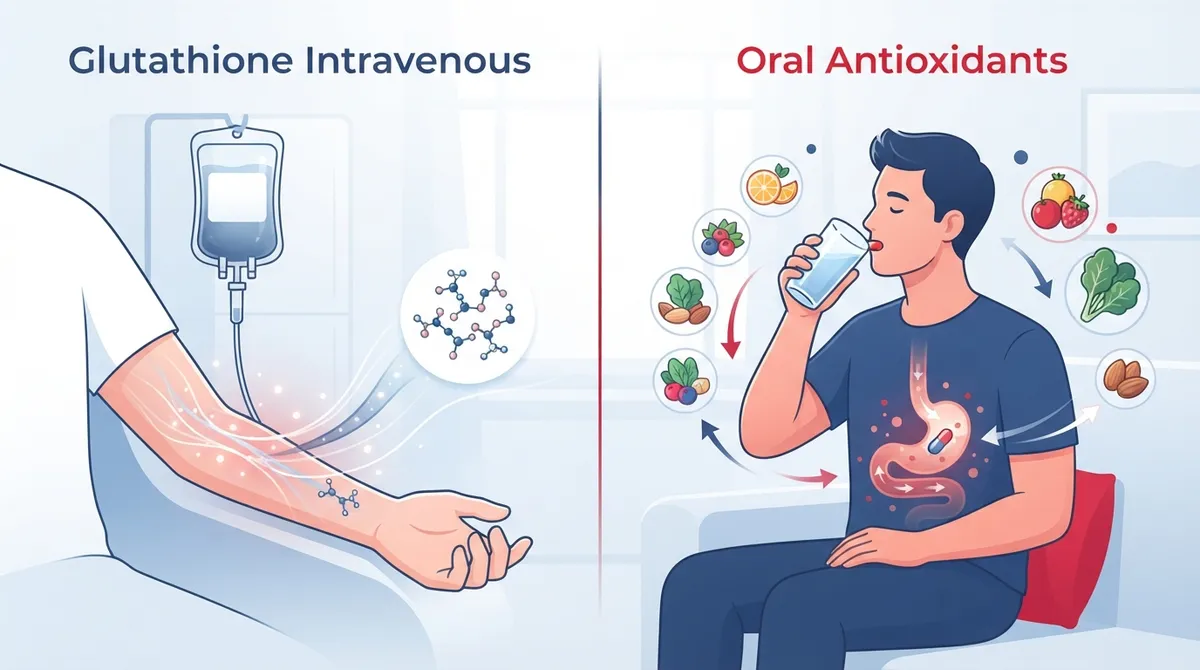
What Is Glutathione and Why Do People Seek It Intravenously?
Glutathione is made from three amino acids. Your liver produces it naturally to fight oxidative stress. It plays a role in supporting your immune system and helping your body process toxins.
Some wellness clinics offer glutathione intravenous therapy as a way to boost these natural processes. The idea is that injecting it directly into your blood skips digestion and gets it into your system faster than a pill.
Common Reasons Patients Ask About IV Glutathione
- Cosmetic skin lightening or brightening
- General antioxidant support
- Claims of improved energy levels
- Perceived detoxification benefits
- Anti-aging or wellness optimization goals
While these reasons sound appealing, the clinical evidence behind them is limited. Standardized dosing, treatment schedules, and maintenance plans have not been firmly established for wellness use.

Does IV Glutathione Actually Lighten Skin?
This is one of the most searched questions about glutathione intravenous treatments. The short answer: the evidence is weak and inconsistent.
A 2024 systematic review found only one placebo-controlled study on IV glutathione for skin lightening. In that study, patients received 1,200 mg of IV glutathione twice a week for six weeks. Here's what happened:
|
Group |
Participants Reporting Lighter Skin |
Percentage |
|---|---|---|
|
IV Glutathione |
6 out of 16 |
37.5% |
|
Placebo |
3 out of 16 |
18.7% |
The difference was not statistically significant (p=0.054). This means researchers could not confidently say the treatment caused the change. Any benefits also faded within about six months.
A separate pilot study of 21 people receiving 10 weekly IV doses found a small drop in melanin index scores. But the average reduction was only about 4.1%. This is not something most people would notice by looking in the mirror.
Key Takeaways on Cosmetic Use
- Only one placebo-controlled study exists for skin lightening claims.
- Reported benefits were small and temporary.
- Results faded within six months in the main study.
- Side effects were reported in a meaningful share of participants.
- No standard dosing protocol has been established for this use.
What Are the Risks of Glutathione IV Therapy?
Any IV treatment carries some risk. But glutathione IV therapy has specific safety concerns that patients should understand before considering it.
Reported Side Effects
- Infusion reactions like nausea or vomiting
- Headache and muscle pain
- Chest discomfort
- Low blood pressure (hypotension)
- Liver or kidney injury
- Severe allergic reactions, including anaphylaxis
In the small pilot study mentioned earlier, three out of 21 participants reported side effects. These included muscle pain, tiredness, chest discomfort, and headache. One participant showed elevated liver enzymes. A 2025 review noted that roughly 32% of participants in a commonly cited skin-lightening study experienced adverse events, including liver dysfunction and one case of anaphylaxis. This figure should be viewed with caution given the small sample size, but it highlights that risks are real and not rare.
The FDA Warning You Should Know About
In 2019, the FDA issued an alert about compounded glutathione injections. Seven patients experienced adverse events after receiving injections made from dietary-grade glutathione powder. This powder was not meant for sterile injectable use.
Symptoms ranged from nausea and vomiting to serious breathing difficulty. One patient required immediate hospitalization. The problem stemmed from potential bacterial endotoxin contamination during compounding.
This warning is a critical reminder. Not all glutathione products are created equal. A compounded IV product is not the same as an FDA-approved, standardized medication.
Compounded vs. Approved: What's the Difference?
|
Factor |
Compounded IV Glutathione |
FDA-Approved Medications |
|---|---|---|
|
Regulatory Oversight |
Limited, varies by pharmacy |
Strict FDA review process |
|
Sterility Standards |
Depends on compounding pharmacy quality |
Standardized manufacturing controls |
|
Dosing Consistency |
Not standardized |
Established and tested |
|
Adverse Event Reporting |
Inconsistent tracking |
Mandatory reporting systems |
|
Source Verification |
Must be checked by patient/provider |
Verified through FDA approval |
Before considering any compounded product, ask about the pharmacy's credentials, sterility testing, and informed-consent process. A trustworthy clinic should be transparent about where their products come from.
Oral and Topical Glutathione: A Safer Alternative?
Many patients wonder if oral or topical glutathione is a gentler option compared to IV therapy. Generally speaking, oral and topical forms carry fewer serious risks than injections.
Why Oral Forms May Be Preferred
- No needle-related risks like infection at the injection site
- Lower chance of severe allergic reactions
- Easier to stop if side effects occur
- No concerns about sterile compounding for injectables
- Generally lower cost than repeated IV sessions
That said, oral glutathione has its own absorption challenges. Your digestive system breaks down much of it before it reaches your bloodstream. This is part of why some clinics promote IV delivery as more "effective," even though the clinical proof for wellness benefits remains thin either way.
How Often Can Someone Receive a Glutathione Infusion?
There's no universally accepted schedule for glutathione IV therapy in wellness settings. Studies have used different frequencies, ranging from twice weekly to once weekly, over six to ten weeks.
Because there's no standardized protocol, any schedule offered by a clinic should be explained clearly. Ask your provider why they recommend a specific frequency and what evidence supports it. If they can't give you a clear, evidence-based answer, that's a red flag.
Who Should Avoid IV Glutathione?
Certain groups should be especially cautious about pursuing this therapy:
- People with known allergies to glutathione or related compounds
- Patients with kidney or liver disease
- Pregnant or breastfeeding individuals, due to lack of safety data
- Anyone seeking a substitute for medical evaluation of fatigue or other symptoms
- Patients unable to verify the sterility and source of the compounded product
If you're experiencing fatigue, mood changes, or other nonspecific symptoms, a wellness IV should never replace a proper checkup. Conditions like anemia, thyroid disease, sleep disorders, depression, or nutritional deficiencies can all cause similar symptoms. These require actual diagnosis, not a quick infusion.
A Primary Care Approach to Wellness Decisions
At InCare, the philosophy starts with understanding your actual health concern before recommending any treatment. If you're worried about skin pigmentation, a dermatologic evaluation may be more appropriate than an unproven IV therapy. If you're feeling tired all the time, a thorough workup can identify the real cause.
This is where a trusted primary care relationship becomes valuable. Instead of jumping straight to a trendy treatment, a knowledgeable provider can walk you through evidence-based options first.
Steps to Take Before Considering IV Glutathione
- Schedule a comprehensive wellness visit to discuss your goals and concerns.
- Ask your provider about the evidence behind any recommended therapy.
- Request lab work to rule out underlying conditions causing fatigue or skin changes.
- Verify the source and sterility standards of any compounded product offered.
- Discuss safer, well-studied alternatives such as IV hydration and vitamin drips for general wellness support.
- Review your family and personal health history with your doctor.
- Ask about DNA gene testing if you're curious about personalized health insights.
InCare's clinics in Tampa and Riverview focus on this kind of thoughtful, whole-body approach. Rather than offering trendy treatments without context, the team emphasizes prevention, informed consent, and individualized care plans.
Comparing Wellness Options: IV Glutathione vs. Comprehensive Care
|
Approach |
Evidence Base |
Best For |
|---|---|---|
|
IV Glutathione |
Limited, inconsistent, small studies |
Patients seeking cosmetic effects with awareness of risks |
|
Comprehensive Wellness Visit |
Strong, individualized diagnostics |
Addressing root causes of fatigue, skin changes, or wellness concerns |
|
IV Hydration Therapy |
Established for dehydration and nutrient support |
General hydration and vitamin needs |
|
Body Composition Analysis |
Data-driven, technology-based tracking |
Tracking fitness and metabolic progress |
This comparison shows why a broader wellness strategy often makes more sense than a single trendy treatment. Services like body composition analysis and metabolic breath analysis give you measurable, science-backed data to guide your health decisions.
How to Verify a Sterile and Safe Glutathione Injection
If you and your doctor decide that glutathione IV therapy fits your care plan, verification steps matter. Here's what to check:
- Confirm the compounding pharmacy is licensed and accredited.
- Ask if the product has passed endotoxin testing.
- Request documentation of sterility practices.
- Review the informed consent form carefully before treatment.
- Ask how adverse events are tracked and reported at the clinic.
- Confirm the provider administering the IV has proper medical training.
These steps protect you from the exact risks the FDA warned about in 2019. A clinic that welcomes these questions is one you can trust more confidently.
Why Whole-Body Wellness Beats Quick Fixes
Wellness trends come and go. What stays consistent is the value of a personalized, evidence-based approach to your health. Instead of chasing the latest IV trend, consider working with a provider who looks at your full health picture.
InCare's team, including trusted providers like those featured on the providers page, focuses on combining technology with real medical expertise. This means your care plan is built around your actual needs, not marketing claims.
You can also explore services such as cancer screening and medically supervised weight loss programs as part of a broader prevention strategy. These services have stronger evidence behind them than cosmetic IV treatments.
Curious what other patients say about their experience? You can visit us on Google — InCare to read reviews from real patients in Tampa and Riverview. You can also follow updates and wellness tips on Facebook, Instagram, and TikTok for more health education content.
Final Thoughts on Glutathione Intravenous Therapy
Glutathione intravenous therapy is often marketed with big promises. But the current evidence shows limited, inconsistent benefits and real safety concerns. Before committing to this treatment, talk with a knowledgeable primary care provider about your specific goals and health history.
Whether you're curious about skin health, energy levels, or general wellness, a thoughtful evaluation beats a one-size-fits-all injection. InCare's locations in Tampa and Riverview offer the kind of personalized, technology-driven care that helps you make informed decisions.
Ready to talk through your wellness goals with a trusted team? Reach out to InCare today or book your appointment now to start your personalized health journey.
FAQs
Q: What is intravenous glutathione used for?
A: In wellness settings, IV glutathione is often marketed for cosmetic skin lightening, antioxidant support, and general wellness. However, strong clinical evidence does not support routine use for these purposes, and standardized dosing has not been established.
Q: Does IV glutathione actually lighten the skin?
A: Evidence for skin lightening is limited and inconsistent. A key placebo-controlled study found no statistically significant difference between treatment and placebo groups, and any reported effects tended to fade within about six months.
Q: Is intravenous glutathione FDA approved for wellness or skin whitening?
A: No, IV glutathione is not FDA approved for cosmetic skin lightening or general wellness use. The FDA has actually issued warnings about safety risks tied to compounded glutathione injections.
Q: What are the side effects and risks of glutathione IV therapy?
A: Reported side effects include nausea, headache, muscle pain, chest discomfort, low blood pressure, and in rare cases, liver injury, kidney injury, or severe allergic reactions. Serious dermatologic reactions have also been reported in safety literature.
Q: Is oral or topical glutathione safer than intravenous glutathione?
A: Oral and topical forms generally carry fewer serious risks than IV administration since they avoid needle-related complications and sterile compounding concerns. However, oral absorption is often lower, and neither form has strong evidence for wellness claims.