
Key Takeaways
- MOTS-c lacks any published human clinical trials proving it improves longevity, physical function, or aging-related conditions; all evidence comes from animal studies that cannot be directly applied to humans.
- No established, evidence-based dosage exists for MOTS-c in humans, and online protocols should be viewed with serious caution as incorrect dosing could lead to unexpected side effects.
- MOTS-c is not FDA-approved for any medical use, lacks long-term safety data, and products may lack proper sterility testing or quality control, making it an unproven experimental compound.
- Proven strategies like regular exercise, balanced diet, quality sleep, and preventive healthcare have decades of clinical evidence and provide measurable results without the safety uncertainties of experimental peptide therapies.
Search online for anti-aging solutions, and you'll likely stumble upon MOTS-c. This mitochondrial peptide has become a buzzword in wellness circles, promising better metabolism, more energy, and slower aging. But what does the science actually say?
At InCare, our team believes in giving patients honest, evidence-based answers. Before you consider any peptide therapy, you deserve to know what's proven and what's still just a promising theory. This article breaks down the real research on MOTS-c for aging, so you can make informed decisions about your health.

What Is MOTS-c and Why Is It Linked to Aging?
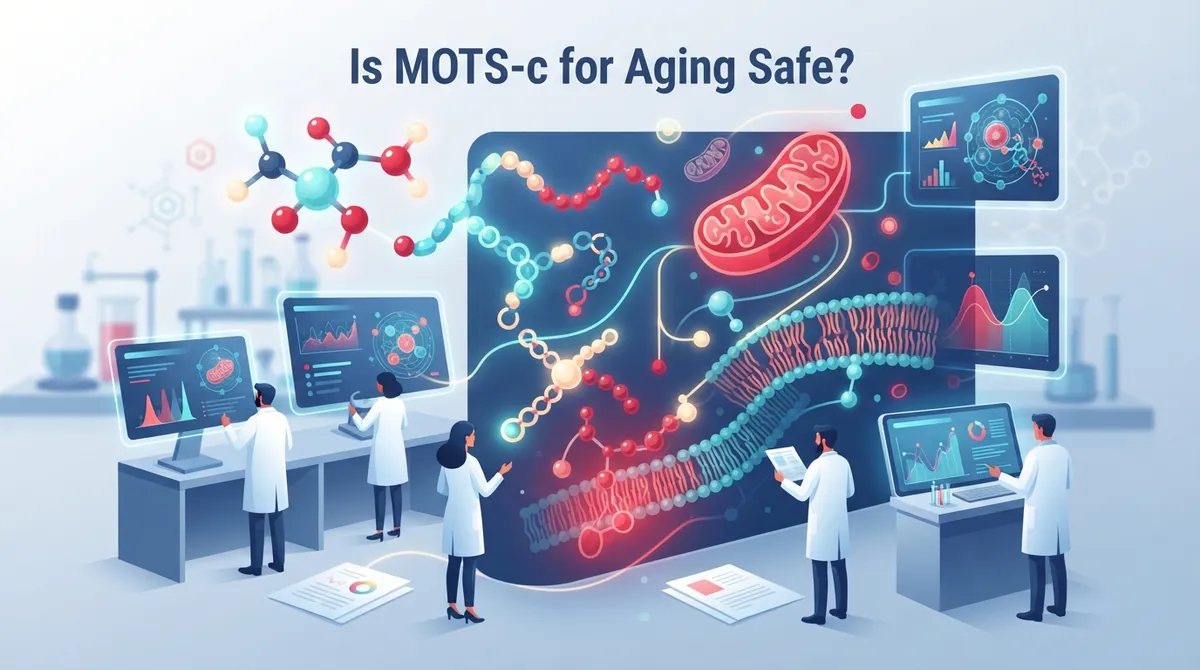
MOTS-c is a small peptide made inside your mitochondria. Mitochondria are the tiny structures in your cells that produce energy. Scientists discovered that this peptide does more than just help make energy. It also sends signals between your mitochondria and the control center of your cell, the nucleus.
This peptide appears to play a role in how your body handles stress, manages blood sugar, and responds to exercise. These functions are closely tied to how we age and how our metabolism changes over time.
Researchers first identified MOTS-c through its connection to a cellular pathway called AMPK. This pathway helps regulate energy use throughout your body. MOTS-c also interacts with folate metabolism, antioxidant defenses, and inflammation control. Each of these processes can influence how well your body ages.
The Science Behind MOTS-c: What Studies Actually Show
Most of what we know about MOTS-c comes from animal studies, not human trials. This distinction matters a lot when deciding if a treatment is right for you.
Animal Research Findings
A notable 2015 study found that MOTS-c treatment helped prevent insulin resistance in mice. The mice also avoided diet-induced obesity, even when fed a high-fat diet. These results are exciting, but mice are not humans. Their bodies process peptides differently than ours do.
Human Research Gaps
A 2023 scientific review summarized what we know about MOTS-c and aging. The review connected this peptide to energy metabolism, insulin resistance, and inflammation. However, the authors described this field as translational research, not established medical treatment.
One human study looked at how exercise affects natural MOTS-c levels. This study included only 10 people. While interesting, this tiny sample size cannot tell us if injecting MOTS-c is safe or effective for aging.
Here is the key fact every patient should know: there is currently no published clinical trial proving that MOTS-c improves longevity, physical function, or any aging-related condition in humans.
MOTS-c Research: Animal Studies vs. Human Evidence
|
Research Area |
Animal Studies |
Human Studies |
|---|---|---|
|
Insulin Sensitivity |
Improved in mice models |
Not established |
|
Weight Management |
Reduced diet-induced obesity in mice |
Not established |
|
Longevity Outcomes |
Some age-related protection observed |
No completed clinical trials |
|
Safety Profile |
Limited long-term data |
No established dosage or safety data |
|
FDA Approval Status |
Not applicable |
Not approved for any medical use |
Why There's No Proven MOTS-c Dosage or Protocol
If you've searched for MOTS-c dosing guides online, you may have found specific numbers and schedules. Here's the problem: none of these protocols come from validated clinical research.
There is currently no established, evidence-based dosage for MOTS-c in humans. No medical organization has approved a specific treatment duration or administration method. Any protocol you find online should be viewed with serious caution.
This matters because incorrect dosing can lead to unexpected side effects. Without proper research, we simply don't know the right amount, frequency, or method of use that would be both safe and effective.
Understanding CB4211: The Related Synthetic Analog
You may also encounter mentions of CB4211 when researching MOTS-c. This is a synthetic version created in labs, not the same as native MOTS-c.
CB4211 has been studied in an early human trial. However, this evidence cannot simply be applied to native MOTS-c. The two compounds behave differently in your body.
Reports from CB4211 studies mentioned injection-site reactions. Long-term safety data remains unavailable. This reinforces why caution is essential when considering any MOTS-c product, whether natural or synthetic.
Key Risks and Red Flags to Watch For
Before considering any peptide therapy, it's important to understand the risks involved. Here are critical points every patient should consider:
- MOTS-c is not FDA-approved for any medical condition, including aging, weight loss, or diabetes
- No standardized dosage exists, making safe use difficult to determine
- Online products may lack proper sterility testing or quality control
- MOTS-c is banned by the World Anti-Doping Agency under AMPK-activator prohibitions, which matters for competitive athletes
- Long-term safety data in humans simply doesn't exist yet
- Interactions with existing medications remain largely unknown
If you're managing diabetes, taking blood pressure medication, or dealing with other chronic conditions, these unknowns become even more important. Your primary care physician needs complete information about any peptide you're considering.
What Your Primary Care Doctor Should Know
Open conversation with your healthcare provider is essential before trying any peptide product. Here's what you should be prepared to discuss:
- Any peptide products you've purchased, including where you bought them
- The specific source and any available quality testing information
- All current medications and supplements you're taking
- Any side effects or unusual symptoms you've experienced
- Your specific health goals and what you hope to achieve
At InCare, our experienced providers take time to understand your complete health picture. This includes reviewing any peptides or supplements you may be using, alongside your standard medical history.
Proven Strategies for Healthy Aging That Actually Work
While MOTS-c research continues, plenty of proven strategies already support healthy aging. These approaches have strong scientific backing and immediate benefits.
Evidence-Based Approaches to Aging Well
- Regular physical activity, including both cardio and resistance training
- A balanced diet rich in whole foods and limited processed sugar
- Consistent, quality sleep of 7-9 hours per night
- Regular blood pressure and cholesterol management
- Diabetes prevention through lifestyle modifications
- Staying current on vaccinations and preventive screenings
- Avoiding smoking and limiting alcohol consumption
These strategies don't carry the uncertainty that comes with unproven peptide therapies. Our primary care services at InCare focus on these evidence-based approaches first.
How InCare Approaches Metabolic Health and Aging
Rather than jumping to unproven treatments, InCare takes a comprehensive approach to healthy aging. We combine proven medical strategies with advanced diagnostic tools.
Our metabolic breath analysis service helps us understand exactly how your body burns energy. This gives us real data to guide your wellness plan, rather than relying on unproven compounds.
We also offer DNA gene testing to identify your unique health risks and predispositions. This personalized information helps us create targeted prevention strategies specific to you.
For patients interested in exploring peptide therapy options that do have stronger evidence behind them, our team can discuss peptide therapy programs available at our Tampa location. We prioritize transparency about what's proven versus what's still experimental.
Comparing MOTS-c to Established Longevity Interventions
|
Intervention |
Human Clinical Evidence |
FDA Status |
Typical Cost Consideration |
|---|---|---|---|
|
Regular Exercise |
Extensive, decades of research |
Not applicable |
Low cost, high accessibility |
|
Metformin |
Well-established for diabetes |
FDA-approved |
Prescription required |
|
GLP-1 Medications |
Strong evidence for weight loss |
FDA-approved |
Prescription required |
|
Native MOTS-c |
Limited to animal studies |
Not approved |
Unregulated online market |
Making Informed Decisions About Emerging Therapies
The wellness industry moves fast, often faster than the research supporting new treatments. MOTS-c represents genuinely interesting science, but interesting science and proven medicine are different things.
Your health deserves careful consideration, not quick fixes based on incomplete research. Before trying any peptide therapy, ask yourself: does this have solid human trial data? Is it FDA-approved? Does my doctor know about this?
If the answer to these questions raises concerns, it's worth pausing. Talk with a primary care provider who can help you weigh the actual evidence, not just marketing claims.
Many patients discover that focusing on medically supervised weight loss programs or body composition analysis gives them measurable, proven results without the uncertainty of experimental compounds.
Why Choose a Comprehensive Wellness Partner
Navigating wellness trends requires a trusted healthcare partner who prioritizes your safety. InCare has built a reputation across Tampa and Riverview for combining cutting-edge technology with sound medical judgment.
Our team stays current on emerging research, including studies on peptides like MOTS-c. We can discuss the latest findings with you honestly, helping you separate genuine breakthroughs from premature hype.
You can connect with us through Facebook or follow our wellness updates on Instagram for regular health tips. We also share educational content on TikTok to help patients stay informed about emerging wellness trends.
Patients throughout the Tampa Bay area trust our approach to whole-body health. You can visit us on Google — InCare to see what our community says about their experience with our team.
Taking the Next Step in Your Wellness Journey
Aging well doesn't require experimental treatments with unclear safety profiles. It requires consistent, evidence-based care tailored to your unique body and goals.
Whether you're curious about MOTS-c, interested in proven weight loss strategies, or simply due for a comprehensive wellness visit, our team is here to help. We'll give you straight answers backed by real science, not speculation.
Ready to discuss your health goals with a provider who prioritizes both innovation and safety? Reach out to our team today to learn more about our comprehensive services, or schedule your appointment now to start your personalized wellness journey with InCare in Tampa or Riverview.
FAQs
Q: What is MOTS-c and how might it affect aging?
A: MOTS-c is a small peptide produced by mitochondria that helps regulate metabolism and cellular stress responses. Research suggests it may influence insulin sensitivity and energy balance, but human evidence linking it directly to slowed aging remains very limited.
Q: Does MOTS-c increase lifespan or slow biological aging in humans?
A: No published human clinical trial has demonstrated that MOTS-c extends lifespan or slows biological aging. Current evidence comes primarily from animal and laboratory studies, which cannot be directly applied to human outcomes.
Q: Is MOTS-c FDA-approved for anti-aging or weight loss?
A: MOTS-c is not FDA-approved for any medical use, including anti-aging, weight loss, or diabetes management. It should be considered an investigational compound rather than an approved treatment option.
Q: What are the risks and side effects of MOTS-c injections?
A: Since native MOTS-c lacks established human safety data, risks remain largely unknown. A related synthetic analog called CB4211 has shown injection-site reactions in early testing, reinforcing the need for caution with any peptide product.
Q: How does MOTS-c compare with exercise or proven longevity strategies?
A: Exercise, proper nutrition, and established medications like metformin have decades of clinical evidence supporting their role in healthy aging. MOTS-c currently lacks this level of proven, peer-reviewed human research.