
Key Takeaways
- MOTS-c is not FDA-approved and has no completed Phase 2 or Phase 3 human clinical trials proving anti-aging benefits, despite widespread claims about reversing cellular aging and boosting energy.
- Most evidence supporting MOTS-c comes from animal studies in mice, not humans; the few human studies conducted were short-term safety tests, not efficacy trials for longevity or age-related disease.
- Unregulated online MOTS-c products carry unknown risks including injection-site reactions, unpredictable blood glucose effects, potential medication interactions, and possible contamination without FDA quality oversight.
- Before considering any peptide therapy, ask your provider whether it has been tested in large human trials, is FDA-approved, has known long-term safety data, and is third-party tested for purity.
- Proven anti-aging strategies with decades of research support—regular exercise, 7-9 hours sleep, balanced nutrition, preventive screenings, and smoking cessation—deliver more reliable results than experimental peptides.
- Discuss any peptide use with your primary care provider, especially if you have diabetes or take medications like insulin or metformin, as interactions with unproven compounds remain unknown.
Scroll through any wellness forum today and you will likely see MOTS-c mentioned as the next big anti-aging breakthrough. Claims about reversing cellular aging, boosting energy, and improving insulin sensitivity sound exciting. But before you consider this peptide, it helps to understand what science actually shows. This article breaks down the real research behind MOTS-c anti-aging claims, what remains unproven, and how a trusted primary care team can help you make safer choices for your long-term health.
At InCare, patients across Tampa and Riverview often ask about peptide therapies during wellness visits. Our providers believe you deserve honest, evidence-based answers rather than hype. This guide will walk you through the facts so you can make an informed decision with your doctor.
What Is MOTS-c and Why Is It Linked to Aging?
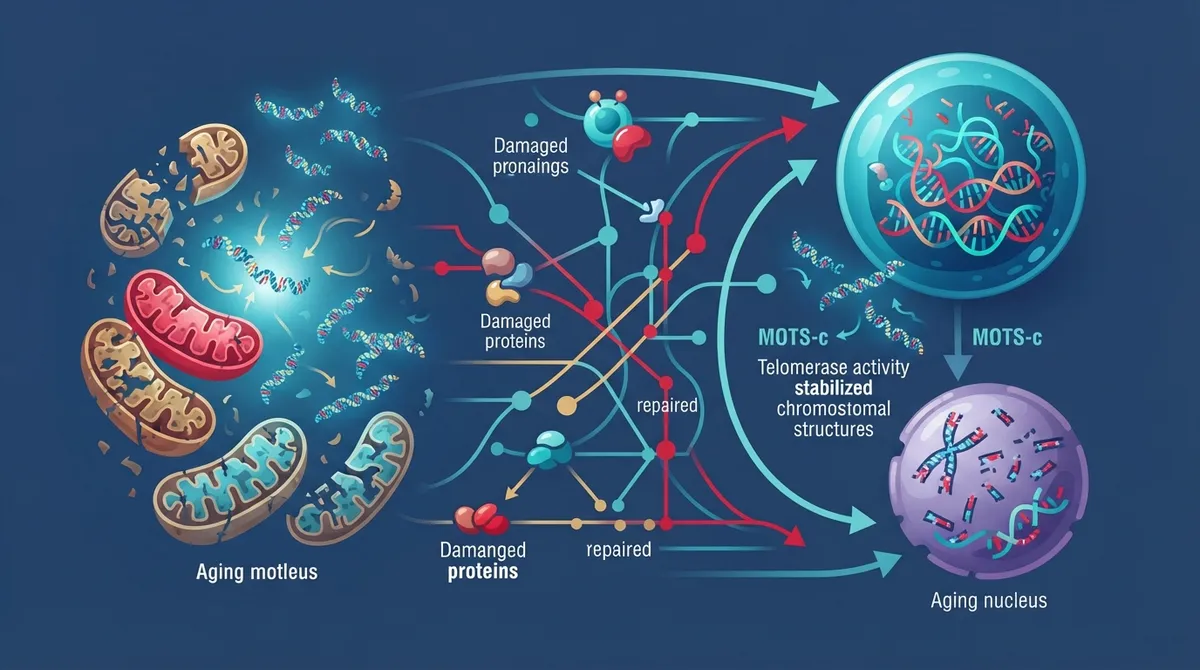
MOTS-c stands for mitochondrial open reading frame of the 12S rRNA-c. It is a small peptide made of just 16 amino acids. Unlike most proteins in your body, MOTS-c is coded by DNA inside your mitochondria, the tiny structures that produce energy in your cells.
Researchers first identified MOTS-c in 2015. Since then, scientists have studied how it may influence glucose metabolism, insulin sensitivity, and cellular stress responses. Because mitochondria play a central role in aging and energy production, some researchers believe MOTS-c could affect how our bodies age over time.
This connection to mitochondrial health is what sparked interest in MOTS-c as a potential anti-aging compound. However, interest and proof are two very different things.

The Science Behind MOTS-c Anti-Aging Claims
The anti-aging theory around MOTS-c comes mostly from laboratory and animal studies, not human trials. Researchers have proposed several possible mechanisms, including:
- Activation of AMPK-related metabolic pathways that regulate energy use
- Improved glucose utilization and insulin sensitivity in muscle tissue
- Protection against cellular stress and metabolic damage
- Possible reduction in markers of cellular senescence, a process linked to aging
These mechanisms sound promising on paper. But most of this evidence comes from mice, not people. Let's look at what the animal research actually found.
What Animal Studies Have Shown
In one study, mice received daily injections of MOTS-c at a dose of 15 mg/kg for about two weeks. Researchers found improved physical performance across young, middle-aged, and older mice. This is an animal dose, though, and cannot be directly converted into a safe human dose.
A separate 2023 review reported that aged mice given systemic MOTS-c showed improvements in age-related skeletal-muscle insulin resistance. Again, this evidence remains preclinical. It has not been confirmed in human clinical trials.
More recently, a 2025 rodent study found that MOTS-c reduced markers of cellular senescence in pancreatic islets. The same study reported delayed diabetes onset in several mouse models. This is interesting mechanistic evidence, but it does not prove MOTS-c will produce the same results in humans.
What Do Human Studies Actually Show?
Human research on MOTS-c remains very limited. Here is a breakdown of what has been studied so far:
|
Study Type |
Population |
Duration |
Focus |
|---|---|---|---|
|
Native MOTS-c Pilot Study |
Overweight, insulin-resistant men |
7 days |
Feasibility and metabolic effects |
|
CB4211 Phase 1a |
~65 healthy volunteers |
Short-term |
Safety and tolerability |
|
CB4211 Phase 1b |
~20 adults with obesity or NAFLD |
Short-term |
Safety and metabolic feasibility |
Notice that none of these studies were designed to test for anti-aging benefits, lifespan extension, or long-term safety. They focused mainly on whether the compound was tolerable and how it behaved in the body over a short period.
It is also worth noting that CB4211, a peptide analog related to MOTS-c, is not identical to the native peptide. Results from CB4211 studies cannot be assumed to apply directly to native MOTS-c products sold online.
No Completed Large-Scale Human Trials
As of now, no completed Phase 2 or Phase 3 randomized clinical trials have established that MOTS-c is effective for longevity or age-related disease in humans. This is an important gap. Phase 2 and Phase 3 trials are the studies that typically prove whether a treatment actually works and is safe for wider use.
Is MOTS-c FDA Approved?
No. MOTS-c is not approved by the FDA for anti-aging, weight loss, diabetes, or any other medical use. There is no FDA-approved dosing chart, no official labeling, and no standardized treatment protocol. This means any product marketed as MOTS-c for anti-aging purposes is being sold outside of approved medical guidelines.
This lack of regulation raises real concerns about quality control. Without FDA oversight, there is no guarantee that a product actually contains what the label claims, or that it is free from contamination.
Potential Risks and Safety Concerns
Because long-term human safety data does not exist, several risks remain unknown or poorly understood. Patients considering MOTS-c should be aware of the following concerns:
- Injection-site reactions, including redness, swelling, or irritation
- Possible immune reactions to the peptide
- Unpredictable effects on blood glucose levels
- Cardiovascular symptoms that have not been fully studied
- Potential interactions with diabetes medications like insulin or metformin
- Risk of product contamination from unregulated suppliers
- Unknown effects from repeated or prolonged use over months or years
If you are currently managing diabetes or another chronic condition, these unknowns matter even more. Combining an unproven peptide with prescription medications could create unpredictable interactions.
How Primary Care Providers Should Approach MOTS-c
Responsible primary care providers should treat MOTS-c as an investigational compound, not an established therapy. This means being honest with patients about what is known and what remains unproven.
At InCare, our approach includes asking patients directly about peptide use during visits. Many patients do not realize that some over-the-counter or online peptide products carry real risks. Open conversation helps your doctor watch for warning signs and adjust your care plan if needed.
Questions to Ask Before Considering Any Peptide Therapy
- Has this compound been tested in large human clinical trials?
- Is it approved by the FDA for the specific use I am considering?
- What are the known short-term and long-term risks?
- Could this interact with medications I already take?
- Is the product third-party tested for purity and accurate dosing?
If a provider or seller cannot answer these questions clearly, that is a red flag. Reliable wellness care should never rely on vague promises or unverified claims.
Evidence-Based Alternatives for Healthy Aging
While MOTS-c remains experimental, there are many proven strategies that support healthy aging and metabolic health right now. These include:
- Regular physical activity, including strength and cardiovascular training
- Consistent, quality sleep of seven to nine hours per night
- A balanced diet rich in whole foods and low in processed sugar
- Routine cancer screenings and preventive checkups
- Blood pressure and cholesterol management
- Smoking cessation support
- Vaccination to prevent illness and reduce inflammation
These approaches are backed by decades of research, unlike MOTS-c, which is still in early investigation stages. A personalized wellness plan built on these foundations often delivers more reliable results than chasing unproven compounds.
Tools That Support Real, Measurable Wellness Progress
Instead of relying on unverified peptides, many patients benefit from advanced diagnostic tools that show actual progress. At InCare, we offer services like body composition analysis, metabolic breath analysis, and DNA gene testing to help you understand your body's unique needs.
These tools give you and your provider real data. That data can guide decisions about nutrition, exercise, and weight loss programs tailored to your goals. This is a more grounded path toward whole-body optimization than relying on a peptide with limited human evidence.
Why Transparency Matters in Wellness Medicine
The wellness industry moves fast, and new compounds like MOTS-c often generate excitement before the science catches up. This is why transparency between patients and providers is so important. A trustworthy clinic will tell you clearly when something is experimental, rather than overstating benefits to make a sale.
InCare's providers, including our team listed under Providers, are committed to this kind of honest, patient-first communication. Whether you visit our Tampa or Riverview location, you can expect clear answers grounded in current medical evidence.
You can also see what other patients say about their experience by visiting our page and checking Visit us on Google — InCare. Many reviews highlight the friendly, knowledgeable care our team provides during wellness consultations.
Staying Informed on Peptide Research
Peptide science is evolving quickly, and future studies may reveal more about MOTS-c's true potential. Until then, it is wise to follow updates from reputable medical sources rather than social media claims. Organizations focused on cognitive and metabolic health continue to track this research closely.
You can also follow InCare's ongoing wellness education content through our social channels, including Facebook, Instagram, and TikTok, where we share updates on emerging wellness topics and evidence-based health tips.
Making an Informed Decision With Your Doctor
If you are curious about MOTS-c or other peptide therapies, the safest first step is a conversation with a licensed primary care provider. Your doctor can review your health history, current medications, and goals to help you understand whether an investigational therapy makes sense, or whether proven interventions would serve you better.
This is especially important if you have underlying conditions like diabetes, heart disease, or thyroid issues. A knowledgeable provider can help you avoid risky interactions and focus on strategies with a stronger evidence base.
Take the Next Step Toward Evidence-Based Wellness
Anti-aging science is exciting, but it should never come at the cost of your safety. MOTS-c remains an interesting research compound, not a proven therapy. Before trying any peptide, talk with a provider who can give you honest, science-backed guidance tailored to your health.
Ready to discuss your wellness goals with a trusted team? Book your appointment today and get personalized answers about healthy aging strategies that actually work.
FAQs
Q: What is MOTS-c and how is it connected to aging?
A: MOTS-c is a 16-amino-acid peptide encoded by mitochondrial DNA. It is being studied for its possible role in glucose metabolism, insulin sensitivity, and cellular stress responses, which has led researchers to explore its connection to aging processes. However, this connection remains largely theoretical based on animal and laboratory research.
Q: Does MOTS-c increase lifespan or reverse biological aging in humans?
A: No human studies have proven that MOTS-c extends lifespan or reverses aging. Most supportive evidence comes from mouse studies, and no completed Phase 2 or Phase 3 human trials have established these effects in people.
Q: Is MOTS-c FDA approved for anti-aging, weight loss, or diabetes?
A: MOTS-c is not FDA approved for any medical use, including anti-aging, weight loss, or diabetes management. There is no approved dosing protocol or official labeling for this peptide.
Q: What are the known side effects and long-term risks of MOTS-c?
A: Potential concerns include injection-site reactions, immune responses, unpredictable blood glucose effects, and possible interactions with diabetes medications. Long-term safety data does not currently exist, making repeated or prolonged use particularly uncertain.
Q: Should primary care or wellness clinics offer MOTS-c peptide therapy?
A: Responsible clinics should present MOTS-c as an investigational research compound rather than a proven anti-aging treatment. Providers should discuss the lack of validated benefits and prioritize evidence-based approaches like exercise, sleep, nutrition, and routine screenings.